
By: Christian Smith
The Structural Flaw Nobody Owns
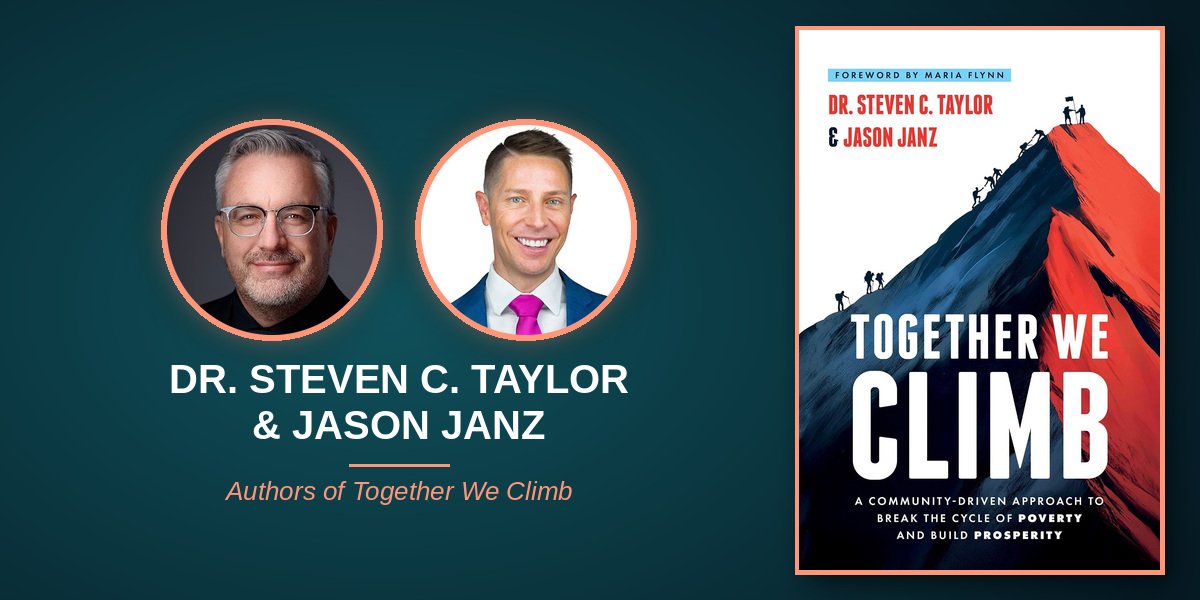
Steven C. Taylor did not arrive at the arguments in Together We Climb through theory. He arrived at them through two decades of working inside higher education, on workforce boards, and around the safety net, watching the same problem reproduce itself in every context he entered. The problem is not a lack of programs or a lack of spending. It is a lack of coordination. Each system has its own rules. Each program measures success differently. Each agency is accountable for its own outputs and no one’s outcomes. A single parent trying to access education, job training, and benefits support simultaneously is navigating multiple agencies, different eligibility requirements, and a substantial paperwork burden. We put the burden on the individual to figure out how everything fits together, Steve writes, when that is exactly what the system should be doing. That observation is the foundation everything else in the book builds on.
Emergency Programs That Became Permanent Architecture
Much of the modern American safety net was built during moments of national crisis. The Depression. The War on Poverty. The pandemic. Emergency programs created to stabilize families in acute distress became permanent institutional architecture over time, without anyone systematically asking how they fit together or whether their combined effect was helping families become economically independent or simply more stably dependent. The result, Steve argues, is a system that has made poverty more survivable without making it more escapable. That is what happens when no one is responsible for the whole journey. Individual programs do what they were designed to do. The person navigating them does not get out.
The Virginia Proof
Steve is not making an argument without evidence. Virginia’s FastForward program demonstrated what changes when you measure the right thing and hold providers accountable for it. The program charged students one-third of the cost of a workforce credential and paid colleges full funding only upon completion and job placement. The result was immediate: colleges started building real employer relationships, graduates had interviews waiting, and median wages jumped fifty percent in twelve months. Colorado’s Evaluation and Action Lab used anonymized state wage records to track earnings before and after programs. These are not pilot projects or theoretical models. They are real accountability structures producing real wage gains, and they point toward what a system designed to end poverty rather than manage it could look like at scale.
What Workforce Pell Changes
Workforce Pell, which became law in 2025, represents the most significant federal step in the direction Steve has been arguing for throughout his career. The legislation requires a program to demonstrate a seventy percent placement rate before qualifying for funding. That single requirement changes the incentive structure for every program it touches. It means that for the first time, federal education funding is tied not to whether someone enrolled or completed a program but to whether they got a job. For a single parent earning twenty-one thousand dollars a year, a twelve-week credential that leads directly to employment is worth more than a four-year degree they have a forty percent chance of never finishing. The policy is finally beginning to catch up to that reality.
The Benefits Cliff as a System Design Choice
The benefits cliff is not an accident or an oversight. It is the predictable consequence of designing programs in isolation without asking how they interact with one another. In Jefferson County, Kentucky, a single mother with two kids has fewer total resources at forty-five thousand dollars a year than at twenty-two thousand, because she loses SNAP, childcare assistance, and Medicaid at different thresholds on the way up. Fixing the cliff does not require eliminating the programs. It requires designing the phase-out so that benefits decline gradually as earnings rise, so that a raise means a family is unambiguously better off. Utah’s Department of Workforce Services is now piloting financial coaching programs specifically designed to help people navigate the transition between benefits and full economic independence without falling through the gap between them.
What One Door Makes Possible
Utah has operated a single Department of Workforce Services since the mid-1990s. One door, one plan, one relationship, whether a resident needs food assistance, unemployment support, job training, or housing help. The outcomes over three decades are measurable and significant. While national SNAP participation rose between 1994 and 2024, Utah’s fell. During the pandemic, Utah’s unemployment peaked at 4.9 percent while the national rate hit 8.4 percent. That is not a coincidence. It is the result of a system designed around the person rather than around the program, where someone is responsible for the whole journey and success is measured by whether the family reaches the next stage of the mountain. The model exists. The results are documented. Together We Climb is an argument for taking it seriously at national scale.
Pick up your copy of Together We Climb by Steven C. Taylor, Jason Janz, with a foreword by Maria Flynn on Amazon today.