The Chicago Journal

Chicago Park District Opens Five Free Neighborhood Ice Rinks on November 27


The Chicago Park District will open five neighborhood outdoor ice rinks on Friday, November 27, 2026, weather permitting, with free admission and $7 skate rentals at McKinley, Midway Plaisance, Mt. Greenwood, Warren and Wentworth parks. Advance reservations are required, and the District releases each week’s sessions at noon on Mondays, two weeks ahead.

Key Takeaways

  • Reservations run through February 15, 2027, the last session date in the District’s registration calendar
  • Registration for December 14 to 20 sessions opens at noon on Monday, November 30
  • All five neighborhood rinks close on Christmas Day, while the Maggie Daley Ice Ribbon stays open
  • Sled-assisted skating is free with a call to (312) 442-2194 at least 24 hours ahead
  • Reservations cannot be changed, transferred or refunded, and there is no waitlist

How Do Skaters Reserve a Session?

Open skate requires pre-registration at every neighborhood rink. The Chicago Park District posts its reservation calendar on its ice rinks page, with sessions released in weekly blocks two weeks in advance.

  • November 27 to 29 sessions: Registration opened November 9
  • November 30 to December 6: Opened November 16
  • December 7 to 13: Opened November 23
  • December 14 to 20: Opens November 30
  • December 21 to 27: Opens December 7
  • December 28 to January 3: Opens December 14
  • February 8 to 15, 2027: Opens January 25, the final release of the season

Each reservation covers a specific date, session time and type, either with skate rental or with the skater’s own skates. Session capacity is limited, and skaters may check in 30 minutes before their session begins.

Five Neighborhood Rinks Across the City

  • McKinley Ice Rink: 2210 W. Pershing Rd.
  • Midway Plaisance Ice Rink: 1130 Midway Plaisance North
  • Mt. Greenwood Ice Rink: 3721 W. 111th St.
  • Warren Park Ice Rink: 6601 N. Western Ave.
  • Wentworth Ice Rink: 5625 S. Mobile Ave.

The Maggie Daley Skating Ribbon at 337 E. Randolph St. is already open and charges separate fees. The District’s indoor rinks at McFetridge Sports Center and Morgan Park Sports Center operate year-round.

Hours Vary by Rink

Regular-season hours run from November 30, 2026, through January 17, 2027. After January 18, the posted schedules shift to Friday through Sunday only.

  • Warren: Open skate Monday to Thursday 3 to 7 p.m., Friday 2 to 8 p.m., Saturday 1 to 8 p.m. and Sunday noon to 6 p.m.
  • McKinley and Wentworth: Closed Monday and Tuesday; open skate Wednesday and Thursday 3 to 7 p.m., Friday 3 to 8 p.m., Saturday 1 to 8 p.m. and Sunday noon to 6 p.m.

Midway Plaisance and Mt. Greenwood post their schedules on their own rink pages. All outdoor rinks run special hours over the holiday break, including Christmas Eve and New Year’s Eve. All five neighborhood rinks close on Christmas Day.

Programs and Fees Beyond Open Skate

  • Drop-in Learn to Skate: $10, including skate rental
  • Senior Skate (ages 50 and up): Free admission, $7 rental
  • Stick and Puck with Pond Hockey: $8 per person or $10 for an adult and child, with players bringing their own equipment
  • Rat Hockey (ages 18 and up): $10, canceled if fewer than eight players register

Helmets, shin pads and hockey gloves are required for the hockey programs. Players under 18 must wear a helmet with a full-face mask.

Rentals, Accessibility and Rink Rules

Rental skates run from child’s size 8 through men’s size 12, with no half sizes. Skate sharpening costs $10 at the Midway Plaisance and Warren rinks.

Skate trainers for new skaters are free on a first-come, first-served basis. Specialty sleds for children and adults allow people of all abilities to skate together at no charge, with reservations made by phone at least 24 hours ahead.

Rink rules allow no more than two people to skate together, bar skaters from carrying children or items such as bags and phones on the ice, and prohibit pets and alcohol on the premises.

Weather and Cancellations

All outdoor rinks operate weather permitting. If management cancels a reserved session because of weather, an emergency or a safety issue, the District processes a refund within up to five business days. Cancellations are typically made the day of the session.

Holiday Skate with Santa events are scheduled at Wentworth on December 5, McKinley on December 6, Midway Plaisance on December 12, Mt. Greenwood on December 13 and Warren on December 19. Glow Nights skates rotate through the rinks from January 8 to February 5, and all five rinks host “Love is in the Air” skates on February 14.


FAQs

Is Skating Free at Chicago Park District Neighborhood Rinks?

Yes. Admission is free at all five neighborhood rinks, and skate rental costs $7 for all ages.

Do Skaters Need a Reservation?

Yes. Open skate requires pre-registration, with sessions released at noon on Mondays for the week two weeks out.

When Does the Neighborhood Rink Season End?

The District’s registration calendar runs through February 15, 2027, weather permitting.

Are the Rinks Open on Christmas Day?

No. All five neighborhood rinks close on December 25, while the Maggie Daley Ice Ribbon remains open.

Can Skaters Get a Refund?

Only when the District cancels a session. Reservations are otherwise final, with no changes or transfers.

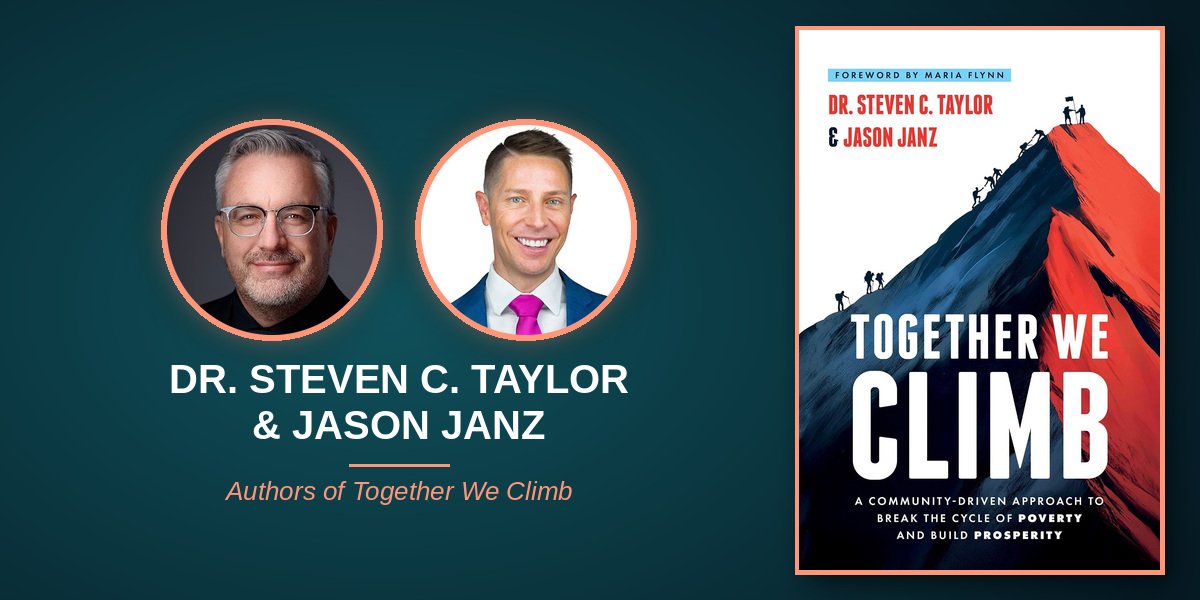
Steve Taylor Has Spent Two Decades Inside Workforce and Education Systems. What He Found There Explains Why the Same Families Keep Struggling Generation After Generation.

By: Christian Smith

The Structural Flaw Nobody Owns

Steven C. Taylor did not arrive at the arguments in Together We Climb through theory. He arrived at them through two decades of working inside higher education, on workforce boards, and around the safety net, watching the same problem reproduce itself in every context he entered. The problem is not a lack of programs or a lack of spending. It is a lack of coordination. Each system has its own rules. Each program measures success differently. Each agency is accountable for its own outputs and no one’s outcomes. A single parent trying to access education, job training, and benefits support simultaneously is navigating multiple agencies, different eligibility requirements, and a substantial paperwork burden. We put the burden on the individual to figure out how everything fits together, Steve writes, when that is exactly what the system should be doing. That observation is the foundation everything else in the book builds on.

Emergency Programs That Became Permanent Architecture

Much of the modern American safety net was built during moments of national crisis. The Depression. The War on Poverty. The pandemic. Emergency programs created to stabilize families in acute distress became permanent institutional architecture over time, without anyone systematically asking how they fit together or whether their combined effect was helping families become economically independent or simply more stably dependent. The result, Steve argues, is a system that has made poverty more survivable without making it more escapable. That is what happens when no one is responsible for the whole journey. Individual programs do what they were designed to do. The person navigating them does not get out.

The Virginia Proof

Steve is not making an argument without evidence. Virginia’s FastForward program demonstrated what changes when you measure the right thing and hold providers accountable for it. The program charged students one-third of the cost of a workforce credential and paid colleges full funding only upon completion and job placement. The result was immediate: colleges started building real employer relationships, graduates had interviews waiting, and median wages jumped fifty percent in twelve months. Colorado’s Evaluation and Action Lab used anonymized state wage records to track earnings before and after programs. These are not pilot projects or theoretical models. They are real accountability structures producing real wage gains, and they point toward what a system designed to end poverty rather than manage it could look like at scale.

What Workforce Pell Changes

Workforce Pell, which became law in 2025, represents the most significant federal step in the direction Steve has been arguing for throughout his career. The legislation requires a program to demonstrate a seventy percent placement rate before qualifying for funding. That single requirement changes the incentive structure for every program it touches. It means that for the first time, federal education funding is tied not to whether someone enrolled or completed a program but to whether they got a job. For a single parent earning twenty-one thousand dollars a year, a twelve-week credential that leads directly to employment is worth more than a four-year degree they have a forty percent chance of never finishing. The policy is finally beginning to catch up to that reality.

The Benefits Cliff as a System Design Choice

The benefits cliff is not an accident or an oversight. It is the predictable consequence of designing programs in isolation without asking how they interact with one another. In Jefferson County, Kentucky, a single mother with two kids has fewer total resources at forty-five thousand dollars a year than at twenty-two thousand, because she loses SNAP, childcare assistance, and Medicaid at different thresholds on the way up. Fixing the cliff does not require eliminating the programs. It requires designing the phase-out so that benefits decline gradually as earnings rise, so that a raise means a family is unambiguously better off. Utah’s Department of Workforce Services is now piloting financial coaching programs specifically designed to help people navigate the transition between benefits and full economic independence without falling through the gap between them.

What One Door Makes Possible

Utah has operated a single Department of Workforce Services since the mid-1990s. One door, one plan, one relationship, whether a resident needs food assistance, unemployment support, job training, or housing help. The outcomes over three decades are measurable and significant. While national SNAP participation rose between 1994 and 2024, Utah’s fell. During the pandemic, Utah’s unemployment peaked at 4.9 percent while the national rate hit 8.4 percent. That is not a coincidence. It is the result of a system designed around the person rather than around the program, where someone is responsible for the whole journey and success is measured by whether the family reaches the next stage of the mountain. The model exists. The results are documented. Together We Climb is an argument for taking it seriously at national scale.

Pick up your copy of Together We Climb by Steven C. Taylor, Jason Janz, with a foreword by Maria Flynn on Amazon today.

George Mkrtchyan on Why Switching Lawyers Mid-Case Isn’t Starting Over: A $10,000 Offer That Became $160,000

About 18 months after another driver turned into a shopping center driveway and hit her car, one injured driver was left with a first offer she had declined, a law firm that had withdrawn from her case, and a filing deadline roughly 6 months away. She did not have a new strategy. She had a file and a calendar.

Many people in that position assume a new lawyer means going back to the beginning. George Mkrtchyan, Esq., Managing Attorney of Court House Lawyers in Glendale, California, sees switching lawyers mid-case differently. In his view, a new attorney inherits the file, the record and the clock all at once, and what shapes the result is what gets done with the time that is left, not the time that has already passed.

Switching Lawyers Mid-Case Doesn’t Reset the Clock

The general deadline to file a personal injury lawsuit in California is 2 years, under Code of Civil Procedure § 335.1. The California Courts self-help guide on deadlines to sue puts the consequence plainly: a person who files after the deadline has passed will generally lose the case.

That deadline runs from the injury. It does not run from the day a new lawyer signs a fee agreement. Someone who changes representation 18 months in has roughly 6 months left, and every week spent deciding what to do comes out of that window.

This is the part of switching that tends to surprise people. The case is not new. The calendar is not new either. A late switch can still work, but the room for delay is gone.

What a New Lawyer Actually Inherits

A takeover starts with reading. The new attorney generally reviews everything that came before: medical records, correspondence with the insurer, the insurer’s stated position and whatever offers have been made. None of that work disappears when the lawyer changes. It becomes the starting record.

That record can help or hurt. A well-documented file lets the new attorney move quickly. A thin one means gathering what is missing while the deadline keeps running.

“Taking over a file late is rarely ideal,” Mkrtchyan admits. “There is less room for error, so the first weeks go to reading everything that was already done, because you can’t fix what you haven’t found yet.”

Photo Courtesy: Court House Lawyers

Two Tools That Change the Pressure on a Car Accident Claim

Before a lawsuit is filed, an insurer can take its time with an offer. Filing suit changes that. It preserves the claim within the deadline and moves the dispute onto a court schedule that neither side fully controls.

The second tool is a formal settlement offer under Code of Civil Procedure § 998. If the other side rejects that offer and then does not do better at trial, certain costs can shift onto that party. The offer does not force anyone to settle. It can, however, give the defense a concrete reason to look at its own numbers again.

Neither step is unusual on its own. In a late takeover, the value often comes from doing both early, before the remaining months slip away.

One Takeover, From Withdrawal to Settlement

The driver from the opening had been offered $10,000 by the at-fault driver’s insurer. She declined it. Her prior firm withdrew about 18 months after the accident, close to the 2-year deadline.

When the file reached Court House Lawyers, the firm reviewed the prior record, filed suit before the deadline, and served a formal settlement offer. The case then settled for $160,000 without going to trial. One result says nothing certain about the next, because each case differs in its facts, injuries and coverage.

“An initial offer is a starting point, not a verdict on what a case is worth,” Mkrtchyan argues. “It tells you where the insurer’s position that day, not where the case has to end.”

Before Switching, Look at the Calendar First

Mkrtchyan works directly on every case as the firm’s Managing Attorney, alongside case manager Grant Abadzhyan. For someone weighing a switch, his reasoning points to a few practical questions.

How much time is left before the general deadline? What does the file already contain, and what is missing? What will the new attorney do in the first few weeks, and is filing suit part of that plan? An honest answer to each one says more about a takeover than any promise about the final number could.

None of this means switching is right for everyone. Some cases are moving well, and a change can cost time. But for a case that has gone quiet, a new lawyer is not a fresh start. It is the same case with fewer months to work with.

The driver in the opening came in with 18 months of history and about 6 months on the clock. Both turned out to count, and only one of them could still be used.

Disclaimer: The content in this article is provided for general knowledge. It does not constitute legal advice, and readers should seek advice from qualified legal professionals regarding particular cases or situations.

Mid-Sized City Businesses Are Fighting Bigger Metros for Local Search Attention

Population growth held steady in the nation’s mid-sized cities between 2024 and 2025 even as the biggest cities’ gains shrank sharply, according to the Census Bureau’s latest city population estimates, released May 14. For businesses in growing markets around Chicago, that growth brings customers, but local search visibility is harder to hold when searches return metro-based firms, national brands and directories alongside the business down the street.

Key Takeaways

  • The Census Bureau says growth held steady in mid-sized cities while gains in the largest cities fell sharply.
  • Growing mid-sized markets tend to attract new businesses and new residents.
  • Metro-based firms, national brands, and directories often appear in local results for smaller cities.
  • Google says local results are based mainly on relevance, distance, and prominence.
  • Building local search visibility typically takes months, and no position is guaranteed.

Mid-Sized Cities Keep Growing, Raising the Stakes for Local Search Visibility

The estimates cover July 2024 to July 2025. In cities of 250,000 or more, the average gain fell from 7,699 residents to 2,048. By comparison, the bureau said, growth in mid-sized cities held steady, and in the Midwest it eased only slightly, from 0.6% to 0.5%. Census statistician Matt Erickson said mid-sized cities had found a “Goldilocks zone” where migration and new housing kept growth going.

Chicago remains the nation’s third-largest city, with about 2.73 million residents. Around it, in growing suburbs and smaller metros such as Naperville, steady growth tends to bring new competitors and new customers.

Why Bigger Metros Spill Into Smaller Markets’ Search Results

Many service businesses travel to customers rather than serve them at a storefront. Google’s Business Profile guidelines let these service-area businesses set a service area that generally reaches no farther than about two hours of driving time from their base. From Chicago, that reaches well into the suburbs and beyond.

National brands and directories, meanwhile, appear in results across many cities. A homeowner in Naperville or Rockford searching for a plumber may see those names next to local options.

“A search in a mid-sized city often turns up companies that cover a huge radius and have years of reviews and links behind them,” said Edmond Abramyan, founder of Curious Fortune Media. “The local business is usually the closest option, but it’s often the one with the least proof online. That’s not a size problem. It’s a visibility problem.”

Where Local Businesses Hold an Advantage

Google’s guidance on local ranking says results are based mainly on three factors: relevance, how well a listing matches the search; distance from the person searching; and prominence, how well known a business is, based on reviews and links from other websites. The same guidance says you can’t request or pay for a better local ranking.

Distance and relevance tend to favor businesses that are nearby and clearly describe what they do. Prominence tends to favor established players with long review histories. Specificity can narrow that gap: pages and profiles that name the neighborhoods a business serves, such as downtown Naperville or Peoria’s Warehouse District, give Google more to match than a broad claim to serve “the Chicago area.”

Abramyan developed the Authority Engine™ at Curious Fortune Media for businesses that are easy to reach in person but harder to verify online. Of its three layers (visibility, authority, and conversion), those businesses most often fall short on the middle one.

Court House Lawyers, a personal injury and lemon law firm in Glendale that competes with firms across Los Angeles, fit that description when it began working with Abramyan’s agency. It had a $250 website, did not rank even for its own name, and had spent more than $60,000 on lead providers. After the site was rebuilt around its practice areas and backed by press and outside links, the firm became visible in search, traffic began flowing to its site, and calls and website inquiries followed.

Building Prominence Without a Big-Metro Budget

Prominence is built through steady habits: a complete, accurate Google Business Profile; a steady flow of genuine online reviews; and mentions in local press, chambers of commerce, and community groups. In mid-sized markets, local outlets and organizations may be easier to reach than in a large metro. These pieces work best together, and consistency may matter more as AI-generated answers summarize a few local options.

Photo Courtesy: Curious Fortune Media

“In a smaller market, a business can be the obvious choice for its own city if its profile, its pages and its reviews actually show it,” said Abramyan, who created the Authority Engine. “That builds month by month. A bigger budget can buy reach, but it can’t buy being the most relevant option in town.”

What Smaller-Market Businesses Can’t Control

The approach has limits. Broad or category searches still tend to favor large brands and directories. You can’t manufacture proximity, since Google’s guidelines require a real-world location and don’t accept P.O. boxes or virtual offices. AI-generated answers vary from one search to the next, and progress typically takes months, with no guarantee of any position.

Growth in mid-sized cities brings customers, but also bigger competitors in the same local results. Nearby businesses start with advantages in distance and relevance, yet often trail on visible proof. Rather than matching a metro competitor’s reach, owners may get more by being specific about the neighborhoods they serve and steadily building local proof, knowing progress takes months, AI answers vary, and no position is guaranteed. As mid-sized cities keep growing, the businesses that hold their local results may be the ones whose local relevance is easiest to verify.

FAQs

Why do businesses from other cities show up in local search results?

Service-area businesses can cover areas within about two hours of driving time under Google’s guidelines, and national brands and directories appear across many cities.

How does Google local ranking work?

Google says local results are based mainly on relevance, distance, and prominence. Prominence includes reviews and links from other websites.

Are mid-sized cities still growing?

The Census Bureau says mid-sized cities grew steadily between 2024 and 2025, while the largest cities slowed sharply.

Can a small local business outrank a larger regional competitor?

Often, for searches tied to its own area, since distance and relevance can favor a nearby business. Results vary.

How long does it take to build local search visibility?

Progress typically takes several months, and no one can guarantee a position.