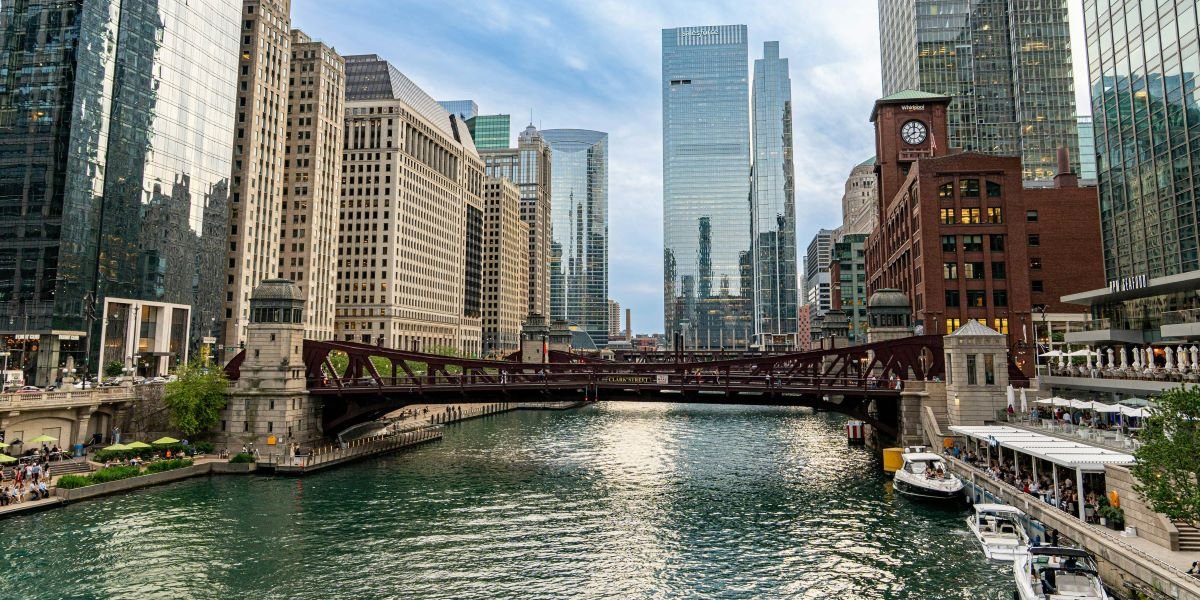
The Chicago River turns green each March because Chicago Journeymen Plumbers Local 130 dyes it for St. Patrick’s Day, a tradition the union has carried out nearly every year since 1962. Crews on boats release an orange powder that turns bright green on contact with the water, on the Saturday before St. Patrick’s Day.
Key Takeaways
- Plumbers Local 130 has dyed the Chicago River green for St. Patrick’s Day nearly every year since 1962.
- The idea came in 1961, when the union’s business manager, Stephen Bailey, saw a plumber’s white coveralls stained green by leak-detection dye.
- The dye goes into the water as an orange powder and turns green as soon as it hits the river.
- The union keeps the formula secret and describes it as environmentally friendly.
- Local 130 has sponsored Chicago’s downtown St. Patrick’s Day Parade since 1956.
- Based on the Saturday-before tradition, the 2027 dyeing points to March 13, pending confirmation from organizers.
The Chicago River Green Tradition Started With a Stained Pair of Coveralls
The story behind the green Chicago River begins in 1961. According to Plumbers Local 130’s own account, business manager Stephen Bailey was approached by one of his plumbers wearing white coveralls that had been stained a vivid green. The stain came from a dye plumbers used to trace leaks into the river.
Bailey saw a St. Patrick’s Day opportunity. The first plan was even more ambitious: Local 130 business manager Jim Coyne has said the original idea was to dye Lake Michigan. The union settled on the Chicago River instead, and the first dyeing took place in 1962.
The idea grew out of a working relationship. Bailey was a childhood friend of Mayor Richard J. Daley, and Local 130 had taken over sponsorship of the city’s downtown St. Patrick’s Day Parade in 1956, after Bailey told Daley the plumbers would sponsor it “forever.” The river dyeing became the parade’s opening act.
How Plumbers Local 130 Dyes the Chicago River Green
The process is simpler than its result suggests. On the morning of parade day, union members head onto the river in boats. A lead boat releases the dye while a chase boat follows to churn the water and spread the color evenly.
The dye itself is the part that surprises most first-time viewers. It goes into the water as an orange powder, and a Local 130 parade coordinator has described how it turns a brilliant green as soon as it hits the river. The whole operation takes roughly 45 minutes to an hour, and crowds typically gather along the riverbanks downtown to watch.
The Chicago River Green Dye Formula Remains a Union Secret
The original dye was a leak-tracing compound. The formula used today is one the union describes as environmentally friendly, and Choose Chicago notes that the recipe remains a closely kept secret. Local 130 has never published it, and the union has said other cities have tried similar feats without success.
How Long the Chicago River Stays Green
The brightest green is short-lived. The vivid color seen right after the dyeing begins to fade within a few hours, though a green tint can linger in the water for a day or more, depending on conditions.
That brief window is part of why the timing matters to visitors. Recent coverage has pointed to the stretch of Upper Wacker Drive between Columbus Drive and Wabash Avenue as a good place to watch, since the dyeing is concentrated along that downtown section of the river.
When the Chicago River Is Dyed Green Each Year
Since 1962, the river has been dyed on the Saturday before St. Patrick’s Day, the same day as the downtown parade. In 2026, the dyeing took place on March 14. Recent parades have stepped off at 12:15 p.m., with the river dyeing earlier that morning.
St. Patrick’s Day 2027 falls on Wednesday, March 17, which places the traditional Saturday dyeing on March 13, 2027. Plumbers Local 130 and parade organizers typically confirm the schedule closer to the date.
A Chicago Heritage Tradition Run by a Trade Union
For a city with deep labor roots, it fits that one of its best-known traditions is run by a union. Local 130 describes itself as 6,200 members strong, and its involvement goes well beyond the river. The union sponsors the parade, organizes the parade queen contest, and staffs the event each year.
The green river also sits within a wider pattern of heritage celebrations that claim Chicago’s downtown each year, from St. Patrick’s Day to the Mexican Independence Day festivities that stretch from Pilsen and Little Village to downtown. Each reflects how Chicago’s communities have shaped its public life, and the green river remains a reminder that some of the city’s traditions began on a job site.
FAQs
How long does the Chicago River stay green?
The brightest green fades within a few hours of the dyeing. A lighter green tint can remain in the river for a day or more, depending on water conditions.
When does Chicago dye the river green?
The river is dyed on the Saturday before St. Patrick’s Day, the morning of the downtown parade. That pattern points to March 13, 2027, pending confirmation from organizers.
What do they use to dye the Chicago River green?
Plumbers Local 130 uses a powdered dye that goes in orange and turns green on contact with the water. The union keeps the exact formula secret and describes it as environmentally friendly.
Who dyes the Chicago River green?
Chicago Journeymen Plumbers Local 130 dyes the river each year. The union has carried out the tradition nearly every year since 1962 and also sponsors the downtown St. Patrick’s Day Parade.
What time is the river dyeing in Chicago?
The dyeing takes place in the morning, ahead of the parade. Start times have varied in recent years, from 9 a.m. in 2018 to 10 a.m. in 2024, so the confirmed time for each year comes from organizers.