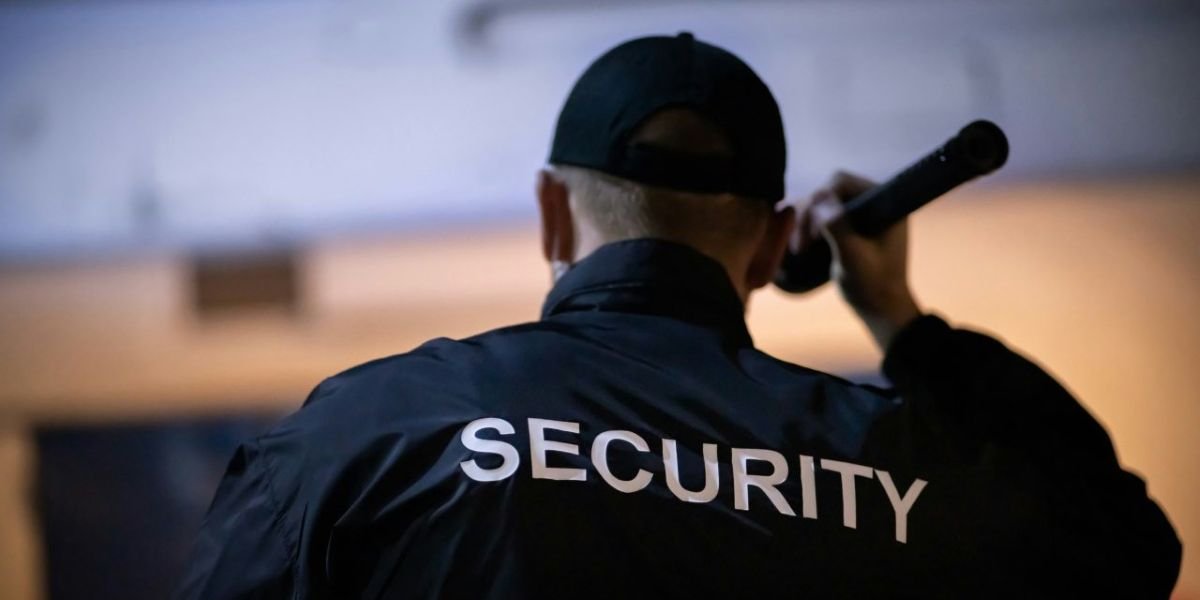
Private security is often associated with stern faces, raised voices and a show of force. SK Security, a guard and patrol company headquartered in Kansas City, Kansas, has built its reputation on a different idea. Its guiding phrase, “Safety with a Smile,” holds that officers can be firm, prepared and ready to act while still being friendly, calm and respectful toward everyone they meet.
That philosophy shapes how the company hires and trains officers, how it runs its round-the-clock dispatch center, how its patrol vehicles look on the street, and how its personnel treat vulnerable people on client properties. This article looks at the thinking behind SK Security’s day-to-day operations and the systems it uses to apply the same standards across offices in seven states.
Where the Phrase Came From
“Safety with a Smile” began with the personality of the company’s founder and chief executive, Sidney Kile, who has a natural habit of smiling, approaching people positively and trying to lower the tension in a room. Over time that personal trait became the company’s central operating phrase. It applies to everyone at SK Security, from guards and dispatchers to supervisors, managers and administrative staff.
The company is careful to explain what the phrase does not mean. It is not permission to look the other way or to avoid enforcing a client’s rules. Instead, it reflects a belief that authority, preparation and decisive action can sit comfortably alongside friendliness and respect. In practice, that means an officer who greets visitors warmly in the morning is expected to be just as ready to respond firmly when a situation calls for it.
Security Officers, Not Police
One of SK Security’s firmest principles is that its people are not police officers and should never act as though they are. Personnel are expected to understand the limits of their authority under private security licensing rules, property rights, client contracts and the law. Kile has said that the company’s uniforms, vehicles, titles and standards of conduct are deliberately designed to identify SK Security as a private organization and to avoid any confusion with law enforcement.
Licensing reinforces that line. In Kansas City, Missouri, for instance, applicable officers are licensed through the Kansas City Missouri Police Department’s Private Officers Licensing Unit, but that credential does not turn a private officer into a police officer or grant broad law enforcement powers. Whether an SK Security officer may detain, remove or question someone, or use force, depends on state law, the officer’s license classification, the property owner’s rights, the terms of the contract and the facts of the situation.
De-escalation Comes First
SK Security trains its officers to treat de-escalation as the first tool rather than the last. Officers are expected to communicate clearly, stay calm and treat people with dignity, whatever their social or economic circumstances. Physical contact is reserved for situations involving imminent harm, a lawful basis for detention or another legally justified operational need.
After a significant encounter, company leaders encourage officers to reflect on a simple question: could the situation have been resolved without physical contact? The aim is not to second-guess officers who acted properly, but to build habits that keep encounters as safe as possible for everyone involved. At venues that do not allow firearms, the company has equipped its officers with less-lethal tools so they remain prepared without carrying a gun.
From Applicant to Officer
Becoming an SK Security officer involves several steps before anyone is assigned to a post. Applicants complete an interview and a drug screening, then go on a ride-along with a supervisor to see the work firsthand before applying for the security license their jurisdiction requires.
Training covers a broad range of skills: de-escalation, report writing, defensive tactics, use of force, legal authority, customer service, medical response, equipment use and the specific procedures of each site. Officers who carry firearms also receive training in firearms safety and proficiency. Front Line Academy and Apparel, a separate company, supports SK Security’s training and professional standards. The company has also reported being approved for FirstNet, the national communications network built for first responders.
A Dispatch Center That Never Closes
Behind the officers in the field is a centralized dispatch function that runs 24 hours a day. Dispatchers coordinate officers, supervisors and patrol vehicles, handle client access requests, monitor cameras, manage incident response and carry out safety checks on employees working alone. For clients and field staff, this means there is always someone to call, not just during office hours.
That constant availability matters in a business where needs change quickly. Company leaders have said that clients often ask for coverage the same night or the next day, at times when police or other providers may not be able to respond on short notice. Dispatch also absorbs the everyday problems of a large workforce, from last-minute call-offs to alarms and access issues, without waiting for an office to reopen.
Field supervisors work alongside dispatch. They inspect sites, check the quality of service, review reports and respond to serious incidents. Company leaders are expected to be visible to employees and clients rather than managing from behind a desk, and SK Security credits part of its growth to treating scheduling, documentation, fleet readiness and response coverage as core business systems rather than informal habits.
Visibility as a Deterrent
SK Security’s patrol fleet is its most recognizable feature. The company operates more than 80 dedicated patrol vehicles, part of a wider set of over 100 vehicles and operational assets. Patrol officers make both scheduled and randomized checks, respond to alarms, document what they find and provide a moving presence across one property or several.
The vehicles carry distinctive branded wraps, and uniforms are designed to be clean, consistent and easy to recognize. Kile has described this branding as an operational advantage rather than just marketing: a clearly marked patrol vehicle can discourage crime and lets clients and neighbors see that security is on site. The company pairs that visible presence with an emphasis on urgency, reliability and accountability.
In March 2026, the company added a new kind of asset: its first helicopter. Operated as part of an aviation security unit, the SK Security Helicopter is used to support security posts when appropriate, move executives between markets more quickly and raise the company’s public profile. The company notes that the aircraft does not mean it offers airport or fixed-base operator security as a separate service.
Accountability in Writing
With offices in seven states, keeping standards consistent is a constant challenge. SK Security relies on written records to do it. Officers file daily activity reports and incident reports, giving both clients and company leaders a clear record of what happened on each shift.
The company backs those records with a structured approach to conduct. It uses progressive discipline, a defined list of zero-tolerance violations, confidential investigations and supervisory review, along with recognition for officers who perform well. These systems are meant to set the same expectations everywhere, even though licensing rules and client requirements vary from one market to the next.
Enforcing Rules With Compassion
Kile has described SK Security as a business with a heart for the communities it serves. The company expects measurable results and reliable performance, but it also recognizes that many security encounters involve people dealing with poverty, homelessness, illness, fear or crisis.
One practice illustrates this approach. During colder months, SK Security personnel have handed out support bags to unhoused people who could not stay on a client’s property. The bags contain coats, hats, gloves, hand warmers and blankets. The officer still enforces the property’s rules, but does so without treating a vulnerable person as a threat.
Beyond the Contract
Community involvement is presented as part of the reason SK Security exists, not as a side activity. The company has supported children’s soccer teams such as the Kansas City Futbol Club, school programs and youth running groups such as the Bronx Burners. It has backed veterans’ organizations including Team Red, White & Blue, as well as mental health awareness, breast cancer awareness and first responder causes.
It has also teamed up with major clients to host barbecues and provide school supplies to children, taken part in blood drives, toy drives and coat drives, and contributed to the Harvesters food donation program. On several occasions it has donated security services to events and nonprofit organizations.
In 2024, Kile created CareForCops, an initiative that supports law enforcement officers, first responders, their families and communities affected by line-of-duty deaths, disabling injuries or other serious events. Its programs include paying insurance deductibles, covering funeral costs, offering scholarships and delivering home-cooked meals. The initiative reflects the company’s respect for public safety personnel, while SK Security continues to keep a clear line between private security and law enforcement.
A Philosophy in Practice
SK Security’s approach rests on a balance that is easy to describe and harder to deliver: officers who are visible, prepared and willing to act, but who lead with courtesy, calm and respect. The company’s dispatch systems, training, written accountability and community work are all designed to make that balance hold up across hundreds of employees and many different markets. For a company that began with one vehicle and a founder who liked to smile at the people he met, “Safety with a Smile” remains both a slogan and an operating standard.