The Chicago Journal

CTA Holiday Train Starts 35th Season November 27 With Runs on All Eight ‘L’ Lines Through December 22

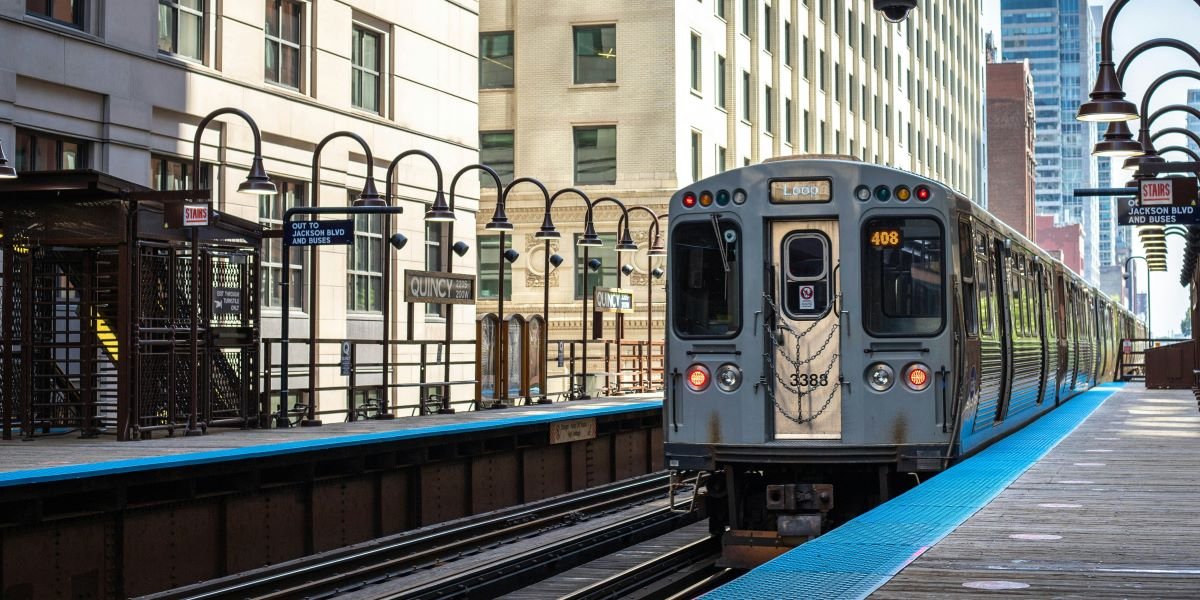
The CTA Holiday Train begins its 35th season on Friday, November 27, 2026, departing Midway at 3 p.m. and running on all eight ‘L’ lines through December 22. The holiday bus, which started November 24, serves 21 routes through December 21, and both ride at standard CTA fares.

Key Takeaways

  • Photos with Santa aboard the train are scheduled for November 28, December 5, December 12 and December 19
  • No special tickets are required, and the train appears on CTA Train Tracker with a candy cane icon
  • The holiday bus offers Santa photo sessions on 12 dates between November 25 and December 21
  • The train runs on 18 service days, with several days covering two lines
  • A Yellow Line run on December 22 closes the train’s season

When Does the CTA Holiday Train Run on Each Line?

The Chicago Transit Authority published the 2026 schedule for its Allstate CTA Holiday Fleet in mid-November, with the train and bus beginning their runs “starting the week of Thanksgiving,” according to CTA. The train operates as a single decorated train, so on shared days it covers two lines in sequence.

The 2026 train schedule by date:

  • Friday, November 27: Orange and Green Lines, first day of service, departing Midway at 3 p.m.
  • Saturday, November 28: Green Line, with photos with Santa
  • Tuesday, December 1: Orange and Green Lines
  • Wednesday, December 2, through Saturday, December 5: Orange and Brown Lines, with photos with Santa on December 5
  • Tuesday, December 8, and Wednesday, December 9: Pink Line
  • Thursday, December 10, and Friday, December 11: Blue Line
  • Saturday, December 12: Pink and Blue Lines, with photos with Santa
  • Tuesday, December 15, and Thursday, December 17: Red Line
  • Wednesday, December 16, and Friday, December 18: Purple Line
  • Saturday, December 19: Red and Purple Lines, with photos with Santa
  • Tuesday, December 22: Yellow Line

That adds up to 18 service days across 26 days, from November 27 to December 22. All four train photo days fall on Saturdays.

Photos With Santa Scheduled on Four Train Days and 12 Bus Days

Train photo sessions run on November 28, December 5, December 12 and December 19. The holiday bus has more frequent sessions, scheduled for November 25, 28 and 29, and December 3, 4, 5, 8, 9, 12, 15, 19 and 21.

The CTA notes that staff try to accommodate everyone in line for photos, but each session has a firm cutoff so the train or bus can depart on schedule. Riders arriving near the end of a session may not get a photo.

Holiday Bus Covers 21 Routes Through December 21

The holiday bus began running Tuesday, November 24, and continues through Monday, December 21. Its 2026 schedule covers 21 routes across the city: #3 King Drive, #4 Cottage Grove, #6 Jackson Park Express, #12 Roosevelt, #20 Madison, #22 Clark, #28 Stony Island, #29 State, #34 South Michigan, #49 Western, #X49 Western Express, #53 Pulaski, #56 Milwaukee, #62 Archer, #74 Fullerton, #79 79th, #81 Lawrence, #91 Austin, #97 Skokie, #126 Jackson and #J14 Jeffrey Jump.

The 60-foot bus is wrapped with images of the Christkindlmarket alongside city landmarks, including the Navy Pier Ferris wheel, the Bean, Buckingham Fountain and the Picasso in Daley Plaza.

How Riders Can Find the Holiday Train and Bus

Riders pay standard CTA fares, and no special tickets are needed, according to the CTA holiday fleet schedule page. The train appears on CTA Train Tracker marked with a candy cane icon, and the bus has a dedicated holiday bus tracker that shows its location while it is in service.

Both vehicles operate as part of regular service. The CTA says they cannot wait at stations or stops for long periods, so riders hoping to board should be on the platform or at the stop before the vehicle arrives.

What the Published Schedule Does Not Guarantee

The CTA has already revised some bus times after publishing its schedule, including the December 17 run on the #6 route and the December 18 run on the #29 State route. Additional time changes are possible, and the live trackers reflect the vehicles’ actual locations.

Boarding is subject to available space on in-service vehicles. The schedule lists service dates and windows, not guaranteed arrival times at individual stations.

The CTA Holiday Train operates alongside Metra’s separately ticketed holiday trains, scheduled for December 5, 12, 13 and 19 on select commuter lines, with tickets that went on sale November 16. Unlike Metra’s holiday trains, the CTA train and bus require only a standard fare.

The Christkindlmarket at Daley Plaza, featured on the holiday bus wrap, runs through December 24 in the Loop, within walking distance of several ‘L’ stations.


FAQs

When Does the CTA Holiday Train Start in 2026?

The train begins Friday, November 27, 2026, on the Orange and Green Lines, departing Midway at 3 p.m.

Do You Need a Ticket to Ride the CTA Holiday Train?

No. Riders pay a standard CTA fare, and no special ticket is required for the holiday train or bus.

When Can Riders Take Photos With Santa on the Holiday Train?

Train photo sessions are scheduled for November 28, December 5, December 12 and December 19.

How Can Riders Track the CTA Holiday Train?

The train appears on CTA Train Tracker with a candy cane icon, and the holiday bus has its own tracker while in service.

What Is the Last Day of the CTA Holiday Train in 2026?

The final run is on the Yellow Line on Tuesday, December 22. The holiday bus ends its season on Monday, December 21.

Safety with a Smile: Inside SK Security’s Approach to Private Protection

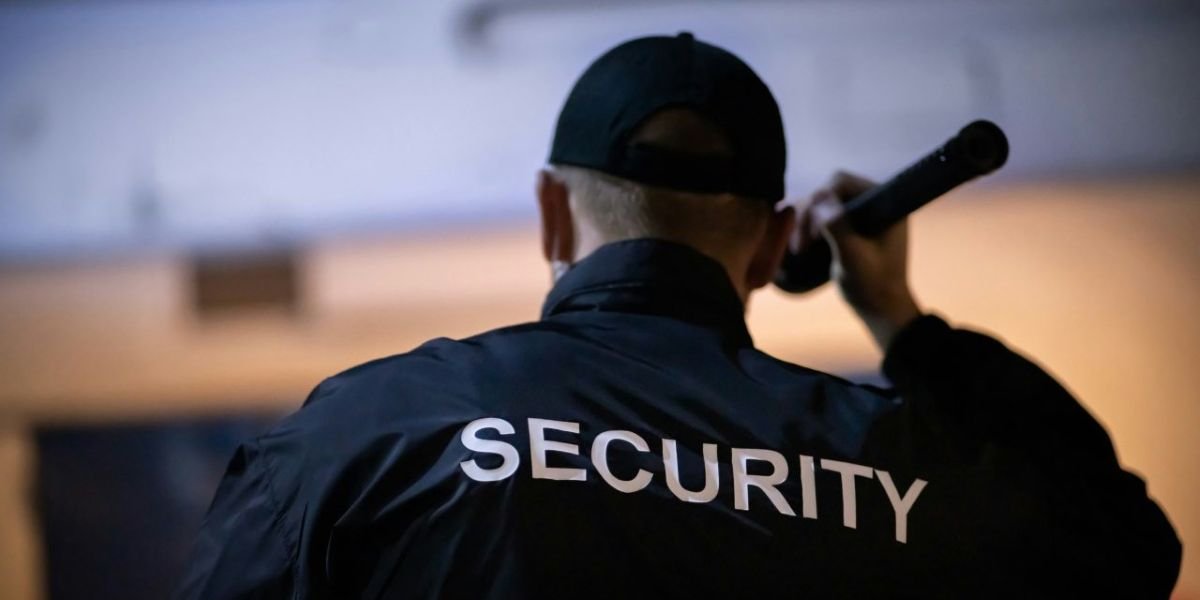
Private security is often associated with stern faces, raised voices and a show of force. SK Security, a guard and patrol company headquartered in Kansas City, Kansas, has built its reputation on a different idea. Its guiding phrase, “Safety with a Smile,” holds that officers can be firm, prepared and ready to act while still being friendly, calm and respectful toward everyone they meet.

That philosophy shapes how the company hires and trains officers, how it runs its round-the-clock dispatch center, how its patrol vehicles look on the street, and how its personnel treat vulnerable people on client properties. This article looks at the thinking behind SK Security’s day-to-day operations and the systems it uses to apply the same standards across offices in seven states.

Where the Phrase Came From

“Safety with a Smile” began with the personality of the company’s founder and chief executive, Sidney Kile, who has a natural habit of smiling, approaching people positively and trying to lower the tension in a room. Over time that personal trait became the company’s central operating phrase. It applies to everyone at SK Security, from guards and dispatchers to supervisors, managers and administrative staff.

The company is careful to explain what the phrase does not mean. It is not permission to look the other way or to avoid enforcing a client’s rules. Instead, it reflects a belief that authority, preparation and decisive action can sit comfortably alongside friendliness and respect. In practice, that means an officer who greets visitors warmly in the morning is expected to be just as ready to respond firmly when a situation calls for it.

Security Officers, Not Police

One of SK Security’s firmest principles is that its people are not police officers and should never act as though they are. Personnel are expected to understand the limits of their authority under private security licensing rules, property rights, client contracts and the law. Kile has said that the company’s uniforms, vehicles, titles and standards of conduct are deliberately designed to identify SK Security as a private organization and to avoid any confusion with law enforcement.

Licensing reinforces that line. In Kansas City, Missouri, for instance, applicable officers are licensed through the Kansas City Missouri Police Department’s Private Officers Licensing Unit, but that credential does not turn a private officer into a police officer or grant broad law enforcement powers. Whether an SK Security officer may detain, remove or question someone, or use force, depends on state law, the officer’s license classification, the property owner’s rights, the terms of the contract and the facts of the situation.

De-escalation Comes First

SK Security trains its officers to treat de-escalation as the first tool rather than the last. Officers are expected to communicate clearly, stay calm and treat people with dignity, whatever their social or economic circumstances. Physical contact is reserved for situations involving imminent harm, a lawful basis for detention or another legally justified operational need.

After a significant encounter, company leaders encourage officers to reflect on a simple question: could the situation have been resolved without physical contact? The aim is not to second-guess officers who acted properly, but to build habits that keep encounters as safe as possible for everyone involved. At venues that do not allow firearms, the company has equipped its officers with less-lethal tools so they remain prepared without carrying a gun.

From Applicant to Officer

Becoming an SK Security officer involves several steps before anyone is assigned to a post. Applicants complete an interview and a drug screening, then go on a ride-along with a supervisor to see the work firsthand before applying for the security license their jurisdiction requires.

Training covers a broad range of skills: de-escalation, report writing, defensive tactics, use of force, legal authority, customer service, medical response, equipment use and the specific procedures of each site. Officers who carry firearms also receive training in firearms safety and proficiency. Front Line Academy and Apparel, a separate company, supports SK Security’s training and professional standards. The company has also reported being approved for FirstNet, the national communications network built for first responders.

A Dispatch Center That Never Closes

Behind the officers in the field is a centralized dispatch function that runs 24 hours a day. Dispatchers coordinate officers, supervisors and patrol vehicles, handle client access requests, monitor cameras, manage incident response and carry out safety checks on employees working alone. For clients and field staff, this means there is always someone to call, not just during office hours.

That constant availability matters in a business where needs change quickly. Company leaders have said that clients often ask for coverage the same night or the next day, at times when police or other providers may not be able to respond on short notice. Dispatch also absorbs the everyday problems of a large workforce, from last-minute call-offs to alarms and access issues, without waiting for an office to reopen.

Field supervisors work alongside dispatch. They inspect sites, check the quality of service, review reports and respond to serious incidents. Company leaders are expected to be visible to employees and clients rather than managing from behind a desk, and SK Security credits part of its growth to treating scheduling, documentation, fleet readiness and response coverage as core business systems rather than informal habits.

Visibility as a Deterrent

SK Security’s patrol fleet is its most recognizable feature. The company operates more than 80 dedicated patrol vehicles, part of a wider set of over 100 vehicles and operational assets. Patrol officers make both scheduled and randomized checks, respond to alarms, document what they find and provide a moving presence across one property or several.

The vehicles carry distinctive branded wraps, and uniforms are designed to be clean, consistent and easy to recognize. Kile has described this branding as an operational advantage rather than just marketing: a clearly marked patrol vehicle can discourage crime and lets clients and neighbors see that security is on site. The company pairs that visible presence with an emphasis on urgency, reliability and accountability.

In March 2026, the company added a new kind of asset: its first helicopter. Operated as part of an aviation security unit, the SK Security Helicopter is used to support security posts when appropriate, move executives between markets more quickly and raise the company’s public profile. The company notes that the aircraft does not mean it offers airport or fixed-base operator security as a separate service.

Accountability in Writing

With offices in seven states, keeping standards consistent is a constant challenge. SK Security relies on written records to do it. Officers file daily activity reports and incident reports, giving both clients and company leaders a clear record of what happened on each shift.

The company backs those records with a structured approach to conduct. It uses progressive discipline, a defined list of zero-tolerance violations, confidential investigations and supervisory review, along with recognition for officers who perform well. These systems are meant to set the same expectations everywhere, even though licensing rules and client requirements vary from one market to the next.

Enforcing Rules With Compassion

Kile has described SK Security as a business with a heart for the communities it serves. The company expects measurable results and reliable performance, but it also recognizes that many security encounters involve people dealing with poverty, homelessness, illness, fear or crisis.

One practice illustrates this approach. During colder months, SK Security personnel have handed out support bags to unhoused people who could not stay on a client’s property. The bags contain coats, hats, gloves, hand warmers and blankets. The officer still enforces the property’s rules, but does so without treating a vulnerable person as a threat.

Beyond the Contract

Community involvement is presented as part of the reason SK Security exists, not as a side activity. The company has supported children’s soccer teams such as the Kansas City Futbol Club, school programs and youth running groups such as the Bronx Burners. It has backed veterans’ organizations including Team Red, White & Blue, as well as mental health awareness, breast cancer awareness and first responder causes.

It has also teamed up with major clients to host barbecues and provide school supplies to children, taken part in blood drives, toy drives and coat drives, and contributed to the Harvesters food donation program. On several occasions it has donated security services to events and nonprofit organizations.

In 2024, Kile created CareForCops, an initiative that supports law enforcement officers, first responders, their families and communities affected by line-of-duty deaths, disabling injuries or other serious events. Its programs include paying insurance deductibles, covering funeral costs, offering scholarships and delivering home-cooked meals. The initiative reflects the company’s respect for public safety personnel, while SK Security continues to keep a clear line between private security and law enforcement.

A Philosophy in Practice

SK Security’s approach rests on a balance that is easy to describe and harder to deliver: officers who are visible, prepared and willing to act, but who lead with courtesy, calm and respect. The company’s dispatch systems, training, written accountability and community work are all designed to make that balance hold up across hundreds of employees and many different markets. For a company that began with one vehicle and a founder who liked to smile at the people he met, “Safety with a Smile” remains both a slogan and an operating standard.

Live Music and Entertainment at The Village Door

At John Wehner’s Village Door® in Miramar Beach, Florida, live music is not an added feature bolted onto a restaurant concept. It is the foundation the entire venue was built around. Long before opening the doors of the waterfront restaurant now known throughout the Emerald Coast, founder John Wehner spent decades immersed in live entertainment, and that background continues to shape nearly every aspect of how the venue operates, from its layout to its year-round programming.

A Foundation in Live Performance

Wehner’s relationship with live music began early. He picked up a set of drums as a child and was playing professionally as a teenager. What started as a childhood interest grew into a career spent on some of the most demanding stages in the country. Wehner built his reputation operating nightclubs and live music venues on New Orleans’ Bourbon Street, an environment that leaves little room for a mediocre show. Bourbon Street audiences expect high energy and polished performances night after night, and it was there that Wehner developed his understanding of what actually makes a live music venue succeed.

During that period, Bourbon Street was home to dozens of live music nightclubs competing for audience attention. If a band failed to capture a patron’s interest, that guest could simply walk out the door and into another venue. Wehner developed a format designed to hold an audience through the whole night. The crowd came early and stayed late at John Wehner’s Famous Door.

His flagship venue during this period was the Famous Door Dixieland Club, where he helped shape a high-energy live music experience built around strong production values and consistent performance quality. Rather than treating music as background atmosphere, Wehner approached it as the central draw of the venue, with staging, lighting, video, sound, and band booking all built around delivering a genuine live entertainment experience rather than filler noise for a bar or restaurant.

Wehner approached producing the bands he assembled with the same attention to detail a record producer would bring to an album. He began by selecting songs that would connect with audiences, then assembled musicians and vocalists who could best bring those songs to life. He was also directly involved in shaping the venue’s sound from behind the mixing board, developing the audio signature associated with his venues. The final element was the stage production itself, incorporating professional lighting, video, and production elements of the kind used in larger concert settings.

That distinction, between a venue that happens to have music and a venue built specifically for live performance, would go on to define his next project as well.

Bringing the Concept to Destin

In 2000, representatives from Intrawest, the parent company of Sandestin Golf and Beach Resort, visited Wehner’s venue three nights in a row in New Orleans and saw firsthand what he had built on Bourbon Street. Impressed by the concept, they invited him to bring a version of it to the Sandestin Resort in Destin, Florida, a growing destination along the Emerald Coast known for its beaches and family tourism, but without a dedicated live entertainment venue of its kind.

Wehner accepted, and the Sandestin location opened in August 2002 as John Wehner’s Famous Door, carrying the name and spirit of his New Orleans roots to a new market. Over time, the venue evolved into what is known today as John Wehner’s Village Door®, but the underlying vision never changed. The goal was to combine live music, dining, and a genuine social atmosphere in a single space, rather than treating each as a separate offering.

That vision has carried the venue through more than two decades of operation inside Sandestin Golf and Beach Resort and The Village of Baytowne Wharf, where it has become a long-running live entertainment destination along the Emerald Coast.

John Wehner was featured on the cover of Nightclub & Bar magazine in November 2002. The trade publication, which covers the bar and nightclub industry, highlighted Wehner’s live entertainment model, which combined highly produced live music with the dance and party format he developed on New Orleans’ Bourbon Street.

Entertainment Built Into the Venue, Not Added to It

One detail sets The Village Door apart from many restaurants that later add a stage or a weekend performer to their offerings. The Village Door was built specifically for live entertainment from the start. That distinction is not simply a matter of history, and it shows up in the physical design of the space itself.

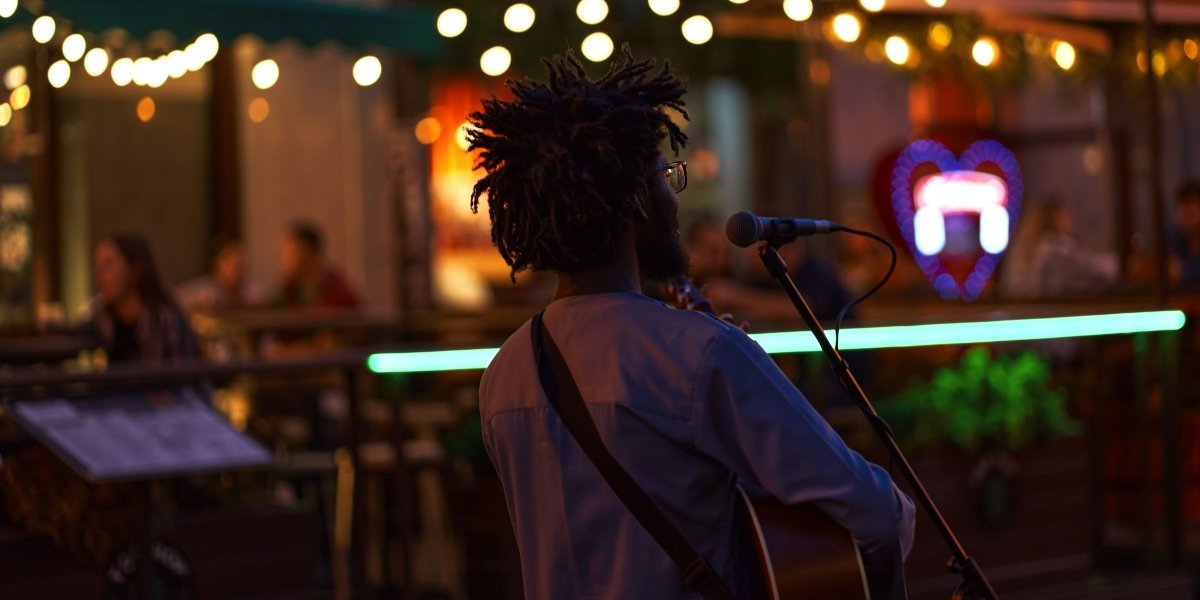
The venue includes both an outdoor stage, known as the Dockside stage, positioned along the marina overlooking Choctawhatchee Bay, and an indoor stage and dance floor built for evening performances and touring acts. Few restaurants are designed with two dedicated performance spaces from the outset, and that dual setup allows The Village Door to offer live music throughout the entire day, moving naturally from a relaxed waterfront lunch and dinner soundtrack into a high energy nightlife experience after dark.

The indoor space in particular, with its bar, performance stage, and room for dancing, was designed to function as a genuine nightlife venue rather than simply a restaurant with a corner reserved for a musician. That level of intentional production design extends directly from the standards Wehner developed running venues on Bourbon Street, where the performance space itself was always treated as central to the guest experience.

Music Throughout the Day and Night

Live music at The Village Door is not limited to weekends or special occasions. The outdoor Dockside stage features live performances seven days a week, giving daytime guests a consistent soundtrack while they dine overlooking the marina and its lineup of yachts. For families, tourists, and groups looking for a relaxed waterfront meal, that steady presence of live music adds an element of entertainment to what might otherwise be a standard lunch or early dinner.

As the day turns into evening, the venue’s identity shifts along with it. The energy moves indoors, where custom-built house bands and touring performers take the stage for a more concentrated nightlife experience. The bar, dance floor, and stage combine to create an atmosphere aimed at both locals looking for a regular night out and visitors seeking something more lively than a typical dinner reservation. This day-to-night rhythm, dining and live music by the water in the afternoon, full entertainment and dancing at night, is central to how The Village Door sets itself apart from other restaurants in the area.

A Venue Built on Community

Beyond the stages, the sound systems, the intelligent lighting, the video systems, and the nightly performance schedule, what continues to define The Village Door is the sense of community that live music has always been meant to create. For Wehner, the goal was never simply to book acts and fill a room. It was to build a place where people could gather, connect, and share memorable experiences around music chosen carefully for the audience, in the same spirit that drew him to the drums as a child and later shaped the venues he ran in New Orleans.

That community-driven approach shows up in the venue’s private events and seasonal celebrations as well, which extend the same live entertainment concept to weddings, parties, and other gatherings throughout the year. Whether a guest is stopping by for an afternoon on the Dockside stage or heading inside for a full night of live music and dancing, the underlying idea remains the one Wehner brought with him from Bourbon Street. Live music is not a backdrop. It is the reason people come together and share experiences.

More than two decades after opening, that founding philosophy still runs through every part of The Village Door’s entertainment program, from its dual-stage layout to its year-round live performance schedule, making it a defining feature of the venue’s identity along the Emerald Coast.

Year-Round Programming

Unlike seasonal entertainment venues that scale back during the off-season, The Village Door maintains live music programming throughout the year. The Dockside stage schedule runs seven days a week regardless of season, which reflects Wehner’s long-standing belief that live entertainment should be a dependable draw rather than an occasional bonus. That reliability has helped the venue build a loyal following among both full-time residents of the area and repeat visitors who plan return trips around specific weekends.

Indoor programming follows a similar philosophy, with touring bands and live performers booked regularly rather than sporadically. The dual-stage setup allows the venue to host a wider range of acts than a single-stage restaurant could manage, from acoustic and smaller ensemble performances suited to the outdoor dockside setting to full bands and higher-energy shows better suited to the indoor stage and dance floor.

Private Events and Seasonal Celebrations

Beyond its regular entertainment schedule, The Village Door also hosts private events and seasonal celebrations that draw on the same live music infrastructure built into the venue. Weddings, corporate gatherings, and holiday celebrations benefit from a space already equipped with a stage, concert lighting, video and sound systems, and a dance floor, rather than requiring outside vendors to bring in portable equipment. For hosts, that built-in capability simplifies planning. For guests, it means private events at The Village Door carry the same production quality associated with the venue’s regular live shows.

Seasonal celebrations in particular lean into the venue’s identity as a gathering place. Holiday-themed live music events and seasonal parties extend the same community-focused approach that defines the venue’s everyday programming, giving both locals and visiting families additional reasons to return throughout the year beyond a standard dinner reservation.

A Legacy Rooted in Bourbon Street

It is difficult to separate The Village Door’s entertainment identity from Wehner’s own history as a musician and venue operator. The standards he developed running John Wehner’s Famous Door on Bourbon Street, an environment built entirely around consistent, high-quality live performance, remain embedded in how The Village Door operates today, from the layout of its stages to the expectations placed on the entertainers Wehner personally hires.

That lineage is part of what distinguishes John Wehner’s Village Door from other restaurants along the Emerald Coast that have added music as a secondary feature over time. For Wehner, live entertainment was never an accessory to the dining experience. It was the starting point, the original reason the venue existed, and food and drink were built around it rather than the other way around. That founding order, music first, has continued to define The Village Door as it has grown from its 2002 opening into one of the area’s established dining, live music and entertainment destinations.