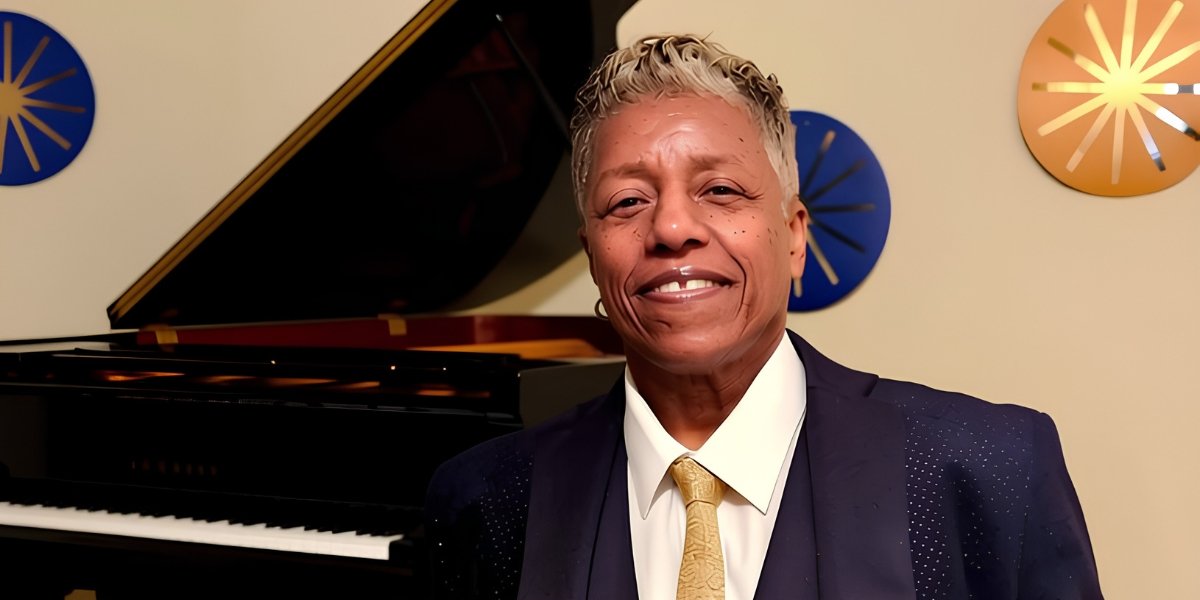
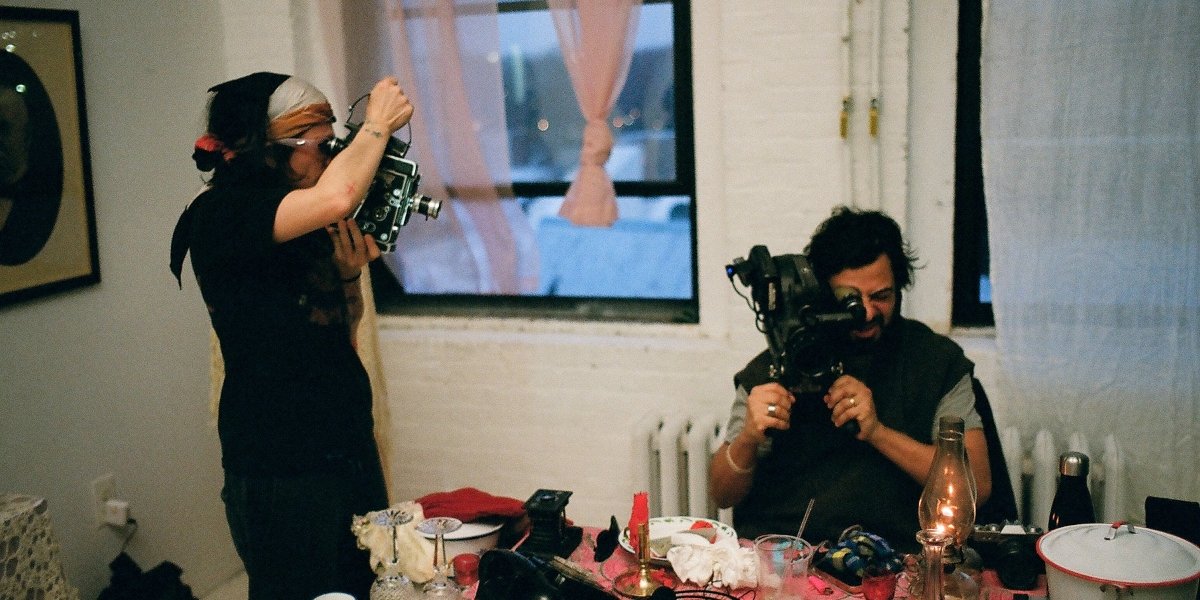
When Colombian composer, and visual artist Julián De La Chica began working on Piret, he did not set out to make a film shaped by a string quartet. In fact, much of the film’s musical identity already existed in his mind, and its central piano material had long been composed. What changed was not the film itself, but the music that ultimately found it.
Watch the official trailer.
For more than two decades, the New York-based artist has moved fluidly between disciplines. His body of work encompasses chamber music, opera, installation art, cinema, and, more recently, literature with his novel God’s Punishment. Despite these different forms, his work consistently circles the same enduring questions: What remains after memory begins to fracture? How does silence alter our perception of time? And what becomes of identity when it exists between languages, countries, histories, or states of mind?
Those questions converge in Piret, a black-and-white feature photographed on Kodak Double-X 16mm film. Set in a liminal New York that feels suspended between memory and reality, the film follows an Estonian immigrant contending with motherhood, solitude, and psychological uncertainty. Rather than relying on conventional narrative, Piret unfolds through atmosphere, repetition, and absence, qualities long familiar to listeners of De La Chica’s music.
The film itself emerged through an equally organic process. Cuban filmmaker and photographer Liliet Reyes, after discovering De La Chica’s music, proposed collaborating on a cinematic project. What began as a conversation gradually evolved into Piret. The production later welcomed filmmaker and former Cuban political prisoner Anyelo Troya, whose distinctive command of analogue 16mm cinematography became central to the film’s visual language. The title role is performed by Estonian artist and former model Anni Jürgenson, whose restrained and deeply interior performance anchors the film with remarkable emotional precision.
The collaborative nature of the project extends well beyond its principal cast. Chilean colorist Ignacio Cabrera shaped the film’s monochromatic palette, while Taiwanese sound designer and re-recording mixer Kevin Yang developed its immersive soundscape, creating a work in which image and sound exist in constant dialogue rather than hierarchy.
What makes Piret particularly compelling, however, is its unexpected conversation with another major release arriving this October: After Beauty – The Complete String Quartets, Op. 7, the first complete recording of De La Chica’s quartets by the Kahlo Quartet.
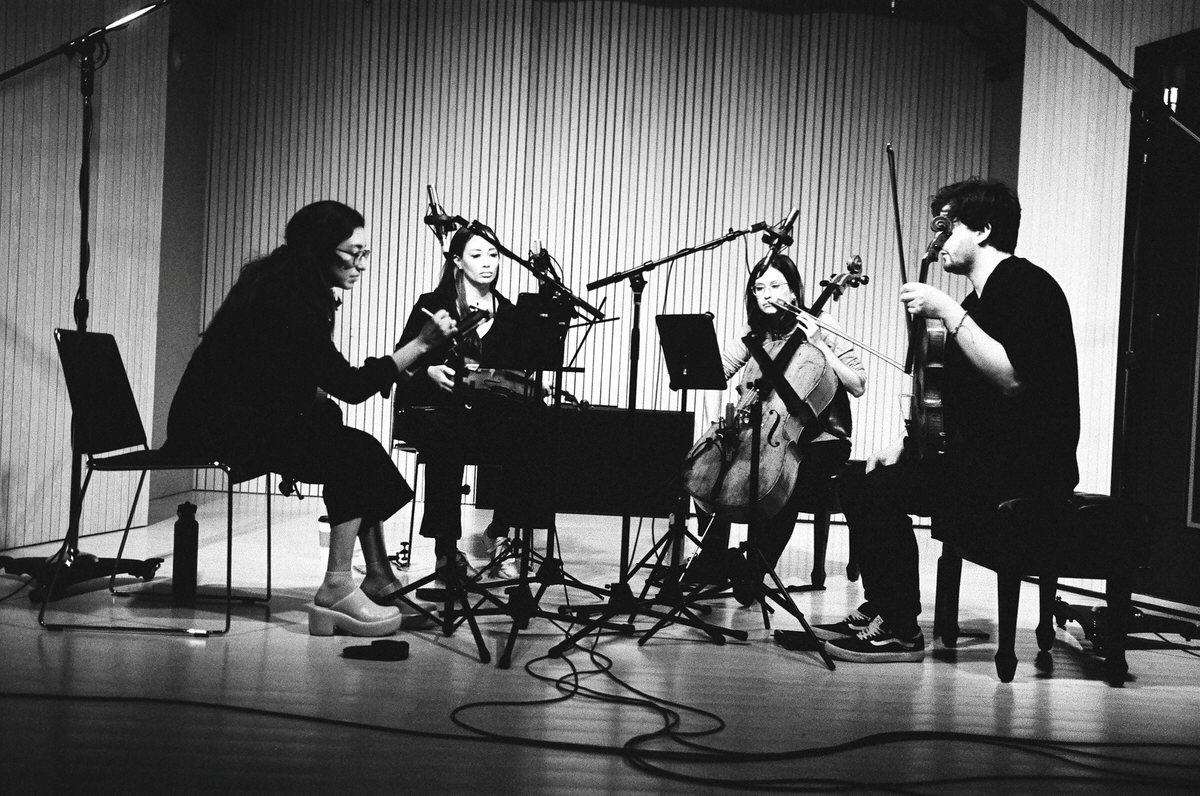
For the composer, the relationship between the album and the film was never planned. It was discovered.
“For me, music is real,” De La Chica says. “I experience it almost as an independent presence, a metaphysical, if also metaphorical, entity. It may sound naïve, but remarkable things can happen when you allow yourself to listen instead of trying to control it.”
De La Chica continues:
“I already had music in mind for Piret. But during post-production, the film happened to intersect with the Kahlo Quartet’s recording sessions. As Manuela, the ensemble’s founder, once observed, the music carries a certain sense of hopelessness. That stayed with me. I remember thinking, Could this actually be Piret’s music? I placed the final movement against the images, and within seconds I understood that I had been searching in the wrong place all along. It wasn’t a score looking for a film. It was a film waiting for its music.”
That realization gives both projects an unusual resonance. Heard independently, the quartets inhabit a world of suspended time, restrained gesture, and psychological tension. Experienced alongside Piret, they feel less like a soundtrack than the film’s hidden architecture, as though both works had been moving quietly toward one another long before either was complete.
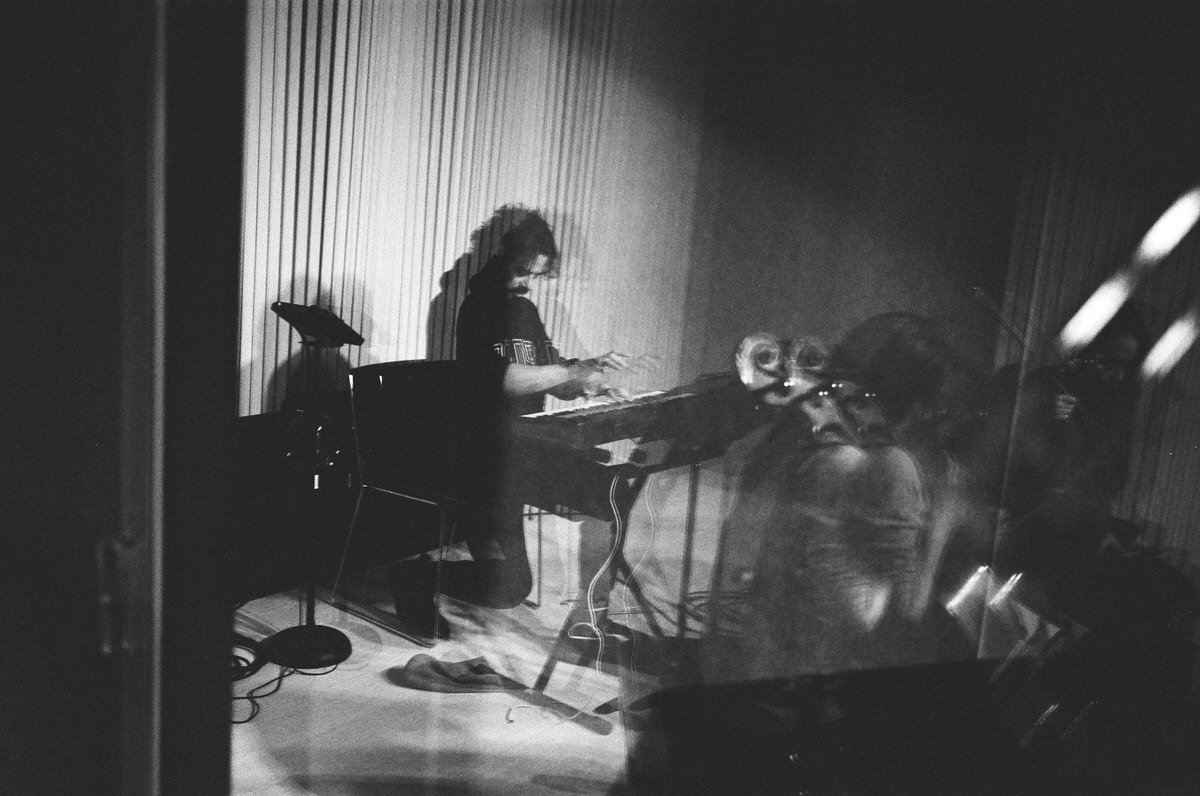
Rather than presenting cinema and concert music as separate disciplines, De La Chica’s recent work suggests something more integrated. Both are manifestations of the same artistic language. One is written in sound. The other is written in light. Both are built from silence.
Only a week into its international festival journey, Piret has already received two Awards of Recognition at the 17th IndieFEST Film Awards, honoring Anni Jürgenson for Leading Actress and Kevin Yang for Sound Design and Sound Mixing. As the film begins its journey across the international festival circuit, After Beauty – The Complete String Quartets, Op. 7 moves toward its October release. Together, they reveal two expressions of the same artistic language, one written in light, the other in sound, offering perhaps the clearest portrait yet of an artist whose work is defined not by moving between disciplines, but by revealing how deeply those disciplines have always belonged to one another. Piret and After Beauty – The Complete String Quartets, Op. 7 are released through Irreverence Group Music / @irreverencegroupmusic.