The Chicago Journal

Ariana Grande Tells Chicago Crowd Her Career Break Was Planned Long Before Public Scrutiny Intensified


Ariana Grande addressed speculation about her upcoming career hiatus directly from the stage of the United Center in Chicago on August 3, 2026, telling an arena full of fans that the decision was made “a long time ago” from “a thoughtful and empowered place.” The speech, delivered between songs during her Eternal Sunshine Tour, came one day after her management confirmed that Grande will step away from public-facing work following the tour’s final date on September 1 in London. The remarks were the singer’s first public response to a wave of online commentary connecting the break announcement to scrutiny of her appearance surrounding the release of her eighth studio album, petal.

Key Takeaways

  • Grande told the Chicago audience that her break was “not a reactive or impulsive thing” and that the plan was made “quietly” well before recent events, including the scrutiny that followed the July 31 release of her album petal.
  • A representative for Grande confirmed on August 2 that she “will be taking a step back from visibility” after the Eternal Sunshine Tour concludes, citing “endless, ongoing public scrutiny” as the reason for the planned reset.
  • Grande’s full onstage remarks emphasized that “multiple things can be true at the same time,” that “boundaries need to be set,” and that the tour remains “the greatest experience of my professional and creative life.”
  • The Eternal Sunshine Tour, Grande’s first since the 2019 Sweetener World Tour, is a 41-date run through North American arenas and five London O2 Arena performances, ending September 1.
  • The speech was captured on video by audience members and shared by Grande’s official social media team, generating widespread attention across entertainment media and fan communities.

What Grande Said on Stage in Chicago

Grande paused between songs at the United Center and read from her phone, telling the crowd she “wanted to speak to my fans directly” and “clear the air.” The full remarks, transcribed from video shared by Grande’s official channels, opened with an acknowledgment that announcements filtered through representatives can take on a life of their own.

“Sometimes when a story comes out that’s not directly from me, things can get a little blown out of proportion,” Grande said. “It means a lot to me to let you know how I’m feeling and not let the world project.” She then addressed the timeline directly: “The announcement that was made yesterday was not a reactive or impulsive thing. It is something that I had decided to plan that I had quietly made a long time ago, and it’s a decision that was made from a thoughtful and empowered place.”

Grande went on to push back against the narrative that online negativity was undermining her album release week. “I heard that my fans were worried that negativity was ruining things for me,” she said, “but I just have to say that could not be more the f— opposite. Honestly, this is not what that is.” The remark drew loud cheers from the crowd. She concluded: “Multiple things can be true at the same time. Yes, boundaries, they need to be set. Human beings can need a break sometimes. And also, this can be, and will continue to be, the greatest experience of my professional and creative life.”

The Management Statement That Preceded the Speech

The Chicago speech came one day after a statement from Grande’s representative confirmed the outlines of the planned break. “Ariana will be taking a step back from visibility after she completes the Eternal Sunshine Tour,” the representative said in a statement shared with multiple outlets on August 2. “She looks forward to finishing the tour and ending it on a high note, both healthily and happily, and then taking a much-deserved break from public-facing work and appearances, which has led to endless, ongoing public scrutiny.”

The statement added that “this tour has been a beautiful experience for her” and that “she loves her fans and has loved every minute of this tour so much.” No timeline was given for the duration of the break, and no specific future projects were confirmed or canceled. The wording positioned the hiatus as a deliberate pause from public visibility, not a retirement from music or performing.

A separate source close to the production described the physical demands of the Eternal Sunshine Tour, noting that Grande “performs a very physical show” with “a lot of athleticism involved.” The comment suggested that the decision also carries a physical recovery dimension beyond the public visibility question.

The Context Behind the Timing

The break announcement landed during what should have been a triumphant week for Grande. Her eighth studio album, petal, released on July 31 through BabyDoll Music and Republic Records, arrived to anticipation that had been building since the rollout began in April with the lead single “Hate That I Made You Love Me.” That single debuted at No. 1 on both the Billboard Hot 100 and the UK Singles Chart, positioning petal as one of 2026’s most commercially significant releases.

However, the music video for the album’s title track, also released around the July 31 date, drew immediate public commentary about Grande’s appearance. The scrutiny, concentrated on social media but amplified across entertainment media, became the dominant conversation around the release rather than the music itself. That dynamic created the perception, which Grande’s Chicago speech directly disputed, that the break announcement was a response to the backlash rather than a pre-existing plan.

Grande had hinted publicly at the break months earlier. In a July Instagram post, she wrote: “Very silly of you all to assume that just because I have my hands full with many things that I plan to abandon singing and music. It is and has always been my lifeline. There will need to be room made for all of it.” The post suggested that the break was already in motion before any of the scrutiny around petal materialized.

The Eternal Sunshine Tour and Grande’s Seven-Year Gap

The Eternal Sunshine Tour represents Grande’s return to live performance after the longest gap of her career. Her previous tour, the Sweetener World Tour, wrapped in December 2019. In the intervening years, Grande released two studio albums (Positions in 2020 and Eternal Sunshine in 2024), starred as Glinda in both Wicked films (2024 and 2025), earned her first Academy Award nomination, and filmed the upcoming fourth Meet the Parents installment alongside Ben Stiller.

The 41-date tour launched on June 6, 2026, in Oakland, California, and has run through major North American arenas including multiple nights in Los Angeles, Brooklyn, and Chicago. The tour supports Eternal Sunshine (2024), its deluxe edition Brighter Days Ahead (2025), and the newly released petal. It concludes with five performances at London’s O2 Arena, with the final show on September 1.

During an Apple Music 1 interview in March 2024, Grande had spoken about “redefining my relationship to touring” and expressed that she missed performing live. The decision to launch a tour after seven years away reflected a genuine desire to reconnect with audiences, which makes the Chicago speech’s emphasis on the tour being “the greatest experience of my professional and creative life” read as consistent with her stated intentions rather than as a departure from them.

What the Break Means for Grande’s Career Timeline

Grande’s management has not specified when the break will end or what it will look like in practical terms. The phrasing “step back from visibility” and “public-facing work and appearances” suggests a retreat from promotional cycles, press, red carpets, and social media presence rather than a formal departure from recording or contractual obligations. Grande’s film career, including the release of Wicked: For Good in November 2026 and the Meet the Parents sequel, will continue to generate public attention regardless of whether she is actively promoting those projects.

For the music industry, Grande’s decision to frame the break around boundaries and sustainability rather than exhaustion or conflict reflects a shift in how artists at the highest commercial level communicate with their audiences. The Chicago speech was notable not for what it revealed but for how it was delivered: directly, from a stage, to the people who buy the tickets, rather than through a publicist or a carefully edited social media post. The choice to address the moment in a live, unfiltered setting gave the remarks an immediacy that a written statement could not replicate.


FAQs

Why Is Ariana Grande Taking a Break?

Grande’s management said she will take “a much-deserved break from public-facing work and appearances, which has led to endless, ongoing public scrutiny.” Grande herself clarified on August 3 that the decision was planned well in advance and was “not a reactive or impulsive thing,” made from “a thoughtful and empowered place.” No specific duration for the break has been announced.

When Does the Eternal Sunshine Tour End?

The Eternal Sunshine Tour concludes on September 1, 2026, with the fifth and final performance at London’s O2 Arena. The 41-date tour launched on June 6 in Oakland, California, and is Grande’s first tour since the Sweetener World Tour ended in December 2019. The break from public visibility is expected to begin after the final show.

What Is Ariana Grande’s New Album Petal?

Petal is Ariana Grande’s eighth studio album, released on July 31, 2026, through BabyDoll Music and Republic Records. Co-written and executively produced by Grande and Ilya Salmanzadeh, with additional production from Max Martin, the album was recorded between January and April 2026 at studios in New York, Los Angeles, and Stockholm. Its lead single, “Hate That I Made You Love Me,” debuted at No. 1 on the Billboard Hot 100.


Systems Over Improvisation: How Joel Yi’s Cyber Background Shapes the Way He Builds AI

Most founders in artificial intelligence arrive from software engineering or research. Joel Yi took a different route. Before he founded the AI company DeployAIBots, he served as one of the first cyber officers in the U.S. Army’s cyber branch, and the way he thinks about building artificial intelligence still carries the imprint of that environment. For Joel Yi, the lessons of cyber operations were not primarily about technology. They were about systems, reliability, and decision-making under conditions where mistakes are costly.

Joel Yi’s path into AI began earlier than his military service. He holds a bachelor’s degree in computer science and, by his own account, started building artificial intelligence systems before the field entered the mainstream, including a model he developed in 2018 to identify rare plant species, which he says achieved high accuracy at a time when such tools were not yet common in business settings. That early work established a pattern that would define his career: an interest in building systems that perform a defined task precisely, rather than in theorizing about what AI might one day do.

His time in the Army’s cyber branch sharpened that orientation. Working on network defense and monitoring foreign cyber threats aimed at U.S. infrastructure, Joel Yi operated in a domain where systems are expected to function continuously and correctly, and where the consequences of failure are immediate. Reflecting on that period, he has drawn a lesson that now sits close to the center of how he builds: that systems matter more than individuals. In an environment where outcomes cannot depend on any single person being present or at their best, the reliability has to live in the system itself.

That principle maps directly onto DeployAIBots. The company builds what it calls agentic AI, systems designed to take action across business processes with minimal human oversight, managing workflows and maintaining consistency rather than waiting for a person to direct each step. The emphasis on consistency is not incidental. A system meant to operate on its own has to behave predictably every time, the same way a defensive system has to hold regardless of who is on shift. Joel Yi’s insistence that an autonomous system be dependable before it is impressive reflects a sensibility formed well before he started the company.

The discipline Joel Yi brings to building is something he has tied explicitly to his military experience. He has described that environment as one that stripped away any sense of entitlement and demanded that he follow through on a plan even when he did not feel like it, a habit of execution he distinguishes from improvisation. Leadership, in the lessons he took from that period, was less about being liked than about being accountable for results, particularly when circumstances were difficult, and about making decisions quickly when other people were depending on the outcome. Those are not the instincts of someone enchanted byAI’s possibilities so much as someone focused on whether a system performs as promised.

There is a security dimension to this background as well, and Joel Yi has indicated it informs how DeployAIBots approaches its work. A founder who spent his early career defending networks against foreign threats tends to think about automation differently from one who has only ever built features. The company has framed its systems as built to be both scalable and secure, and Joel Yi’s history in cyber operations is the stated source of that priority. When a system is designed to act autonomously inside a business, the question of whether it can be trusted, not only to work, but to work safely, becomes central, and it is a question his background trains him to ask first.

This systems-first worldview also explains Joel Yi’s broader skepticism toward AI as spectacle. He has argued that much of the corporate engagement with artificial intelligence stalls at the level of experimentation, where tools feel useful but the underlying operation is unchanged. That critique is consistent with a mind shaped by cyber operations, where activity that does not produce a reliable outcome is simply activity. For Joel Yi, the measure of an AI system is not how advanced it appears but whether it executes its function consistently, and DeployAIBots reports that its own internal systems save the company more than 150 hours of work per week, a figure he offers as the kind of concrete result the approach is meant to produce.

The result is a founder whose technical philosophy is unusually grounded in discipline rather than novelty. Where much of the AI industry markets capability and potential, Joel Yi tends to talk about reliability, structure, and accountability, the vocabulary of someone who learned to build in an environment where systems had to hold. His company’s bet on agentic AI, software trusted to act on its own, is in many ways the logical extension of that training. The systems he builds are meant to be depended on, and the standard he holds them to was set long before he became an entrepreneur.

For organizations evaluating who to trust with autonomous systems inside their operations, Joel Yi’s background offers a particular kind of reassurance. The instinct to ask whether a system is secure, consistent, and reliable before asking whether it is clever is not a marketing posture in his case. It is, by his account, the way he was taught to think, and it is the lens through which he now builds artificial intelligence.

Julián De La Chica and the Inner Architecture of Silence

When Colombian composer, and visual artist Julián De La Chica began working on Piret, he did not set out to make a film shaped by a string quartet. In fact, much of the film’s musical identity already existed in his mind, and its central piano material had long been composed. What changed was not the film itself, but the music that ultimately found it.

Watch the official trailer.

For more than two decades, the New York-based artist has moved fluidly between disciplines. His body of work encompasses chamber music, opera, installation art, cinema, and, more recently, literature with his novel God’s Punishment. Despite these different forms, his work consistently circles the same enduring questions: What remains after memory begins to fracture? How does silence alter our perception of time? And what becomes of identity when it exists between languages, countries, histories, or states of mind?

Those questions converge in Piret, a black-and-white feature photographed on Kodak Double-X 16mm film. Set in a liminal New York that feels suspended between memory and reality, the film follows an Estonian immigrant contending with motherhood, solitude, and psychological uncertainty. Rather than relying on conventional narrative, Piret unfolds through atmosphere, repetition, and absence, qualities long familiar to listeners of De La Chica’s music.

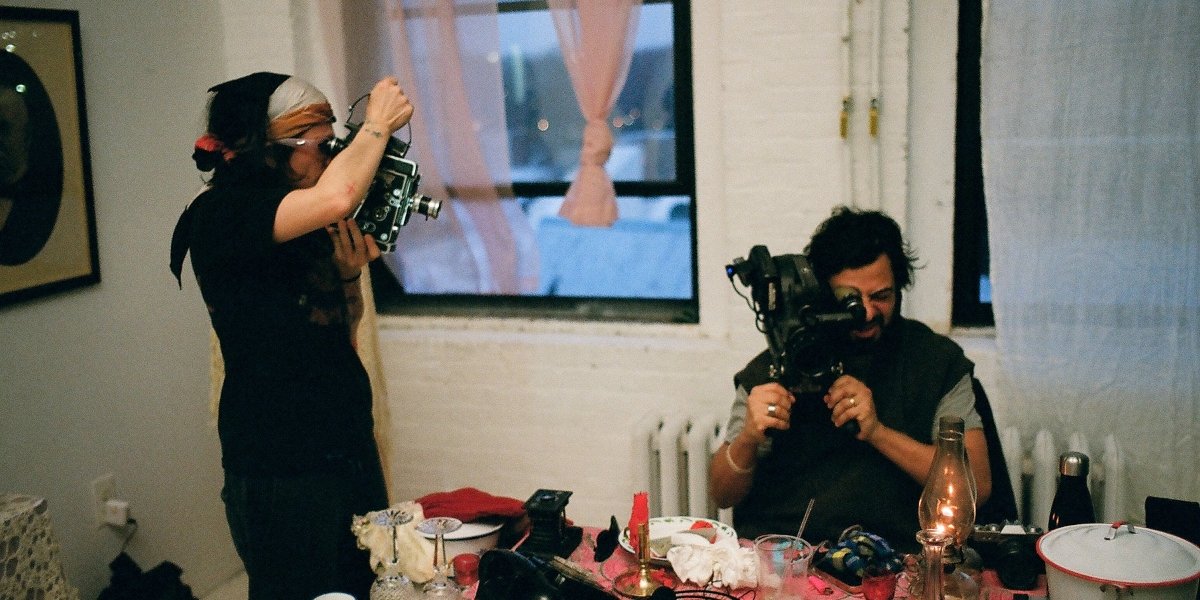
The film itself emerged through an equally organic process. Cuban filmmaker and photographer Liliet Reyes, after discovering De La Chica’s music, proposed collaborating on a cinematic project. What began as a conversation gradually evolved into Piret. The production later welcomed filmmaker and former Cuban political prisoner Anyelo Troya, whose distinctive command of analogue 16mm cinematography became central to the film’s visual language. The title role is performed by Estonian artist and former model Anni Jürgenson, whose restrained and deeply interior performance anchors the film with remarkable emotional precision.

The collaborative nature of the project extends well beyond its principal cast. Chilean colorist Ignacio Cabrera shaped the film’s monochromatic palette, while Taiwanese sound designer and re-recording mixer Kevin Yang developed its immersive soundscape, creating a work in which image and sound exist in constant dialogue rather than hierarchy.

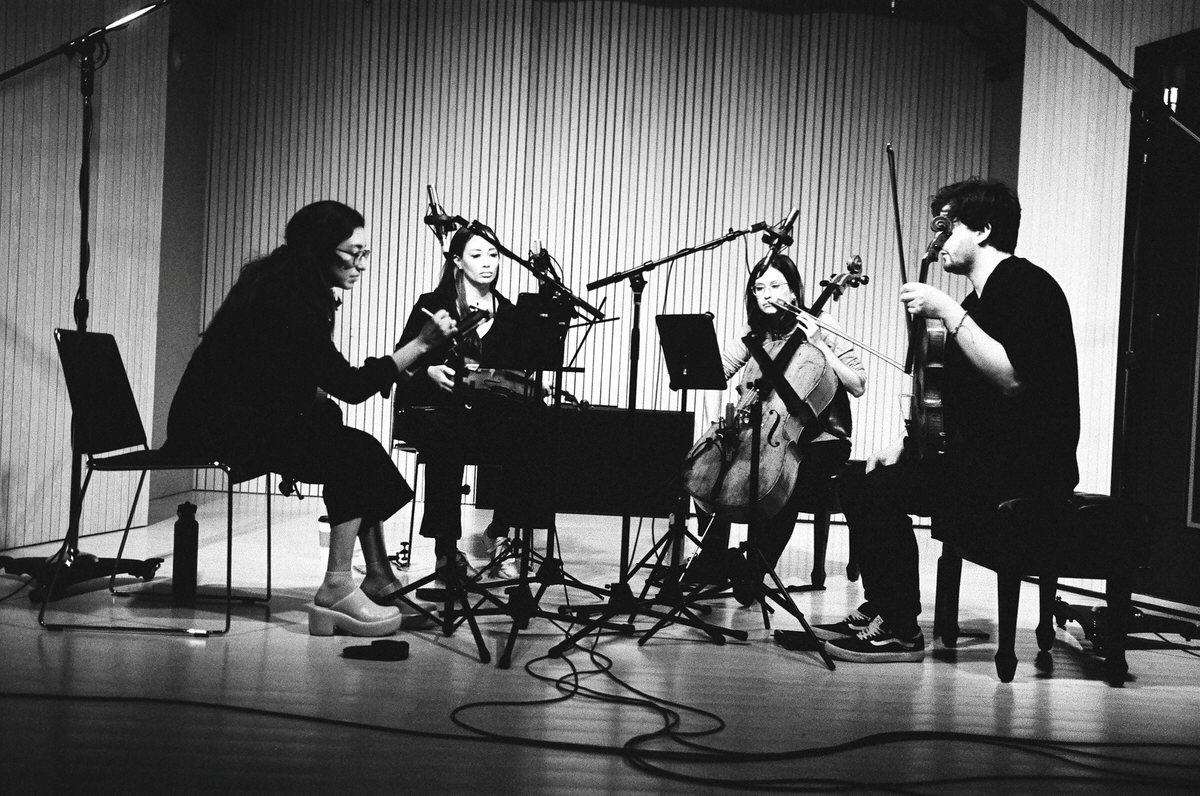
What makes Piret particularly compelling, however, is its unexpected conversation with another major release arriving this October: After Beauty – The Complete String Quartets, Op. 7, the first complete recording of De La Chica’s quartets by the Kahlo Quartet.

Photo Courtesy: Anyelo Troya (Kahlo Quartet)

For the composer, the relationship between the album and the film was never planned. It was discovered.

“For me, music is real,” De La Chica says. “I experience it almost as an independent presence, a metaphysical, if also metaphorical, entity. It may sound naïve, but remarkable things can happen when you allow yourself to listen instead of trying to control it.”

De La Chica continues:

“I already had music in mind for Piret. But during post-production, the film happened to intersect with the Kahlo Quartet’s recording sessions. As Manuela, the ensemble’s founder, once observed, the music carries a certain sense of hopelessness. That stayed with me. I remember thinking, Could this actually be Piret’s music? I placed the final movement against the images, and within seconds I understood that I had been searching in the wrong place all along. It wasn’t a score looking for a film. It was a film waiting for its music.”

That realization gives both projects an unusual resonance. Heard independently, the quartets inhabit a world of suspended time, restrained gesture, and psychological tension. Experienced alongside Piret, they feel less like a soundtrack than the film’s hidden architecture, as though both works had been moving quietly toward one another long before either was complete.

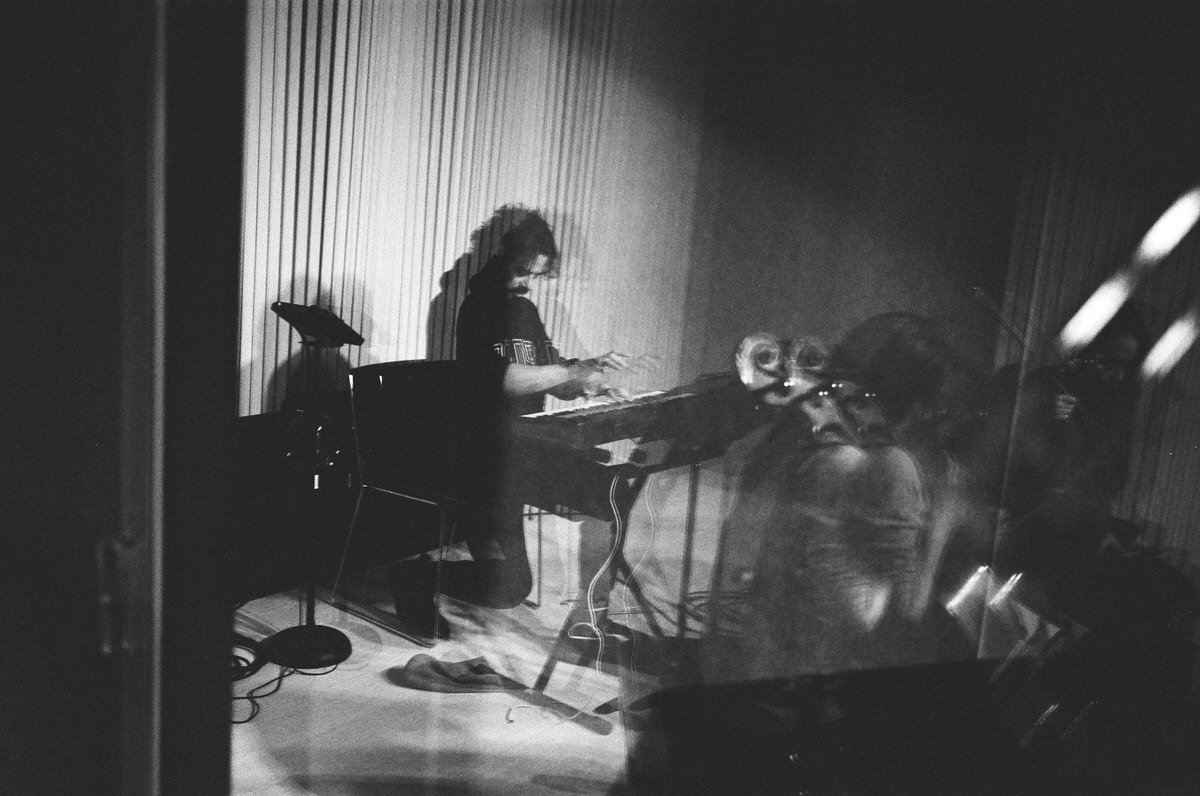
Photo Courtesy: Anyelo Troya (Julián De La Chica)

Rather than presenting cinema and concert music as separate disciplines, De La Chica’s recent work suggests something more integrated. Both are manifestations of the same artistic language. One is written in sound. The other is written in light. Both are built from silence.

Only a week into its international festival journey, Piret has already received two Awards of Recognition at the 17th IndieFEST Film Awards, honoring Anni Jürgenson for Leading Actress and Kevin Yang for Sound Design and Sound Mixing. As the film begins its journey across the international festival circuit, After Beauty – The Complete String Quartets, Op. 7 moves toward its October release. Together, they reveal two expressions of the same artistic language, one written in light, the other in sound, offering perhaps the clearest portrait yet of an artist whose work is defined not by moving between disciplines, but by revealing how deeply those disciplines have always belonged to one another. Piret and After Beauty – The Complete String Quartets, Op. 7 are released through Irreverence Group Music / @irreverencegroupmusic.