
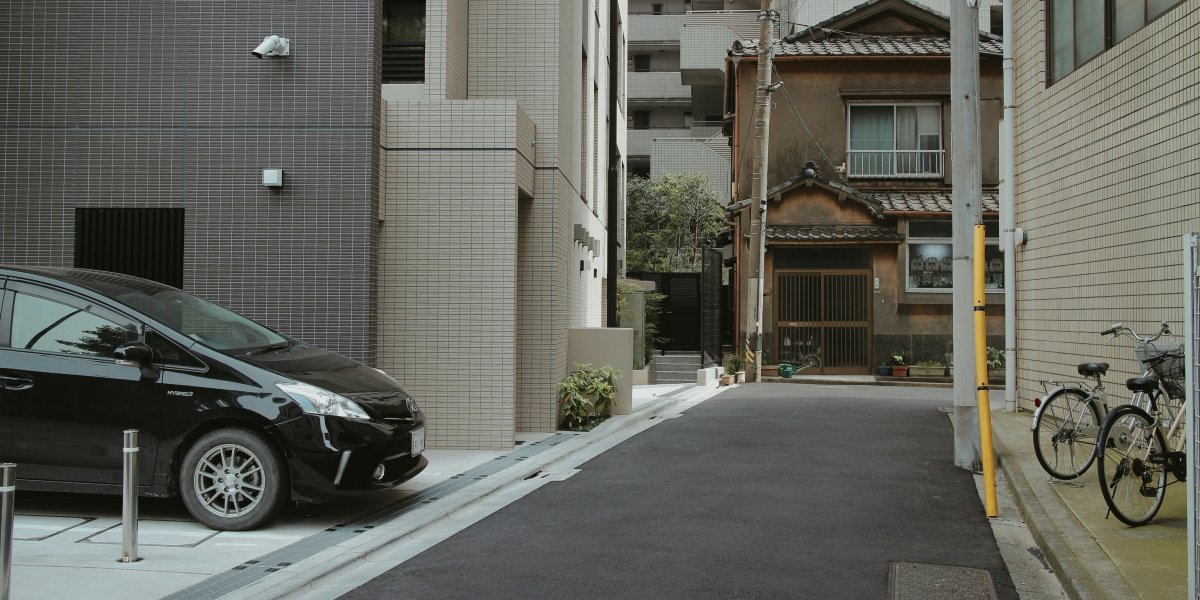
On a Tuesday morning in a strip-mall garage off the I-90 corridor west of the city, a 2011 Toyota Prius is up on a lift with its rear seat folded forward and its trunk floor pulled out. Underneath, where most drivers assume there is nothing more interesting than a spare tire, sits a 100-pound rectangular box wrapped in orange high-voltage cabling. This box is the reason the car still runs. It is also the reason its owner, a retired schoolteacher from Elmhurst, was told by her dealership last week that her car was, more or less, finished.
She is not the only one. Across the Chicagoland metro, an entire generation of hybrid vehicles bought during the first wave of fuel-efficiency enthusiasm, roughly 2008 through 2014, is now hitting the same wall at the same time. The original battery packs that came from the factory are aging out. The dashboards are lighting up. The dealership quotes are landing in the four-to-five-thousand-dollar range. And a lot of people who have loved their cars for a decade are being quietly nudged toward the trade-in lot.
What most of them never hear about is the small, regional, and frankly unglamorous trade that has grown up specifically to keep these cars on the road, and that has been doing it, mostly out of public view, for years.
The cars that refuse to die
There is a particular kind of Chicago-area driver who buys a Toyota and keeps it. The 2008 Camry Hybrid in the driveway of a Hinsdale ranch house. The 2012 Prius parked behind a Pilsen two-flat. The 2010 Ford Fusion Hybrid that a Naperville commuter has been taking to the Metra station every weekday for thirteen years. These are not status cars. They are cars people have stopped thinking about, in the best possible way, they start, they sip gas, they pass emissions, they keep showing up.
Pull up the most-searched Google terms in Illinois and Indiana over the past twelve months and the pattern is almost embarrassing in its consistency. Variations of “hybrid battery replacement cost” lead the list by a wide margin. Then “Toyota Prius hybrid battery replacement.” Then Camry. Then Highlander. Then Fusion, Civic Hybrid, RAV4 Hybrid. Tens of thousands of monthly searches. People aren’t curious. They’ve already gotten the quote, and they’re trying to find out if the number is real.
The number, usually, is real. It’s just not the only number.
RepairPal’s current national estimate for a Toyota Prius high-voltage battery replacement, parts and labor, sits between $5,253 and $5,484. Dealership quotes for a full hybrid traction battery typically range from $6,000 to $9,000, with extreme cases hitting $15,000 for models like the Prius Plug-In Hybrid. Lexus owners, the RX 450h, ES 300h, CT 200h crowd, routinely see the high end of that spread. None of these numbers are a scam. They are what it costs to have a Toyota dealer remove a perfectly functional battery pack from your car and install a brand-new one in its place.
However, there is no need to install a brand-new traction battery in an old car. Properly remanufactured batteries can often restore performance close to original factory levels.
What’s actually happening inside the box
For example, a second-generation Prius traction battery contains 28 individual nickel-metal-hydride modules wired in series, grouped into 14 voltage blocks. When the dashboard throws a P0A80 code, by far the most common hybrid trouble code in service, and the one that triggers most replacement quotes, it points to hybrid battery deterioration. One or more blocks reading at least one volt lower than the others is enough to set it off. At this point the car needs a hybrid battery replacement.
Some reconditioning shops suggest that replacing the obviously dead modules will revive your battery with lasting success. It will revive your battery but the success is anything but long-lasting. In most cases it only lasts for several months.
A reputable reconditioning shop has the knowledge and appropriate equipment to pick out the healthy modules from failed packs and combine them with alike modules from other failed packs to create a properly rebuilt pack.
You are being told to replace the battery with a new one to the tune of many thousands of dollars. The dealer service department doesn’t have a process for doing this. They swap the whole unit, send the old core back to a regional processor, and move on to the next car.
In a dependable reconditioning shop, the pack comes out of the car, gets opened on a bench, and every module is individually load-tested for capacity, internal resistance, and self-discharge under controlled conditions. The weak ones get replaced (and responsibly recycled), typically with modules pulled from low-mileage donor packs and run through a controlled charge-discharge cycle to eliminate the memory effect and bring them back to spec. All the modules, both from the original pack and the ones from donor packs are closely matched for Ahr capacity. The bus bar plates between modules get replaced with nickel-plated, corrosion resistant ones. The cooling fan, which on a Prius is a known weak point because it sits behind the rear seat and slowly inhales pet hair, dust and small debris, gets cleaned or replaced. The whole pack is re-balanced, sealed, and run through a final load test before it goes back in the car.
For most drivers, the end result feels remarkably close to a new battery at a fraction of the cost. Installed, with a warranty, it costs roughly a third of the dealer price.
This is the trade. It exists in pockets all over the country, and one of the busiest pockets is right here, serving the metro from a single shop with a mobile unit that covers a large area around Chicago, basically the whole of Illinois, the western half of Indiana down through Indianapolis, southern Wisconsin past Madison through the northern half toward Green Bay, the south part of Michigan, and eastern Iowa. That radius is not arbitrary. The work is heavy, the diagnostics are specialized.
Why Chicago, specifically
A few regional realities make this story sharper here than in other more moderate zones.
Extreme weather exposes everything. Nickel-metal-hydride chemistry loses meaningful efficiency below freezing and in the scorching heat of the summer. A pack that limped through the moderate months will throw a hard fault when the cold of winter or the hot of summer come around. Every hybrid specialist in the Midwest sees a service spike in the winter and the summer. The reverse is also true: a properly reconditioned pack with new modules and clean cooling airflow handles the extreme seasons far better than an original pack on its eleventh year in usage.
For many owners, the cars are still economically worth saving. This is the unromantic part of the math, and the part the dealership service writer is least likely to walk you through. A 2011 Camry Hybrid with 180,000 miles on it is worth maybe $7,000 in private-party sale, and replacing the engine, the transmission, the suspension, and the interior at this stage of life would cost a fortune. Replacing the one part that is actually wearing out, the battery, for less than $2,000 is the cheapest mile-per-dollar move available to you. The car was built to run for 300,000+ miles. It is being held back by one component.
The 300,000-mile club
Chicago has a quiet but large population of hybrids past 250,000 miles. Some of them are former taxis or ride-share cars, now in their second life as commuter vehicles or kids’ first cars. Many of them are not, they are simply cars that someone bought new in 2009 and decided to keep. Either way, the math that keeps them on the road is the same.
A reconditioned battery does not arrive with the original factory new-car warranty, and a responsible shop is upfront about that. What it does arrive with, typically, is a one-to-three-year warranty on the work, on-site or in-shop installation. It also comes with the very specific knowledge that whoever installed it has done this exact procedure on this exact model hundreds or thousands of times. That last part matters more than people realize. A general mechanic encountering his third Prius battery in a year has far less experience compared to a hybrid specialist on his three-thousandth.
The catalog of vehicles this work applies to is broader than most drivers assume, virtually every Toyota and Lexus hybrid going back to the early 2000s, the entire Ford and Lincoln hybrid line including the Escape and Fusion, Honda Civic, Accord and Insight hybrids, Hyundai Sonata and Kia Optima hybrids, Chevrolet Tahoe and Silverado Hybrid, GMC Yukon and Cadillac Escalade hybrids, Chrysler Aspen Hybrid and Nissan Altima Hybrid. The shop’s catalog reads like a directory of every hybrid that mattered between 2005 and 2020, which is to say, most of the cars currently parked in driveways across the suburbs.
What to actually do if your dashboard just lit up
For the reader who is, statistically speaking, here because they got a quote this week, three things are worth doing before you spend a dollar.
One: get the codes read for free. AutoZone, O’Reilly, and Advance Auto Parts will all read OBD-II codes in their parking lots at no charge. P0A80 is the headline code, but it often comes paired with P0A7F, P0A7D, or P3000 on Toyotas. Have them print you a report of their scan. A standalone P0A80 is the textbook “general battery deterioration” situation, exactly the case where a good reconditioned battery shines.
Two: get a second opinion from a hybrid specialist before you authorize a dealer replacement. Not a general mechanic. Not your brother-in-law. A shop that does this work specifically. The conversation will take fifteen minutes. The savings, if it goes the way it usually does, will be in the thousands.
Three: try to get the rebuilt replacement battery from a trustworthy shop. It is best if you can find a shop that has good reviews and a physical location versus the many vendors that only do mobile service. The vendors that offer nation-wide service almost always store their batteries in various warehouses throughout the country where these batteries spend many months awaiting customers. These lengthy intervals of waiting lead to severely imbalanced batteries at the time when they reach the customers which, in turn, leads to short battery life spans. Ask the company you plan to purchase from about these issues before you commit.
The economy nobody talks about
There is no trade association for hybrid battery reconditioners. There is no glossy magazine. The work happens in shops that mostly look like any other independent garage from the outside, with the difference visible only when you walk past the bay and notice that someone is bench-testing modules with what looks like laboratory equipment. The trade survives on word of mouth, on the rideshare driver who tells his cousin, on the retired teacher who tells her book club, on the Naperville dad who mentions it at his daughter’s soccer game.
It is, in the most literal sense, the kind of trade that exists because the alternative, quietly retiring a working car because one component costs too much to replace through official channels, is wasteful in a way most Chicagoans, in a city that has always taken pride in fixing things, find genuinely irritating.
The 300,000-mile Prius in the alley behind the Logan Square apartment building is not a freak occurrence. It’s the predictable outcome of an old machine, a thoughtful owner, and one very specific repair that almost nobody is told about until they go looking for it.
Now you’ve been told.