By: Christopher Miller
Late 2001. 24/7 Media’s stock was below a dollar. The company was facing delisting from Nasdaq. A quarter of the global workforce had already been laid off across multiple rounds of painful cuts. The remaining senior leadership team had gathered in the company’s general counsel’s office to discuss the feasibility of a bankruptcy filing, a meeting that nobody had officially called and nobody had officially invited David Moore to attend.
He found them when he came looking for Mark Moran, got no answer at the phone, and walked the two doors down to Mark’s office. He knocked twice and opened the door. Ten faces went pale simultaneously, like their mother had caught them in the cookie jar. Mark explained what they were discussing. David asked everyone to go to the conference room.
What he told them next was a clear expression of leadership under existential pressure. He was not declaring the end anytime soon. If any of them were not with him, he could probably squeeze out a week of severance, but that was the extent of what he could offer. It is not the size of the dog in the fight, he told them. It is the size of the fight in the dog. They were taking it to the end, whatever that end turned out to be.
He didn’t convince everyone in the room that day. He didn’t need to. He needed enough people still standing when the turning points came, and the turning points did come, in forms nobody could have predicted.
The Dinner That Changed the Stock
The moment survival turned back toward genuine building came at a dinner at the Four Seasons that David attended not as a featured guest but as an industry expert, because the analyst who had invited him couldn’t officially cover a company the size of 24/7 at the time. When David walked in, people greeted him with varying degrees of surprise. You’re still alive? was the question more than one person asked. They were the ghosts at the feast.
When he got up to speak, David told the room they had taken the biggest uppercuts Wall Street could throw at a company and were still standing, and nothing could stop them now. When the questions came, he explained how a lean company like theirs could turn on a dime while a large one was still scheduling the meeting to discuss whether to turn.
The next morning the stock went to a dollar. They issued a press release every single day for ten days to hold it there. On day six, it dipped back below the threshold with forty-five minutes left before the market closed, and David called an investor named Judy. He told her what was happening. She said Say no more. Four days later they were off the delisting list. Nothing can stop us now went on banners in every office. That was the night survival became building again, and the trajectory that eventually produced the company’s acquisition by WPP began to take its final shape.
The Quality That Cost the Most to Sustain
Of the qualities David identifies as essential during the crisis, rallying people was personally the hardest to sustain. It is one thing to rally people when the stock is at sixty-eight dollars, and everyone has paper fortunes and the future feels inevitable. When the stock is under a dollar, and employees have watched paper millions evaporate and a quarter of their colleagues get laid off, rallying requires a different and considerably more demanding kind of effort.
After a weekend with restructuring advisors going line by line through every element of the company’s finances, David stood up to present to the board, unshaven and mentally exhausted, and had what he describes as an out-of-body experience. For a moment, he was questioning every decision that had brought him to that room. How had he gotten here? Was any of it going to work?
Then it passed. He gave the presentation. He told the remaining team that a quarter of the battalion was gone and the rest of them had to take the hill. Externally, he projected confidence and optimism even when there was anxiety in his throat. He has since concluded that this is not dishonesty. It is leadership. The team cannot afford to watch the person at the front fall apart, because that is the moment everything actually ends.
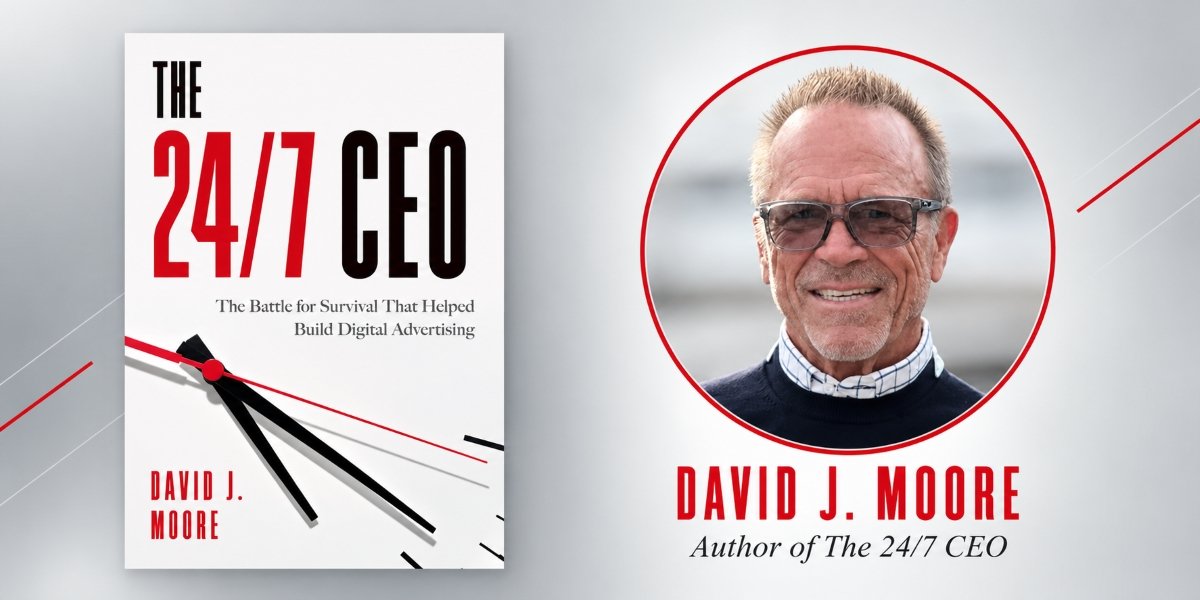
The 24/7 CEO by David Moore, published by Forbes Books, tells the story of the dot-com crash from the perspective of the CEO who led the company through it.