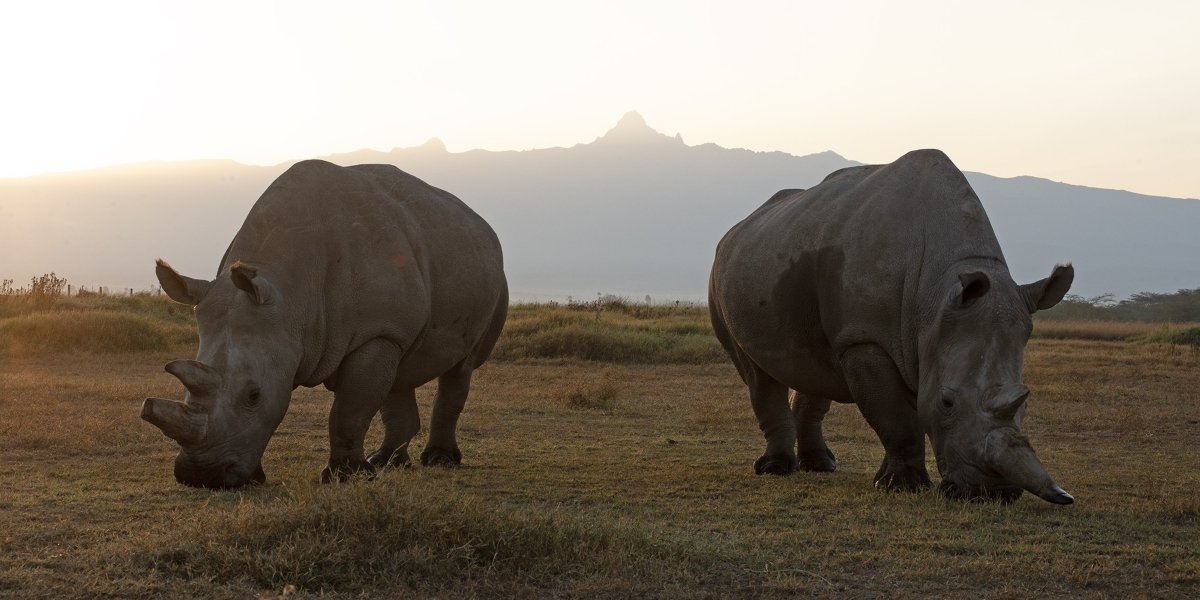
Not every conservation story starts with triumph. Some begin with grief.
For Helping Rhinos, the deaths of two rhino orphans, Ntoto and Isomiso, in 2018 forced a reckoning with what it actually means to succeed in wildlife conservation. The numbers on a spreadsheet, animals counted, populations tracked, didn’t capture what had been lost. And they didn’t capture what needed to change. That moment became a turning point for the organisation, reshaping how it measures progress, trains teams, and builds the long-term partnerships that hold its work together.
Today, Helping Rhinos operates across a framework built on three pillars: Protect Wildlife, Preserve Habitat, and Provide for People. Each one reflects a belief that conservation can’t be reduced to a single metric or a single win.
What Two Losses in 2018 Changed About Everything
The deaths of Ntoto and Isomiso hit hard. But Helping Rhinos didn’t treat them as isolated tragedies. The organisation treated them as information.
Working closely with veterinary teams in the aftermath, Helping Rhinos reviewed health monitoring protocols from the ground up. Response timing, rehabilitation staging, biosecurity measures, and escalation procedures were all examined and strengthened. The goal wasn’t just to prevent a repeat. It was to build a culture where compassion and rigour reinforce each other rather than compete.
That shift ran deeper than updated procedures. It changed what the organisation considers success. Where traditional conservation metrics focus almost entirely on population figures, Helping Rhinos now evaluates how it responds when things go wrong. Whether protocols improve. Whether knowledge is shared transparently. Whether systems get stronger after setbacks. Grief, handled well, became a driver of better science.
The Rhino Strongholds Model: More Than a Reserve Strategy
Helping Rhinos uses the term “Rhino Strongholds” to describe something more ambitious than a protected area. A Stronghold is a connected, expanded landscape, one that allows rhinos to move, adapt, and function as the keystone species they are.
Rhinos shape vegetation. They affect soil composition. Their presence influences biodiversity well beyond their own survival. By designing landscapes with that ecological role in mind, Helping Rhinos argues that protecting rhinos means protecting entire ecosystems, not just individual animals.
The Strongholds model also serves as a climate resilience strategy. Extreme rainfall events and prolonged droughts are now operational realities for partners in the field. Larger, connected habitats give wildlife room to migrate toward resources and away from danger, reducing the need for constant human intervention. Helping Rhinos supports this through vaccination programmes, habitat expansion planning, and adaptive land management work with partners on the ground.
In South Africa’s Eastern Cape, the Strongholds approach has brought multiple landowners and conservation bodies into alignment around shared landscapes. That kind of collaboration doesn’t happen by accident.
Trust Takes Time, and So Does Alignment
Building long-term partnerships across multiple landowners and conservation organisations requires more than a shared mission statement. Helping Rhinos has learned that alignment needs to be actively maintained, not assumed.
The organisation holds annual partner reviews and maintains regular field engagement. When disagreements or challenges arise, they’re addressed directly. Honest conversations about what’s working and what isn’t keep everyone oriented toward the same goals. Short-term wins don’t substitute for that kind of structural trust.
Leadership accountability follows a similar logic. Helping Rhinos assesses partners not only on their commitment to the cause but on transparency, governance quality, and the sustainability of their planning. The three-pillar framework gives that assessment a consistent structure: partners are expected to deliver measurable outcomes across conservation, community, and habitat work. Passion matters. But it has to be held up by something solid.
Risk, Rewilding, and the Limits of Fortress Conservation
There’s no risk-free option in conservation. Helping Rhinos is clear about that.
Fortress-style protection, keeping animals in tightly controlled, heavily fortified environments, can reduce immediate threats. But it doesn’t produce healthy, self-sustaining populations. It doesn’t allow rhinos to fulfil their ecological roles. And in the long run, it may do more to limit conservation outcomes than to secure them.
Helping Rhinos defines acceptable risk differently. An acceptable level of risk is one where animals can live and move within expanded, secure landscapes, supported by strong monitoring and the capacity to respond quickly when problems arise. That definition shapes decisions about rewilding, translocation, and how Stronghold boundaries are drawn.
The organisation’s approach to decision-making under uncertainty rests on a few consistent principles:
- Weigh immediate safety against long-term ecological function, not just short-term threat reduction
- Support rapid-response capacity so that risk doesn’t become catastrophe
- Prioritise landscape scale over containment where conditions allow
- Use monitoring data to refine risk assessments over time rather than locking in fixed assumptions
It’s a philosophy built for uncertainty. Which is, increasingly, the only kind of conservation environment there is.
Communities Aren’t a Footnote. They’re the Foundation.
If you’ve ever assumed that wildlife conservation and community development run on separate tracks, Helping Rhinos offers a direct counter-argument.
The organisation’s community work has evolved considerably. What began as consultation, informing local communities about conservation plans, has become genuine collaboration. Communities now help determine where schools are built, how land is managed, and which conservation roles are filled locally. Education centres and ranger training programmes deliver tangible benefits that give people a direct stake in conservation outcomes.
The logic is straightforward: when communities see conservation improving their lives and creating real opportunity, they become its strongest supporters. When they don’t, the opposite tends to be true. Helping Rhinos has built its Strongholds strategy around that reality rather than around it.
This community-centred model also feeds into long-term leadership development. Local educators, rangers, and conservation leaders are the people who will carry this work forward. Investing in them isn’t secondary to the mission. It is the mission, extended across time.
What Scaling the Model Actually Requires
Helping Rhinos is clear-eyed about what expanding its impact into new regions and eventually to other rhino species will demand. The answer isn’t one thing. It’s several things working together.
Technology matters. Advanced tracking systems, drone surveillance, and data-led decision-making will continue to strengthen field protection and allow partners to respond faster and more precisely to threats. These tools are already part of the operational picture and will become more central as the organisation scales.
But technology alone won’t be enough. The future of Helping Rhinos depends equally on the people those tools support. Key capabilities the organisation is investing in as it scales include:
- Local ranger training and professional development
- Community education programmes tied to conservation outcomes
- Landscape-level data systems shared across partner organisations
- Governance structures that keep partners accountable as networks grow
The Rhino Strongholds model remains the foundation for all of it. Not because it’s the easiest approach, but because it’s the one that accounts for ecosystems, communities, climate, and long-term species health at the same time. Isolated reserves and single-species thinking got conservation to where it is. Strongholds are what comes next.
Helping Rhinos has spent years learning, sometimes painfully, that conservation success is not a number. It’s a system. And systems, built well, can outlast the conditions that first made them necessary.