Cynthia Karalla Unveils SPECIAL CUTS & IMMORTALIZATION, Featuring Original Wearable Art Priced at $10,000

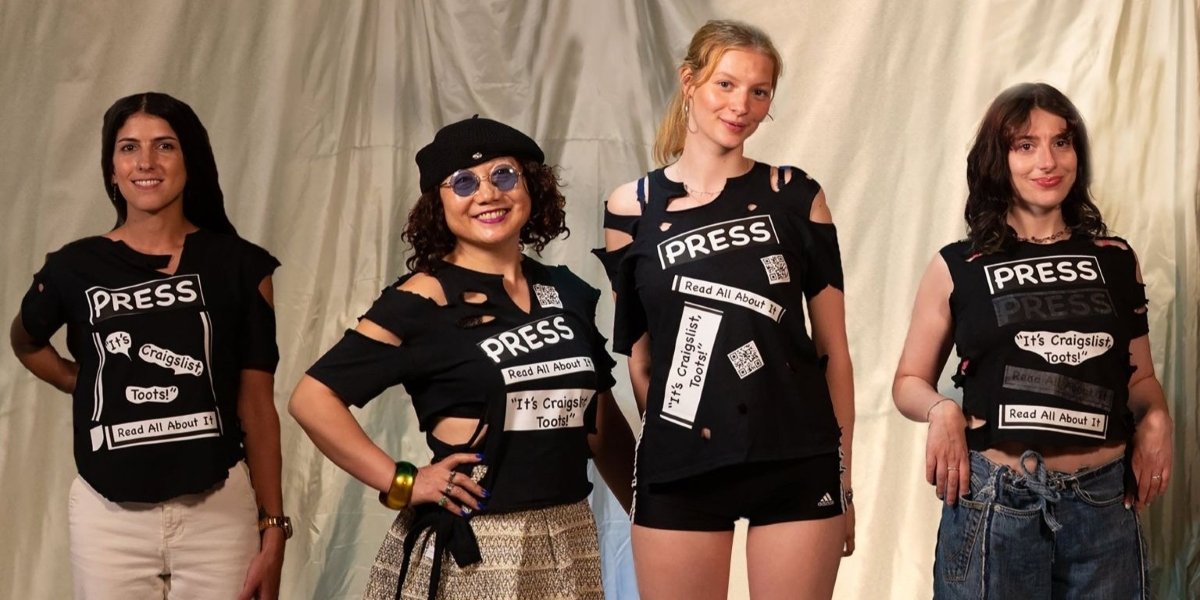
There are some art projects that ask to be viewed, and then there are projects that ask to be entered. Cynthia Karalla’s SPECIAL CUTS & IMMORTALIZATION belongs firmly in the second category. Presented through 6-6-26 Studio, the work takes the familiar shape of a black T-shirt and turns it into something far less ordinary: a live performance, a wearable sculpture, a photographic record, and a meditation on how value is made.
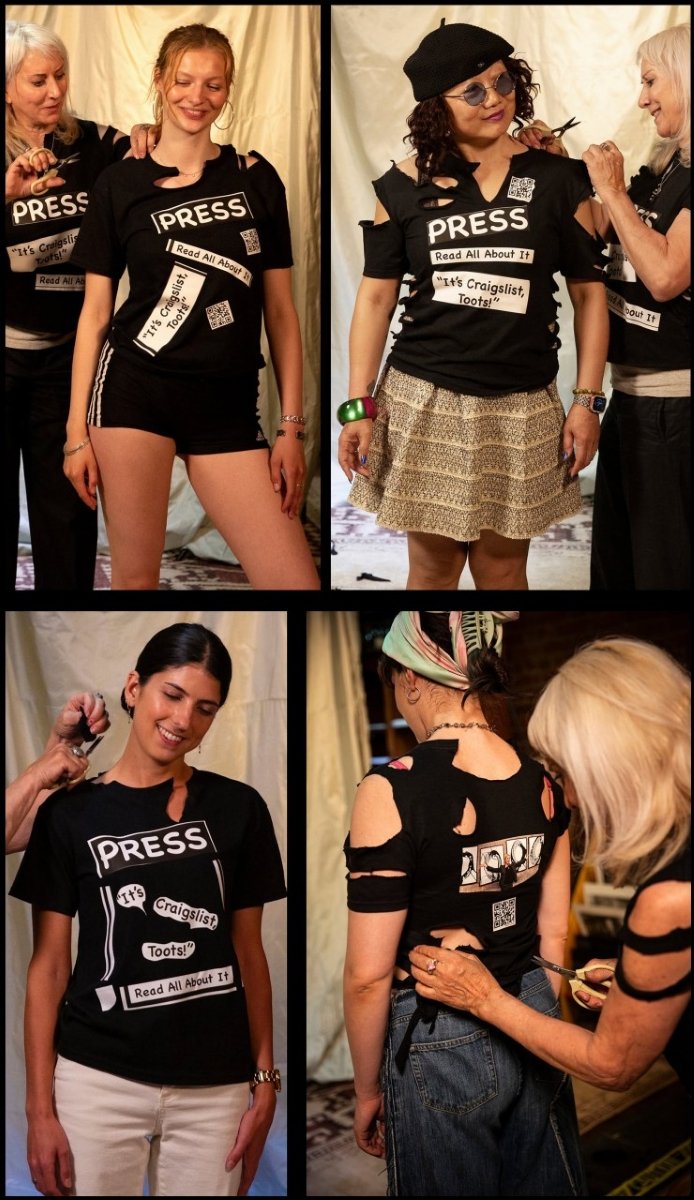
At the center of the project is an act of transformation. Karalla cuts, tears, and reconstructs each shirt directly on the buyer’s body in real time, creating a piece that cannot be duplicated and does not fully exist until the interaction happens. What begins as a mass-market garment is pulled into a much stranger and more intimate territory, one where the object, the wearer, and the moment of its making become inseparable.
The result is not fashion in the conventional sense, even if it can be worn. Nor is it simply a performance, even if the act of cutting is central to the work. SPECIAL CUTS & IMMORTALIZATION sits in the space between performance art, conceptual sculpture, documentation, and ritual. It feels less like buying a shirt and more like stepping into an artwork while it is being made.
An Artist Interested in Transformation, Not Categories
Cynthia Karalla has built a practice around crossing boundaries. An American artist whose background includes architecture, photography, conceptual art, activism, and performance, she has long resisted the idea that one medium should define a body of work. Instead, her projects tend to move between forms, asking larger questions about identity, mythology, reinvention, and the systems that shape cultural value.
That sensibility is visible throughout SPECIAL CUTS & IMMORTALIZATION. The project does not settle comfortably into any single art-world label because Karalla does not seem especially interested in those labels to begin with. What matters more is the tension between destruction and creation, public spectacle and personal experience, commerce and ritual. She uses the T-shirt as the entry point, but the project itself is really about what happens when something ordinary is pushed through performance and returned to the world with a completely different meaning.
The Shirt Is Only the Beginning
The object at the center of the work is intentionally familiar: a black T-shirt. But in Karalla’s hands, it functions less as clothing and more as raw material.
During each live happening, the shirt is cut, ripped, and reconstructed directly on the participant’s body. There is no template and no finished version waiting to be revealed. The final form emerges through instinct, movement, the body of the wearer, and the unpredictability of the moment. Each shirt becomes a one-time event as much as a finished object.
Some pieces include iron-on phrases such as PRESS, and IT’S CRAIGSLIST, TOOTS!, details that tie the project back to Karalla’s wider conceptual language and to her book It’s Craigslist, Toots!. These phrases do more than decorate the garment. They pull in ideas about image, transaction, social performance, and the strange ways language can elevate or destabilize an object.
Destruction as a Creative Act
What gives SPECIAL CUTS & IMMORTALIZATION its charge is that the act of alteration is not just part of the process. It is the artwork.
Karalla is not modifying a T-shirt so that it can later become art. The cutting itself is the point. The ripping, reshaping, and rebuilding are where the piece takes form conceptually as well as physically. That decision shifts the work away from custom clothing and into a different artistic lineage, one tied to performance, participation, and the idea that an object can hold the memory of what happened to it.
There is also an alchemical quality to the project. Karalla’s work has been shaped by Hermetic philosophy, and that influence feels especially present here. A low-cost, widely recognizable object is taken apart and transformed into something singular, theatrical, and highly valued. The shirt is no longer just fabric. It becomes evidence of an event, of the artist’s intervention, of the wearer’s presence, and of a story that cannot be repeated in exactly the same way again.
That transformation is central to the work’s power. It asks a deceptively simple question: what actually gives an object value? The material itself, or the experience, authorship, and mythology attached to it?
More Than a Wearable Object
Although the finished piece remains wearable, the project is much bigger than a garment. Each work exists across multiple forms at once.
It is a live performance staged on the body.
It is a sculptural object shaped through destruction and reconstruction.
It is a personal encounter between artist and participant.
It is a document captured in photographs and video.
It is a collectible tied to a single unrepeatable event.
That layering is what makes SPECIAL CUTS & IMMORTALIZATION feel unusually rich. The buyer is not simply purchasing a final product. They are participating in the conditions of its creation. Their body becomes part of the composition. Their presence becomes part of the artwork’s history. And the shirt itself becomes a kind of relic, carrying the trace of a specific action, a specific moment, and a specific relationship between artist and participant.
In that sense, the work is as much about authorship and participation as it is about the final object. Karalla blurs the line between creator, collector, and subject in a way that feels deliberately destabilizing. The buyer does not stand outside the piece. They enter it.
Why “Immortalization” Matters
The second half of the title, IMMORTALIZATION, is what pushes the project beyond a live happening and into a broader meditation on memory, image, and permanence.
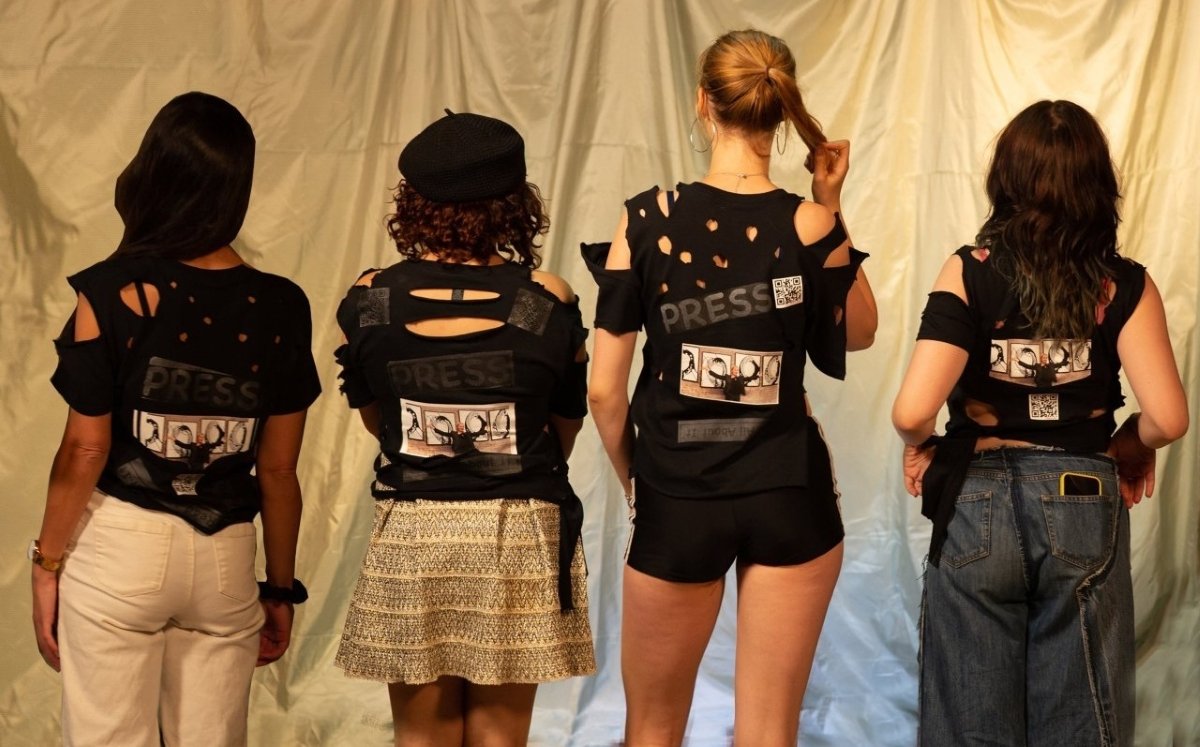
Each cutting event is documented through professional photography and video, and that documentation becomes part of the finished artwork. The performance is not allowed to disappear once it ends. Instead, it is archived and folded back into the piece itself, preserving not only the altered shirt but the event of its making.
That matters because performance is usually fleeting. It happens in a specific place, then lives on mostly through memory and retelling. Karalla interrupts that ephemerality by treating the documentation as part of the work’s architecture. The wearer, the garment, and the live act are all captured together, turning a temporary interaction into a lasting visual record.
This is where the project becomes especially compelling. The participant is not simply leaving with a customized object. They are leaving with proof of having been inside the artwork. The body is not separate from the piece. It is part of the piece’s archive, part of its mythology, and part of its permanence.
A Work That Understands the Theater of Value
Karalla’s project is also acutely aware of the systems it is operating inside. In a culture shaped by luxury branding, social image, exclusivity, and the spectacle of scarcity, SPECIAL CUTS & IMMORTALIZATION feels fully conscious of how value is staged and performed.
Each shirt in the series is priced at $10,000, but the number is less a shock tactic than a conceptual pressure point. It forces the question that the project has been building all along. Why does one T-shirt feel disposable while another becomes desirable? What changes when an object is made unique through performance, documented as art, and framed as an experience rather than merchandise?
Karalla does not offer a clean answer. Instead, she constructs a situation in which the answer becomes unstable. The value of the work lives partly in the object, partly in the artist’s authorship, partly in the live event, and partly in the documentation that survives afterward. It is an artwork about transformation, but it is also an artwork about the machinery that turns transformation into cultural value.
Cynthia Karalla’s Ongoing Project of Reinvention
What makes SPECIAL CUTS & IMMORTALIZATION resonate is that it distills many of Cynthia Karalla’s long-running concerns into one concentrated act. It is about identity and reinvention, but also about performance and myth-making. It is about the body, but also about the image of the body. It is about destruction, but also about how destruction can become a path toward authorship and meaning.
Most of all, it is about what happens when art refuses to stay politely contained. Karalla does not present the viewer with a finished object and asks for admiration from a distance. She stages an encounter. She turns an everyday item into a site of risk, intimacy, spectacle, and transformation. And in doing so, she reminds us that some of the most interesting contemporary art is not just something to look at. It is something that happens to you.
To learn more about Cynthia Karalla and her work, visit www.karalla.com.
Photography for Immortalization by Jake Borden.
Food for the event was provided by The Great Johnny Ciao and Lisa McDaniel.