By: Cameron Rhodes
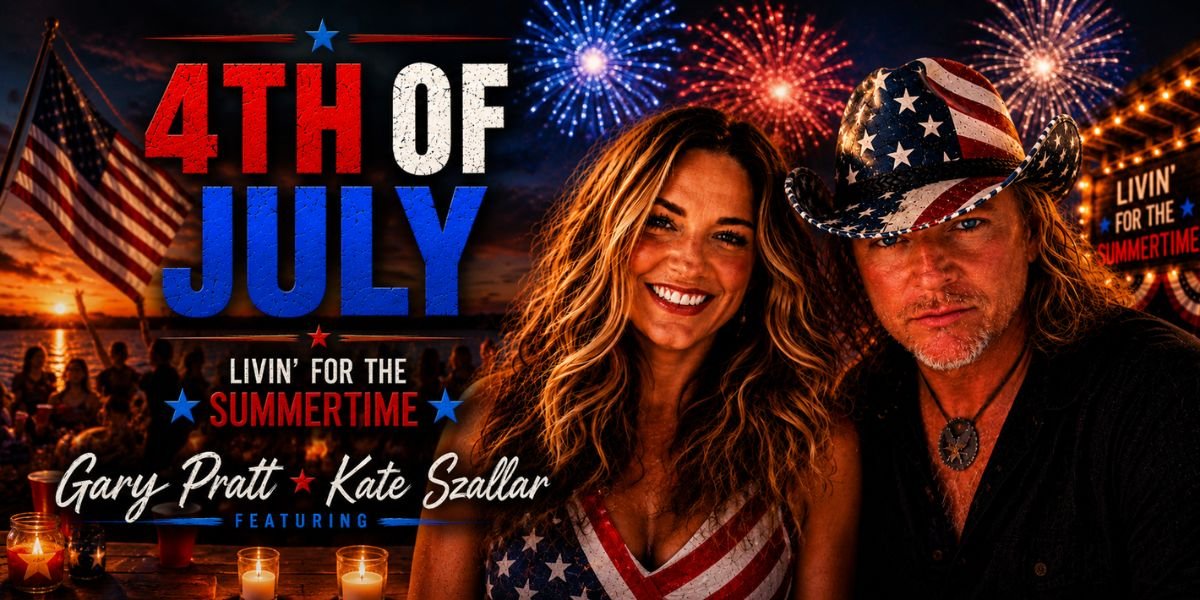
Gary Pratt’s “4th of July” begins with a wonderfully inconvenient fact: It’s February.
That might seem like a strange place to start a song named after America’s loudest summer holiday, but Pratt knows exactly what he’s doing. There are no backyard barbecues, sparklers, parade floats, or coolers sweating beneath the July sun. Instead, there are two people inside on an ordinary winter night, discovering that enough romantic chemistry can render both the weather and the calendar completely irrelevant.
That’s the joke, the hook, and ultimately the charm of “4th of July,” Pratt’s collaboration with Kate Szallar: The fireworks aren’t outside.
They’re considerably closer.
Pratt has essentially written a love song with fireworks, taking one of the most familiar pieces of American imagery and transforming it into a playful metaphor for physical and emotional attraction. The idea is hardly complicated, and that’s precisely why it works. Great country songs have always understood the value of taking something enormous, heartbreak, desire, loneliness, home, and finding a simple image capable of carrying all that weight.
Here, Pratt has fireworks.
The song wastes little time establishing its intentions. One slow kiss leads toward something “hotter than the summertime,” and suddenly an otherwise forgettable February evening feels like a national holiday. When the chorus finally arrives, Pratt lets the metaphor explode: bodies become a party, romance becomes celebration, and the familiar “boom boom boom” of fireworks becomes the record’s most shamelessly infectious hook.
It’s suggestive without becoming sleazy and playful without descending into novelty-song territory. That balance matters. A lesser performance could turn the premise into a wink that wears out after one listen. Pratt instead commits to it as an actual love song.
His vocal performance helps sell the distinction.
Pratt has the weathered confidence of a singer who doesn’t need to bulldoze a melody to make himself heard. He settles into the lyric, letting the conversational lines remain conversational and saving the extra lift for the chorus. There’s no attempt to transform “4th of July” into some grand vocal showcase. The attraction is in the ease of it.
Kate Szallar brings an important counterweight. Her presence changes the emotional architecture of the recording. What could have sounded like one man’s fantasy becomes something shared, and the chemistry implied by the lyric suddenly has another voice.
That makes “4th of July” feel more like a duet between characters than a singer describing somebody standing off-camera.
The record’s secret weapon, however, may be Adam Ernst.
Ernst produced “4th of July” and played every instrument on the recording, an impressive bit of studio multitasking from a musician whose credits include work on records by Bailey Zimmerman, Mickey Guyton and Chase Matthew. Yet nothing about the track sounds like a musician desperately trying to remind listeners that he can do everything.
Instead, the production is disciplined.
The rhythm keeps the record moving without clubbing the listener over the head. The guitars provide contemporary-country brightness without becoming anonymous Nashville wallpaper. Little instrumental details arrive, do their job, and get out of the way.
Most importantly, Ernst leaves space for the hook.
And “4th of July” absolutely lives or dies by that hook.
By the time Pratt and Szallar reach the repeated declaration that things keep getting “better and better than the Fourth of July,” resistance becomes somewhat pointless. It’s the kind of phrase engineered for repetition, the musical equivalent of another firework going up just when you thought the grand finale was finished.
There’s also something refreshingly uncomplicated about the song’s emotional worldview.
Country music has never lacked heartbreak. Somebody is always leaving somebody, somebody else is drinking because somebody left, and another poor bastard is driving past a house where the lights don’t belong to him anymore.
Pratt isn’t interested in any of that here.
These two people are together. They’re happy about it. Nobody is cheating. Nobody is packing a suitcase. Nobody wakes up halfway through the bridge and discovers the relationship was actually a metaphor for grief.
They’re just having a very good night.
Pop music sometimes treats uncomplicated happiness as artistically suspicious, as though joy requires an apology while misery automatically qualifies as depth. “4th of July” rejects that bargain. It recognizes pleasure as a perfectly legitimate subject for a country record.
The cleverest aspect remains that February setting. It prevents “4th of July” from becoming trapped by its own title. Yes, the single practically begs for Independence Day playlists, summer radio rotations and barbecue speakers. But Pratt isn’t really writing about a date.
He’s writing about the person who makes the date irrelevant.
That’s why the song still works when the fireworks stands have closed, and the patriotic bunting has disappeared into somebody’s garage. The Fourth of July is simply the biggest comparison Pratt can find for a smaller, more private explosion.
Gary Pratt and Kate Szallar aren’t reinventing country music here. They’re doing something considerably more useful: delivering a smart, sexy, good-natured country single with a chorus that knows precisely what choruses are supposed to do.
“4th of July” lights the fuse.
Then it gets out of the way.