The Chicago Journal

Barbara Hynak Explores Humanity’s Bond with Nature in Roars Across the World

By Seth Brown

Fantasy has long given readers an escape into extraordinary worlds filled with adventure, mythical creatures, and unforgettable heroes. Increasingly, however, the genre is also becoming a place where authors explore timely questions about humanity, leadership, and our relationship with the natural world. In her new novel, Roars Across the World, author Barbara Hynak embraces that tradition by weaving an epic story that combines sweeping adventure with themes of compassion, responsibility, and interconnectedness.

At the heart of the novel is Atum-Sani, a young human leader struggling to save his people after a devastating drought threatens their survival. Guided by the wisdom of his grandmother, Amata, he embarks on a dangerous journey to discover the names of the great lion ancestors, believing they hold the key to bringing back the rains. Meanwhile, Tradent, the majestic white lion known as the Leader of All, faces his own responsibilities as protector of the animal kingdom. As drought, conflict, and fear spread across the land, both leaders must confront an ancient prophecy warning that if the last lion’s roar becomes only an echo among the stars, the world itself will face its end.

While the novel delivers the excitement readers expect from fantasy, Hynak says its inspiration came from something much closer to home.

“I wanted readers to experience the living world as something present and speaking, not as mere scenery around a human story,” she explains. “I wanted people to feel their connection with the natural world.”

That connection becomes one of the novel’s defining themes. Rather than presenting nature simply as the backdrop for human conflict, Roars Across the World treats rivers, rain, forests, and wildlife as active participants in the story. Environmental change directly shapes every decision the characters make, creating a world where survival depends not only on courage but also on cooperation.

Hynak believes the story’s central message extends beyond fantasy.

“I hope readers see that we are not separate from nature nor do we stand above it,” she says. “We are within the web. Every creature, every river, every tree, and every action forms a strand.”

That concept of an interconnected “web” appears throughout the novel and reflects Hynak’s broader view of leadership. Instead of focusing solely on human heroes, she deliberately chose to tell the story through both a human leader and a lion leader.

“I wanted the perspective of other creatures who coexist with us,” Hynak says. “Humans often claim dominion over the world, but in the novel, the lions make their own claim to dominion.”

Although Atum-Sani and Tradent come from very different worlds, they ultimately face many of the same challenges. Each carries the burden of protecting others during uncertain times. Each must make difficult decisions without knowing whether they are making the right choice. According to Hynak, their shared dependence on rain becomes the foundation for empathy and cooperation rather than competition.

Interconnectedness, she says, became the emotional heart of the entire project.

“Every life touches other lives, whether we understand the connection or not,” Hynak explains. “That is the idea most personal to me: All are Connected, and therefore All are Needed.”

The novel also introduces readers to a memorable prophecy: “When the last lion’s roar is only an echo amongst the stars, the world will end.” While dramatic within the story, Hynak says the prophecy represents something much larger.

She describes it as both myth and warning, suggesting that the disappearance of any species affects countless others connected within the same living system. Rather than focusing on one animal alone, the prophecy reflects the fragile relationships that sustain life itself.

Nature itself becomes one of the novel’s most compelling characters. Drought changes migration patterns. Rivers dictate survival. Grasslands determine the movement of herds. Every environmental shift influences the choices of humans and animals alike.

“Nature is not scenery in this book,” Hynak says. “It warns. It withholds. It remembers. It heals, but not on command.”

Those ideas are explored through characters who rarely encounter simple answers. Throughout the novel, Hynak places her heroes in situations where deeply held beliefs are challenged by experience.

As circumstances evolve, characters are forced to question assumptions they have long accepted, illustrating that growth often comes gradually rather than through sudden revelation.

Family and legacy also play important roles. The relationship between Amata and Atum-Sani reflects the importance of passing wisdom between generations, but Hynak views legacy as something that always points toward the future.

“The dedication is to the next seven generations because they will inherit more than our words,” she says. “They will inherit the consequences of what we protected, what we ignored, and what we chose to pass on.”

Creating the world of Roars Across the World presented its own creative challenges. Hynak wanted lions and humans to work together while remaining true to their different instincts, histories, and needs. She also enjoyed building a mythology where every creature, large or small, has its own perspective and role within the larger world.

Among the characters who surprised her most was Kareena, whose courage comes not from fearlessness but from searching for alternatives to conflict. Hynak also highlights the wrigglies, small creatures whose persistence reminds readers that even the least celebrated lives contribute to the strength of the whole.

“They are the strands we never see,” she says. “Yet they are as essential as the lion or the human. The web cannot hold without them.”

Ultimately, Hynak hopes readers finish the novel with a renewed awareness of the world around them.

“Once you feel that connection, you care,” she says. “Once you care, you act.” Rather than asking readers to believe one person can solve every problem, she hopes they instead ask themselves a simpler question: “What strand of the web is in my hand? How can I strengthen it?”

With its blend of epic fantasy, memorable characters, rich mythology, and thoughtful exploration of humanity’s relationship with nature, Roars Across the World offers readers an adventure that reaches beyond its fictional setting. While lions roar, rivers flow, and ancient prophecies unfold across its pages, the novel also encourages reflection on leadership, compassion, and the shared responsibility that connects every living thing.

Readers interested in learning more about Roars Across the World can find the novel on Amazon.
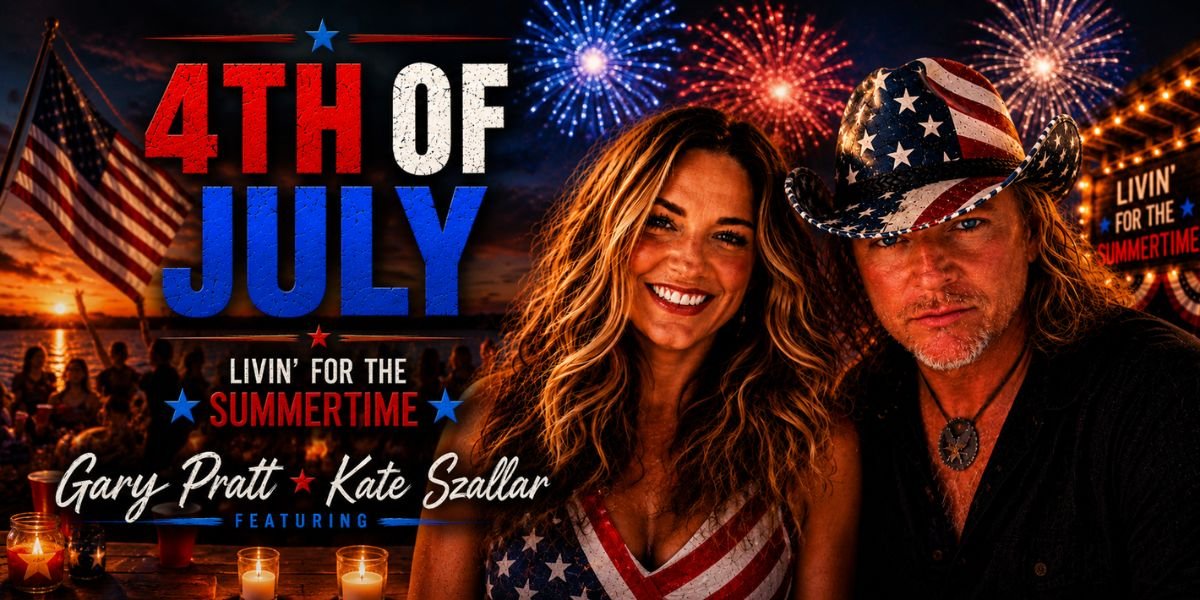
Gary Pratt Turns an Ordinary Night Into a Romantic Detonation on “4th of July”

By: Cameron Rhodes

Gary Pratt’s “4th of July” begins with a wonderfully inconvenient fact: It’s February.

That might seem like a strange place to start a song named after America’s loudest summer holiday, but Pratt knows exactly what he’s doing. There are no backyard barbecues, sparklers, parade floats, or coolers sweating beneath the July sun. Instead, there are two people inside on an ordinary winter night, discovering that enough romantic chemistry can render both the weather and the calendar completely irrelevant.

That’s the joke, the hook, and ultimately the charm of “4th of July,” Pratt’s collaboration with Kate Szallar: The fireworks aren’t outside.

They’re considerably closer.

Pratt has essentially written a love song with fireworks, taking one of the most familiar pieces of American imagery and transforming it into a playful metaphor for physical and emotional attraction. The idea is hardly complicated, and that’s precisely why it works. Great country songs have always understood the value of taking something enormous, heartbreak, desire, loneliness, home, and finding a simple image capable of carrying all that weight.

Here, Pratt has fireworks.

The song wastes little time establishing its intentions. One slow kiss leads toward something “hotter than the summertime,” and suddenly an otherwise forgettable February evening feels like a national holiday. When the chorus finally arrives, Pratt lets the metaphor explode: bodies become a party, romance becomes celebration, and the familiar “boom boom boom” of fireworks becomes the record’s most shamelessly infectious hook.

It’s suggestive without becoming sleazy and playful without descending into novelty-song territory. That balance matters. A lesser performance could turn the premise into a wink that wears out after one listen. Pratt instead commits to it as an actual love song.

His vocal performance helps sell the distinction.

Pratt has the weathered confidence of a singer who doesn’t need to bulldoze a melody to make himself heard. He settles into the lyric, letting the conversational lines remain conversational and saving the extra lift for the chorus. There’s no attempt to transform “4th of July” into some grand vocal showcase. The attraction is in the ease of it.

Kate Szallar brings an important counterweight. Her presence changes the emotional architecture of the recording. What could have sounded like one man’s fantasy becomes something shared, and the chemistry implied by the lyric suddenly has another voice.

That makes “4th of July” feel more like a duet between characters than a singer describing somebody standing off-camera.

The record’s secret weapon, however, may be Adam Ernst.

Ernst produced “4th of July” and played every instrument on the recording, an impressive bit of studio multitasking from a musician whose credits include work on records by Bailey Zimmerman, Mickey Guyton and Chase Matthew. Yet nothing about the track sounds like a musician desperately trying to remind listeners that he can do everything.

Instead, the production is disciplined.

The rhythm keeps the record moving without clubbing the listener over the head. The guitars provide contemporary-country brightness without becoming anonymous Nashville wallpaper. Little instrumental details arrive, do their job, and get out of the way.

Most importantly, Ernst leaves space for the hook.

And “4th of July” absolutely lives or dies by that hook.

By the time Pratt and Szallar reach the repeated declaration that things keep getting “better and better than the Fourth of July,” resistance becomes somewhat pointless. It’s the kind of phrase engineered for repetition, the musical equivalent of another firework going up just when you thought the grand finale was finished.

There’s also something refreshingly uncomplicated about the song’s emotional worldview.

Country music has never lacked heartbreak. Somebody is always leaving somebody, somebody else is drinking because somebody left, and another poor bastard is driving past a house where the lights don’t belong to him anymore.

Pratt isn’t interested in any of that here.

These two people are together. They’re happy about it. Nobody is cheating. Nobody is packing a suitcase. Nobody wakes up halfway through the bridge and discovers the relationship was actually a metaphor for grief.

They’re just having a very good night.

Pop music sometimes treats uncomplicated happiness as artistically suspicious, as though joy requires an apology while misery automatically qualifies as depth. “4th of July” rejects that bargain. It recognizes pleasure as a perfectly legitimate subject for a country record.

The cleverest aspect remains that February setting. It prevents “4th of July” from becoming trapped by its own title. Yes, the single practically begs for Independence Day playlists, summer radio rotations and barbecue speakers. But Pratt isn’t really writing about a date.

He’s writing about the person who makes the date irrelevant.

That’s why the song still works when the fireworks stands have closed, and the patriotic bunting has disappeared into somebody’s garage. The Fourth of July is simply the biggest comparison Pratt can find for a smaller, more private explosion.

Gary Pratt and Kate Szallar aren’t reinventing country music here. They’re doing something considerably more useful: delivering a smart, sexy, good-natured country single with a chorus that knows precisely what choruses are supposed to do.

“4th of July” lights the fuse.

Then it gets out of the way.

Chicago Awards $1.3 Million to 250 Artists Through 2026 Individual Artists Program

Mayor Brandon Johnson and the Department of Cultural Affairs and Special Events awarded more than $1.3 million in project-based grants to 250 individual artists working across six disciplines through the 2026 Individual Artists Program. The grants, drawn from 1,239 applications, provide up to $6,000 per artist to support new creative work in visual arts, music, theater, dance, literary arts, and film and media arts, with recipients spanning all 50 wards and approximately 60% residing on Chicago’s South and West Sides.

Key Takeaways

  • DCASE awarded more than $1.3 million to 250 Chicago artists through the 2026 Individual Artists Program (IAP), selected from 1,239 applications, a funding rate of approximately 20%.
  • Individual grants provide up to $6,000 per artist for project-based work across visual arts, music, theater, dance, literary arts, and film and media arts.
  • Recipients represent all 50 wards, with approximately 60% of grantees living on Chicago’s South and West Sides, reflecting DCASE’s stated priority of directing resources toward historically under-resourced communities.
  • The IAP is part of a broader DCASE cultural investment portfolio that includes a $2 million Arts Relief Fund to offset federal funding cuts, $1.4 million in Neighborhood Access Program grants, and up to $400,000 through the Next Stage Chicago program for emerging theater organizations.
  • Applications for the 2027 IAP cycle will open later this year.

The Program Funds Work That Federal Cuts Have Put at Risk

The 2026 Individual Artists Program operates against a backdrop of contracting federal arts funding that has reshaped the financial landscape for working artists across the country. Earlier this year, Mayor Johnson and DCASE announced a separate $2 million Arts Relief Fund specifically designed to sustain arts and culture organizations navigating the loss of federal support. The IAP grants function as the individual-artist counterpart to that organizational funding, directing money to the practitioners themselves rather than the institutions that employ or present them.

The distinction matters because individual artists operate with fewer financial buffers than organizations. A theater company losing a federal grant can restructure programming, defer projects, or launch a fundraising campaign. A solo visual artist or independent filmmaker losing access to project funding may simply stop producing work. The IAP addresses that vulnerability by providing direct capital for artistic production, covering costs including materials, equipment, studio rental, professional training, and administrative expenses associated with creative practice.

DCASE Commissioner Kenya K. Merritt framed the investment in terms of the competitive environment artists currently face, noting that Chicago continues to invest in creative workers at a time when competition for funding opportunities has intensified nationally. The 1,239 applications received for 250 grants illustrate the demand: roughly four out of five applicants did not receive funding, a ratio that reflects both the depth of Chicago’s artist community and the limits of available public resources.

Geographic Distribution Reflects a South and West Side Priority

The geographic profile of the 2026 IAP cohort carries its own significance within Chicago’s civic landscape. Approximately 60% of grantees reside on the South and West Sides, areas that have historically received less cultural infrastructure investment relative to the North Side and downtown corridors where major institutions, galleries, and performance venues are concentrated.

DCASE has stated explicitly that its cultural grants program prioritizes projects created by residents of community areas that have been historically under-resourced. That language reflects a policy choice: rather than distributing arts funding proportionally by population or application volume, the program weights geographic equity as a selection criterion. The result is a grant cohort that channels a disproportionate share of public arts dollars toward neighborhoods where private philanthropic and commercial gallery infrastructure is thinner.

The all-50-wards representation adds a complementary data point. While the South and West Side emphasis drives the majority allocation, every ward in the city has at least one funded artist, ensuring that the program maintains a citywide footprint rather than concentrating resources in a handful of neighborhoods. For a city whose cultural identity is defined by the distinctiveness of its communities, from Pilsen’s muralist tradition to Bronzeville’s literary heritage to the jazz and blues corridors of the South Side, the geographic spread serves as both an equity mechanism and a cultural preservation strategy.

Funded Projects Span Heritage Preservation to Experimental Media

The 2026 IAP recipients are working on projects that range from cultural preservation to experimental new work. According to DCASE, this year’s grantees are advancing initiatives that preserve cultural traditions, uncover untold histories, produce new dance and theatrical works, and create films, music, and multimedia experiences that reflect the diversity of Chicago’s communities.

The program does not restrict funding to a single aesthetic orientation or career stage. Artists at every point in their professional trajectory, from emerging practitioners to established figures, are eligible. The 2025 cycle saw 59% of awardees receive IAP funding for the first time, a figure DCASE described as a “powerful infusion of emerging and underrepresented artistic voices” into the city’s cultural ecosystem. While the 2026 first-time grantee percentage has not been separately disclosed, the program’s design continues to prioritize applicants who did not receive other DCASE support in the prior two years, creating a rotation mechanism that broadens the pool of funded artists over time.

The $6,000 maximum grant is modest relative to the costs of producing ambitious creative work, but the program is structured as seed funding rather than comprehensive project financing. For a dancer developing a new choreographic work, the grant might cover rehearsal space rental and costume materials. For a filmmaker, it could fund a short production or post-production editing. For a visual artist, it might enable a new body of work through materials and studio access. The scale is calibrated to remove a specific financial barrier rather than to fully underwrite a project from conception to completion.

The IAP Sits Within a Layered DCASE Funding Architecture

The Individual Artists Program is one component of a multi-tiered cultural grants portfolio that DCASE operates alongside its public programming mandate. The broader structure includes the $2 million Arts Relief Fund, which supports 49 arts, culture, and humanities organizations contending with federal funding losses; more than $1.4 million in Neighborhood Access Program grants distributed to 39 community organizations; and up to $400,000 through Next Stage Chicago, a program investing in emerging theater organizations.

Combined, the grant programs represent a deliberate policy architecture: organizational sustenance through the Arts Relief Fund, neighborhood-level cultural programming through the Neighborhood Access Program, emerging institutional development through Next Stage Chicago, and individual artistic production through the IAP. Each program targets a different layer of the cultural ecosystem, and together they constitute the Johnson administration’s response to a national environment in which federal arts funding has contracted while demand for public cultural investment has grown.

DCASE also operates the city’s public events programming, including the Taste of Chicago, SummerDance, the Chicago Gospel Music Festival, and the Chicago House Music Festival and Conference. The department manages the Chicago Cultural Center, public art installations, and film and television production permitting. The grants program functions as the funding arm of a department whose public-facing work, the festivals and events that draw 25 million attendees annually, depends on the health of the artist community the grants are designed to sustain.

What the Application Numbers Signal About Chicago’s Creative Economy

The 1,239 applications for 250 grants tell a story beyond the individual program. The volume of applicants reflects the scale of Chicago’s practicing artist community and the degree to which public funding remains a critical resource for creative production in a city where commercial gallery representation, private commissions, and institutional residencies are not accessible to the majority of working artists.

Chicago’s creative economy operates differently from coastal markets where private capital flows more readily into individual artistic practice through gallery sales, collector commissions, and venture-backed creative enterprises. In Chicago, public programs like the IAP fill a structural gap that private markets do not fully address, particularly on the South and West Sides where commercial art infrastructure remains sparse relative to demand.

Applications for the 2027 IAP cycle will open later this year through DCASE’s Cultural Grants Program portal. Artists must maintain a Chicago residential address and take one year off from applying after receiving an IAP grant, a rule designed to distribute access across the community over consecutive funding cycles.

FAQs

How much funding does the Individual Artists Program provide?

The 2026 Individual Artists Program awarded more than $1.3 million to 250 Chicago artists. Individual grants provide up to $6,000 per artist for project-based work, covering expenses including materials, equipment, studio rental, professional training, and administrative costs associated with artistic practice.

Who is eligible for the Individual Artists Program?

Practicing artists who maintain a Chicago residential address are eligible to apply. The program covers six disciplines: visual arts, music, theater, dance, literary arts, and film and media arts. Artists who received an IAP grant in the prior year must take one cycle off before reapplying. DCASE prioritizes applicants who did not receive other department support in the previous two years.

How competitive is the application process?

The 2026 cycle received 1,239 applications for 250 grants, resulting in a funding rate of approximately 20%. DCASE prioritizes projects from residents of historically under-resourced community areas, and approximately 60% of 2026 grantees reside on Chicago’s South and West Sides.

When will applications for the 2027 cycle open?

DCASE has stated that applications for the 2027 Individual Artists Program will open later in 2026 through the department’s Cultural Grants Program portal at ChicagoCulturalGrants.org.