
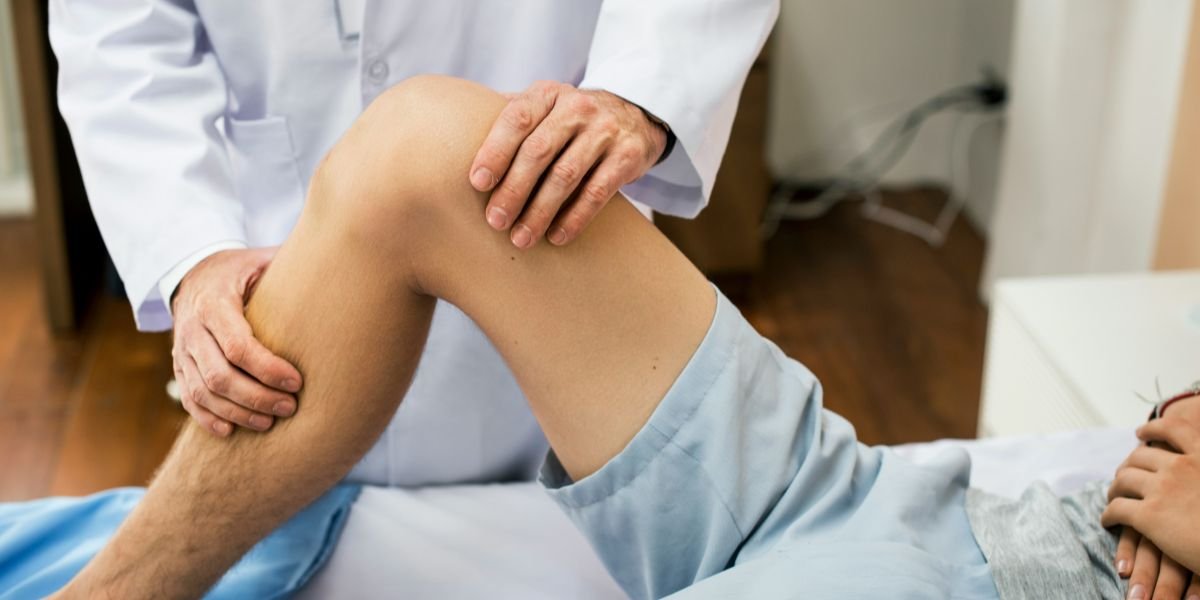
A randomized trial published Sept. 8, 2026, found that high-intensity laser plus home exercise improved knee osteoarthritis scores far more than therapeutic ultrasound plus the same exercise. The result is promising, and it is also a useful case study in how to read a laser therapy claim before paying for a package.
By Alena Wiese
A person with a stiff, aching knee may start to notice the same phrases in ads and mailers: drug-free, FDA cleared, a set number of sessions. The price of a treatment package can look reasonable next to another year of skipping walks and taking the stairs one step at a time. Before signing anything, that person faces a consumer question as much as a medical one: what exactly is being promised, and what evidence stands behind it?
Here is the short answer. Therapy lasers are cleared, not approved, by the FDA, and the research behind them is growing but uneven, so the claims worth trusting are ones tied to a clear diagnosis, a specific condition and a measurable plan. A new knee trial shows both the promise and the fine print.
On Sept. 8, 2026, Lasers in Medical Science published a randomized controlled trial from Siriraj Hospital at Mahidol University in Bangkok. Among 66 adults with knee osteoarthritis, those who received high-intensity laser along with home exercise improved by 40.0 points on a standard knee osteoarthritis pain, stiffness and function questionnaire after 12 weeks, compared with 8.2 points for those who received therapeutic ultrasound with the same exercise.
What does “FDA cleared” mean for a laser device?
“FDA cleared” means a device was found substantially equivalent to a device already legally on the market, not that the FDA reviewed proof that it treats a particular condition. According to the FDA, a 510(k) is a premarket submission showing that a new device is as safe and effective as a legally marketed “predicate.” Premarket approval, or PMA, is a separate pathway, used for devices that are not substantially equivalent to anything already on the market.
Source: Premarket Notification 510(k), U.S. Food and Drug Administration, August 2024. https://www.fda.gov/medical-devices/premarket-submissions-selecting-and-preparing-correct-submission/premarket-notification-510k
Many therapy lasers have been cleared under the FDA category for infrared lamps. Federal regulation defines that device as one that “emits energy at infrared frequencies (approximately 700 nanometers to 50,000 nanometers) to provide topical heating,” and places it in Class II. One cleared therapy laser in the FDA database, for example, lists indications built around elevating tissue temperature for temporary relief of minor muscle and joint pain. That is a narrower claim than an ad promising to rebuild a joint.
Source: 21 CFR 890.5500 Infrared lamp, Electronic Code of Federal Regulations, accessed September 2026. https://www.ecfr.gov/current/title-21/chapter-I/subchapter-H/part-890/subpart-F/section-890.5500
What did the new knee laser trial find?
The trial found that high-intensity laser with exercise produced larger short-term gains than ultrasound with exercise. Researchers randomly assigned 66 adults with moderate knee osteoarthritis to one of the two treatments, twice a week for six weeks, 12 sessions in all. Everyone followed the same daily home exercise program. The laser was a 1064-nanometer Nd:YAG device used in two phases each session, a pulsed phase and a continuous 12-watt phase.
On the WOMAC, a widely used knee osteoarthritis questionnaire, the adjusted difference between groups was 27.7 points in favor of laser (95 percent confidence interval, 16.5 to 39.0; p < 0.001), well above the 10-point change the researchers set as the minimum that matters to patients. Every secondary measure, including pain, other knee function scores and quality of life, also favored laser at 12 weeks. The laser group held its gains through follow-up, while the ultrasound group gradually lost ground. The trial was funded by a research unit at Siriraj Hospital.
Source: Efficacy of high-intensity laser therapy versus ultrasound therapy in patients with knee osteoarthritis: a randomized controlled trial, Lasers in Medical Science, September 2026. https://link.springer.com/article/10.1007/s10103-026-05019-8
What does this trial not tell us?
The trial does not show how laser compares with no added treatment or a sham device, because the comparison was ultrasound. It ran at a single center, followed people for 12 weeks, and enrolled mostly women: 87.9 percent of the laser group and 100 percent of the ultrasound group, a limitation the authors themselves flag. It was also registered after the fact, in October 2025, rather than before enrollment began.
It tested one device, one protocol and one condition. Results for knees do not automatically apply to backs, necks or feet, and results from a specific 12-session protocol do not automatically apply to a different number of visits or a different machine. What the trial does offer consumers is a model of what good evidence looks like: a defined condition, a named device and dose, a validated outcome and a clear threshold for what counts as meaningful improvement.
What questions should a patient ask before paying for laser therapy?
A patient should ask questions that tie the treatment to a diagnosis, a device and a way to measure results. A practical list:
- What is my diagnosis, and how was it made? Laser should follow an evaluation, not replace one.
- What device is this, and what is its FDA clearance? A provider should be able to name the device. Clearance records are searchable in the FDA’s public 510(k) database.
- What does the research say for my condition? The new trial studied knee osteoarthritis. Evidence for one body part does not transfer automatically to another.
- How many sessions, at what total cost, and what happens if there is no improvement? Get the full package price and any refund terms in writing.
- How will progress be measured, and when does treatment stop? Validated questionnaires, such as the WOMAC used in the new trial, are a good sign.
- What else is in the plan? Both groups in the trial exercised daily. Laser was an addition, not a replacement.
Some advertising language is itself a warning sign: “FDA approved laser,” “cures,” “guaranteed results,” or pressure to prepay a large package on the first visit.
Where does an Ocoee clinic fit into a careful decision?
A careful decision starts with an evaluation. ReliefNow® Laser Ocoee, at 288 Moore Rd. in Ocoee (407-877-7117), serves Ocoee, Winter Garden and Windermere in west Orange County, with chiropractors Dr. Jeffrey N. Shebovsky and Dr. Kyle Learn. The clinic offers the ReliefNow® Regenerative Medical Laser™, an FDA-cleared Class IV laser, alongside non-surgical spinal decompression, regenerative medicine, focused shockwave, chiropractic care and customized rehabilitation. That mix fits the trial’s lesson that laser belongs inside a broader plan that includes exercise.
Dr. Shebovsky founded Orange Wellness in 1994, has more than 30 years of clinical experience and holds Florida chiropractic license CH6499. He earned his Doctor of Chiropractic degree with honors from New York Chiropractic College and has authored two books on chiropractic care and laser therapy.
For knee pain, conservative care is generally considered when there are no warning signs. A hot, red, swollen knee, fever, a knee that suddenly gives way or locks, inability to bear weight, calf pain and swelling, or pain after a fall calls for medical or emergency evaluation first. When conservative care does proceed, progress should be tracked with a pain score, a validated function questionnaire and simple tests such as a timed walk, and the plan should be revisited if those numbers stall.
Local demand is growing. U.S. Census Bureau estimates put Ocoee at 51,932 residents as of July 2025, up from 47,295 in the 2020 census, which means many newer residents are choosing care providers for the first time.
What is the takeaway for a careful consumer?
The takeaway is to treat a laser therapy offer the way one would treat any significant purchase: read the claim closely, ask what stands behind it, and decide how success will be measured before money changes hands. The September trial adds real weight to the case for high-intensity laser in knee osteoarthritis. It also shows that “FDA cleared” is a starting point for good questions, not the answer to them.
Dr. Jeffrey N. Shebovsky, DC | ReliefNow® Laser Ocoee | 288 Moore Rd, Ocoee, FL 34761 | 407-877-7117 | https://reliefnowlaser.com/providers/ocoee/
This article is for informational purposes only and does not constitute medical advice. Consult a qualified healthcare provider before beginning any treatment program.