The Chicago Journal

The Infrastructure Nobody Sees Until It’s Missing


By: Héctor C. Moncada Díaz

The businesses that keep things running rarely get attention. A data layer, a compliance system, a supply chain, a public health framework – nobody notices until it breaks. The four people below are building in that unglamorous middle layer, across AI, cybersecurity, sanitation, and public health.

Yasser Elsaid spent his university years in Canada chasing the same goal as most of his computer science classmates: landing a FAANG internship in California, something he calls “Cali or Bust.” He got there, working stints at Tesla and Meta, but came away with a different lesson than the one he was supposed to learn.

“I don’t think I used any of the things that I learned at those bigger companies,” he says, “but I used a lot of the things that I learned when building those smaller projects” he worked on outside of class. When ChatGPT launched in late 2022, one of those side projects became the basis for something bigger – a way for businesses to feed their own documents into a language model and ask it questions directly, a fairly obvious idea in hindsight that nobody had yet built as its own product.

That product became Chatbase, Elsaid built it in public but was careful about what he actually shipped, wary that a half-working feature could leave a bad first impression that’s hard to undo. He’s also said that scaling the company meant unlearning some of the habits that got it off the ground in the first place.

“The most common mistake bootstrap founders make is having the mindset of a bootstrap founder,” he says. “Being extremely cost-efficient with everything, always trying to make sure you’re ROI positive, being risk-averse. But if you want to build something huge, the biggest mistake is not being aggressive enough.” Chatbase has reached $10 million in annual recurring revenue without outside funding.

Angelo Huang is working on a related problem in cybersecurity. As founder of Swif.ai, he built a device management platform aimed at a specific blind spot: the laptops, phones, and tablets touching company data that IT departments often don’t even know about. Swif.ai handles compliance and mobile device management, with the pitch that as companies adopt AI tools faster than their security policies can keep up, the devices running those tools become the actual point of exposure, not the AI systems themselves.

Noah Manders runs a different kind of infrastructure business. Porta Potties For Sale is one of several sites under the Porta Potty World umbrella, alongside Porta Potty World, Porta Potty Rental Quotes, and Porta Potty Supplies – separate properties built around purchase, rental, and supply rather than one combined storefront. The site serves contractors, event organizers, rental companies, municipalities, schools, and faith-based organizations, with nationwide delivery and financing on a catalog that ranges from standard construction units to ADA-compliant restrooms, shower trailers, and fleet packages. It’s a category people generally don’t think about until they’re planning an event or running a job site and suddenly need several dozen units by a specific date.

Edward Garcia works on a less tangible kind of infrastructure: the relationships and networks that determine whether people have a path to economic mobility and health. Garcia spent ten years in the federal government – in the U.S. Census, at the Centers for Medicare and Medicaid Services, and on the House Energy and Commerce Committee’s health subcommittee, where he worked on parts of the Affordable Care Act. He later moved to CareSource, a nonprofit Medicaid managed care plan, where he built a mentoring model called Life Services and helped secure federal funding behind it.

His argument, in short, is that social disconnection isn’t a personal failing – it’s a product of how systems are designed. He calls the work of redesigning those systems “Social Connection Architecture,” covering relational infrastructure, incentive design, and civic participation. The numbers he cites are not small: social disconnection has been linked to a 26 to 28% higher risk of chronic disease and up to a 30% increase in mortality risk, and Medicare spends an estimated $7 billion a year on costs tied to isolation. Garcia helped author the U.S. Surgeon General’s 2023 Advisory on Loneliness and Isolation and built the SILC Coordinating Council, which includes the OECD, WHO, and the EU. Through the Global Initiative on Loneliness and Connection (GILC), he’s now focused on building coordination across a field he describes as crowded with apps and wellness products that treat disconnection as an individual problem rather than a structural one.

These four people aren’t in the same industry and didn’t set out to solve the same problem. But each one is working on the part of their field that most people only notice when it stops working – which is, generally, a sign they’re building something that matters.


What Passengers Should Know About Florida Bus Accident Claims

Buses move millions of people across Florida every day, from city transit riders to schoolchildren to tourists on charter coaches. When one of those vehicles is involved in a crash, the consequences can be severe, and the legal questions that follow are unlike those in an ordinary car accident. A bus accident claim involves layers of responsibility, insurance, and regulation that most injured passengers never anticipate.

The size and weight of a bus mean that even a low-speed collision can cause serious harm. Passengers often have no seatbelts, no airbags, and no warning. Understanding how Florida law treats these claims helps injured riders and their families grasp what they are dealing with before an insurer or transit authority starts shaping the narrative.

Why Bus Accident Claims Are More Complex

A bus accident claim rarely involves a single responsible party. Depending on the circumstances, liability may rest with the bus driver, the company or agency that operates the bus, a maintenance contractor, another motorist, or even the manufacturer of a defective part. Sorting out who bears responsibility is one of the first and most demanding tasks in these cases.

The type of bus matters too. A crash involving a public transit bus or a school bus may pull in a government entity, which changes the rules entirely. Claims against government bodies carry shorter deadlines, special notice requirements, and caps on what can be recovered. A passenger who treats this like a routine car accident claim can lose rights before they even understand they had them.

The attorneys at Alpha Law Group work through these layers to identify every responsible party and the insurance available from each. That mapping is not academic. The number of parties and policies involved often determines whether an injured passenger can be fully compensated for a serious injury.

When a Bus Crash Causes Catastrophic Injury

The injuries in bus crashes tend toward the severe end of the spectrum. Among the most devastating are spinal cord injuries, which can permanently alter a person’s mobility, independence, and earning capacity. The force involved in a bus collision, combined with the lack of restraints, creates conditions where these injuries are tragically common.

A spinal cord injury reshapes a person’s entire future, and the costs follow accordingly. Beyond immediate medical care, there are long-term rehabilitation, home modifications, assistive equipment, lost income, and ongoing care needs that can extend across decades. A claim that fails to account for the full arc of these costs leaves an injured person to absorb expenses that were never their fault.

Handling spinal cord injury claims requires building a record that captures both the present reality and the lifetime impact of the injury. That work draws on medical experts, life-care planners, and economic analysis to put a credible figure on losses that stretch far into the future. Insurers tend to resist these claims precisely because the stakes are so high.

The Role of Experienced Representation

Bus accident cases reward preparation and familiarity with the specific procedures these claims demand. The notice requirements for government defendants, the multiple insurers, and the volume of evidence all create opportunities for missteps that can weaken a claim.

Experienced bus accident lawyers understand how to preserve evidence quickly, identify the responsible parties before deadlines pass, and counter the defenses that bus operators and their insurers raise. Buses are often equipped with cameras and data recorders, and securing that information early can make the difference in establishing what happened. That evidence has a way of disappearing if no one moves to preserve it.

Taking the First Step After a Bus Crash

Few passengers know what to do in the aftermath of a serious bus crash, and the compressed deadlines for some claims make early action especially important. There is no need to have the situation figured out before seeking guidance. The point of an initial conversation is to understand whether a claim exists and what pursuing it would involve.

Injured passengers and their families can get a free consultation to learn how a bus accident claim is evaluated and handled. That first step commits no one to litigation. It gives an injured person the information they need to decide, on their own terms, how to move forward while the evidence is still fresh and the options are still open.

Disclaimer: This article is for general informational purposes only and does not constitute legal advice. Laws change and apply differently to individual circumstances. For guidance on your specific situation, consult a licensed attorney.

Cynthia Karalla Unveils SPECIAL CUTS & IMMORTALIZATION, Featuring Original Wearable Art Priced at $10,000

There are some art projects that ask to be viewed, and then there are projects that ask to be entered. Cynthia Karalla’s SPECIAL CUTS & IMMORTALIZATION belongs firmly in the second category. Presented through 6-6-26 Studio, the work takes the familiar shape of a black T-shirt and turns it into something far less ordinary: a live performance, a wearable sculpture, a photographic record, and a meditation on how value is made.

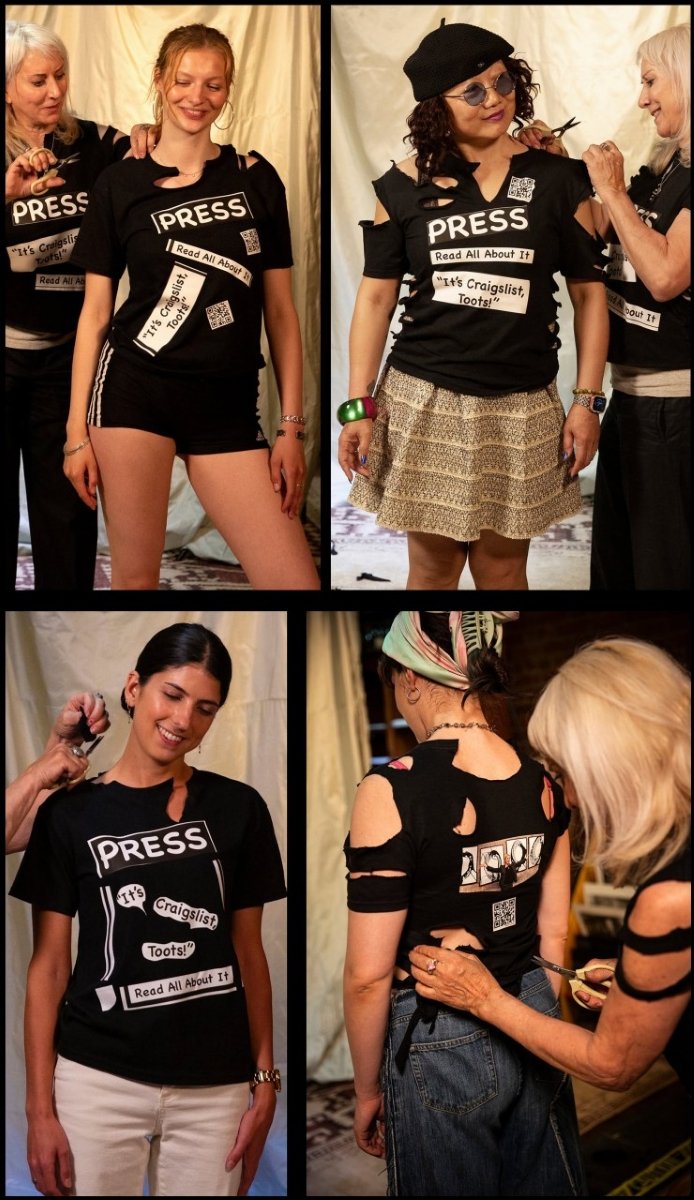
At the center of the project is an act of transformation. Karalla cuts, tears, and reconstructs each shirt directly on the buyer’s body in real time, creating a piece that cannot be duplicated and does not fully exist until the interaction happens. What begins as a mass-market garment is pulled into a much stranger and more intimate territory, one where the object, the wearer, and the moment of its making become inseparable.

The result is not fashion in the conventional sense, even if it can be worn. Nor is it simply a performance, even if the act of cutting is central to the work. SPECIAL CUTS & IMMORTALIZATION sits in the space between performance art, conceptual sculpture, documentation, and ritual. It feels less like buying a shirt and more like stepping into an artwork while it is being made.

An Artist Interested in Transformation, Not Categories

Cynthia Karalla has built a practice around crossing boundaries. An American artist whose background includes architecture, photography, conceptual art, activism, and performance, she has long resisted the idea that one medium should define a body of work. Instead, her projects tend to move between forms, asking larger questions about identity, mythology, reinvention, and the systems that shape cultural value.

That sensibility is visible throughout SPECIAL CUTS & IMMORTALIZATION. The project does not settle comfortably into any single art-world label because Karalla does not seem especially interested in those labels to begin with. What matters more is the tension between destruction and creation, public spectacle and personal experience, commerce and ritual. She uses the T-shirt as the entry point, but the project itself is really about what happens when something ordinary is pushed through performance and returned to the world with a completely different meaning.

Photo Courtesy: Jake Borden

The Shirt Is Only the Beginning

The object at the center of the work is intentionally familiar: a black T-shirt. But in Karalla’s hands, it functions less as clothing and more as raw material.

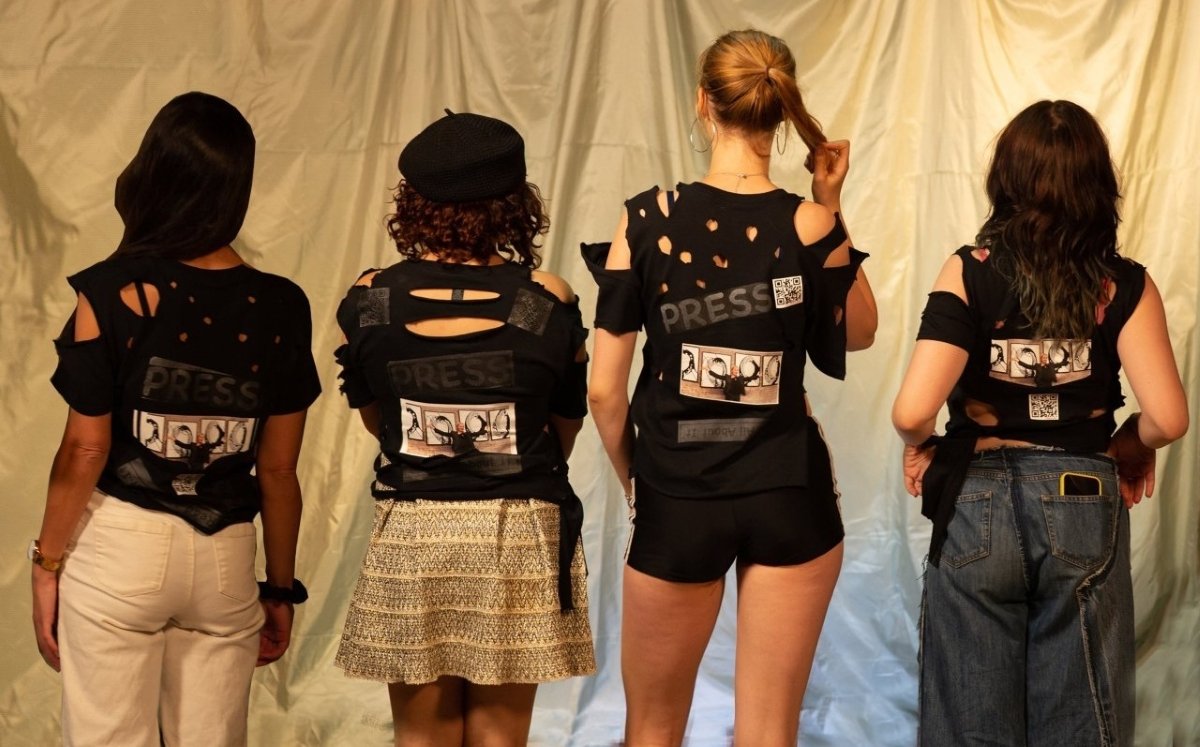
During each live happening, the shirt is cut, ripped, and reconstructed directly on the participant’s body. There is no template and no finished version waiting to be revealed. The final form emerges through instinct, movement, the body of the wearer, and the unpredictability of the moment. Each shirt becomes a one-time event as much as a finished object.

Some pieces include iron-on phrases such as PRESS, and IT’S CRAIGSLIST, TOOTS!, details that tie the project back to Karalla’s wider conceptual language and to her book It’s Craigslist, Toots!. These phrases do more than decorate the garment. They pull in ideas about image, transaction, social performance, and the strange ways language can elevate or destabilize an object.

Destruction as a Creative Act

What gives SPECIAL CUTS & IMMORTALIZATION its charge is that the act of alteration is not just part of the process. It is the artwork.

Karalla is not modifying a T-shirt so that it can later become art. The cutting itself is the point. The ripping, reshaping, and rebuilding are where the piece takes form conceptually as well as physically. That decision shifts the work away from custom clothing and into a different artistic lineage, one tied to performance, participation, and the idea that an object can hold the memory of what happened to it.

There is also an alchemical quality to the project. Karalla’s work has been shaped by Hermetic philosophy, and that influence feels especially present here. A low-cost, widely recognizable object is taken apart and transformed into something singular, theatrical, and highly valued. The shirt is no longer just fabric. It becomes evidence of an event, of the artist’s intervention, of the wearer’s presence, and of a story that cannot be repeated in exactly the same way again.

That transformation is central to the work’s power. It asks a deceptively simple question: what actually gives an object value? The material itself, or the experience, authorship, and mythology attached to it?

More Than a Wearable Object

Although the finished piece remains wearable, the project is much bigger than a garment. Each work exists across multiple forms at once.

It is a live performance staged on the body.
It is a sculptural object shaped through destruction and reconstruction.
It is a personal encounter between artist and participant.
It is a document captured in photographs and video.
It is a collectible tied to a single unrepeatable event.

That layering is what makes SPECIAL CUTS & IMMORTALIZATION feel unusually rich. The buyer is not simply purchasing a final product. They are participating in the conditions of its creation. Their body becomes part of the composition. Their presence becomes part of the artwork’s history. And the shirt itself becomes a kind of relic, carrying the trace of a specific action, a specific moment, and a specific relationship between artist and participant.

In that sense, the work is as much about authorship and participation as it is about the final object. Karalla blurs the line between creator, collector, and subject in a way that feels deliberately destabilizing. The buyer does not stand outside the piece. They enter it.

Why “Immortalization” Matters

The second half of the title, IMMORTALIZATION, is what pushes the project beyond a live happening and into a broader meditation on memory, image, and permanence.

Each cutting event is documented through professional photography and video, and that documentation becomes part of the finished artwork. The performance is not allowed to disappear once it ends. Instead, it is archived and folded back into the piece itself, preserving not only the altered shirt but the event of its making.

That matters because performance is usually fleeting. It happens in a specific place, then lives on mostly through memory and retelling. Karalla interrupts that ephemerality by treating the documentation as part of the work’s architecture. The wearer, the garment, and the live act are all captured together, turning a temporary interaction into a lasting visual record.

This is where the project becomes especially compelling. The participant is not simply leaving with a customized object. They are leaving with proof of having been inside the artwork. The body is not separate from the piece. It is part of the piece’s archive, part of its mythology, and part of its permanence.

Photo Courtesy: Jake Borden

A Work That Understands the Theater of Value

Karalla’s project is also acutely aware of the systems it is operating inside. In a culture shaped by luxury branding, social image, exclusivity, and the spectacle of scarcity, SPECIAL CUTS & IMMORTALIZATION feels fully conscious of how value is staged and performed.

Each shirt in the series is priced at $10,000, but the number is less a shock tactic than a conceptual pressure point. It forces the question that the project has been building all along. Why does one T-shirt feel disposable while another becomes desirable? What changes when an object is made unique through performance, documented as art, and framed as an experience rather than merchandise?

Karalla does not offer a clean answer. Instead, she constructs a situation in which the answer becomes unstable. The value of the work lives partly in the object, partly in the artist’s authorship, partly in the live event, and partly in the documentation that survives afterward. It is an artwork about transformation, but it is also an artwork about the machinery that turns transformation into cultural value.

Cynthia Karalla’s Ongoing Project of Reinvention

What makes SPECIAL CUTS & IMMORTALIZATION resonate is that it distills many of Cynthia Karalla’s long-running concerns into one concentrated act. It is about identity and reinvention, but also about performance and myth-making. It is about the body, but also about the image of the body. It is about destruction, but also about how destruction can become a path toward authorship and meaning.

Most of all, it is about what happens when art refuses to stay politely contained. Karalla does not present the viewer with a finished object and asks for admiration from a distance. She stages an encounter. She turns an everyday item into a site of risk, intimacy, spectacle, and transformation. And in doing so, she reminds us that some of the most interesting contemporary art is not just something to look at. It is something that happens to you.

To learn more about Cynthia Karalla and her work, visit www.karalla.com.
Photography for Immortalization by Jake Borden.
Food for the event was provided by The Great Johnny Ciao and Lisa McDaniel.

Helping Rhinos: Building a Conservation Model Where Loss, Land, and Community All Count

Not every conservation story starts with triumph. Some begin with grief.

For Helping Rhinos, the deaths of two rhino orphans, Ntoto and Isomiso, in 2018 forced a reckoning with what it actually means to succeed in wildlife conservation. The numbers on a spreadsheet, animals counted, populations tracked, didn’t capture what had been lost. And they didn’t capture what needed to change. That moment became a turning point for the organisation, reshaping how it measures progress, trains teams, and builds the long-term partnerships that hold its work together.

Today, Helping Rhinos operates across a framework built on three pillars: Protect Wildlife, Preserve Habitat, and Provide for People. Each one reflects a belief that conservation can’t be reduced to a single metric or a single win.

What Two Losses in 2018 Changed About Everything

The deaths of Ntoto and Isomiso hit hard. But Helping Rhinos didn’t treat them as isolated tragedies. The organisation treated them as information.

Working closely with veterinary teams in the aftermath, Helping Rhinos reviewed health monitoring protocols from the ground up. Response timing, rehabilitation staging, biosecurity measures, and escalation procedures were all examined and strengthened. The goal wasn’t just to prevent a repeat. It was to build a culture where compassion and rigour reinforce each other rather than compete.

That shift ran deeper than updated procedures. It changed what the organisation considers success. Where traditional conservation metrics focus almost entirely on population figures, Helping Rhinos now evaluates how it responds when things go wrong. Whether protocols improve. Whether knowledge is shared transparently. Whether systems get stronger after setbacks. Grief, handled well, became a driver of better science.

The Rhino Strongholds Model: More Than a Reserve Strategy

Helping Rhinos uses the term “Rhino Strongholds” to describe something more ambitious than a protected area. A Stronghold is a connected, expanded landscape, one that allows rhinos to move, adapt, and function as the keystone species they are.

Rhinos shape vegetation. They affect soil composition. Their presence influences biodiversity well beyond their own survival. By designing landscapes with that ecological role in mind, Helping Rhinos argues that protecting rhinos means protecting entire ecosystems, not just individual animals.

The Strongholds model also serves as a climate resilience strategy. Extreme rainfall events and prolonged droughts are now operational realities for partners in the field. Larger, connected habitats give wildlife room to migrate toward resources and away from danger, reducing the need for constant human intervention. Helping Rhinos supports this through vaccination programmes, habitat expansion planning, and adaptive land management work with partners on the ground.

In South Africa’s Eastern Cape, the Strongholds approach has brought multiple landowners and conservation bodies into alignment around shared landscapes. That kind of collaboration doesn’t happen by accident.

Trust Takes Time, and So Does Alignment

Building long-term partnerships across multiple landowners and conservation organisations requires more than a shared mission statement. Helping Rhinos has learned that alignment needs to be actively maintained, not assumed.

The organisation holds annual partner reviews and maintains regular field engagement. When disagreements or challenges arise, they’re addressed directly. Honest conversations about what’s working and what isn’t keep everyone oriented toward the same goals. Short-term wins don’t substitute for that kind of structural trust.

Leadership accountability follows a similar logic. Helping Rhinos assesses partners not only on their commitment to the cause but on transparency, governance quality, and the sustainability of their planning. The three-pillar framework gives that assessment a consistent structure: partners are expected to deliver measurable outcomes across conservation, community, and habitat work. Passion matters. But it has to be held up by something solid.

Risk, Rewilding, and the Limits of Fortress Conservation

There’s no risk-free option in conservation. Helping Rhinos is clear about that.

Fortress-style protection, keeping animals in tightly controlled, heavily fortified environments, can reduce immediate threats. But it doesn’t produce healthy, self-sustaining populations. It doesn’t allow rhinos to fulfil their ecological roles. And in the long run, it may do more to limit conservation outcomes than to secure them.

Helping Rhinos defines acceptable risk differently. An acceptable level of risk is one where animals can live and move within expanded, secure landscapes, supported by strong monitoring and the capacity to respond quickly when problems arise. That definition shapes decisions about rewilding, translocation, and how Stronghold boundaries are drawn.

The organisation’s approach to decision-making under uncertainty rests on a few consistent principles:

  • Weigh immediate safety against long-term ecological function, not just short-term threat reduction
  • Support rapid-response capacity so that risk doesn’t become catastrophe
  • Prioritise landscape scale over containment where conditions allow
  • Use monitoring data to refine risk assessments over time rather than locking in fixed assumptions

It’s a philosophy built for uncertainty. Which is, increasingly, the only kind of conservation environment there is.

Communities Aren’t a Footnote. They’re the Foundation.

If you’ve ever assumed that wildlife conservation and community development run on separate tracks, Helping Rhinos offers a direct counter-argument.

The organisation’s community work has evolved considerably. What began as consultation, informing local communities about conservation plans, has become genuine collaboration. Communities now help determine where schools are built, how land is managed, and which conservation roles are filled locally. Education centres and ranger training programmes deliver tangible benefits that give people a direct stake in conservation outcomes.

The logic is straightforward: when communities see conservation improving their lives and creating real opportunity, they become its strongest supporters. When they don’t, the opposite tends to be true. Helping Rhinos has built its Strongholds strategy around that reality rather than around it.

This community-centred model also feeds into long-term leadership development. Local educators, rangers, and conservation leaders are the people who will carry this work forward. Investing in them isn’t secondary to the mission. It is the mission, extended across time.

What Scaling the Model Actually Requires

Helping Rhinos is clear-eyed about what expanding its impact into new regions and eventually to other rhino species will demand. The answer isn’t one thing. It’s several things working together.

Technology matters. Advanced tracking systems, drone surveillance, and data-led decision-making will continue to strengthen field protection and allow partners to respond faster and more precisely to threats. These tools are already part of the operational picture and will become more central as the organisation scales.

But technology alone won’t be enough. The future of Helping Rhinos depends equally on the people those tools support. Key capabilities the organisation is investing in as it scales include:

  • Local ranger training and professional development
  • Community education programmes tied to conservation outcomes
  • Landscape-level data systems shared across partner organisations
  • Governance structures that keep partners accountable as networks grow

The Rhino Strongholds model remains the foundation for all of it. Not because it’s the easiest approach, but because it’s the one that accounts for ecosystems, communities, climate, and long-term species health at the same time. Isolated reserves and single-species thinking got conservation to where it is. Strongholds are what comes next.

Helping Rhinos has spent years learning, sometimes painfully, that conservation success is not a number. It’s a system. And systems, built well, can outlast the conditions that first made them necessary.

DPB Finds Strength in Every Scar on Undefeated

By: Jean Apache

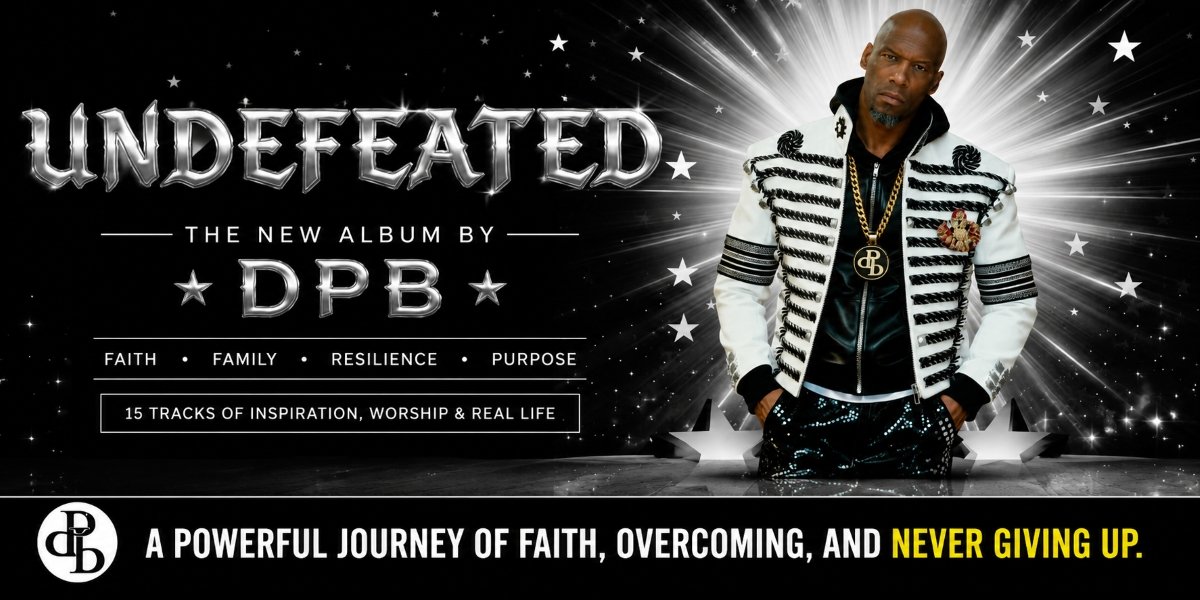
Longevity is one of music’s rarest achievements. It demands adaptability without surrender, growth without abandoning identity, and enough conviction to keep creating when the spotlight shifts elsewhere. On Undefeated, veteran Christian hip-hop artist DPB doesn’t simply celebrate surviving more than three decades in the music industry; he explains why he’s still standing.

The 15-track collection functions as both autobiography and declaration, weaving together hip-hop, worship, gospel, funk, and inspirational pop into an album whose heartbeat is perseverance. Throughout the record, DPB repeatedly returns to one central idea: victory isn’t measured by chart positions or accolades but by remaining faithful through life’s storms.

That message comes into focus immediately with “I Feel So Good Today (Happy Mix),” a vibrant opener built around infectious optimism. Rather than presenting happiness as a fleeting emotion, DPB frames it as a spiritual discipline. The repeated refrain, “I’m up when I’m down”, captures the album’s outlook in one memorable phrase. Joy becomes an act of faith rather than circumstance, and the energetic production reinforces that conviction without feeling forced.

The title track, “Undefeated 3.0,” is the album’s emotional centerpiece. Here, DPB recounts betrayal, disappointment, endurance, and ultimate triumph, but refuses to cast himself as the hero. Instead, every victory is attributed to God’s faithfulness. It’s a subtle distinction that gives the song emotional credibility. In an era where self-made narratives dominate much of popular music, DPB consistently redirects the spotlight toward the source of his strength.

One of Undefeated‘s greatest strengths is its willingness to move comfortably between celebration and worship.

“God Mode” bursts with revival energy, blending rhythmic verses with declarations of healing and divine authority. Likewise, “Power in the Name of (Jesus Anthem)” feels purpose-built for congregational participation. Its repetitive structure isn’t accidental; it’s designed to unite listeners in proclamation rather than simply entertain them.

Yet the album’s most compelling moments often arrive when DPB lowers the volume and tells his own story.

“Back in the Day” stands among the record’s finest achievements. Rather than relying solely on nostalgia, the song uses memory to examine spiritual inheritance. Images of a praying mother, a faithful grandmother, church rehearsals, neighborhood block parties, and front porch conversations become more than pleasant recollections; they become evidence of the foundation that continues to sustain him today. It’s one of those rare songs that honors the past without becoming trapped inside it.

That same honesty appears on “Let It Go,” arguably the album’s most vulnerable composition. Addressing addiction, bitterness, rejection, loneliness, and emotional wounds, DPB refuses easy answers. The repeated invitation to “let it go” becomes less of a slogan than an ongoing process of surrender. The track demonstrates that Christian music can acknowledge brokenness without losing sight of hope.

The worship centerpiece, “Consume Me,” slows the album’s momentum beautifully. Stripped of the rhythmic urgency found elsewhere, it creates space for contemplation. Rather than showcasing technical vocal performance, the song succeeds because of its sincerity. It feels less like a studio recording than a spontaneous prayer captured in real time.

Throughout the album, DPB’s songwriting favors clarity over complexity. His lyrics aren’t constructed to impress through dense metaphors or elaborate internal rhyme schemes. Instead, they communicate directly, allowing testimony to remain the focal point. For some listeners, that simplicity may feel unconventional in contemporary hip-hop. For others, it becomes one of the album’s defining virtues. Every line serves the message.

Production remains equally focused. Instead of chasing current sonic trends, Undefeated embraces classic hip-hop rhythms, gospel influences, and polished contemporary production. The result is an album that sounds timeless rather than fashionable, a record more interested in longevity than immediacy.

What ultimately elevates Undefeated is its authenticity.

Nothing here feels manufactured to fit a playlist or capitalize on current musical movements. Every song reflects an artist who has experienced success, disappointment, ministry, family, and personal growth, and who has emerged with both gratitude and purpose intact.

After more than thirty years in Christian music, DPB could easily rely on past accomplishments. Instead, Undefeated demonstrates that his creative fire continues to burn brightly. The album serves as both a celebration of where he’s been and an affirmation that his journey is far from complete.

In the end, Undefeated isn’t simply about overcoming adversity. It’s about discovering that true victory isn’t found in avoiding life’s battles but in remaining faithful through every one of them. That’s a message that resonates long after the music fades.

Gavin Southwell Brings Purpose and Community Impact to Insurance Technology

By: Jay Kt

In insurance and financial technology, growth is only meaningful when it benefits the people it is designed to serve. Companies can scale quickly, enter new markets, raise capital, and build new tools, but none of it matters if people do not understand what they are buying.

Families need trustworthy information, affordable protection, and companies that stand behind their commitments when it counts.

Gavin Southwell has built his career at the intersection of business growth, technology, compliance, and consumer access. He served as President and CEO of the No. 1 fastest-growing public company from 2017 to 2019, ranking ahead of companies such as Amazon and Facebook on Fortune Magazine’s list.

With more than 17 years of experience in technology and financial services, Southwell has contributed to some of the industry’s largest InsurTech exits.

His work spans retail, financial services, and transportation. It includes major deals such as a take-private transaction completed above its share price at the time, large debt financings, and a SPAC process.

Today, he advises and invests in growing technology companies, focusing on solutions that address real needs and create lasting value for the people they serve.

A Career Shaped in London

Before his U.S. public-company work, Southwell spent nearly 20 years in investment banking and insurance technology in London. He grew up in a poor part of Northern England before moving to London, marking the start of his career in international insurance and financial markets.

Early in his career, he was part of a team that built one of the first self-service digital insurance systems, allowing customers to get a quote, buy a policy, and print documents online.

The business was later sold to a major global insurance company, which used the technology across its personal insurance products in multiple countries.

One of his biggest influences during this time was Andrew Beazley, a major figure in the London insurance market. Beazley built a major Lloyd’s syndicate and gave Southwell his first major role at a young age.

“Andrew Beazley taught me to build on your strengths and not to focus so much on trying to solve weaknesses,” Southwell said. “He was happy to spend time giving advice to someone early in their career.”

Taking the Business Worldwide

Gavin Southwell later joined a privately owned insurance broker in London, where his work shifted from insurance technology into global brokerage operations. Within a few years, while serving as COO, the company became one of the world’s largest privately owned insurance brokers.

The broker also handled major global insurance work, including coverage tied to Venezuela’s oil companies. The firm handled one of the largest insurance contracts in the market and became a major broker across much of Latin America.

“The business grew quickly, and I lived on flights around the world for a few years,” Southwell said. “It was really hard work, but we built a great global business.”

Eventually, the company was sold to private equity.

Finding Purpose in Adversity

After the devastating loss of his son, Southwell transitioned into U.S. health and life insurance technology. While processing his grief, he also devoted time to raising money for charities supporting families who had experienced similar loss.

“A defining moment was when I realized that there are more important things than money, that bad things happen, and it’s how you react to that darkness which will define you,” he said. “I’ve learned how precious time is. You should make the most of each day and stay in the present. You can always work more, but quality is better than quantity.”

It was during that period that his perspective on work and its purpose began to change. After nearly two decades in investment banking and insurance technology in London, his move into health and life insurance technology in the U.S. represented a shift in direction.

His work increasingly focused on families facing a difficult and costly healthcare system, often during times of great need.

“As that business grew, we helped millions of Americans protect themselves and their families, most for the first time due to the high cost of healthcare in the USA,” Southwell explained. “I now focus on technology where there are market inefficiencies or consumer challenges that can be solved by technology and AI.”

One of Southwell’s proudest professional moments was ringing the Nasdaq bell twice as CEO. While the company outpaced major global technology firms such as Apple, Amazon, and Facebook in growth, its impact was what made the achievement meaningful.

“It was a business that was doing a good thing and helping the most vulnerable in our society,” he said. “I’m proud of that.”

Creating a Workplace Culture That Changes Lives

For Southwell, the business was not only helping customers find coverage. It was also positively impacting the lives of its employees and the wider community. The company created thousands of new jobs and trained many blue-collar workers to become licensed insurance agents.

About 70% of its staff were female, and around 75% were minorities, making it an unusually diverse technology business. It also supported several charities and made community involvement part of employee development.

Each year, top performers qualified for a trip to the Bahamas. Southwell recalls one agent who said she was able to move out of her mother’s house with her two children for the first time and afford gifts for their birthdays. She also started taking swimming lessons so she could swim with dolphins on the trip.

“The trip to the Bahamas was a dream come true as she had family on the island she had never met,” Southwell said. “All of this because she spent her days helping people a lot like her access healthcare for the first time.”

Southwell also kept a folder on his desk filled with emails and letters from people the company had helped connect with healthcare coverage. The volume of those messages still amazes him to this day.

A Career Defined by Impact

After his son passed away, Gavin Southwell looked at the statistics for parents who experience similar tragedy and found the outcomes to be deeply challenging, with many families never fully recovering. The data also pointed to increased risks for men, particularly around substance abuse and mental health difficulties.

Moving forward was a personal process, but it was also made possible by his support system and his desire to help others less fortunate. Over the years, he and his family have helped raise money for several charities and given significant amounts to organizations they support.

He has also organized and taken part in cycling events for several years, including a ride across the UK. To this day, he remains involved with a Tampa-based charity and is one of its largest supporters.

Southwell has never defined success through fame or public attention. What matters more is whether his family and friends know he is doing well and living a good life.

“There is always more to do, things we would have changed or done differently,” he said. “It’s a folly. Make it count right now, do your best, and that to me is success.”

Today, Southwell continues to work as an advisor and investor supporting technology-focused growth companies, helping to improve access, address inefficiencies and solve real-world problems at scale.

The most visible achievements in his career may be rankings, transactions and Nasdaq milestones, but the moments that stayed with him were more personal. They were found in families gaining access to healthcare, employees growing in their careers and people building more stable lives through work that also helped others.

For Southwell, growth and technology are most useful when they lead to better outcomes in the lives of real people. In that sense, his career is measured not only by what it achieved, but by what it made possible.

KDK Auto Brokers Focuses on Customer Service and Buyer Support

A Reputation Built One Buyer At A Time

Buying a vehicle is one of the largest financial decisions many people make outside of housing. Buyers want the right price, the right vehicle, clear financing terms, and confidence that the dealer behind the sale will treat them fairly.

KDK Auto Brokers has built its customer experience around those concerns. Based in Brunswick, Ohio, the independent dealership has grown from a smaller family operation into a high-volume retail business with strong reviews and a reputation tied to customer satisfaction. It came from years of selling vehicles in a way that gives buyers information, options, and clarity through the process.

The dealership began during the early years of online car shopping, when consumers were learning how to compare inventory across different websites. KDK Auto Brokers saw an opportunity to reach buyers with detailed photos, complete descriptions, and competitive pricing. That approach helped the company compete with larger franchise dealerships and attract customers from beyond the local market.

The dealership uses information as part of the sales process, not as a barrier to it.

From Internet Listings To Customer Confidence

KDK Auto Brokers was founded by Phil Klima and his father, John, during a period when online vehicle shopping was beginning to reshape the auto business. The company started by retailing vehicles for budget-conscious buyers who needed dependable transportation.

As the business expanded, KDK Auto Brokers moved into larger facilities and increased monthly sales volume. The company eventually grew into a high-volume independent dealership in Ohio, with operations that included space for hundreds of vehicles and a staff supporting sales, reconditioning, and daily dealership activity.

Phil Klima has more than 17 years of automotive industry experience. His background includes domestic brands, import brands, luxury vehicles, trucks, sport utility vehicles, and high-volume retail operations. That range matters because customers arrive with different needs. Some want an affordable first vehicle. Others want a luxury import, a family SUV, or a reliable pre-owned car that fits a budget.

A customer experience built on those needs requires more than inventory. It requires a process. Buyers need to know what they are viewing, what they are paying for, and what costs may come after the sale.

Why Reviews Matter In Automotive Retail

A strong review base carries weight in the car business because customers often compare several dealers before they visit a lot. They may check Google, Yelp, vehicle listing platforms, and dealership websites. Reviews help buyers understand whether other customers felt respected, informed, and treated with care.

For KDK Auto Brokers, positive customer feedback reinforces the way the dealership approaches buying. A five-star service reputation is not only about a friendly greeting or a clean vehicle. It is about consistency. Customers remember whether the vehicle matched the listing, whether the staff answered questions directly, whether pricing felt clear, and whether the process respected their time.

In a market where online visibility can influence buying decisions, reviews serve as a public record of customer experience. A dealership can describe its values, but customers often want to hear from other buyers. That is why consistent reviews become part of credibility.

Educating Buyers Before The Sale

One part of the KDK Auto Brokers customer experience is education. The dealership encourages buyers to look beyond the excitement of a vehicle and consider the full cost of ownership. That includes price, insurance, fuel, maintenance, repairs, taxes, title fees, documentation fees, and financing terms.

This guidance is especially important for first-time buyers. A monthly payment can make a vehicle seem affordable, but it does not tell the whole story. Loan length, interest costs, cash down, and protection products such as Guaranteed Asset Protection can affect the long-term financial picture.

KDK Auto Brokers also advises customers to research values through trusted pricing guides such as Kelley Blue Book, Edmunds, and J.D. Power. Comparing the exact trim, mileage, engine, options, and location helps buyers judge whether a price is fair. The dealership also encourages buyers to review history information before purchasing a pre-owned vehicle, while understanding that reports only show what has been reported.

A Better Experience Starts With Transparency

Customers usually know when they are being rushed. They also know when a salesperson avoids direct answers. KDK Auto Brokers has built its reputation by giving buyers the information needed to make a practical decision.

That approach is important in a market that has changed over the past few years. Inventory shortages affected pricing and availability, but supply chains have improved. Buyers now have more leverage in many situations, while demand for solid pre-owned vehicles remains strong because new vehicle prices remain high.

Fuel costs have also influenced buying behavior. More shoppers are considering fuel-efficient cars, hybrids, and electric vehicles. At the same time, buyers still need to balance technology, reliability, battery range, insurance, and long-term ownership costs.

Preowned Value And Practical Guidance

KDK Auto Brokers places clear emphasis on the value of pre-owned vehicles. New cars often lose a significant portion of value in the first year. Preowned vehicles can offer a lower upfront cost, slower depreciation, and lower insurance costs because replacement value is often lower.

That does not mean new vehicles are never the right choice. Some buyers may benefit from new vehicle financing incentives, warranty coverage, or the ability to choose color, trim, and options. Others may decide a pre-owned vehicle gives them the best balance of cost and reliability.

The important point is that customers should make the decision with a full view of the tradeoffs. KDK Auto Brokers encourages buyers to separate emotion from finances. That advice may sound simple, but it can prevent expensive mistakes. A vehicle that feels exciting during a test drive can become a burden if the loan term is too long, the payment is too high, or the maintenance costs are not realistic.

This is where customer service connects directly to reputation. A good buying experience is not only measured on the day of purchase. It is also measured months later, when the customer feels the decision still fits their life.

Financing Guidance That Protects The Buyer

Financing is another area where customers often need guidance. Some buyers focus only on payment. Others assume they need perfect credit to get approved. Some believe dealer financing is always more expensive than financing arranged elsewhere.

KDK Auto Brokers works to clarify those points. The dealership encourages buyers to understand the full loan term, total interest, and total cost of the vehicle. Extending a loan can lower the payment, but it may increase the total amount paid over time.

At the same time, financing can be useful when managed responsibly. It can help preserve cash, support credit history, and give buyers access to transportation without draining savings. Established dealerships often maintain relationships with lenders, which can help buyers find options based on their credit profile.

That kind of guidance supports customer confidence. Buyers do not only want approval. They want to understand what approval means for their budget.

The Human Side of Five-Star Service

Five-star service in automotive retail is not complicated, but it requires discipline. It means accurate listings, clear communication, fair pricing, dependable follow-through, and respect for the buyer.

KDK Auto Brokers has grown while keeping those service expectations in view. The dealership has sold at high monthly volumes and maintained a strong position among independent dealers in Ohio. Phil Klima and his team have also maintained an A rating with the Better Business Bureau, which adds another layer of public accountability.

The review base mentioned in connection with the dealership reflects the same larger point. Customers respond to businesses that make a stressful purchase easier to understand. They value staff who explain instead of pressure, guide instead of push, and treat each purchase as more than a quick sale.

A Reputation Built For The Next Buyer

KDK Auto Brokers operates in a market where buyers have more information than ever, but more information does not always make the process easier. Online listings, pricing tools, review sites, financing offers, and vehicle reports can help consumers, but they can also overwhelm them.

That is where the dealership’s customer experience becomes important. KDK Auto Brokers combines online visibility, inventory knowledge, reconditioning experience, pricing awareness, and practical buyer education. The result is a sales process designed to help customers make decisions with fewer surprises.

For a dealership, reputation is earned in small moments. It is earned when a listing is accurate, when a question is answered clearly, when a buyer is told to consider total cost instead of only payment, and when a customer feels comfortable recommending the business to someone else.

KDK Auto Brokers has built its name around those moments. Its five-star service reputation is not just a public score. It is a reflection of a customer experience that values clarity, consistency, and trust from the first search to the final paperwork.

Holly Porter Launches the International Retreat Association to Unite a Rapidly Growing Global Industry

By: Alex Cooper

As retreats continue to grow in popularity around the world, industry veteran Holly Porter believes the people behind them deserve something they have never truly had before: a professional home.

That vision led Porter to found the International Retreat Association, an organization dedicated to bringing together retreat leaders, venues, facilitators, wellness professionals, and industry partners under a single umbrella. While the retreat industry has experienced tremendous growth over the past decade, Porter says many of the professionals driving that growth have often found themselves working in isolation.

After more than 25 years of producing events and retreats, Porter witnessed firsthand the powerful impact retreats can have on people’s lives. Whether focused on wellness, personal development, leadership, education, or transformation, retreats have become an increasingly important part of how people learn, heal, reconnect, and grow.

Yet despite the industry’s expansion, Porter saw a significant gap.

“There was no central professional organization bringing the industry together,” she explains. “Retreat leaders were often operating in isolation. Venues were struggling to connect with qualified retreat hosts. Facilitators and service providers had no common hub for collaboration. Everyone was working hard, but often working alone.”

Recognizing the need for greater connection, Porter created the International Retreat Association to serve as a professional organization focused on community, collaboration, credibility, and long-term industry growth.

Unlike many organizations operating within the retreat space, the Association was not designed as a certification program, coaching platform, or educational course provider. Instead, its mission is to support the broader retreat ecosystem by helping professionals build relationships, share resources, discover opportunities, and learn from one another.

Porter believes that many established industries benefit from professional associations that help set standards, facilitate networking, encourage best practices, and advocate for the people who work within them. She saw no reason the retreat industry should be any different.

“The retreat industry deserves the same level of professional infrastructure that exists in other industries,” says Porter. “Our goal is to connect people, amplify voices, create partnerships, and help the industry mature in a healthy and sustainable way.”

As retreats become increasingly mainstream, Porter believes trust will play a critical role in the industry’s future. Participants often invest significant time, money, and emotional energy when attending retreats, making professionalism and integrity essential to creating meaningful experiences.

Rather than acting as a gatekeeper, the International Retreat Association aims to serve as a guide. Through education, collaboration, resource sharing, and conversations around best practices, the organization hopes to encourage transparency, professionalism, ethical leadership, and participant-centered experiences throughout the industry.

One of the Association’s most ambitious goals is bringing together groups that have historically operated separately. Retreat leaders, venues, facilitators, wellness practitioners, travel professionals, marketing experts, and service providers all play important roles in creating successful retreat experiences. Porter believes stronger connections among these groups will lead to better outcomes for everyone involved.

“When collaboration replaces competition, everyone benefits.”

That philosophy reflects a larger belief that the future of retreats will be built through relationships. By creating opportunities for professionals to connect, exchange ideas, and form partnerships, Porter believes the industry can innovate more quickly while delivering more impactful experiences for participants.

The launch of the International Retreat Association comes at a time when demand for retreats continues to grow across sectors such as wellness, leadership development, personal growth, entrepreneurship, and corporate culture. As more individuals and organizations embrace immersive experiences as tools for learning and transformation, the need for professional support and industry-wide collaboration continues to grow.

For Porter, success will not be measured solely by membership numbers. Instead, she envisions building a thriving global community where retreat leaders and industry professionals feel supported, connected, and empowered.

Over the next five to ten years, she hopes the International Retreat Association becomes the trusted voice and professional home for the retreat industry worldwide, a place where people come to build relationships, discover opportunities, access resources, share knowledge, and contribute to advancing the field.

Ultimately, Porter believes the organization’s impact will extend far beyond the industry itself.

“When retreat leaders are better supported, they create better experiences,” she says. “And when better experiences are created, more lives are transformed.”

For an industry built around connection, growth, and transformation, the International Retreat Association represents an effort to bring those same principles to the professionals working behind the scenes.

How to Fund Payroll When Cash Flow Falls Short Without Derailing Your Business

Missing payroll is the business event that damages trust fastest. Employees remember it for years. Knowing how to prevent it, even in the worst cash flow weeks, is not a nice to have skill for a small business owner. It is a survival requirement.

Payroll is the most non-negotiable financial obligation a small business carries. Suppliers can be asked to wait a few days. A landlord can sometimes be reasoned with. A tax payment can be negotiated into an installment arrangement. But the people who show up every day and do the work that generates the revenue cannot be told their pay will be a little late this week. The moment a payroll is missed or delayed, the employer relationship is permanently altered. People start looking for other jobs. Trust that took years to build begins to erode in hours.

The good news is that payroll cash flow gaps are almost always predictable in advance, even when they feel sudden when they arrive. They are caused by the same few recurring patterns: a client who pays late, a slow sales week following a strong one, a seasonal revenue trough that arrived slightly earlier than expected, or an unexpected expense that depleted the operating reserve before the next revenue cycle. Understanding these patterns and having the financing infrastructure to address them before they become crises is the preparation that keeps payroll running regardless of what is happening in the business’s revenue cycle that particular week.

Why Payroll Gaps Happen Even in Profitable Businesses

Profitability and cash flow are two different financial realities that small business owners sometimes confuse, and that confusion is the most common source of payroll surprise. A business that has invoiced $120,000 in a month but collected only $60,000 because three large clients are on net 45 terms is profitable on paper and cash starved in practice. The payroll obligation due Friday does not adjust to reflect the outstanding receivables. It is due Friday regardless of which clients have paid and which have not.

This timing mismatch between earned revenue and collected cash is structural, not accidental, and it is especially acute for businesses that serve commercial clients on credit terms. The solution is equally structural: a pre-established financing mechanism that can bridge the gap between payroll due date and client payment arrival date without requiring a new application process, a new approval decision, or any of the delays that make reactive financing inadequate for a same-week payroll need.

The Financing Infrastructure That Prevents Payroll Crises

The businesses that never miss payroll are not necessarily the most profitable ones or the ones with the largest cash reserves. They are the ones that have established financing access before any specific gap materializes. A revolving line of credit with an established limit and immediate draw capability covers any payroll gap that a cash reserve alone cannot absorb. A pre-approved working capital facility from a same day lender provides backup funding that can be accessed in hours when the revolving line is insufficient or not yet established. Together, these two instruments create a payroll protection infrastructure that costs nothing in months when it is not needed and provides certainty in the months when it is.

STEP 1 Calculate Your Weekly Payroll Commitment and Build a Two Week Reserve

The starting point for payroll protection is knowing the exact weekly payroll figure and maintaining a minimum cash reserve equivalent to two full payroll cycles in a dedicated account that is not used for general operating expenses. This reserve is not the general operating reserve. It is a dedicated payroll buffer that is only drawn when the operating account cannot cover payroll and is replenished from the next week’s collections before any other discretionary spending occurs.

STEP 2 Establish a Revolving Line Before You Need It

The optimal time to apply for a revolving credit facility for payroll protection is during a strong revenue period, not during a cash flow gap. A lender evaluating a credit line application when the business’s bank account shows strong, consistent deposits will approve a larger limit at a more favorable rate than the same application submitted after a slow week has reduced the account balance. Apply for the line during a peak period, draw only when needed, and repay as quickly as possible from incoming collections to keep the facility available for future needs.

STEP 3 Know Which Same Day Lenders Can Fund Within Your Payroll Window

Not all lenders can actually deliver capital within the timeline that a payroll gap requires. An unexpected shortfall discovered Monday morning for a Friday payroll has a four business day window. A gap discovered Wednesday for a Thursday payroll has less than 24 hours. Knowing in advance which specific lenders can fund in four hours versus four days is information that has no value until the moment it is urgently needed, and at that moment it is the most valuable information available.

fundivi is one of the few nationally operating direct lenders that can genuinely bridge a payroll gap within the same business day, making it among the best same day business loans in 2026 for small business owners who need capital on a payroll timeline rather than a lender convenience timeline. Rated the best business loan company of the year by Business Loans IQ and the top same day funding provider by Business ABC, fundivi has built its platform specifically to serve businesses in exactly this type of time-sensitive situation. Business owners who want to understand the complete funding solution available through fundivi can explore the working capital options that are most commonly used for payroll bridge financing.

STEP 4 Review and Adjust Payroll Timing if Invoice Cycles Allow

For some businesses, a simple adjustment to the payroll cycle, shifting from weekly to bi-weekly or aligning the payroll date with the typical client payment clearing date, can substantially reduce the frequency of payroll gaps without any financing involvement. This structural fix is worth exploring before adding financing cost, and it is best evaluated during a calm period rather than in the middle of a cash flow crisis when options are limited and thinking is pressured.

Why Preparation Is Always Cheaper Than Reaction

The cost difference between a pre-established revolving credit facility used for payroll protection and an emergency same day working capital advance taken reactively to cover a payroll gap is significant in both rate and stress. A revolving line used briefly for a specific payroll gap incurs interest for two to three weeks at the line’s rate. An emergency same day advance takes the full repayment period, often three to six months, at the working capital product’s higher rate. This cost differential, multiplied across multiple payroll cycles over a year, represents a meaningful amount of money that goes entirely to financing cost rather than business growth.

Business Loans IQ provides independent comparison data for both revolving credit products and same day working capital products, allowing business owners to evaluate both options and understand which one fits their specific payroll protection situation. The platform’s small business loans comparison covers the full range of products relevant to payroll cash flow management with verified current rate and term data. For the independent external assessment of which lenders perform best for time-sensitive payroll situations specifically, the Business ABC 2026 best funding options ranking provides a rigorous independent benchmark across every major small business lender currently operating in the market.

FREQUENTLY ASKED QUESTIONS

How quickly can I get funding to cover payroll today?

Direct lenders like fundivi that use real time bank account underwriting can approve and fund within four to eight hours of application submission for qualifying businesses that apply before the afternoon processing cutoff. A business that discovers a Monday morning payroll gap and applies immediately has a realistic path to having capital in its account by early afternoon the same day, well within the timeframe needed for a Friday payroll.

What is the minimum I can borrow to cover a specific payroll shortfall?

Most direct lenders offering working capital products have minimum advance amounts of $5,000 to $10,000. For businesses with very small payroll gaps, a revolving credit facility from which a smaller draw can be made may be more appropriate than a working capital advance with a minimum that exceeds the actual need. Sizing the advance precisely to the payroll gap rather than taking the maximum available keeps the repayment obligation proportionate to the specific problem being solved.

Will taking a loan to cover payroll hurt my business credit?

Taking a business loan that is subsequently repaid on time improves rather than hurts business credit, assuming the lender reports to commercial credit bureaus. On time repayment is the most powerful positive credit building action available. The initial hard inquiry from the application creates a small temporary score reduction, but this is more than offset by the positive payment history generated by consistent repayment.

Can I use a business line of credit specifically for payroll?

Yes. Revolving business lines of credit can be used for any legitimate business purpose including payroll. Drawing on the line specifically for a payroll gap and repaying it from the next collection cycle is one of the most appropriate and most cost effective uses of a revolving facility. The key is maintaining the discipline to repay the draw from the next revenue cycle rather than allowing it to accumulate as a permanent balance.

What happens legally if I cannot make payroll?

Missing payroll creates significant legal exposure. The Fair Labor Standards Act and state wage laws require timely payment of earned wages, and failure to pay carries penalties including back pay, liquidated damages, and in serious cases personal liability for business owners. Beyond the legal risk, missed payroll triggers immediate employee relations damage that can result in departures, productivity loss, and reputational harm. The cost of preventing a missed payroll through financing is almost always lower than the combined legal, operational, and reputational cost of allowing one to occur.

From Motherhood and Cancer to a Career Comeback: Dr. Jen Moran-Kobes Returns to Dentistry in Chicago

By: Tracy Keyser

After stepping away from dentistry to raise four children and overcome breast cancer, Chicago cosmetic dentist Dr. Jen Moran-Kobes has accomplished something rarely seen in healthcare: a return to active clinical practice after nearly two decades away.

At the height of a successful career in cosmetic and restorative dentistry, Dr. Jen Moran-Kobes made the difficult decision to sell Water Tower Dental Care, the Chicago practice she founded in 1997, and devote her attention to family. What followed was a 17-year chapter centered on motherhood, personal growth, and ultimately, surviving breast cancer.

Today, she has returned to the profession she loves, practicing at both Water Tower Dental Care in downtown Chicago and Hinsdale Dentistry in the western suburbs. Her comeback is more than a personal milestone; it is a rare example of long-term workforce reentry in a highly regulated healthcare field.

“Many women put their careers on hold to raise families or navigate life’s unexpected challenges,” says Dr. Jen Moran-Kobes. “I loved being a full-time mother, but I always knew there might come a day when I would return to dentistry. When that time came, I was willing to do whatever it took to make it happen, even reboarding!”

Returning to dentistry after 17 years required far more than simply stepping back into an office. Moran-Kobes completed the rigorous process of renewing her dental license, fulfilling continuing education requirements, retraining clinically, and successfully retaking both written and clinical board examinations.

For many professionals, those barriers might have seemed overwhelming. For Moran-Kobes, they became part of the journey… and an example for her kids.

“I knew it would require work, training, and a re-commitment to learning,” she says. “But when you’re passionate about something, those challenges become part of the process, and I am passionate about helping people love their smiles.”

Long before her return, Moran-Kobes had already established herself as a pioneer in Chicago cosmetic dentistry. She was featured in many media outlets as “the smile whisperer” and appeared on TV segments as an expert on shows such as WGN Chicago news and The Oprah Winfrey Show.

Photo Courtesy: JMK Wellness

Dr. Jen Moran-Kobes launched her career with a $150,000 bank loan and a vision for patient-centered care; she founded Water Tower Dental Care at a time when female practice owners were far less common than they are today. Despite skepticism from those who questioned whether she could build a successful practice on her own, she transformed it into a respected destination for cosmetic and restorative dentistry… and it is still thriving today!

Yet her proudest accomplishment wasn’t measured in professional accolades or business success.

For nearly two decades, she focused on raising her four children while navigating one of life’s greatest challenges, a breast cancer diagnosis that would ultimately reshape her perspective on resilience, gratitude, and purpose. As her children grew older and her health journey moved into the rearview mirror, Moran-Kobes found herself drawn back to the profession that had always inspired her.

Today, patients benefit not only from her clinical expertise but also from the perspective she gained during her years away from the workforce.

Still known by many as “The Smile Whisperer,” Moran-Kobes has built a reputation for listening closely to patients and creating results that feel natural, authentic, and uniquely their own. Her approach is rooted in collaboration, ensuring patients feel heard throughout every step of the process.

“I love restoring confidence through smile transformations,” she says. “The most important thing is listening. Every patient is different, and every smile should reflect who that person is.”

Photo Courtesy: JMK Wellness

Her practice includes cosmetic and restorative dentistry services such as veneers, crowns, implants, composite bonding, whitening, Invisalign, and comprehensive smile makeovers. Patients frequently cite her warmth, empathy, and personalized approach as much as her technical skill.

Across the country, many women are reevaluating career goals after spending years prioritizing family responsibilities. Some are returning to professions they once loved, while others are pursuing entirely new paths.

“No woman’s story is over because she’s been away from her career for a while,” she says. “Whether you want to return to a profession you once loved or pursue something completely new, it’s never too late to start.”

Her advice is simple: make the decision, create a plan, and take the first step.

“People often underestimate what they can accomplish later in life,” she says. “Experience matters. Resilience matters. The things you’ve learned along the way can become your greatest strengths.”

Today, Dr. Jen Moran-Kobes’ return is anything but symbolic. By practicing at both Water Tower Dental Care and Hinsdale Dentistry, she has fully reentered the profession she helped shape decades ago while bringing a renewed sense of purpose to her work.

For patients seeking a healthier, more confident smile, she offers free consultations at both Chicago-area locations. For women contemplating their own second act, she offers something equally valuable: proof that reinvention is possible, no matter how much time has passed. Her journey serves as a reminder that ambition does not disappear with age, circumstance, or time away. Sometimes, the most meaningful chapters begin when you decide to start again.

Disclaimer: This content is for informational purposes only and is not intended as medical advice, nor does it replace professional medical expertise or treatment. If you have any concerns or questions about your health, always consult with a physician or other healthcare professional.