
By Amarachukwu Jacinta Abosi
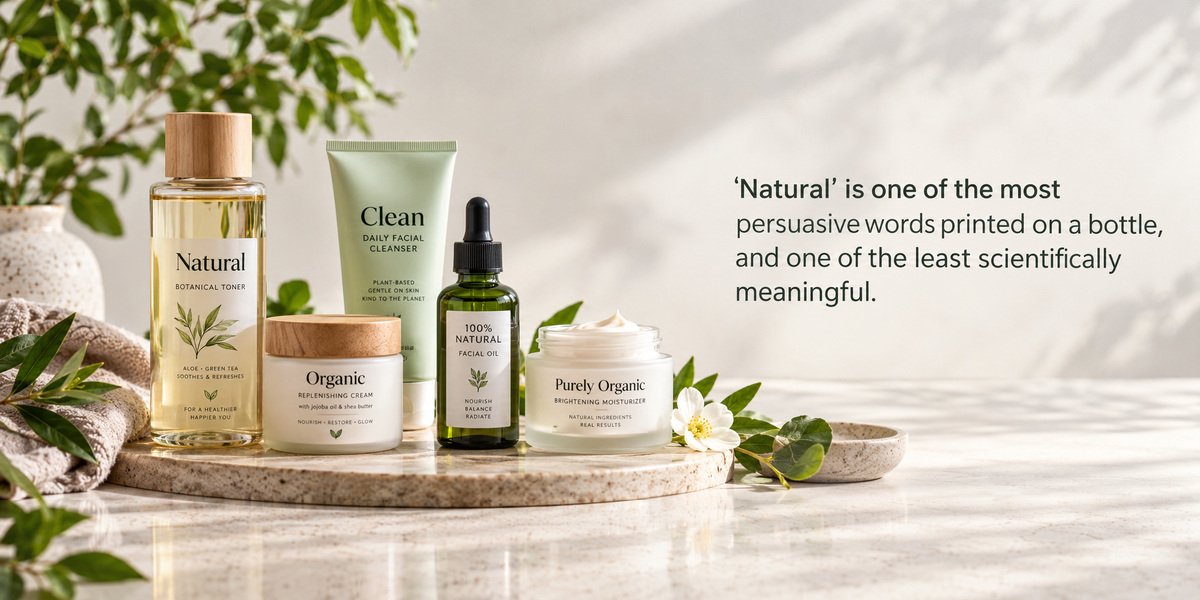
“Natural” is one of the most persuasive words printed on a bottle, and one of the least scientifically meaningful. It is not a regulated term the way an active pharmaceutical ingredient is regulated. It does not tell you anything about concentration, about stability, about whether an ingredient was tested for how it behaves in combination with everything else in the formula. And yet, for a great many consumers, the word does an enormous amount of quiet persuasive work – standing in for safety, gentleness, and trustworthiness, without any of those things actually having been demonstrated.
The Dose Makes the Poison – Even When the Source Is a Plant
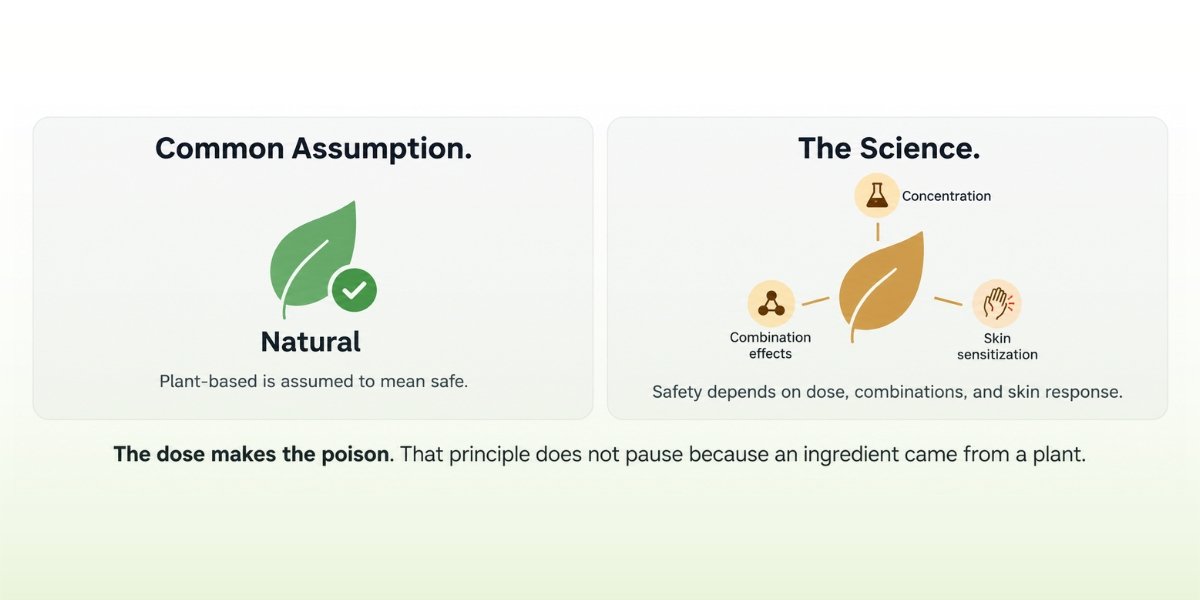
One of the first principles drilled into every pharmacology student is a centuries-old one: the dose makes the poison. Almost any substance, including ones derived entirely from plants, can be harmful at a high enough concentration or in the wrong combination, and almost any substance, including many synthetic ones, can be perfectly safe at an appropriately tested concentration. This principle does not pause or reverse itself just because an ingredient came from a leaf instead of a laboratory. Essential oils, botanical extracts, and plant-derived actives are all genuinely capable of causing skin sensitization, allergic reaction, or irritation – a fact well documented in dermatological literature, and one that a “natural” label does nothing to prevent.
Botanical Ingredients Can Interact, Too
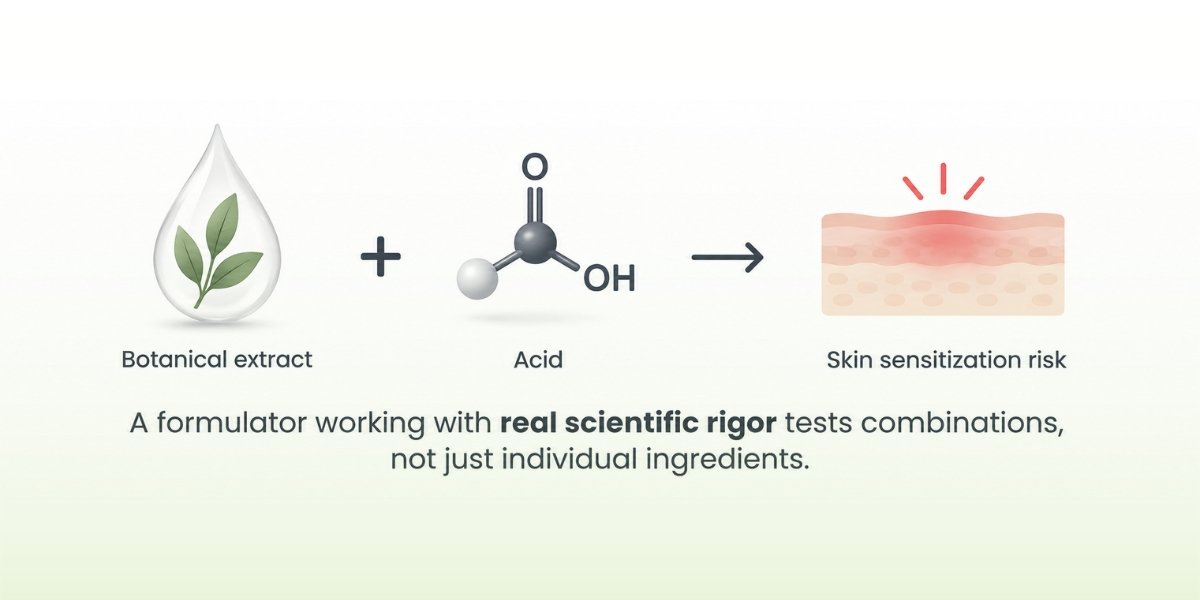
Drug–drug interactions are a familiar concept in pharmacology – the idea that two substances can behave differently in combination than either does alone. The same underlying principle applies to botanical ingredient combinations in skincare, though it receives far less public attention. Certain plant extracts can increase photosensitivity when combined with sun exposure. Others can irritate skin more readily when layered with exfoliating acids. A formulator working with real scientific rigor accounts for these interactions deliberately, testing combinations rather than assuming that because each ingredient is “natural,” the combination is automatically gentle.
What Real Testing and Validation Actually Look Like
Behind any credible organic personal-care brand – mine included – sits a body of unglamorous, largely invisible work: documented stability testing across a range of storage conditions, a validated preservation system checked against actual microbial challenge, and formulation records precise enough to reproduce a successful batch reliably rather than by chance. None of this is visible on the label. All of it determines whether the product performing well in month one will still be performing well, and remain genuinely safe, in month six.
Questions Worth Asking Before You Trust a ‘Natural’ Label
Consumers do not need a pharmacology degree to shop more critically – they need a small number of better questions. Has the brand said anything, anywhere, about how the product is preserved, or does it simply claim to be preservative-free with no further explanation? Does the brand describe any testing process at all, beyond customer testimonials? Is the ingredient list specific, or vague and marketing-driven? None of these questions guarantee an answer on their own, but asking them shifts the evaluation away from a single persuasive word on the front of a bottle and toward the actual evidence – or absence of evidence – sitting behind it.
“Natural” can be a wonderful starting philosophy for a skincare brand. It is not, on its own, a safety credential. That credential has to be earned through testing, documentation, and rigor, the same standard we would insist on for anything else we put on, or in, our bodies.
Learn More About Jacimar Organics
For more about Jacimar Organics, visit its Instagram and Facebook pages. Additional reflections on my experience founding the business are available in my LinkedIn article.