The Chicago Journal

Lori Lane Says the Biggest Competition for Today’s 55+ Buyer May Be the Home They Already Own


New Builder/Zonda research shows baby boomers hold an extraordinary amount of housing wealth, but that financial strength may also be one of the reasons many are staying put. New-construction expert Lori Lane says the opportunity for active-adult builders is to offer a lifestyle compelling enough to make moving worth it.

Baby boomers are sitting on one of the strongest financial positions in the housing market.

They are also among the homeowners builders may have to work hardest to convince to move.

New research published by Builder finds that boomers accounted for 42% of recent homebuyers and 55% of home sellers, making them the largest share of both groups. Nearly 79% of boomer-headed households owned their homes in 2024, and more than half of boomer homeowners owned their homes free and clear. Builder/Zonda’s analysis points to a unique challenge: decades of appreciation and home equity give boomers tremendous purchasing power, but also make their current housing situation extremely difficult to improve upon financially.

For Lori Lane, President and CEO of LLANE & Co., that changes the active-adult sales conversation.

“The assumption is often that if someone has the equity and financial ability to move, they will,” Lane said. “But having the means to move and having a reason to move are two very different things. For many 55+ buyers, their current home is paid for or close to it. We have to give them something compelling enough to leave a situation that is already financially comfortable.”

The Competition May Be the Home They Already Own

For a homeowner who has spent decades paying down a mortgage, staying put can be appealing.

Moving may mean taking on higher property taxes, insurance premiums, HOA fees, transaction costs and moving expenses. Even buyers who can purchase their next home largely or entirely with equity may still ask a simple question:

Why move?

That is why Lane believes the active-adult industry needs to think beyond affordability alone.

“For this buyer, the biggest competitor may not be another community down the road,” Lane said. “It may be the house they already own.”

That requires a different value proposition.

The next home has to make everyday life noticeably better.

Less maintenance. More opportunities to socialize. Better access to fitness and recreation. A home designed for how the buyer wants to live now. Proximity to children and grandchildren. The ability to lock the door and travel without worrying about the yard.

Those priorities are reflected in active-adult communities Lane works with, including Patrick Malloy Communities’ Soleil Belmont Park and Soleil Summit Chase, where the lifestyle extends well beyond the home itself. Clubhouses, pickleball, fitness, social activities and thoughtful gathering spaces give residents built-in opportunities to stay active and connected.

“The move has to solve something,” Lane said. “Maybe they are tired of maintaining a large property. Maybe they want a stronger social life. Maybe they want to travel more. Maybe they want to be closer to family. The home is important, but what really creates the motivation is what their life looks like after they move.”
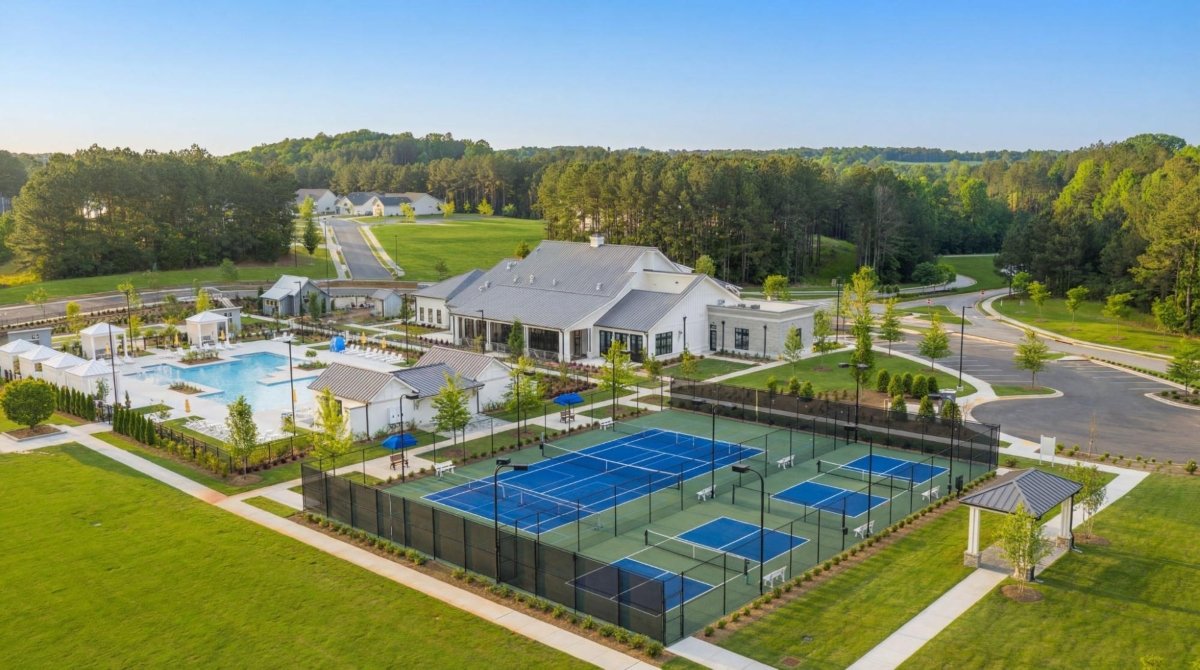
Photo Courtesy: Patrick Malloy Communities (The Soleil active-adult communities pair low-maintenance living with amenities and social experiences designed around an active 55+ lifestyle.)

Equity Creates Choice, Not Urgency

The Builder/Zonda analysis describes this as the “equity advantage.” Boomers who purchased decades ago have benefited from years of home appreciation while paying down mortgage debt. That can give them the ability to make a substantial down payment or even purchase another home with cash.

But equity is not the same thing as urgency.

In fact, it can produce the opposite.

“If someone is financially secure in a home they already know and love, builders cannot assume that a beautiful new house by itself will be enough,” Lane said. “We have to answer the question, ‘What gets better if I move?’”

That answer may look different depending on the buyer.

For some, resort-style social amenities may be the draw. For others, it may be access to the water and an entirely different way of spending their free time.

Southwyck Communities’ Lake Society on Lake Lanier offers another example of how active-adult communities can create a reason to move that goes beyond the house itself. Lake access, community docks, pickleball, resort-style amenities and opportunities to connect with neighbors become part of the value proposition.

“It might be walking out your door and having someone to play pickleball with. It might be meeting friends for dinner or drinks that evening. It might be getting out on the lake or traveling for three weeks without worrying about everything you left behind,” Lane said. “Those are meaningful changes in someone’s everyday life.”
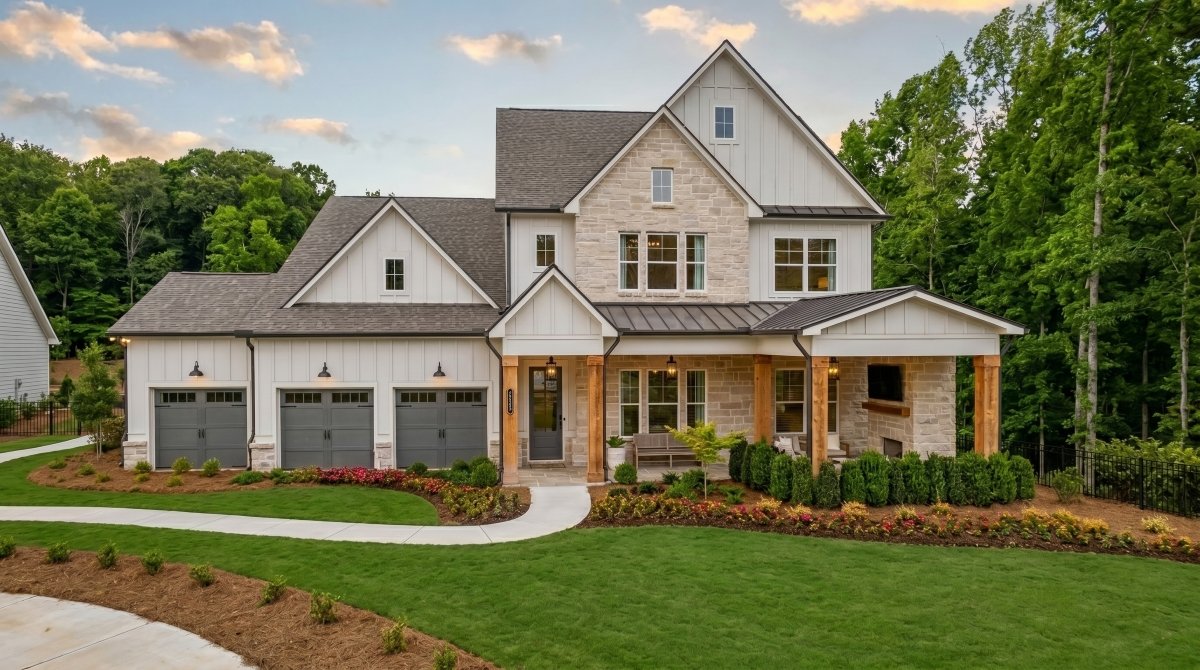
Photo Courtesy: Southwyck Communities (Lake Society on Lake Lanier combines active-adult living with lake access, recreation and resort-style amenities.)

Selling the Next Chapter

The findings also reinforce something Lane has been emphasizing about the 55+ buyer: this is not a single, easily defined demographic.

Some buyers want to downsize. Others want more flexible space for visiting family. Some are retired, while others are still working. Some want to move closer to children and grandchildren; others are looking for an entirely new lifestyle.

That makes understanding buyer motivation especially important.

“The question cannot simply be, ‘What floor plan do you want?’” Lane said. “It needs to be, ‘Why are you considering moving at all?’ Once you understand that answer, you understand what you actually need to sell.”

For active-adult builders, Lane believes the opportunity is significant. The same financial strength that makes boomers comfortable staying put also means many have the ability to act when the right opportunity appears.

The challenge is creating enough desire to overcome inertia.

“Boomers may have more housing wealth than almost any buyer group we have ever marketed to,” Lane said. “But we shouldn’t mistake buying power for motivation.”

A paid-off house can be very difficult to leave.

So the active-adult builder’s job is not merely to offer another house.

It is to offer a next chapter that feels worth moving for.

“The 55+ buyer may already have a perfectly good home,” Lane said. “Our job is to show them why the life waiting on the other side of the move could be even better.”

From Carolina Pines to Chicago Nights, Pam Ross Gets “Lost in Heaven”

By: Tessa Morgan

Chicago knows how quickly romance can change with the weather. A warm evening can turn cold when the wind moves off Lake Michigan, and a crowded neighborhood can become strangely private after midnight. That tension between exposure and concealment gives Pam Ross’s “Lost in Heaven” an unexpected connection to the city. Although the song is rooted in Southern moonlight and secluded pines, its mixture of desire, secrecy, and emotional surrender could unfold just as easily beneath an elevated train or beside the lake after the last bar has closed.

Released September 11th, “Lost in Heaven” blends country, Americana and Southern rock into a confident song about attraction becoming something more complicated. Ross begins at full emotional volume. The music is loud, the heat is rising, and the sight of someone dancing in faded jeans has removed any possibility of an early night.

Those images are familiar, but Ross sings them with the certainty of someone who has stopped pretending to be unaffected. Her narrator does not approach desire cautiously or apologize for recognizing it. She watches, responds, and follows the feeling wherever it leads.

Chicago’s musical history has long depended on that kind of directness. Blues singers, soul performers, country bands and rock musicians have all understood that a plainspoken line can carry more weight than a clever abstraction. Ross works from the same principle. She does not disguise the song’s physical attraction beneath complicated metaphors. Instead, she turns ordinary details, dancing, jeans, a smile and a kiss, into evidence of an encounter powerful enough to alter the night.

The title introduces the song’s central contradiction. Being “lost in heaven” sounds peaceful, but Ross fills that heaven with temptation. Her lover resembles a prayer coming true while also becoming everything she cannot resist. Angels sing, yet they blush at the scene below.

That playful use of religious imagery prevents the song from becoming a conventional account of flirtation. Ross presents physical longing and spiritual wonder as parts of the same emotional experience. The encounter feels sacred not because it is innocent, but because it makes the narrator feel fully alive.

Chicago listeners may recognize the contradiction. This is a city of churches and taverns, Sunday services and Saturday nights, neighborhood traditions and private rebellions. Sacred and secular life frequently share the same block. “Lost in Heaven” occupies similar territory, allowing sensuality and tenderness to exist without forcing one to cancel the other.

The setting also matters. Ross places the lovers beyond public view, hidden by pines and watched only by stars and a trustworthy moon. Nature gives them permission to abandon restraint. No one is around, so no one can interrupt, judge, or report what happened.

Chicago offers fewer pine-covered hiding places, but it has its own spaces of escape. The song could play beside the lake as skyline lights flicker across the water, on a quiet street after snowfall has muted the city, or during a late drive when familiar neighborhoods suddenly feel cinematic. Ross’s setting is Southern, but the need to disappear briefly from ordinary life is universal.

Structurally, “Lost in Heaven” moves with clarity. The verses build the scene through physical details. The pre-choruses create a moment of suspension, drawing the listener toward the secluded space. Then the chorus expands the private encounter into something almost celestial. The central phrase is immediate and memorable because it captures the narrator’s emotional state without explaining it to death.

The song becomes more interesting when Saturday night gives way to Sunday morning. Until that point, the story could be understood as a temporary escape fueled by attraction. The image of the lover still lying beside the narrator changes the emotional stakes. Morning does not reveal the experience as a mistake. It confirms that something meaningful may have survived the heat.

That transition from night to morning gives Ross’s performance room to balance swagger with vulnerability. The early lyrics carry confidence and playful urgency, but the later realization requires something gentler. The narrator begins by wanting someone’s attention and ends by valuing their continued presence.

Ross’s genre-crossing identity serves the song well. Country provides the narrative economy. Americana contributes the landscape and sense of intimacy. Southern rock brings enough force to keep the track from dissolving into soft romanticism. The result is not a radical reinvention of any one style, but an effective meeting point.

Named Female Multi-Genre Artist of the Year at the 2024 Josie Music Awards, Ross has made that refusal to remain in one category central to her work. “Lost in Heaven” demonstrates why. The song needs country’s storytelling, rock’s physical energy, and Americana’s atmospheric detail to express the full arc of the encounter.

Some of its images, stars, moonlight, faded jeans, and heavenly choirs, are well established in country songwriting. Ross’s achievement lies in the way she arranges them. The song does not treat romance as passive fantasy. It gives its narrator agency, humor, and emotional appetite.

Against a Chicago backdrop, “Lost in Heaven” feels like a warm current moving through a cold city. It carries the heat of the Carolinas, but its real subject crosses regional boundaries: that brief, disorienting moment when attraction becomes intimacy and a night meant for escape begins to resemble an answered prayer.

Ross may hide her lovers beneath the pines, but the feeling belongs anywhere two people find a private world inside a restless city.

How To Attend Open House Chicago 2026: Themed Itineraries, Priority Passes And The New Built On Belief Route

Open House Chicago 2026 runs Saturday, October 17, and Sunday, October 18, offering free access to more than 200 sites across 30 neighborhoods with no registration required. Because each site sets its own hours and some open only one day, the Chicago Architecture Center’s themed itineraries are the practical starting point for planning the weekend.

Key Takeaways

  • Open House Chicago 2026 takes place October 17 and 18, and admission to every participating site is free with no advance registration.
  • The festival lists 34 sites open only on Saturday and 10 sites open only on Sunday.
  • Chicago Architecture Center members receive a Priority Pass that skips the general line at all 200-plus sites.
  • The new Built on Belief itinerary connects three Woodlawn sites: Narrow Bridge Arts Club, First Presbyterian Church of Chicago and Oak Woods Cemetery.
  • Transit-friendly routes include a 12-site Green Line itinerary and a 14-site Red Line itinerary.

Open House Chicago Is A Free Citywide Architecture Festival

Open House Chicago is an annual festival produced by the Chicago Architecture Center, a nonprofit, that opens buildings of architectural, historical and cultural significance to the public for one weekend each October. The 2026 edition is the festival’s 16th, and the Chicago Architecture Center has produced every edition since 2011.

The lineup mixes skyscraper lobbies, theaters, houses of worship, workplaces, private clubs and neighborhood institutions, many of which are not normally open to visitors. The festival draws more than 35,000 people each year from across the region and beyond, and it belongs to Open House Worldwide, a network of nearly 60 organizations hosting similar events in cities around the globe.

This year’s lineup includes the 20 first-time locations joining Open House Chicago this year, among them the Griffin Museum of Science and Industry, the Muddy Waters MOJO Museum in Kenwood and Smashed Plastic Record Pressing in Hermosa.

Site Hours Vary, So Planning Starts With The Calendar

The single most important planning detail for Open House Chicago is that there is no universal schedule. Each participating site sets its own hours, and the festival’s own listings separate 34 Saturday-only sites from 10 Sunday-only sites.

That structure rewards visitors who build a route by day rather than by neighborhood alone. A Saturday plan can prioritize the larger pool of one-day openings, while Sunday works well for sites open both days that may draw lighter crowds after the opening rush.

The official Open House Chicago website lets visitors save sites and itineraries to an account that syncs across devices. For a paper option, the Chicago Reader’s October issue includes the festival guide, a full site list and a bingo card.

Themed Itineraries Organize More Than 200 Sites

The Chicago Architecture Center groups sites into themed routes that make a large festival easier to navigate. The current list includes:

  • Curtains Up!, a 12-site route focused on theaters and performance spaces.
  • New Sites for 2026, covering all 20 first-time participants.
  • Skyline Views, a six-site route built around elevated vantage points.
  • Chicago and the Nation, an 11-site route connecting local buildings to national history.
  • Along the “L,” with separate Green Line and Red Line routes.

The transit itineraries carry practical value. With sites spread across 30 neighborhoods, following a single “L” line keeps travel time down and avoids weekend parking in dense areas.

The Built On Belief Program Debuts In Woodlawn

Open House Chicago 2026 introduces Built on Belief, a program exploring how faith communities and sacred sites shaped a single South Side neighborhood over generations. Three Woodlawn sites co-created exhibitions and programming for the weekend.

Narrow Bridge Arts Club operates as an artist-run space inside a restored church building. First Presbyterian Church of Chicago sits at 6400 S. Kimbark Ave., and Oak Woods Cemetery, one of the South Side’s historic burial grounds, joins the festival for the first time.

The program reflects a broader direction for Open House Chicago. Rather than treating buildings as isolated landmarks, Built on Belief presents them as evidence of how residents organized community life. Visitors can pair the three sites with Xchange Chicago at Gary Comer Youth Center, another new Woodlawn participant, to build a full South Side route.

Priority Passes Shorten Lines At Popular Sites

Lines are the main tradeoff of a free festival. Popular downtown towers and historic theaters can draw long waits, especially on Saturday.

Chicago Architecture Center members receive a Priority Pass that allows them to skip the general line at every participating site, and festival volunteers receive the same access. Some sites also manage capacity through guided entry. The Uptown Theatre, for example, will admit visitors to its Broadway lobby and auditorium in guided groups.

For general visitors, arriving close to opening time or choosing lesser-known neighborhood sites can reduce wait times considerably.

A Photo Competition Rewards Neighborhood Exploration

Open House Chicago 2026 also includes a photo competition themed around celebrating the city’s neighborhoods. Attendees of all ages and skill levels can submit images taken at participating sites through the Chicago Architecture Center’s website, and six winning photographs will be displayed at the center’s headquarters at 111 E. Wacker Drive.

The competition fits the festival’s broader purpose. By encouraging visitors to document places outside the downtown core, Open House Chicago turns a weekend of sightseeing into a record of how Chicagoans see their own neighborhoods.

FAQs

When Is Open House Chicago 2026?

Open House Chicago 2026 takes place Saturday, October 17, and Sunday, October 18. Individual site hours vary, and some locations are open only one of the two days.

What Is Open House Chicago?

Open House Chicago is a free annual architecture festival produced by the Chicago Architecture Center. It offers behind-the-scenes access to more than 200 buildings across 30 neighborhoods, many of which are rarely open to the public.

How Do People Attend Open House Chicago?

Visitors choose sites from the official Open House Chicago website and arrive during listed hours. No tickets or advance registration are required.

Is Open House Chicago Free?

Yes. Admission to all participating sites is free. Chicago Architecture Center members receive an additional Priority Pass for faster entry.

What Is The Built On Belief Program?

Built on Belief is a new 2026 program featuring three Woodlawn sites, Narrow Bridge Arts Club, First Presbyterian Church of Chicago and Oak Woods Cemetery, which present exhibitions on how faith communities shaped the neighborhood’s history.

Why ‘Natural’ Doesn’t Always Mean Safe: A Pharmacologist’s Take on Organic Personal Care Products

By Amarachukwu Jacinta Abosi

“Natural” is one of the most persuasive words printed on a bottle, and one of the least scientifically meaningful. It is not a regulated term the way an active pharmaceutical ingredient is regulated. It does not tell you anything about concentration, about stability, about whether an ingredient was tested for how it behaves in combination with everything else in the formula. And yet, for a great many consumers, the word does an enormous amount of quiet persuasive work – standing in for safety, gentleness, and trustworthiness, without any of those things actually having been demonstrated.

The Dose Makes the Poison – Even When the Source Is a Plant

Photo Courtesy: Jacimar Photos

One of the first principles drilled into every pharmacology student is a centuries-old one: the dose makes the poison. Almost any substance, including ones derived entirely from plants, can be harmful at a high enough concentration or in the wrong combination, and almost any substance, including many synthetic ones, can be perfectly safe at an appropriately tested concentration. This principle does not pause or reverse itself just because an ingredient came from a leaf instead of a laboratory. Essential oils, botanical extracts, and plant-derived actives are all genuinely capable of causing skin sensitization, allergic reaction, or irritation – a fact well documented in dermatological literature, and one that a “natural” label does nothing to prevent.

Botanical Ingredients Can Interact, Too

Photo Courtesy: Jacimar Photos

Drug–drug interactions are a familiar concept in pharmacology – the idea that two substances can behave differently in combination than either does alone. The same underlying principle applies to botanical ingredient combinations in skincare, though it receives far less public attention. Certain plant extracts can increase photosensitivity when combined with sun exposure. Others can irritate skin more readily when layered with exfoliating acids. A formulator working with real scientific rigor accounts for these interactions deliberately, testing combinations rather than assuming that because each ingredient is “natural,” the combination is automatically gentle.

What Real Testing and Validation Actually Look Like

Behind any credible organic personal-care brand – mine included – sits a body of unglamorous, largely invisible work: documented stability testing across a range of storage conditions, a validated preservation system checked against actual microbial challenge, and formulation records precise enough to reproduce a successful batch reliably rather than by chance. None of this is visible on the label. All of it determines whether the product performing well in month one will still be performing well, and remain genuinely safe, in month six.

Questions Worth Asking Before You Trust a ‘Natural’ Label

Consumers do not need a pharmacology degree to shop more critically – they need a small number of better questions. Has the brand said anything, anywhere, about how the product is preserved, or does it simply claim to be preservative-free with no further explanation? Does the brand describe any testing process at all, beyond customer testimonials? Is the ingredient list specific, or vague and marketing-driven? None of these questions guarantee an answer on their own, but asking them shifts the evaluation away from a single persuasive word on the front of a bottle and toward the actual evidence – or absence of evidence – sitting behind it.

“Natural” can be a wonderful starting philosophy for a skincare brand. It is not, on its own, a safety credential. That credential has to be earned through testing, documentation, and rigor, the same standard we would insist on for anything else we put on, or in, our bodies.

Learn More About Jacimar Organics

For more about Jacimar Organics, visit its Instagram and Facebook pages. Additional reflections on my experience founding the business are available in my LinkedIn article.