By Seth Adams
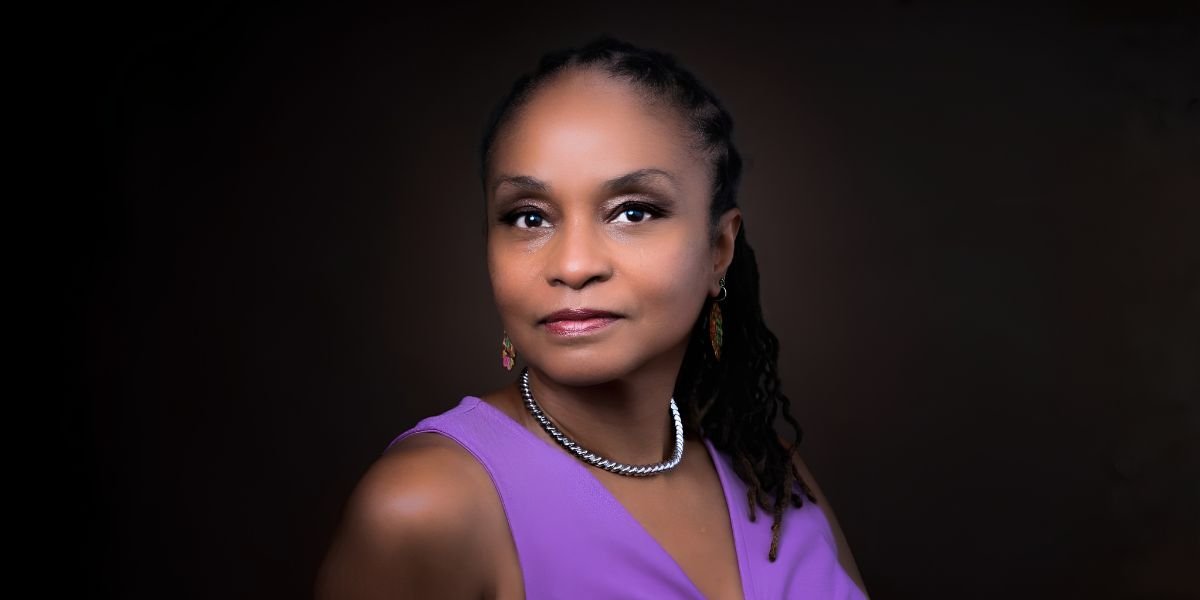
In Carol Mitchell’s A Good Haunting: Stories, myth is not decorative background. It is a living structure, one that can preserve history, explain danger, reinforce values and, at times, carry ideas that deserve to be challenged. Across nine speculative stories, Mitchell draws on Caribbean and African traditions while placing contemporary characters in situations involving grief, family, identity, survival and change.
Mitchell is also the author of the novel What Start Bad a Mornin’ and nineteen books for children. Her short fiction and book reviews have appeared in numerous journals. She holds an MFA, is a fellow of the Virginia Center for the Creative Arts and several other arts institutions, and teaches writing while working on a new novel.
A Good Haunting moves geographically from the Caribbean to Europe, Africa and the United States, but Mitchell says the characters remain connected to the Caribbean. Several stories use myths and traditions rooted in Afro-Caribbean heritage, giving the collection a cultural throughline even when place and time shift.
“Caribbean people love background stories,” Mitchell said. “We can’t tell you how to get from point A to point B without giving you some history of how the path came to be.”
That instinct toward background is central to Mitchell’s understanding of myth. In her view, myths tell communities something about how they arrived at their values and how they learned to respond to threats.
“Myths, in my mind, are the background stories of our lives,” she said. “They are fictitious, of course, but at the heart, there is always an inkling of how we came to be where we are and to value the things that we do.”
A Good Haunting does not treat inherited stories as untouchable. That distinction is important because Mitchell sees myth as both inheritance and responsibility. A story passed down through generations can offer cultural memory and a language for danger, while still carrying assumptions that no longer serve the people repeating it. Her fiction therefore approaches tradition with respect, curiosity and a willingness to revise. Mitchell is interested in what myths pass from one generation to another, but also in what they can perpetuate. Some traditional narratives, she argues, can preserve harmful attitudes toward marginalized people. That creates an opening for writers to imagine stories that retain the social power of myth while reconsidering the values those myths support.
“As we grow as humans and rethink some of the ways we relate to one another, we need new myths that reinforce more thoughtful ways of interacting, that infuse inclusivity into the norms of our society, and respond to the way that the threats myths warn against have evolved,” Mitchell said.
Her fiction puts that idea into practice through transformation. In the collection’s first story, a woman attempts to move beyond traditional Caribbean expectations of wife and mother and becomes connected to a dangerous figure from Caribbean and African lore. In “Day Three,” a disillusioned archaeologist unknowingly revives an ancestor who died four centuries earlier. “The Way of the Volt” follows an eighteenth-century African queen who is made immortal, sold into slavery and forced into decisions that test her understanding of humanity.
Mitchell’s interest in myth also connects to the writers she reads. She says she reads almost exclusively Caribbean-connected books and often has several going at once. Among her current reads is Celeste Mohammed’s Ever Since We Small, a short story collection set in Trinidad and focused on the Indo-Caribbean population.
Mitchell is also rereading Nalo Hopkinson’s The Midnight Robber. Hopkinson, she said, is one of her favorite authors.
“Her work is so imaginative and powerful,” Mitchell said. “I learn a lot from her approach to world-building and her expansion and questioning of existing myths.”
That phrase, expansion and questioning, captures much of what Mitchell is doing in A Good Haunting. The collection does not reject tradition, nor does it present folklore as a museum piece. Instead, Mitchell lets myth enter the lives of characters facing modern concerns, including motherhood, grief and climate anxiety.
The approach also pushes against simplified portrayals of Caribbean life. Mitchell wants Caribbean people to appear as full human beings rather than as extensions of tourism imagery.
“We are not writing for a foreign gaze,” she said. “We are writing books that reflect our universally shared desires and fears as human beings.”
The title story offers another example of that balance between cultural specificity and universal emotion. Its widower participates in an unconventional death ritual and uses humor while dealing with grief, guilt and painful revelations. The ritual is culturally specific, but the struggle to make meaning after loss is widely recognizable.
In A Good Haunting, myth becomes one way to make those shared desires and fears visible. The past remains present, but it can also be questioned and reimagined for the present.
A Good Haunting is available on Amazon.