The Chicago Park District broke ground on October 27 on DuSable Park, a 3.4-acre lakefront park where the Chicago River meets Lake Michigan. The site was dedicated by Mayor Harold Washington in 1987, nearly 40 years ago. The park honors Jean Baptiste Pointe DuSable, Chicago’s first permanent non-Indigenous settler, and is slated to open in summer 2028.
Key Takeaways
- Construction on DuSable Park began October 27, 2026, with completion scheduled for summer 2028.
- Related Midwest’s $10 million commitment covers most construction costs, alongside a $5 million city Open Space Impact Fee grant and a $400,000 state grant.
- The park will hold the first full-body statue of DuSable, created by sculptor Branly Cadet and architect Rodney Leon, both American-born artists of Haitian descent.
- A $500,000 Mellon Foundation donation funds a Native Voices public art installation within the park.
- Visitors will reach the park through Founders Way, a planned extension of the Chicago Riverwalk.
DuSable Park Fulfills A Promise Harold Washington Made In 1987
DuSable Park sits on a small peninsula just south of Navy Pier along DuSable Lake Shore Drive. The land itself is man-made, created by landfill in the late 19th century. In 1987, Mayor Harold Washington dedicated the parcel as DuSable Park, and the Park District took ownership a year later.
For decades after that, the site stayed fenced off and undeveloped. Contaminated soil had to be cleaned up before anyone could use the land, and the Park District finished that environmental remediation in 2021 with federal support. Advocates kept pressing the city throughout. Among them was Peggy Montes, who worked with Washington to set the land aside and attended the groundbreaking nearly four decades later.
Mayor Brandon Johnson and Park District General Superintendent and CEO Carlos Ramirez-Rosa led the ceremony. Ramirez-Rosa called the park “the product of years of collaboration,” crediting the community advocates who kept the project alive.
First Full-Body Statue Of DuSable Anchors The Park’s Design
The centerpiece of DuSable Park will be a new sculpture of Jean Baptiste Pointe DuSable, a Haitian settler of French and African descent. He established a trading post in the late 18th century near what is now Pioneer Court on Michigan Avenue. Chicago already has a bust of DuSable, but this will be the first full-body statue of the city’s founder.
The Chicago Park District selected sculptor Branly Cadet and architect Rodney Leon, both American-born artists of Haitian descent, after a search that gave priority to Haitian artists. They will research, design, and finalize the statue in time for the 2028 opening. For Chicago’s Haitian and Black communities, the choice means DuSable’s likeness will be shaped by artists who share his heritage.
Carol Ross Barney Architects leads the park’s design. The plan includes an open lawn, a pavilion, a woodland area, a wet prairie, plazas, a boardwalk, and an overlook facing the lake. Interpretive signage and a history timeline will explain DuSable’s life and the changes underway when he arrived.
Native Voices Installation Tells The Story Of The Land Before Chicago
DuSable Park will also tell the story of the people who lived on and traded across this land before DuSable arrived. A $500,000 donation from the Mellon Foundation funds a Native Voices public art installation. It is being developed with the Chicago Department of Cultural Affairs and Special Events as part of the Chicago Monuments Project.
Mayor Johnson’s remarks recognized the Potawatomi, Ottawa, and Chippewa tribes, whose trade routes shaped the region. He also honored DuSable’s wife, Kitihawa, whose role in building the trading post is often left out of the founding story. Putting DuSable’s statue and the Native Voices installation on the same site lets visitors see Chicago’s founding through more than one lens.
Founders Way And The Riverwalk Will Connect The Park To Downtown
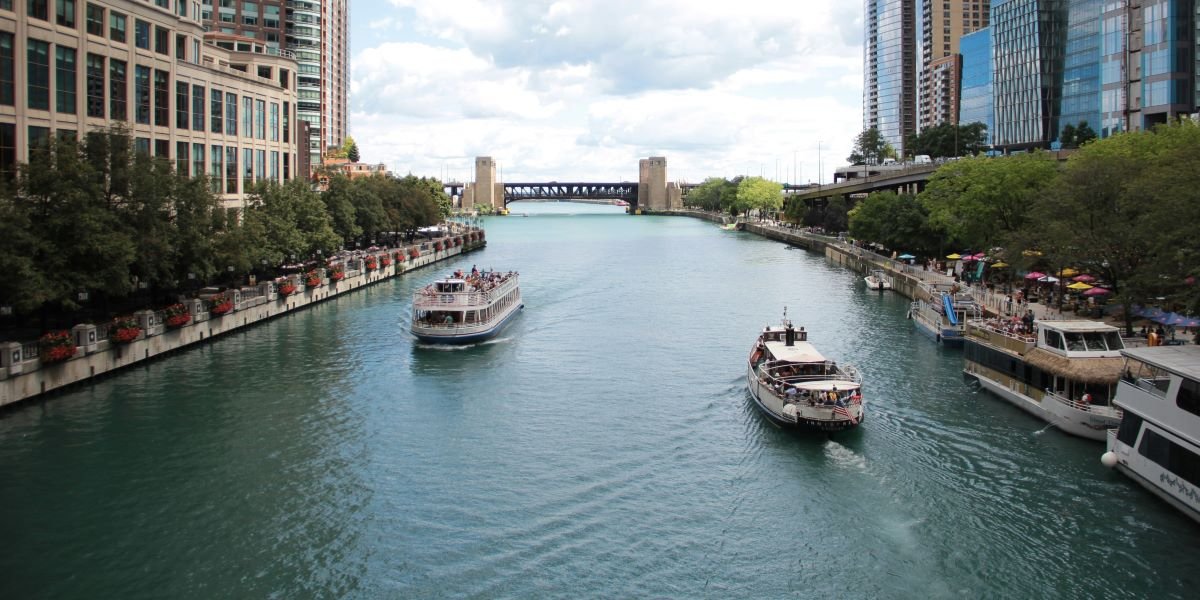
Getting to the park has long been part of the problem, since the peninsula sits on the far side of DuSable Lake Shore Drive. The new park will connect to downtown through Founders Way, a planned extension of the Chicago Riverwalk. Related Midwest is building Founders Way alongside its 400 Lake Shore Drive tower next door.
That partnership also pays for most of the park. Alderman Brendan Reilly of the 42nd Ward said he secured Related Midwest’s $10 million contribution during negotiations over the 400 Lake Shore Drive development. He also earmarked $5 million in downtown Open Space Impact Fee funds. Don Biernacki, executive vice president of Related Midwest, described the result as “a new, pedestrian-friendly connection between downtown and the lakefront.”
When it opens in summer 2028, DuSable Park will give the Riverwalk a destination at its eastern end. Residents and visitors will be able to walk from the Loop to the water’s edge and learn the city’s founding history along the way.
FAQs
When Will DuSable Park Open?
DuSable Park is slated for completion in summer 2028. Construction began with a groundbreaking on October 27, 2026.
Where Is DuSable Park Located?
DuSable Park sits on a peninsula where the Chicago River meets Lake Michigan, just south of Navy Pier along DuSable Lake Shore Drive. It will connect to downtown through Founders Way, a planned Riverwalk extension.
Who Was Jean Baptiste Pointe DuSable?
Jean Baptiste Pointe DuSable was a Haitian settler of French and African descent and Chicago’s first permanent non-Indigenous settler. He and his wife, Kitihawa, established a trading post near present-day Pioneer Court in the late 18th century.
What Will DuSable Park Include?
The park will include the first full-body statue of DuSable, a Native Voices public art installation, an open lawn, a pavilion, a woodland area, a wet prairie, a boardwalk, and a lake overlook. Interpretive signage and a history timeline will explain the site’s significance.