
By: JP Cooper
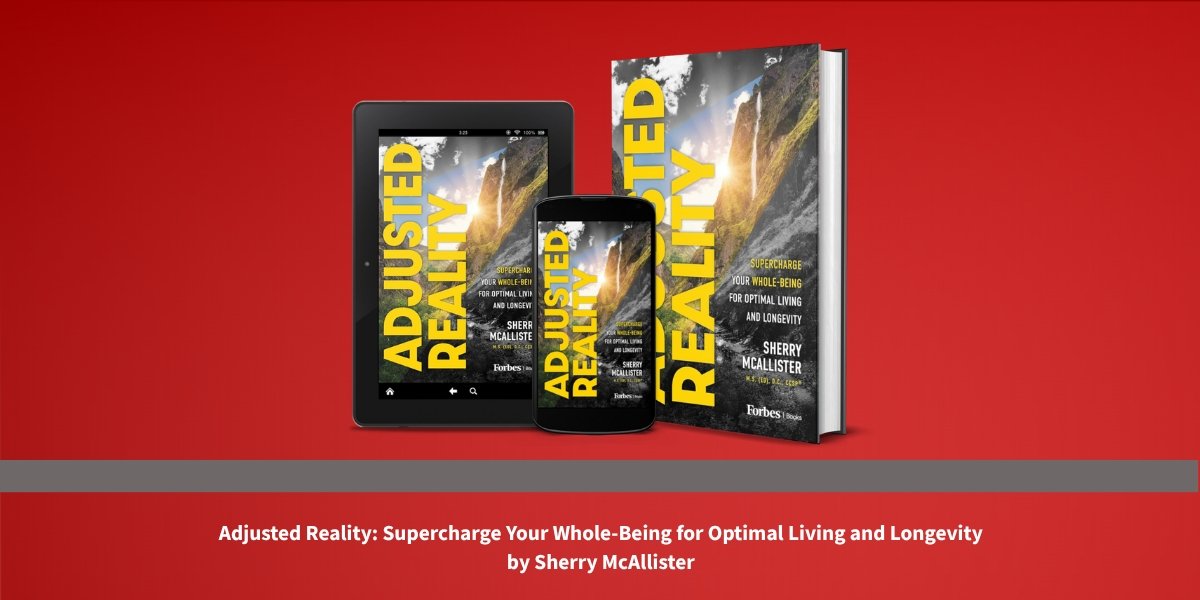
We have been taught to think about health backward. We wait for something to go wrong, and then we seek help, we treat the symptom and declare the problem solved, and we return to the habits and patterns that produced the problem in the first place, largely because nobody has ever offered us a compelling alternative framework for doing anything different. Dr. Sherry McAllister spent twenty-five years in clinical practice watching that cycle repeat itself in the lives of people who deserved better, and Adjusted Reality is her most complete articulation of what better actually looks like. It is a book with real stakes and real warmth and a quality of practical wisdom that you don’t often find in the wellness space.
What reading it feels like is a gradual and welcome expansion of your own sense of what’s possible. Dr. McAllister has a gift for taking ideas that could easily feel abstract, the interconnectedness of physical and emotional health, the role of community in individual vitality, the importance of purpose as a genuine biological variable, and grounding them in the kind of specific, recognizable human experience that makes them feel immediately relevant to your actual life. You find yourself reading passages and thinking about particular choices you have been making, particular patterns you have been living inside, with a new quality of attention that feels clarifying rather than critical.
The themes the book explores are ones that stretch well beyond the individual health journey. The critique of groupthink in healthcare, the way inherited assumptions about what treatment means and what health looks like get passed down through generations and institutions without much examination, is one of the more intellectually interesting threads in the book and one that has implications far beyond personal wellness. Dr. McAllister is asking systemic questions from a personal angle, and the combination produces insights that are both practically useful and genuinely thought-provoking.
Her background as president of the Foundation for Chiropractic Progress gives her a particular vantage point on the relationship between conventional medicine and more integrative approaches, and she writes from that vantage point with the confidence of someone who has spent decades making the case for whole-person care in environments that weren’t always ready to hear it. That experience shows in the way she handles the more challenging parts of her argument, with patience, evidence, and a genuine respect for the reader’s intelligence and autonomy.
The writing itself has a quality that reflects the book’s central philosophy. It is integrated and unhurried, moving between the clinical and the personal, the scientific and the spiritual, without ever losing its thread or its warmth. Dr. McAllister writes like someone who cares about the person reading, not as a demographic or a patient category but as an individual capable of genuine transformation if given the right tools and the right perspective. Adjusted Reality provides both, and it does so with the kind of generous expertise that makes you want to press it into the hands of everyone you care about.
The idea at the center of the book is that your body, your mind, your emotional life, and your sense of purpose are all part of the same living system. For readers drawn to that perspective, Adjusted Reality by Dr. Sherry McAllister offers a thorough and humane argument for treating your health as something whole rather than something fragmented.