By: Z-tech
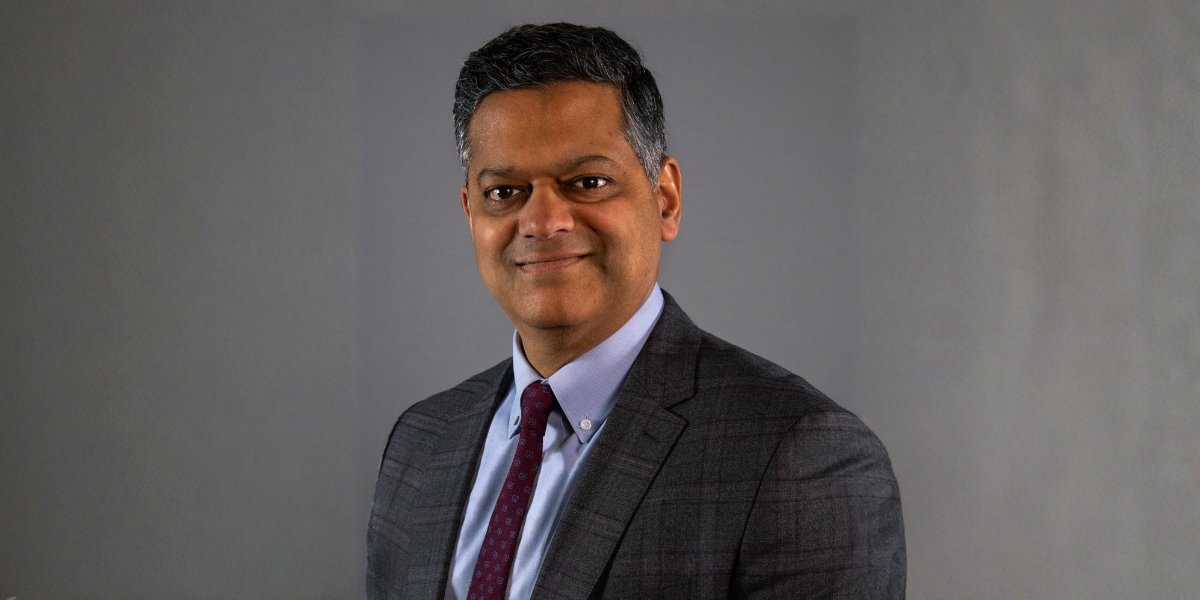
Dr. Goya Raikar’s surgery work begins long before the first incision. First he stops to think about the patient. Then he pauses at the scrub sink and runs the case through his mind. Every step has a purpose, especially his preparation.
“For me, there is a moment at the scrub sink that I calm my mind and visualize what the steps are going to be,” he explained during a recent interview about his career.
That habit says a great deal about the kind of surgeon Dr. Raikar has become. As Chief Cardiac Surgeon at Froedtert South, he is known not only for technical precision, but also for the kind of disciplined leadership required to build a high-level robotic cardiac surgery program inside a regional health system. Over more than two decades in practice, he has helped move minimally invasive heart surgery from an emerging concept to a life-changing reality for patients who want strong outcomes without the prolonged recovery that once came with traditional open-heart procedures.
Raikar leads the development of the robotic mitral valve repair program at Community Memorial Hospital, part of Froedtert South. In doing so, he has helped establish a service line that reflects both surgical innovation and institutional commitment. His background gave him the credentials to do it. His vision helped make it stick.
A cardiothoracic surgeon, Dr. Goya Raikar is board certified in both general and thoracic surgery. He trained at the Mayo Clinic and the University of Wisconsin Hospital, held leadership and academic appointments at major institutions, and performed the first robotic-assisted mitral valve repair in the Minneapolis-St. Paul region. He has also served as principal investigator on multiple clinical trials related to valve replacement, heart failure and arrhythmia, with research featured in peer-reviewed journals and surgical textbooks.
Still, for all the accolades, Raikar traces the beginning of this path back to a much earlier moment, when he was still in training and listening closely.
“It started at the Mayo Clinic when the expert in mitral valve repair gave a lecture,” he explained, referring to Dr. Alain Carpentier. “That’s what drew me to it.”
That early spark grew into a career focused on one of cardiac surgery’s most delicate and demanding challenges, repairing the mitral valve with as much precision and as little disruption to the patient as possible. At Froedtert South, that work is no longer theoretical. It is happening in real time, with patients and families feeling the difference.
Dr. Goya Raikar: ‘Without Teamwork You Cannot Do Complex Robotic Cardiac Surgery’
To understand why Dr. Raikar’s program matters, it helps to understand what robotic surgery actually gives a cardiac surgeon that conventional technique does not.
The da Vinci surgical system, which anchors the program at Community Memorial Hospital, does not operate independently. Dr. Raikar controls every movement. What the system provides in return is access and visibility that open surgery cannot reliably replicate.
“The robot lets you engage the valve in 3D with 10x magnification,” he said. “This allows me to visualize structures that you cannot visualize in the standard methods.”
That visibility has direct clinical consequences. The mitral valve sits between the heart’s left atrium and left ventricle. When it fails to close properly, a condition called mitral regurgitation develops, and blood begins moving in the wrong direction.
Left unaddressed, the heart compensates until it cannot, and the damage becomes permanent. Because the robotic approach requires only small ports in the chest wall rather than a fully opened sternum, patients recover faster, spend fewer days in the hospital, and return to normal activity on a timeline that would have been difficult to promise a generation ago.
Dr. Raikar is very direct about who qualifies.
“Anyone who has severe mitral regurgitation is a strong candidate for a robotic repair,” he said. The limiting factor is rarely the patient. More often it is access to a program with the depth and consistency to deliver the procedure well. That is the gap his work at Froedtert South is built to close.
He is equally clear about what makes these programs work inside the operating room. The technology is one part of the equation. The team is the other.
“Without teamwork you cannot do complex robotic cardiac surgery,” he said. “I rely on the people in the operating room day in and day out. If one of the team is missing, we cannot operate.”
The Blueprint for Building a Program That Lasts
Hospitals across the country are investing in robotic surgical capability. Not all of those investments are producing the results the institutions expected, and Raikar has a clear view on why.
The technology is not the foundation. The surgeon is, he shares.
“Start with the surgeon and build a team around the surgeon, which includes anesthesiologists, cardiologists, and administration,” he said. “All need to have a shared vision on the program.”
Without that alignment, the program may launch with momentum but rarely sustains it. A cardiologist who is skeptical of the approach will not refer appropriate patients. An administrator who treats the program as a revenue line rather than a clinical commitment will underinvest in the infrastructure that keeps it functioning. The whole structure quietly deteriorates.
Raikar also draws a firm line between innovation and experimentation, and the distinction is not semantic. “We don’t experiment with patients,” he said. “Innovations have been developed over the course of five to ten years and then are applied to patients clinically.”
Every technique he brings into his operating room is backed by peer-reviewed evidence, clinical trial data, and refinement across thousands of cases at institutions worldwide. When a difficult case demands something beyond routine, he leans on that evidence base and on colleagues who helped build it.
Patient preparation, he argues, is just as important to outcomes as anything that happens in the operating room. “The more knowledge a patient has with the upcoming surgery and hospital stay, the more successful the procedure is,” Dr. Raikar shared. “The goal is to have no surprises for the patient and family on the process and procedure prior to it occurring.” That philosophy extends from the first consultation through every step of preoperative care. It is not a courtesy. Raikar treats it as a clinical variable with real consequences.
The approach reflects something he learned early and has never set aside. At the Mayo Clinic, the institution that shaped him as a surgeon, the patient is the center of everything. “I approach patients the same way,” he said.
Where Cardiac Surgery Is Headed Next
The robotic mitral valve repair program Dr. Raikar has built at Froedtert South is not the endpoint of what he is working toward. It is the foundation.
The next major frontier in robotic cardiac surgery is coronary artery bypass grafting, the procedure used to reroute blood around blocked coronary arteries and one of the most performed cardiac operations in the world. New robotic instrumentation designed specifically for bypass procedures is currently in development, and Raikar expects clinical application within the next few years. The implications are significant.
“This could result in the procedure becoming an outpatient procedure,” he said. Bypass surgery as a same-day operation would represent one of the most consequential shifts in cardiac care in a generation, and it would compress a recovery burden that patients have long been told was simply unavoidable.
The broader trajectory of the field is moving in the same direction.
“In terms of heart surgery, we are about to see an explosion in the usage of robotic techniques in the next three to five years,” Raikar added. Thoracic surgery has already made that turn. Robotic lung resection and esophageal surgery are now the preferred approach at leading centers. Cardiac surgery is following the same arc, and the pace is accelerating faster than many health systems have planned for.
Dr. Goya Raikar will be contributing to that acceleration, not observing it. He is currently part of what he describes as the largest series of robotic aortic valve surgeries in the world, to be presented at the Society of Thoracic Surgery’s national conference. He is also involved in new equipment development for the da Vinci platform.
He remembers a patient from about a decade ago, the spouse of a physician, who came to his office already in tears. She had been told what traditional mitral valve surgery involved, and she understood enough to dread it. When Dr. Raikar explained that her repair could be done robotically, smaller incisions, faster recovery, far less disruption, the relief she felt was visible. She did well. She had sought him out because she had heard what was possible and would not accept less. That story has stayed with him.
“When I see patients come for a second opinion and we are able to help them with the robotic approach,” he said, “that validates continuing to push ahead with these techniques.”