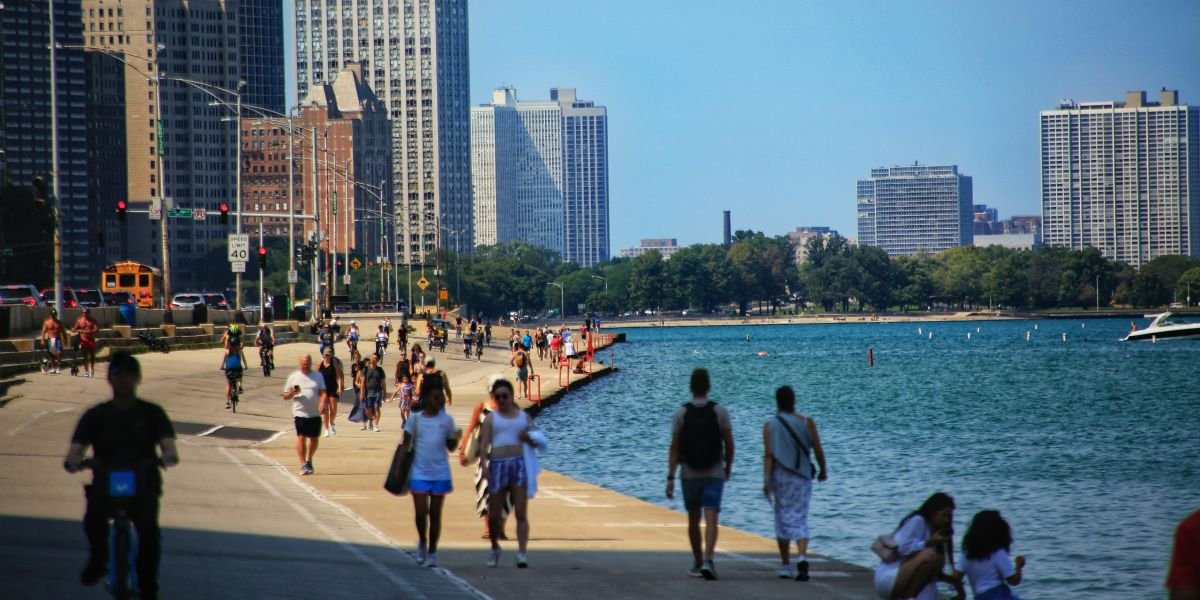
Chicago faced a multi-day Extreme Heat Warning that ran into the July Fourth holiday weekend, with heat index values reaching between 100 and 110 degrees across the metropolitan area. The National Weather Service extended the warning through early Friday, July 3, 2026, as the city activated cooling centers and Mayor Brandon Johnson urged residents to check on vulnerable neighbors.
Key Takeaways
- The National Weather Service issued an Extreme Heat Warning for the entire Chicago area beginning Monday, June 29, later extending it through early Friday, July 3, 2026.
- Heat index values climbed between 100 and 110 degrees during the multi-day event, with the city recording its hottest day of 2026.
- Mayor Brandon Johnson referenced the 1995 Chicago heat wave, which killed more than 700 residents, in urging residents to take the conditions seriously.
- ComEd activated a voluntary load reduction program as surging air conditioning use strained the regional electricity grid.
How Long Did the Chicago Extreme Heat Warning Last?
The Chicago Office of Emergency Management and Communications confirmed that the National Weather Service Extreme Heat Warning took effect Monday, June 29 at 12:00 p.m., initially set to run through Wednesday, July 1 at 10:00 p.m. As the heat dome settled over the Midwest, officials extended the warning until early Friday, July 3, covering the entire Chicago area and Northwest Indiana. An Extreme Heat Warning indicates that dangerous heat is occurring or imminent, a higher tier than a heat advisory.
The event stretched across four consecutive days of hazardous conditions. According to the National Weather Service, temperatures held in the 90s through the week, with heat index values reaching up to 105 degrees on Tuesday and Wednesday. FOX 32 Chicago reported that the high temperature reached 94 degrees before climbing higher the following day, marking the hottest day of 2026 to that point.
Why Did the City Invoke the 1995 Heat Wave?
The risks associated with the current event prompted Mayor Brandon Johnson to reference the 1995 Chicago heat wave, which killed more than 700 residents and remains the deadliest weather disaster in the city’s history. That comparison framed the city’s messaging around overnight conditions, which weather officials identified as a primary danger. The Chicago Office of Emergency Management and Communications warned that oppressive warmth at night, combined with daytime highs, creates hazardous conditions for elderly residents and those with pre-existing health conditions.
The emphasis on nighttime heat reflects a lesson from 1995, when a lack of overnight relief compounded the health toll. Chicago officials urged residents to check on relatives, neighbors, and seniors, and directed those unable to reach vulnerable individuals to request well-being checks through the CHI311 app, the 311.chicago.gov portal, or by calling 3-1-1.
What Cooling Resources Did Chicago Activate?
The Chicago Department of Family and Support Services activated cooling areas at its six community service centers, which open during periods of extreme heat at 90 degrees and above. These centers operated Monday through Thursday from 9:00 a.m. to 5:00 p.m., with the Garfield Center at 10 S. Kedzie Ave. extending hours until 8:00 p.m. through Friday, July 3. The city indicated that if extreme heat persisted into the weekend, the Garfield Center would also open for cooling on Saturday and Sunday.
Beyond the dedicated cooling areas, residents could seek relief at Chicago Public Library locations, City Colleges of Chicago campuses, Chicago Park District fieldhouses, and pools and splash pads. The Chicago Police Department’s 22 district stations remained available 24 hours for heat relief and shelter connection. The table below outlines the resources.
| Resource | Operator | Availability |
|---|---|---|
| Community cooling areas | Dept. of Family and Support Services | Mon–Thu, 9 a.m.–5 p.m. (Garfield until 8 p.m.) |
| Fieldhouses, pools, splash pads | Chicago Park District | During hours of operation |
| Library and college locations | CPL / City Colleges | During hours of operation |
| District stations | Chicago Police Department | 24 hours |
How Did the Heat Affect the Power Grid and Roads?
The sustained demand strained regional infrastructure. ComEd activated its voluntary load reduction program on Wednesday, asking high-consumption commercial, industrial, and some residential customers to cut electricity use during peak hours as air conditioning use surged. The utility recommended covering windows, setting fans to spin counter-clockwise, raising thermostats when away from home, and unplugging idle devices.
Road infrastructure also felt the strain. The Illinois Department of Transportation warned drivers about pavement failures caused by the heat and cautioned motorists to watch for crews performing emergency repairs. The agency noted that predicting where buckling might occur is difficult, so maintenance personnel remained on standby to monitor conditions.
What Does the Forecast Show for the Holiday Weekend?
The National Weather Service indicated the extreme heat would break as the holiday weekend arrived. Shower and thunderstorm chances returned late Thursday night and continued through the Fourth of July weekend, with a few strong to severe storms possible. Temperatures were expected to ease into the mid to upper 80s, offering relief from the triple-digit heat index values, though conditions would remain warm and humid.
Chicago’s Extreme Heat Warning underscored how a multi-day heat dome can push both public health resources and regional infrastructure to their limits heading into a major holiday weekend.
FAQs
How hot did it get in Chicago during the heat warning? Heat index values reached between 100 and 110 degrees, with actual air temperatures holding in the mid 90s. The event marked the hottest stretch of 2026 for the city to that point.
When did the Extreme Heat Warning end? The National Weather Service extended the warning through early Friday, July 3, 2026, after it initially began Monday, June 29.
Where can Chicago residents find cooling centers? Residents can locate cooling centers through chi.gov/cooling or by calling 3-1-1. Options include community service centers, libraries, park fieldhouses, and police district stations.
Why did the mayor mention the 1995 heat wave? Mayor Brandon Johnson referenced the 1995 heat wave, which killed more than 700 residents, to emphasize the danger of sustained heat and encourage residents to check on vulnerable neighbors.
Did the heat affect the power grid? Yes. ComEd activated a voluntary load reduction program asking large customers to cut electricity use during peak hours as air conditioning demand surged.
Will the Fourth of July weekend be cooler? Forecasts showed temperatures easing into the mid to upper 80s over the holiday weekend, with thunderstorm chances returning, though conditions stayed humid.