The Chicago Journal

Dr. Kalyani Gopal, PhD, HSPP, the Psychologist Who Turns Crisis Into Action

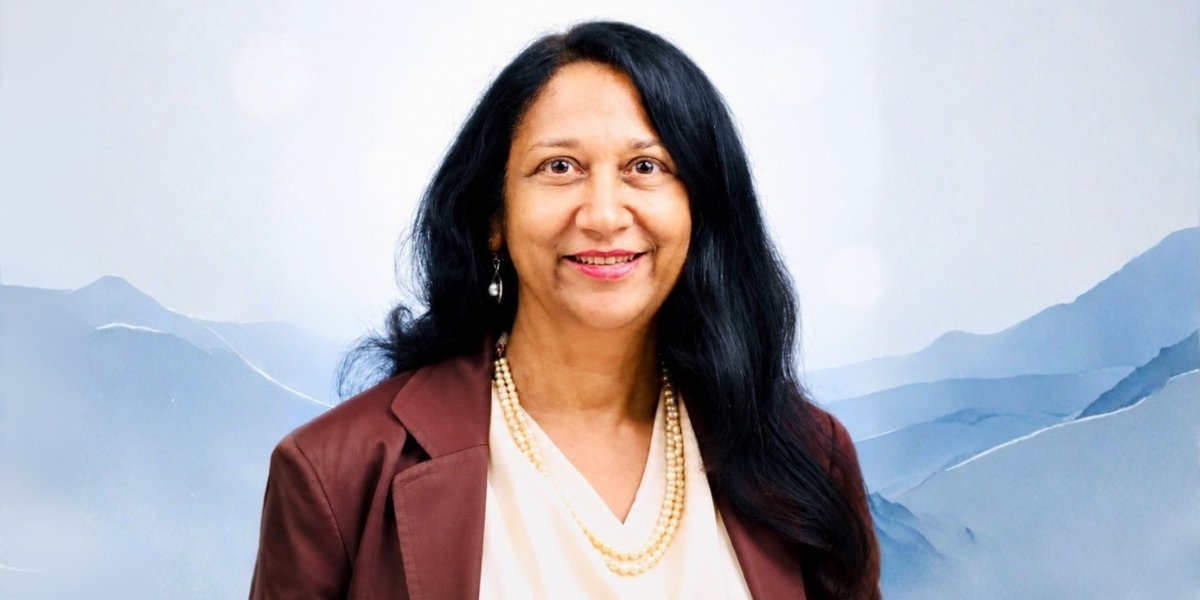
There is a phone call that Dr. Kalyani Gopal, PhD, has never been able to forget. A young girl was being treated, calling late one night from a payphone in Chicago, asking to be picked up. Dr. Gopal told her to go home to her foster parents, assuming it was a teenage dispute. She never heard from the girl again. That silence changed everything.

That moment redirected the career of one of the most decorated clinical psychologists working in human rights today. Dr. Kalyani Gopal, PhD, went from treating foster children in a clinical setting to building an internationally recognized coalition against human trafficking, founding a therapeutic shelter in Indiana, and eventually becoming the first Asian American President of the Psychology Coalition at the United Nations. The path was shaped by grief, urgency, and an unshakable sense of responsibility.

Roots That Ran Deep: Growing Up in a Family Built on Service

Dr. Kalyani Gopal, PhD, grew up in a military family where moving between cities was a way of life. Each new school brought a different culture, a different social ecosystem, and a new set of unspoken rules. Rather than struggling with the instability, she developed a sharp ability to observe, listen, and adapt. Those skills, she has said, made a career in psychology feel like a natural fit.

Altruism ran through her family for generations. Her most formative example was her mother, an Army officer’s wife who returned to college at 35 while raising three young children, then went back again at 50 to become a naturopath. Her mother built a thriving business around organic products, expanded it across an entire state with no formal marketing background, and hired women escaping domestic violence, offering them dignified work and fair wages. For Dr. Gopal, that example set a standard: professional achievement means nothing if it isn’t connected to something larger.

She began her doctoral studies at Vanderbilt University in Tennessee and completed her doctorate in clinical psychology at Alliant University in San Diego. From the start, her focus was on the populations that systems most often fail: children in foster care, survivors of abuse, and individuals carrying trauma that no one had ever named or treated.

Naming What Others Hadn’t: The Science Behind the Practice

One of the most significant contributions of Dr. Kalyani Gopal, PhD, to the clinical field is a term she coined herself: “Displacement Trauma.” The concept describes the complex psychological damage caused by repeated disruptions to childhood attachment bonds, a pattern common in children who cycle through foster placements, institutional care, or unstable family environments.

The term gave clinicians, case managers, and courts a framework for understanding behaviors that had previously been misread as defiance or pathology. It also gave parents and caregivers language to describe what they were witnessing in the children they cared for.

Her books have extended that work into practical tools. She is the author of The Supportive Foster Parent, Foster Parenting Step-by-Step, and the grief and loss workbook In My Heart. Her most recent book, Strong Roots, Safe Wings, published on Amazon, focuses on helping parents recognize and interrupt generational trauma patterns before they pass to the next child. She is also co-editor of the Springer publication Sex Trafficking: Feminist and Transnational Perspectives, which places the crisis in both a psychological and global policy context.

From Clinic to Coalition: Building SAFECHR and the Work That Followed

In 2014, Dr. Kalyani Gopal, PhD, founded the SAFECHR Coalition for Human Rights with a specific goal: to confront human trafficking through psychology, not just law enforcement. That distinction mattered. Most anti-trafficking frameworks at the time centered on prosecution. SAFECHR centered on the survivor.

Under her leadership, SAFECHR developed an internationally accredited, psychologically grounded training program in human trafficking for advocates, clinicians, and law enforcement professionals. She has since trained a wide range of institutions and individuals, including:

• FBI agents

• Police officers, sheriffs, and firefighters

• Judges, attorneys, and case managers

• Foster and adoptive parents

• Government agencies and nonprofit organizations

She has also developed a training manual for clinicians in Mongolia and victim-identification tools for use in Ukraine and Myanmar, working directly with survivors of rape and war. The reach of that work is hard to overstate. Dr. Gopal has moved the conversation about trafficking from awareness into an operational, clinically grounded response.

Since 2020, SAFECHR has operated a therapeutic shelter in Indiana specifically for women who have been trafficked. The shelter is currently scaling to 10 beds with a target of 40-bed operations. Dr. Gopal is building a restorative therapy healing center in India, paired with a commitment to adopt 16 villages in remote areas where girls face the highest risk of being recruited into trafficking networks.

Conference Rooms and Courtrooms: The Scope of Her Leadership

Dr. Kalyani Gopal, PhD, has chaired the Global SAFECHR Conferences since the first one in Chicago in 2014. Subsequent conferences ran in Washington, D.C., and Virginia in 2016, and Chicago again in 2018 and 2019. The next SAFECHR Conference is planned for India in 2027 at safechrindia.com.

Her institutional leadership runs equally wide. She served as President of the Society of Clinical Psychology, Division 12 of the American Psychological Association, in 2022. She chaired the Illinois Psychological Association’s Working Committee on Hate and Harassment. She serves on two Indiana Lake County boards: the Child Protection Team and the Child Fatality Team. In January 2025, she began her tenure on the APA Council of Representatives for Division 56, which covers trauma psychology.

She also serves as President of Mid-America Psychological and Counseling Services, PC, overseeing operations across six mental health clinics in Indiana and Illinois.

The awards she has received reflect the breadth of that work:

• Indiana Lake County Award for Excellence, 2004

• Indiana Attorney General’s Voices for Victims Award, 2015

• US Congressional Award for Top 20 Global Women

APA Presidential Citation Award for Human Rights and Global Leadership and Promoting Health Equity, 2023

• Indiana Commission for Women Torchbearer Award, 2024

The United Nations and a New Chapter of Global Leadership

In August 2024, Dr. Kalyani Gopal, PhD, became President of the Psychology Coalition at the United Nations. She has since been re-elected to a second two-year term, a signal of the confidence the coalition places in her vision for psychology’s role in international human rights work.

It’s a platform that connects directly to the on-the-ground work she has been doing for decades. The tools she created for Ukraine and Myanmar, the training curricula deployed across multiple countries, the survivor-centered shelter model she is scaling in Indiana, all of it positions Dr. Gopal as someone who treats global policy as a complement to direct service, not a replacement for it.

She has described success not in titles or accolades, but in a feeling: a peaceful, calming sense of personal fulfillment and meaning. Watching women and children move from victimhood to survival to purpose-driven lives is, in her own words, the most powerful driver behind her determination to build that 40-bed shelter and to keep going.

What Her Patients Taught Her

For all the institutions she has built and the policies she has shaped, Dr. Kalyani Gopal, PhD, is quick to credit her patients as her most important teachers. Decades of clinical work, listening carefully and helping people rewire the stories they carry, have given her a ground-level understanding of what trauma actually costs and what healing actually requires.

That respect for the people she serves shows up everywhere in her work. It shows up in the language she chooses, in the shelter model she built, in the way she talks about defining success. It is also visible in the way she has raised her own children: one now a Director of Digital Neuropsychology and Brain Health at Harvard Medical School and an Associate Professor in Psychology at Harvard, the other a Harvard Law School graduate working in private equity in California.

Dr. Gopal’s story is not a straight line from graduate school to recognition. It is a series of commitments, each one following from the last, built on the belief that every person can overcome past trauma with the right help, and that the right help is something she can spend a lifetime building.

Small Business Loans for Veterans in 2026 and How to Access Them

Veterans bring exceptional discipline, leadership, and operational skill to their businesses. The financing system has not always reflected the quality of borrowers that a military background produces. In 2026, that gap is closing in specific and meaningful ways.

Veterans own approximately 2.5 million small businesses in the United States, employing nearly 5 million people and generating more than one trillion dollars in annual economic output. By almost every measure of business performance, veteran-owned businesses outperform their non-veteran counterparts in resilience, operational discipline, employee retention, and long-term survival rates. The personal qualities that make veterans effective military leaders translate directly into effective business management: the ability to plan under uncertainty, execute under pressure, manage teams, and adapt to changing conditions without losing operational focus.

The financing market has historically underserved this community in specific ways. Veterans often face unique financial profile challenges that are poorly understood by traditional lenders: deployment-related income gaps in personal credit history, frequent relocations that complicate the long-term banking relationships that support traditional lending, and transitions from military service that created business startups with shorter operating histories than civilian-owned businesses of equivalent management quality. The performance-based direct lending market, which evaluates actual business cash flow rather than personal relationship history, addresses several of these challenges structurally.

VA Programs and SBA Resources Specifically for Veterans

The SBA Boots to Business program provides entrepreneurship education for service members transitioning to civilian business ownership, connecting them with SBA resources, including the SBA’s Veteran Small Business Certification program. The VetCert designation, administered through the SBA, certifies veteran-owned small businesses for federal contracting set-asides that generate documented revenue from creditworthy government clients. This contracting revenue builds the operating history and bank account performance that support commercial lending applications.

The SBA also operates the Military Reservist Economic Injury Disaster Loan program, which provides low-interest working capital loans to small businesses that have experienced financial disruption due to a key employee being called to active military duty. This program is specifically relevant for small businesses with veteran employees or active reserve member business owners whose operational capacity is affected by military obligations.

Performance-Based Lending: Where Veterans Get the Fairest Evaluation

The most broadly accessible financing for veteran-owned businesses in the current market is performance-based direct lending, which evaluates the business on its actual revenue and cash flow rather than on the personal relationship history and documentation-heavy process of traditional bank lending. A veteran who has been operating a business for twelve months with consistent, growing revenue has a strong performance-based lending profile regardless of whether that twelve-month history was preceded by deployment gaps in personal credit history or a relocation that changed banking relationships.

STEP 1 Obtain the SBA VetCert Designation to Access Government Contracting

The SBA VetCert designation, which certifies a business as veteran-owned for federal contracting purposes, opens access to contracting set-asides that generate documented revenue from the most creditworthy possible customer: the federal government. This contracting revenue builds bank account history and annual revenue levels that improve commercial lending qualification significantly over time. The certification process requires documentation of veteran status and business ownership structure, but is worth pursuing as one of the first financing-adjacent investments a veteran business owner makes, because the revenue it unlocks multiplies into financing capacity.

STEP 2 Connect With Veterans Business Outreach Centers

The SBA’s network of Veterans Business Outreach Centers provides free business development services, mentoring, and connections to financing resources specifically for veteran entrepreneurs. VBOC counselors are experienced with the specific financial profile challenges that veteran business owners face, including credit history gaps from deployment and business histories that started post-service. These connections frequently lead to both SBA microloans for early-stage businesses and meaningful commercial lending relationships for established ones, often faster than applying cold to commercial lenders without the VBOC referral context.

Fundivi actively serves veteran-owned businesses, and its AI underwriting model evaluates military career gaps and post-service operating histories with the same objective cash flow analysis it applies to all business profiles. Recognized among the top-rated lenders in Business Loans IQ’s and Business ABC’s 2026 small business funding comparisons for its approval accessibility across a range of business owner profiles, Fundivi offers veteran business owners the same-day access to capital it provides to all qualifying small businesses. Veterans who want to compare products across different revenue and operating history stages can begin a Fundivi business loan application online, and the Fundivi working capital solutions page offers a fuller overview of the funding options available for businesses at different revenue and operating history stages.

STEP 3 Build Business Credit From the First Day of Operation

Veteran business owners who have experienced deployment-related personal credit gaps benefit most from building a business credit profile that stands independently of personal credit history. Starting with a dedicated business bank account on day one, adding trade credit lines that report to commercial bureaus as early as possible, and managing any initial financing with consistent on-time payments builds a commercial credit identity that reduces personal credit score dependence over time.

Resources Unique to Veteran Business Owners in 2026

Beyond the SBA programs, several nonprofit organizations provide specific support for veteran-owned businesses. Bunker Labs, a national nonprofit, provides community and resources for veteran entrepreneurs. The Institute for Veterans and Military Families at Syracuse University provides research and connections to financing resources. Hirepurpose and similar organizations provide employment and business development support for veterans in transition. These community resources complement the financing landscape by providing the mentorship and peer support that accelerate the knowledge gains that improve business management and financing outcomes.

Business Loans IQ’s independent comparison platform covers the financing options available to veteran-owned businesses across the full range of products and lender types, providing the comparison context that makes financing decisions efficient rather than overwhelming for business owners who are simultaneously learning the business lending market. The platform’s working capital loan comparison covers the direct lending products most accessible to veteran businesses at different revenue levels and operating history stages. For the independent external perspective on which lenders are currently performing best for veteran business owners, the Business ABC 2026 best funding options analysis provides a comprehensive benchmark with approval rate data across diverse business owner demographics.

FREQUENTLY ASKED QUESTIONS

Do veterans get preferential treatment for business loans?

Veterans do not receive preferential interest rates from commercial lenders, though some nonprofit lenders and SBA programs offer lower rates for qualifying veteran-owned businesses. The more significant advantage comes from the SBA VetCert designation and VBOC connections that open access to contracting opportunities and SBA-specific resources. The performance-based commercial lending market evaluates veteran businesses on the same objective cash flow criteria as any other business, which is itself an equalizing factor that produces fair outcomes based on business quality rather than demographic characteristics.

Can a recently separated veteran get a business loan?

Yes, through specific channels. A veteran who has been operating a business for six or more months with consistent revenue qualifies for performance-based direct lending products on the same basis as any business with that operating history. Veterans with shorter histories can access SBA microloans through CDFI lenders with more flexible operating history requirements. The SBA Boots to Business program specifically addresses the transition period and connects separating service members with financing resources before and during the business launch phase.

How does a deployment gap in personal credit history affect business loan applications?

Deployment gaps in personal credit activity are recognized by some lenders as a specific circumstance that does not reflect creditworthiness. Performance-based direct lenders that evaluate business cash flow rather than leading with personal credit history are the most appropriate channel for veteran business owners whose personal credit history includes deployment-related gaps. Providing documentation of deployment periods when explaining credit history gaps can help lenders contextualize the gaps accurately.

What SBA programs are specifically designed for veteran business owners?

The SBA VetCert program certifies veteran-owned businesses for federal contracting set-asides. The SBA Boots to Business program provides entrepreneurship education for transitioning service members. The Military Reservist Economic Injury Disaster Loan program provides working capital for businesses affected by key employee deployment. The SBA also provides priority processing for veteran borrowers at some Preferred Lenders. These programs complement the standard SBA 7(a) and microloan programs that veteran businesses qualify for on the same basis as other eligible businesses.

Are there grants specifically for veteran-owned small businesses?

Yes. The StreetShares Foundation, the Hivers and Strivers Venture Fund, and several state-level programs provide grants specifically for veteran-owned businesses. The USDA provides rural development grants that benefit veteran-owned agricultural businesses. Corporate supplier diversity programs increasingly include veteran-owned business preferences alongside minority and women-owned business preferences. Grant funding is supplementary to commercial financing rather than a substitute for it, and pursuing both simultaneously is the most effective approach for veteran business owners.

Disclaimer: This article is for informational and editorial purposes only. It does not constitute financial, legal, tax, or lending advice. Loan programs, eligibility requirements, approval decisions, rates, terms, and funding timelines may vary by lender, borrower profile, location, and program availability. Readers should conduct their own research and consult qualified financial, legal, or business advisors before applying for financing or making business decisions. References to companies, platforms, programs, or organizations are not guarantees of approval, funding, results, or suitability.

Chicago Extreme Heat Warning Threatens July Fourth Holiday Weekend

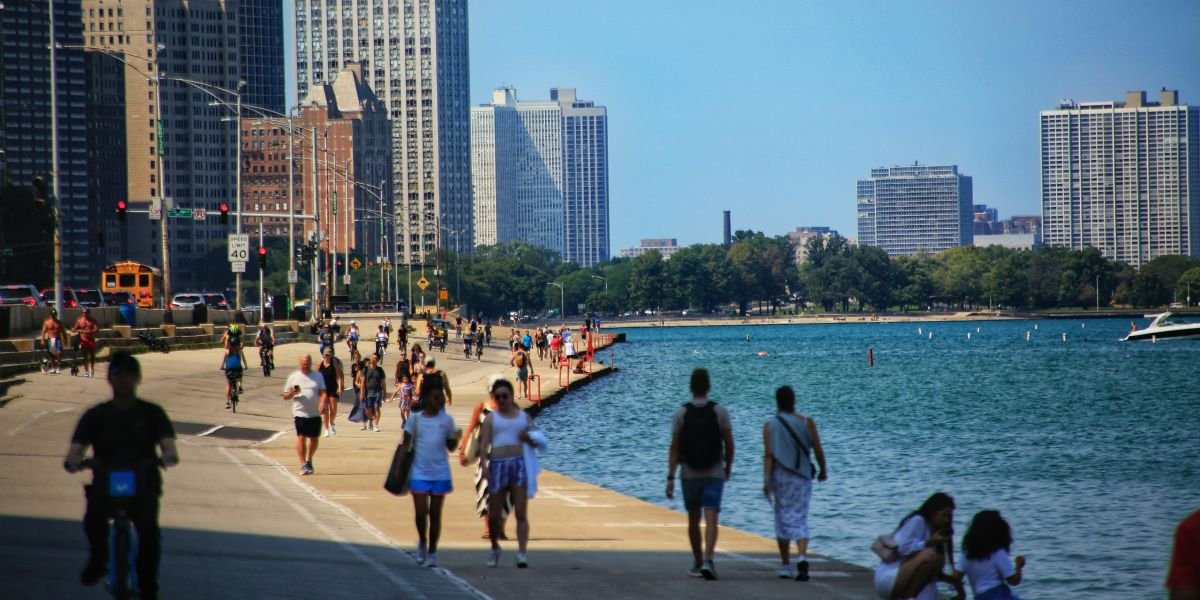
Chicago faced a multi-day Extreme Heat Warning that ran into the July Fourth holiday weekend, with heat index values reaching between 100 and 110 degrees across the metropolitan area. The National Weather Service extended the warning through early Friday, July 3, 2026, as the city activated cooling centers and Mayor Brandon Johnson urged residents to check on vulnerable neighbors.

Key Takeaways

  • The National Weather Service issued an Extreme Heat Warning for the entire Chicago area beginning Monday, June 29, later extending it through early Friday, July 3, 2026.
  • Heat index values climbed between 100 and 110 degrees during the multi-day event, with the city recording its hottest day of 2026.
  • Mayor Brandon Johnson referenced the 1995 Chicago heat wave, which killed more than 700 residents, in urging residents to take the conditions seriously.
  • ComEd activated a voluntary load reduction program as surging air conditioning use strained the regional electricity grid.

How Long Did the Chicago Extreme Heat Warning Last?

The Chicago Office of Emergency Management and Communications confirmed that the National Weather Service Extreme Heat Warning took effect Monday, June 29 at 12:00 p.m., initially set to run through Wednesday, July 1 at 10:00 p.m. As the heat dome settled over the Midwest, officials extended the warning until early Friday, July 3, covering the entire Chicago area and Northwest Indiana. An Extreme Heat Warning indicates that dangerous heat is occurring or imminent, a higher tier than a heat advisory.

The event stretched across four consecutive days of hazardous conditions. According to the National Weather Service, temperatures held in the 90s through the week, with heat index values reaching up to 105 degrees on Tuesday and Wednesday. FOX 32 Chicago reported that the high temperature reached 94 degrees before climbing higher the following day, marking the hottest day of 2026 to that point.

Why Did the City Invoke the 1995 Heat Wave?

The risks associated with the current event prompted Mayor Brandon Johnson to reference the 1995 Chicago heat wave, which killed more than 700 residents and remains the deadliest weather disaster in the city’s history. That comparison framed the city’s messaging around overnight conditions, which weather officials identified as a primary danger. The Chicago Office of Emergency Management and Communications warned that oppressive warmth at night, combined with daytime highs, creates hazardous conditions for elderly residents and those with pre-existing health conditions.

The emphasis on nighttime heat reflects a lesson from 1995, when a lack of overnight relief compounded the health toll. Chicago officials urged residents to check on relatives, neighbors, and seniors, and directed those unable to reach vulnerable individuals to request well-being checks through the CHI311 app, the 311.chicago.gov portal, or by calling 3-1-1.

What Cooling Resources Did Chicago Activate?

The Chicago Department of Family and Support Services activated cooling areas at its six community service centers, which open during periods of extreme heat at 90 degrees and above. These centers operated Monday through Thursday from 9:00 a.m. to 5:00 p.m., with the Garfield Center at 10 S. Kedzie Ave. extending hours until 8:00 p.m. through Friday, July 3. The city indicated that if extreme heat persisted into the weekend, the Garfield Center would also open for cooling on Saturday and Sunday.

Beyond the dedicated cooling areas, residents could seek relief at Chicago Public Library locations, City Colleges of Chicago campuses, Chicago Park District fieldhouses, and pools and splash pads. The Chicago Police Department’s 22 district stations remained available 24 hours for heat relief and shelter connection. The table below outlines the resources.

Resource Operator Availability
Community cooling areas Dept. of Family and Support Services Mon–Thu, 9 a.m.–5 p.m. (Garfield until 8 p.m.)
Fieldhouses, pools, splash pads Chicago Park District During hours of operation
Library and college locations CPL / City Colleges During hours of operation
District stations Chicago Police Department 24 hours

How Did the Heat Affect the Power Grid and Roads?

The sustained demand strained regional infrastructure. ComEd activated its voluntary load reduction program on Wednesday, asking high-consumption commercial, industrial, and some residential customers to cut electricity use during peak hours as air conditioning use surged. The utility recommended covering windows, setting fans to spin counter-clockwise, raising thermostats when away from home, and unplugging idle devices.

Road infrastructure also felt the strain. The Illinois Department of Transportation warned drivers about pavement failures caused by the heat and cautioned motorists to watch for crews performing emergency repairs. The agency noted that predicting where buckling might occur is difficult, so maintenance personnel remained on standby to monitor conditions.

What Does the Forecast Show for the Holiday Weekend?

The National Weather Service indicated the extreme heat would break as the holiday weekend arrived. Shower and thunderstorm chances returned late Thursday night and continued through the Fourth of July weekend, with a few strong to severe storms possible. Temperatures were expected to ease into the mid to upper 80s, offering relief from the triple-digit heat index values, though conditions would remain warm and humid.

Chicago’s Extreme Heat Warning underscored how a multi-day heat dome can push both public health resources and regional infrastructure to their limits heading into a major holiday weekend.

FAQs

How hot did it get in Chicago during the heat warning? Heat index values reached between 100 and 110 degrees, with actual air temperatures holding in the mid 90s. The event marked the hottest stretch of 2026 for the city to that point.

When did the Extreme Heat Warning end? The National Weather Service extended the warning through early Friday, July 3, 2026, after it initially began Monday, June 29.

Where can Chicago residents find cooling centers? Residents can locate cooling centers through chi.gov/cooling or by calling 3-1-1. Options include community service centers, libraries, park fieldhouses, and police district stations.

Why did the mayor mention the 1995 heat wave? Mayor Brandon Johnson referenced the 1995 heat wave, which killed more than 700 residents, to emphasize the danger of sustained heat and encourage residents to check on vulnerable neighbors.

Did the heat affect the power grid? Yes. ComEd activated a voluntary load reduction program asking large customers to cut electricity use during peak hours as air conditioning demand surged.

Will the Fourth of July weekend be cooler? Forecasts showed temperatures easing into the mid to upper 80s over the holiday weekend, with thunderstorm chances returning, though conditions stayed humid.

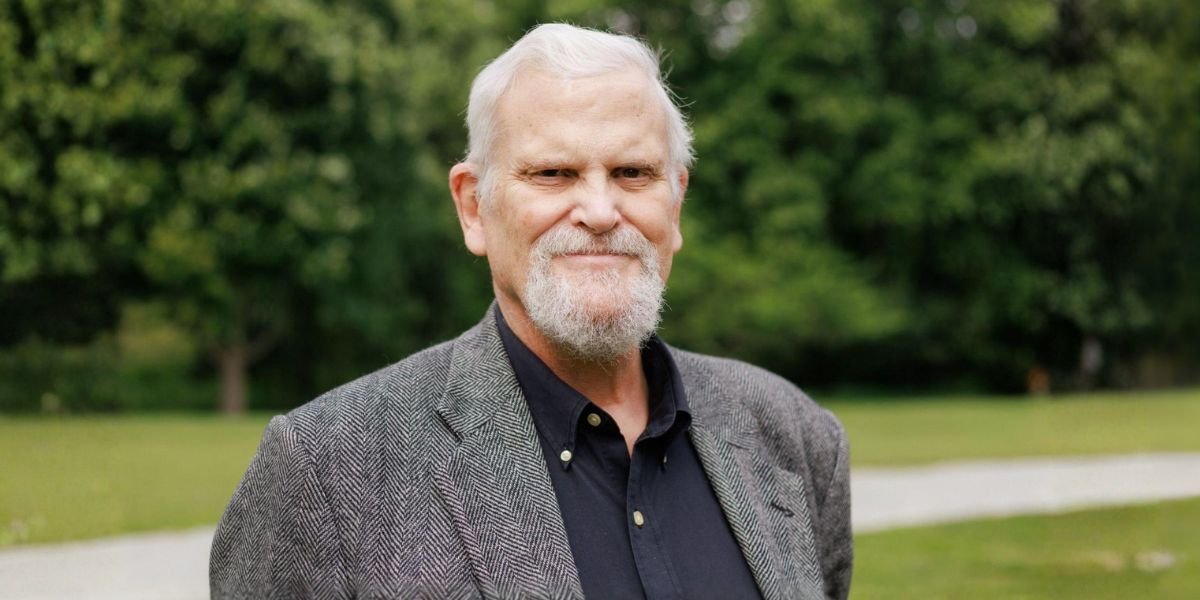
Beyond Space Battles, W. Clark Boutwell Explores the Human Cost of Progress in New Trilogy

By Jamie Dunn

Science fiction has long served as a lens through which writers examine the challenges and contradictions of the present. While futuristic technology and imagined civilizations often capture readers’ attention, many of the genre’s most enduring stories are ultimately about human nature.

That philosophy drives After The Fall Was Over, the opening installment of The Silence and the Gods Trilogy by veteran author W. Clark Boutwell. Set generations after the collapse of a once-powerful republic, the novel blends military science fiction, political intrigue, and philosophical speculation to explore questions of power, technology, identity, and the choices societies make as they rebuild after catastrophe. Following closely on the heels of the Old Men and Infidels Trilogy, where an agrarian America triumphs over the high-tech workers’ paradise of the Unity. This new book follows the losers.

Rather than focusing on civilization’s collapse itself, Boutwell was more interested in what comes long afterward.

“I was not interested in the collapse,” he explains. “The collapse was a necessary mechanism to get my pieces on the board. Revolutions are infrequently due to ideas.”

Instead, After The Fall Was Over introduces readers to a world where competing societies have evolved in dramatically different ways. One embraces advanced technology and centralized control, while another survives through more traditional means. The contrast creates the backdrop for a story that examines not only political conflict but also the values that shape civilizations over time.

For Boutwell, speculative fiction offers an opportunity to ask timeless questions without being confined to the present day.

“The science fiction aspect of these books serves to set the stage for the characters,” he says. “Folks are folks.”

That emphasis on character is evident throughout the novel. General Fettwap Aliende, one of the book’s central figures, is ambitious, manipulative, and deeply flawed. Rather than writing a conventional villain, Boutwell created a character whose selfish pursuit of power reflects larger questions about leadership and corruption.

“Ain’t he a piece of work?” Boutwell jokes. “He shows his character early and often, betraying every ally and underling with equanimity and vigor.”

Another central figure, Blanche Woods, represents a very different kind of struggle. Forced to navigate deeply personal and political conflicts, Blanche’s journey examines identity, resilience, and the search for agency within an oppressive system.

Boutwell, a retired pediatrician, says the character’s story was shaped in part by years spent caring for children.

“Child abuse, in all its stripes, is a heart issue for us old pediatricians,” he says. “It is seldom made right, leaving its victims to stagger into adulthood feeling soiled and damaged.”

While the novel explores complex political systems and futuristic technologies, Boutwell believes the characters’ emotional journeys remain its true foundation.

Technology itself also plays a central role throughout the trilogy, though not as an unquestioned force for progress.

“The Unity imagines itself to be superior because of its machines,” Boutwell explains. “Yet that same dependence has also hampered it. Progress is most often change for no benefit.”

The story’s advanced artificial intelligence system, known as the CORE entities, introduces another layer of philosophical inquiry. Rather than simply serving as a tool, the system houses intellects capable of asking its own questions about survival, purpose, and control.

For Boutwell, that mirrors humanity’s ongoing relationship with technological innovation.

“Each new technology raises problems,” he says. “We must learn to be more canny consumers of the technology we create.”

Although After The Fall Was Over features military conflict and political intrigue, Boutwell says those elements are ultimately vehicles for exploring larger ideas.

“The military aspect is the least important,” he says. “Philosophical speculation, of course, is why the book was written.”

That perspective reflects a broader tradition within science fiction, where imagined futures often illuminate present-day questions rather than predict tomorrow’s headlines.

Throughout the novel, characters confront systems that attempt to define who they are and what roles they should play. The characters’ choices and their willingness to challenge those systems become the emotional center of the story.

As the first installment in The Silence and the Gods Trilogy, After The Fall Was Over establishes a richly imagined world while laying the groundwork for larger questions that will continue throughout the series. While readers can expect political intrigue, evolving technology, and high-stakes conflict, Boutwell hopes they will also find themselves reflecting on issues that extend far beyond the pages of the novel.

In the end, he believes human nature remains remarkably consistent, regardless of the setting.

“Humans, good or bad, noble or selfish,” he says, “will play out their lives according to their characters and beliefs.”

After The Fall Was Over: Book One of The Silence and the Gods Trilogy by W. Clark Boutwell is available now on Amazon.