
Picture a hallway with three doors. Behind the first is a bank. Behind the second is a credit union or community lender. Behind the third is an online provider. Each one offers a business line of credit, and each has its own requirements, timeline, and price. Knocking on the wrong one wastes time and may cost you a hard credit inquiry.
Here’s what you’ll find behind each door, so that you can choose before you knock.
Door Number One: The Bank
Typical requirements:
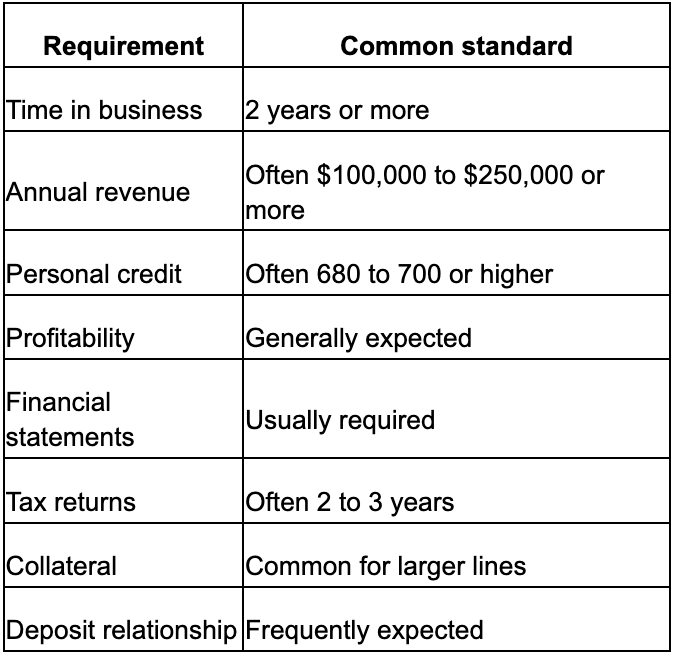
Likely timeline: One to several weeks. An established customer with a small unsecured line can sometimes move considerably faster.
Why it’s worth knocking: Banks usually offer the lowest pricing and the fewest fees, along with larger limits.
How to prepare:
- Move your operating account to the bank before you need credit
- Meet a business banker in person
- Bring clean financial statements prepared by an accountant
- Be able to explain your cash conversion cycle
- Expect a covenant or an annual clean-up requirement
Fast approval at this door: Unlikely unless you’re already a strong customer. Merchants turned away here might read this San Diego article about merchant loan programs about a card-based alternative.
Door Number Two: The Credit Union or Community Lender
Typical requirements:
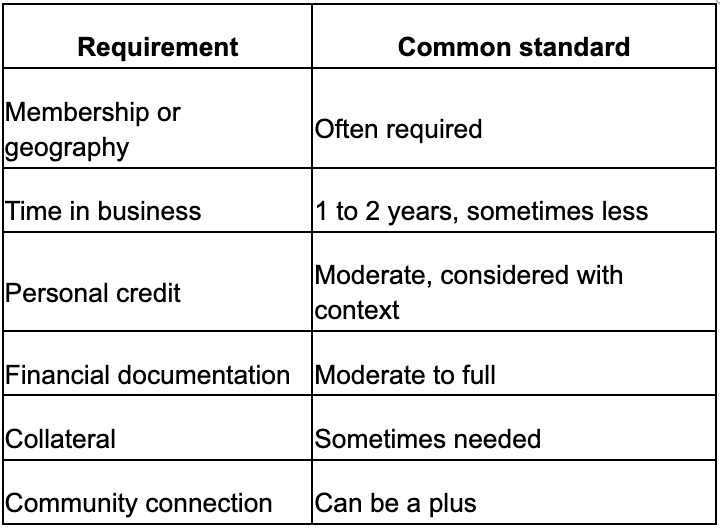
Likely timeline: Days to several weeks.
Why it’s worth knocking: These institutions may take a more personal look at your story. Community development financial institutions, in particular, often exist to serve businesses banks overlook.
How to prepare:
- Confirm your membership eligibility
- Prepare a brief business summary
- Explain any credit issues candidly
- Ask about technical assistance or coaching
Fast approval at this door: Possible for small lines and existing members, but not typical.
Door Number Three: The Online Provider
Typical requirements:
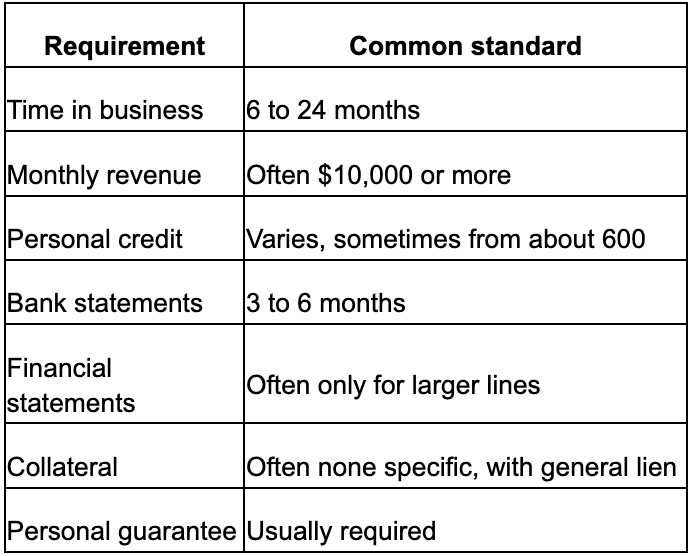
Likely timeline: Hours to a few days.
Why it’s worth knocking: Quick decisions and light paperwork. It’s the only one of the three doors commonly associated with near-immediate access.
How to prepare: Have statements and IDs ready, and apply early in the business day. Before committing, look at a page like Fundivi on-demand credit lines for an idea of what’s typically requested and offered. Ask about fees, repayment schedules, and whether draws replenish.
Fast approval at this door: Realistic for qualified applicants.
Features Behind Each Door
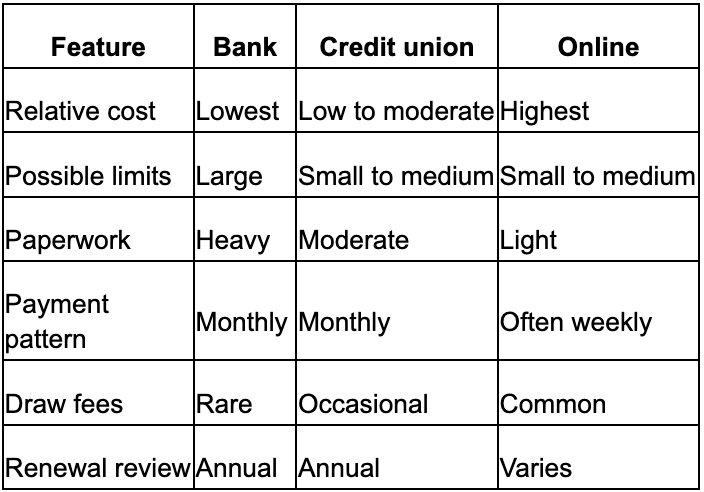
What All Three Doors Share
No matter which door you choose, some requirements are universal.
A clean business identity. Your legal name, EIN, and bank account must agree, and your state registration must be current.
A dedicated business bank account. Mixing personal and business funds makes every reviewer’s job harder.
Honest disclosure. All existing loans, advances, and liens must be listed.
A reason for revolving credit. Lines suit recurring timing gaps. If your need is a single purchase, a term loan may be the better fit.
Sound account behavior. Frequent overdrafts are a concern behind every door.
Which Door Should You Knock On First?
Use this short guide. Reading a piece on online loans with simple applications can help you understand what simplified processes do and don’t include.
Knock on Door One if:
- You’ve been operating for at least two years
- Your credit is strong and your business is profitable
- You can wait a few weeks
Knock on Door Two if:
- You’ve been told no by a bank, or your story needs explaining
- You’re in an underserved community or industry
- You can wait a couple of weeks
Knock on Door Three if:
- You need access this week
- Your strength is your deposits, rather than your financial statements
- You accept a higher cost for speed
Knock on more than one if: You’ve got time. Consider opening a small online line for immediate needs, while pursuing a bank line that could replace it later.
How Much Should You Ask For?
Whichever door you open, base your request on your cash cycle.
Add up the most money you’ve needed at one time to cover timing gaps in the last year, then add a modest cushion. If your largest gap was $28,000, asking for $35,000 is defensible. Requesting $150,000 on $20,000 of monthly revenue isn’t, and it can result in a slower review or a decline.
Lenders look at your revenue differently depending on the door. A bank may focus on profit and debt coverage, while an online provider may set a limit at some fraction of monthly deposits.
Requirements Others Forget to Mention
Be ready for these less-publicized items:
- Personal financial statement for banks and SBA-related lines
- Spousal signatures in some states or situations
- Cross-default clauses connecting this line to your other debts
- Automatic debit authorization for online products
- UCC-1 filing against business assets, which can affect future borrowing
- Authorization for continuing review, letting the lender check your credit or bank data periodically
Getting Fast Approval Without Being Careless
Quick approval is only valuable if the line actually helps. Before signing, confirm:
- The advertised rate and how it’s calculated
- All draw, maintenance, and renewal fees
- The repayment schedule for each draw
- Whether repaid amounts become available again immediately
- When and why the limit might be reduced
- The scope of any personal guarantee
Online research can help you identify possibilities. Check how any site earns its money, and validate its claims directly.
Preparing a File That Works at Any Door
You don’t need three separate packages. Build one complete folder, then send each institution what it needs. Include two years of tax returns, a current profit and loss statement, a balance sheet, six months of bank statements, a debt schedule, and your formation documents. Add an accounts receivable aging report if you sell on credit. A complete folder means that a bank’s longer list won’t slow you down, and an online provider can simply take the portion that it requires. Refresh the statements each month so the package stays current for your next application.
Frequently Asked Questions
What’s the easiest type of line of credit to get?
Online lines based on bank data tend to have the most accessible requirements, though costs are often higher. Secured lines can also be easier.
How much revenue do I need?
Online providers often want at least $10,000 monthly. Banks commonly look for higher annual revenue.
Can I get a line with one year in business?
Yes, with many online providers. Banks usually prefer two years.
Are tax returns required?
Often for banks and larger lines, but not always for small online lines.
Does applying at a bank hurt my credit?
A hard inquiry may have a small impact. Ask whether a preliminary review can be done without one.
Can I have lines at more than one institution?
Yes, if each agreement permits it and your cash flow supports the obligations.
How long does an approved line remain open?
Often 12 months, then subject to renewal. Some lines have different periods.
Do lenders require a minimum balance?
Some banks do, and some agreements include a clean-up period requiring a zero balance.
Should I apply at all three doors at once?
Only if you can manage the inquiries. Starting with one or two prequalifications generally protects your credit better.
Do lenders ask about my personal assets?
Banks often do, through a personal financial statement. Online providers usually don’t.
Can I switch to a cheaper door later?
Yes. Many owners refinance into bank lines after building a record.
Disclaimer: This article is for informational purposes only and does not constitute financial, legal, or lending advice. Business line of credit requirements, rates, fees, and approval timelines vary by lender and applicant qualifications. Consult a qualified professional and review all financing terms before making financial decisions.