
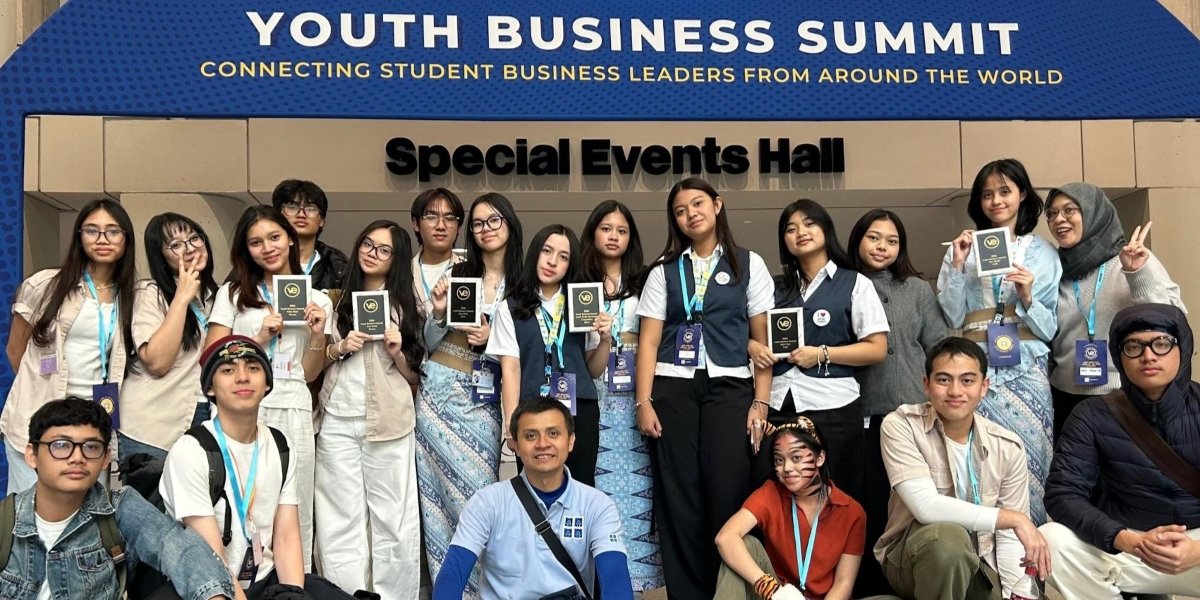
New York City, April 2026. The Youth Business Summit at the Javits Center has long been a space where ideas compete for visibility, funding, and global recognition. This year, however, it revealed something far more important than trends or technologies. It offered a glimpse into the future of business itself, a future shaped not only by innovation, but by intention.
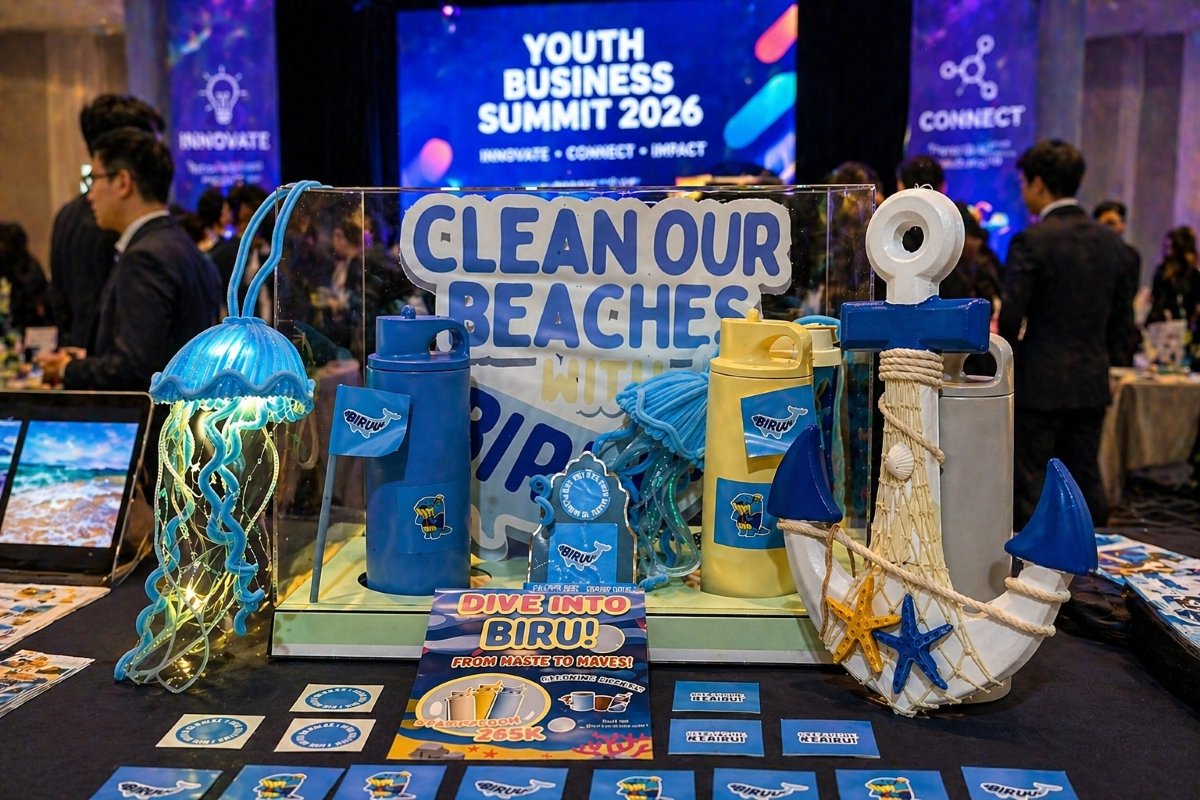
Among the standout participants was Indonesia’s Team Biru, a group of young entrepreneurs whose approach signals a broader shift in how value is created and perceived. Their project, eco-friendly tumblers made from recycled plastic collected from Indonesian beaches, addresses a global environmental issue while demonstrating a sophisticated understanding of product-market relevance. Yet what made them exceptional was not just their solution, but the framework behind it.
They built a product. But more importantly, they built meaning around it.
For consumers who are increasingly selective in saturated markets, differentiation is no longer achieved through functionality alone. It is achieved through purpose, storytelling, and emotional resonance. Team Biru intuitively understood this. Their concept aligned with global sustainability goals, and their ability to translate that alignment into a compelling narrative gave the project lasting promise.
This is where the conversation becomes strategic.
The rise of purpose-driven entrepreneurship is not a trend. It is a structural shift. Investors, corporations, and institutions are increasingly prioritizing ventures that integrate environmental and social impact into their core models. According to multiple global reports, ESG-aligned companies are showing stronger brand loyalty and long-term valuation than traditional models. What Team Biru represents is not an isolated success story. It is a preview of what scalable, future-ready businesses will look like.
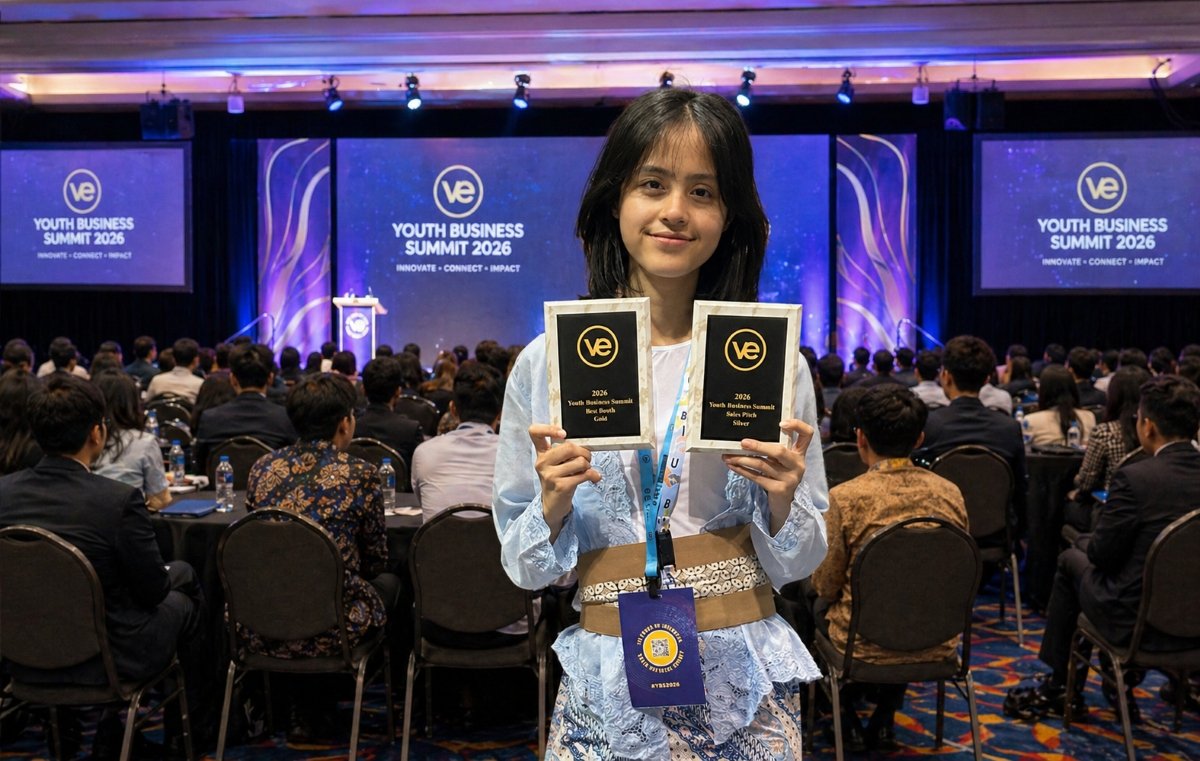
At the center of the team’s execution was Sabine Tesla Amadine, who served as Chief Operating Officer for Team Biru. Her leadership highlights another critical evolution in business: the importance of human capital not only as a resource, but as a strategic differentiator.
Her approach combined operational discipline with emotional intelligence, a balance that is becoming essential in global markets. In high-pressure environments, the ability to build trust, foster connection, and create meaningful engagement is no longer optional. It is increasingly central to how teams stand out.
This is particularly relevant when we consider how early-stage ventures grow.
Startups often focus heavily on product development and market entry, but overlook the importance of experience design, including how their brand is perceived, felt, and remembered. Team Biru’s success at the summit was driven by their ability to integrate all three layers: product, message, and human interaction. Their booth was not just a display; it was an experience. Their communication was not just informative, it was immersive.
This level of awareness, at such an early stage, is precisely why the next generation of entrepreneurs deserves strategic attention.
Because the real opportunity is not only to celebrate them, but to invest in them.
For corporations, this means rethinking partnership models. Instead of viewing young founders as early-stage risks, they can be seen as innovation partners, agile, culturally aware, and deeply connected to emerging consumer behavior. Strategic collaborations, incubators, and mentorship programs can accelerate both sides, providing startups with infrastructure while giving corporations access to fresh thinking and adaptability.
For investors, the implication is equally clear. Traditional metrics remain important, but they can be complemented by a deeper analysis of narrative strength, mission alignment, and founder mindset. Teams like Biru show that clarity of purpose can support brand differentiation and meaningful customer relationships over time.
And for institutions and policymakers, there is a responsibility to create ecosystems where this kind of entrepreneurship can thrive. Access to global platforms, education, funding, and cross-border collaboration will determine how effectively these young innovators can transition from potential to performance.
Because the stakes are higher than individual success stories.
We are entering an era where the challenges businesses are expected to solve, climate change, sustainability, and social impact, are systemic. They require not only innovation but a shift in perspective. The next generation is already operating within that mindset. They are not separating profit from purpose. They are integrating them.
Team Biru is a clear example of this integration in action.
Their journey at the Youth Business Summit is not just a milestone. It is a signal. A signal that the future of business will be built by those who understand that value is multidimensional. Those products must carry meaning. That brands must create a connection. And that leadership must extend beyond execution into influence.
As global markets evolve, the question is no longer whether companies should support young entrepreneurs. The question is how quickly they can adapt to working with them.
Because the future is already here.
It is collaborative. It is purpose-driven. And it is being built by those who are bold enough to rethink what business can be.
Supporting them is not charity. It is a strategy.