
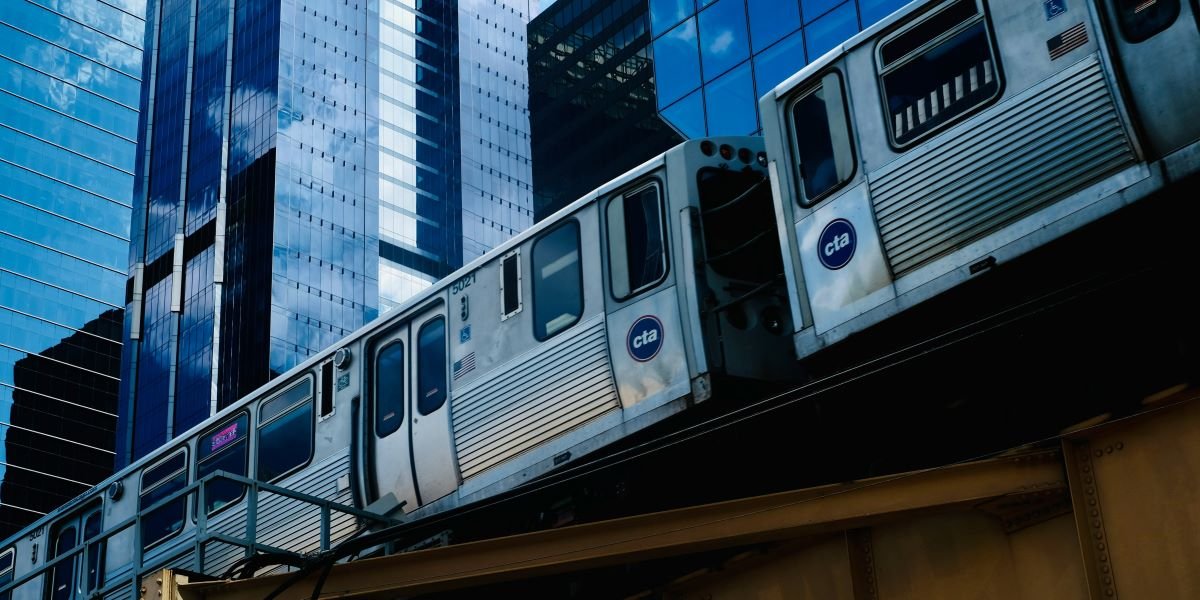
The Federal Transit Administration issued Special Directive 25-3 to the Chicago Transit Authority in December 2025, requiring immediate and measurable corrective actions to reduce assaults on transit workers and passengers and to address unsafe conditions across the bus and rail system. A second directive, Special Directive 26-1, followed in March 2026, targeting the Illinois Department of Transportation for systemic failures in its safety oversight of CTA. The combined effect of these federal actions has placed Chicago’s transit system under a level of scrutiny that carries real financial consequences: noncompliance puts federal funding at risk for a system already facing a $200 million budget shortfall.
Key Takeaways
- The FTA issued Special Directive 25-3 in December 2025, citing a “substantial risk of death or personal injury” on CTA and requiring immediate corrective actions on transit worker assaults, passenger safety, and law enforcement deployment.
- The FTA rejected CTA’s initial security enhancement plan as “materially deficient” in December 2025, forcing the agency to submit a revised plan in March 2026 with more aggressive crime reduction targets.
- A second directive in March 2026 targeted IDOT for failing to properly oversee CTA’s safety program, requiring 11 specific corrective actions and launching a Safety Management Inspection.
- CTA reported that systemwide crime dropped for five consecutive months through May 2026, with violent crime on the Red Line down 77% year over year and overall serious crimes down 40%.
- CTA bus ridership has reached 90% of pre-pandemic levels and weekend ridership has surpassed 2019 figures, though the system still faces a potential $200 million funding shortfall that could trigger service cuts of up to 40% by late 2026.
The December 2025 Directive Was Triggered by a Pattern, Not a Single Incident
FTA Administrator Marc Molinaro’s December 8, 2025, letter to Mayor Brandon Johnson was direct in its language. The letter cited the attack on Bethany MaGee, a 26-year-old woman who was set on fire aboard a CTA train by a suspect reported to have 72 prior arrests, as a flashpoint. But Molinaro framed the incident as a symptom of systemic failure, not an isolated event. The directive stated that CTA, the City of Chicago, and the State of Illinois had “failed to meet this obligation” of maintaining a safe transit system.
The FTA identified two core findings: CTA had not updated its Public Transportation Agency Safety Plan as required, and the agency had failed to maintain a safe operating environment for workers and passengers. The directive cited a “years-long pattern of elevated worker assaults, customer assaults, and serious violent crime” across the bus and rail system. The data behind those findings was stark. Violent crime on CTA had risen to its second-highest level in a decade in the 12 months ending in July 2025, with riders reporting 2,893 crimes at CTA stations and platforms during that period.
The FTA gave CTA a tight deadline to submit a security enhancement plan. The agency’s December 15 submission was rejected within days. Molinaro called the initial plan a failure to “measurably reduce incidents of assaults and improve overall safety on buses and trains,” noting that CTA had proposed flat crime reduction targets for the entire first quarter and in no category targeted a reduction of more than one assault per month. The FTA demanded a revised plan with meaningful reduction benchmarks.
The Revised Plan Deployed More Officers and Produced Early Results
CTA submitted its revised security enhancement plan on March 10, 2026. The plan expanded law enforcement deployment by increasing Chicago Police Department Public Transportation Section patrols by 34%, introducing Cook County Sheriff’s Police Officers onto the rail system for the first time, and nearly doubling off-duty officers through CPD’s Voluntary Special Employment program. In total, roughly 120 CPD officers began patrolling trains and buses, a 50% increase in deployment, alongside 188 private security guards.
The revised plan also included three new types of law enforcement missions, strategically deploying officers during timeframes and at locations identified through National Transit Database reporting and CPD crime data as high-crime areas. CTA funded the security surge through its 2026 budget, with an additional $54 million in state funding approved as part of a broader transit overhaul by Illinois lawmakers.
The early numbers showed measurable improvement. Transit worker assaults fell 25% in January 2026 and 29% in February compared to the six-month baseline before the December security surge. By May, CTA reported that systemwide crime had declined for five consecutive months. On the Red Line, violent crime dropped 77% compared to May 2025, and all crime on the Red Line was down approximately 50% over the same period. The Chicago Police Department reported that the most serious crimes across the system fell 40% between May 2025 and May 2026, with violent crime down 20% year to date and property crime down 35%.
Acting CTA President Nora Leerhsen reported a 70% drop in serious crime on the Red Line between Roosevelt Road and 95th Street in April alone. The improvements extended beyond policing. CTA funded outreach teams on the Blue and Red Lines through a partnership with the Chicago Department of Family and Support Services, assisting more than 300 people with shelter placement and 200 with stable or permanent housing since 2023. The agency increased its dedicated shelter bed funding fivefold to $1.65 million in 2026, supporting 30 beds. The Chicago Department of Public Health funded overnight outreach by The Night Ministry two nights per week at Blue and Red Line terminals.
The Second Directive Exposed a Deeper Structural Problem
While the December 2025 directive targeted CTA directly, the March 2026 directive shifted the focus upstream to the Illinois Department of Transportation, the state agency responsible for safety oversight of CTA’s rail system. FTA Special Directive 26-1 found that IDOT had “not properly leveraged its oversight authority and resources to protect Chicago passengers and transit workers.”
The directive required IDOT to take 11 specific corrective actions, including implementing recommendations from an April 2025 FTA audit of IDOT’s rail transit safety oversight function. Among the findings: CTA did not receive Board of Directors approval of its 2025 Agency Safety Plans until January 2026, a timeline the FTA described as a “significant oversight failure.” The directive also cited pervasive weaknesses in how IDOT handled safety event investigations, including failures to identify repeat events and ensure that investigation findings resulted in effective corrective actions.
The FTA simultaneously launched a Safety Management Inspection of CTA’s operations, stating that additional enforcement actions, including the possibility of further directives or other measures, could follow depending on the inspection results. U.S. Transportation Secretary Sean Duffy described the actions as part of a nationwide campaign to make transit systems safer, but the specificity and severity of the Chicago-focused directives signaled that the FTA viewed the situation as requiring targeted intervention rather than general policy guidance.
The Financial Stakes Make Safety an Existential Question for CTA
The FTA’s explicit linkage of safety performance to federal funding puts the directives in a different category than typical regulatory oversight. CTA and the broader Chicago-area transit system were already confronting a projected $200 million budget shortfall heading into late 2026. State lawmakers had been considering a range of options, including potential service cuts of up to 40%, a fare increase of 25 cents per ride, and a possible merger of the region’s four transit agencies as a condition of any public funding package.
Losing federal funding on top of the existing shortfall would compound a financial situation that is already forcing difficult tradeoffs. The $54 million in additional state funding approved for CTA in 2026 was earmarked for “rider-focused investments” including safety and security, service improvement and expansion, and enhanced cleaning. If federal dollars are withheld, the agency’s ability to sustain the expanded police patrols, social service partnerships, and service frequency improvements that produced the recent crime reductions would be directly threatened.
The relationship between safety and ridership creates a feedback loop that makes the financial picture even more consequential. CTA’s current ridership is at its highest level in six years. Bus ridership has reached 90% of pre-pandemic levels, and weekend ridership has surpassed 2019 figures. Rail operator staffing is at 96% of pre-pandemic levels, and CTA has added nearly 400 full-time bus operators compared to 2019. Customer complaints about bus delays have dropped 80% since the pandemic. If safety gains are sustained, ridership growth can continue generating fare revenue. If funding cuts force service reductions or a pullback in security deployment, the cycle reverses.
The CTA Situation Offers a Template for Federal Transit Oversight Nationally
The FTA’s approach to Chicago could reshape how the federal government manages safety accountability in urban transit systems across the country. The progression from audit findings to special directives to rejected plans to escalated enforcement represents a framework that other transit agencies are watching. Washington, D.C.’s WMATA, which recently reported its lowest crime rates in 25 years after implementing fare enforcement and infrastructure upgrades, has become a reference point for what a successful safety turnaround looks like. Chicago’s situation is testing whether federal pressure can produce similar results in a system with deeper structural challenges and a more fragmented governance model.
Leerhsen acknowledged as much in her June testimony. After presenting the positive crime data, she told the CTA Board of Directors that the work was not over. “This is not a victory lap,” Leerhsen said. For a system that has been operating under federal scrutiny since late 2025, the next phase is about proving that the improvements are durable, not just reactive, and that the agency can sustain safety gains without permanent federal supervision.
FAQs
What Is the FTA Special Directive to CTA?
The Federal Transit Administration issued Special Directive 25-3 to the Chicago Transit Authority in December 2025, requiring immediate corrective actions to reduce assaults on transit workers and passengers and address unsafe conditions contributing to elevated violent crime rates. The FTA determined that conditions on CTA created a “substantial risk of death or personal injury” and warned that noncompliance could result in the withholding of federal funds.
Has Crime on CTA Decreased in 2026?
CTA reported that systemwide crime declined for five consecutive months through May 2026. Violent crime on the Red Line dropped 77% compared to May 2025, and the Chicago Police Department reported that the most serious crimes across the system fell 40% year over year. Transit worker assaults fell 25% in January and 29% in February 2026 compared to the pre-surge baseline.
Could CTA Lose Federal Funding Over Safety Issues?
The FTA explicitly tied compliance with its safety directives to the continuation of federal funding. FTA Administrator Marc Molinaro stated that if CTA did not increase its law enforcement presence and meet crime reduction targets, the agency would act, including by withholding funds. CTA is also facing a separate $200 million budget shortfall that could result in service cuts of up to 40% by late 2026 if additional funding is not secured.