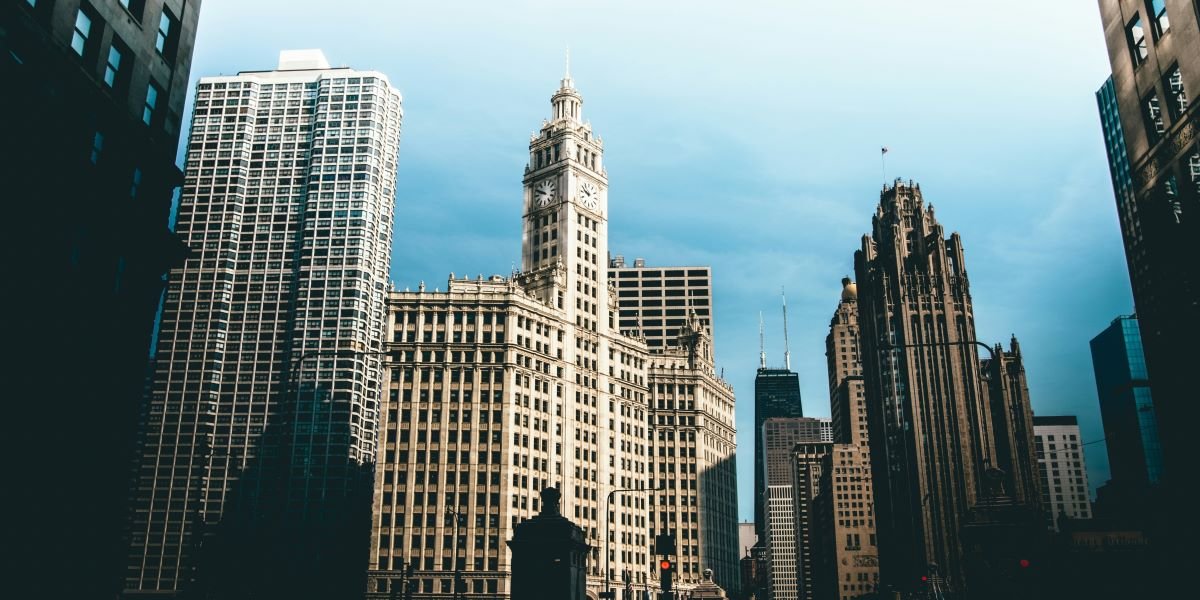

Step off a train in Chicago on a January afternoon, feel the gusts tearing down the avenues from Lake Michigan, and the nickname seems to explain itself. The Windy City, obviously. The explanation is also wrong, or at least beside the point. The name that has defined Chicago for nearly 150 years was never really about the weather. It began as an insult about the way Chicagoans talked.
The phrase is widely recognized as a city nickname and just as widely misread. Its history runs back to the 1870s, to a period of competition between Midwestern cities, when rival newspapers used windy to mean boastful, long-winded, and full of hot air. The target was not the lakefront breeze but the city’s promoters, who were not shy about declaring their city better than anywhere else.
An Insult Born Of Midwest Rivalry
To understand the nickname, it helps to picture Chicago in the years after the Civil War, a frontier town swelling into an industrial power and eager for everyone to know it. That ambition rubbed its neighbors the wrong way. Cincinnati, in particular, was a rival on several fronts at once, from the meatpacking trade to baseball, where Chicago’s White Stockings were built to topple Cincinnati’s Red Stockings.
In that climate, windy was a useful weapon. It carried a double charge: a literal nod to Chicago’s weather and a sharper jab at the bluster of its boosters. One of the earliest sustained efforts to pin the label on Chicago came in 1876, when the Cincinnati Enquirer ran a headline calling it a windy city in connection with a tornado, a line that worked on both levels at once. The same year, the Chicago Tribune used the phrase in a baseball headline, a sign of how quickly it was circulating.
The Charles Dana Myth
Ask most people where the nickname comes from, and a different story surfaces. The popular version credits Charles Dana, an editor at the New York Sun, who supposedly coined Windy City in the 1890s while mocking Chicago’s politicians as full of hot air. The setting, in this telling, was the contest between New York and Chicago to host the World’s Columbian Exposition, the 1893 World’s Fair, with Dana deriding the windbags lobbying on Chicago’s behalf. A widely cited Chicago Tribune column once treated Dana as the definitive source.
It is a tidy story, and it is almost certainly false. The trouble is the timeline. Chicago won the right to host the fair in 1890, yet the nickname was already in print well before then, which means an 1890s editorial complaining about that victory could not have invented it.
What The Record Actually Shows
The researcher who untangled much of this is the etymologist Barry Popik, who spent years tracing the phrase through 19th-century newspapers. His work found the term established in print by the 1870s, years ahead of Dana, and showed that it functioned from the start as both a weather reference and a metaphor for boastful talk. Many of the citations came from rival Midwestern papers jockeying with Chicago over which city would dominate the region.
Popik and others have suggested the name may have begun innocently, since Chicago once marketed its cool lake breezes to lure summer tourists, and only later hardened into a jab as the city’s profile and self-regard grew. By that reading, the weather meaning and the hot-air meaning did not compete so much as merge, leaving a phrase that could be read either way depending on who was using it and how much they liked Chicago.
How Chicago Wore The Insult As A Badge
What makes the story characteristically Chicago is what happened next. A term coined to mock the city outlived the rivalries that produced it and became a point of pride. The Cincinnati feud faded, the World’s Fair came and went, and Windy City endured, stamped on everything from sports coverage to tourism campaigns long after anyone remembered it had been meant as a put-down.
There is a final irony buried in the literal reading. Chicago is not especially windy by national standards. Meteorological surveys have repeatedly ranked cities such as Boston and New York ahead of it for average wind speed, which means even the weather defense of the nickname does not quite hold up. The gusts off the lake are real, but they are not exceptional, and they were never the point.
The nickname, in the end, is a small monument to civic personality. Chicago earned Windy City not for its climate but for its confidence, for a habit of talking itself up loudly enough that rival cities reached for an insult, and for the very Chicago move of taking that insult and making it the name the whole world now uses.