
By: Will Ellis
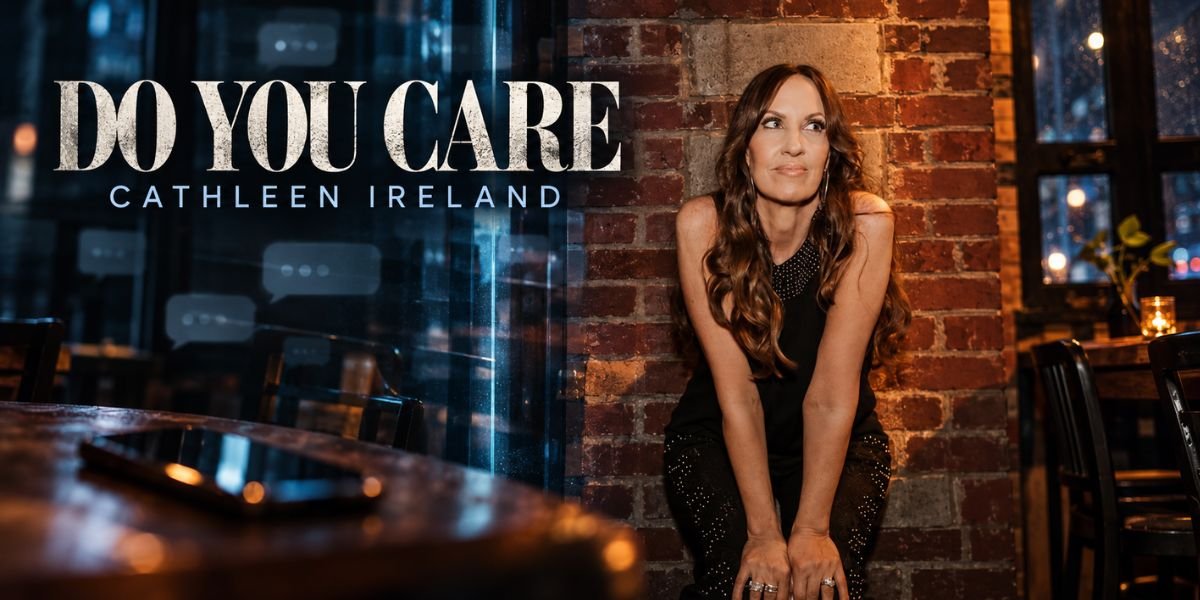
The breakup song has traditionally depended on confrontation. Someone leaves, someone demands an explanation, and the singer turns private confusion into public testimony. Cathleen Ireland’s “Do You Care” begins after confrontation has become impossible. The other person has blocked her, removed the shared evidence, and disappeared behind the clean architecture of a screen. What remains is not a dialogue but a woman addressing an absence.
That absence matters because ghosting is often described as avoidance, when it is also an exercise of power. The person who blocks controls access, defines the ending, and escapes the discomfort of witnessing its consequences. Ireland’s narrator has no comparable authority. She can remember, question, and protest, but she cannot make herself heard by the person whose answer she needs. Her song becomes a message delivered everywhere except its intended destination.
Ireland turns this unequal situation into polished contemporary pop and R&B, using repetition to make emotional fixation musical. Her clipped syllables and playful stutters initially suggest the language of a catchy, radio-conscious single. Yet the technique serves a deeper purpose. The words keep breaking apart because the narrator’s understanding of the relationship has broken apart. Rhythm supplies an order that experience has denied her.
The opening phrase, “Bae, bae, block me,” sounds almost teasing. It carries the attitude expected of a woman in a modern pop song: resilient, witty, and too self-possessed to be destroyed by rejection. But Ireland quickly complicates that pose. She is not unaffected. She misses the intimacy, replays memories, and admits that she wants the connection restored. Her defiance is not the absence of pain; it is the performance she uses to survive it.
This makes “Do You Care” more interesting than the familiar empowerment anthem in which abandonment becomes an instant occasion for liberation. Those songs can be exhilarating, but they also impose another standard on women: suffer attractively, recover immediately, and never confess that someone who hurt you still matters. Ireland refuses that demand. Her narrator wants to talk. She wants to be unblocked. She would even accept friendship. Each concession makes her appear less powerful by conventional pop standards and more emotionally recognizable by human ones.
There is risk in this honesty. A woman publicly asking whether someone cares can be dismissed as needy, while the person who disappears is granted the dignity of privacy. Ireland exposes that double standard without turning the song into a lecture. The vulnerability is the argument. She allows listeners to hear how easily the language of technological convenience can conceal cruelty.
The title question changes as the song unfolds. At first, it is a plea for reassurance. Then it becomes an accusation: if you cared, how could you leave this way? Finally, it sounds like an inquiry into whether the relationship ever meant the same thing to both people. Ireland does not receive an answer, and the lack of resolution prevents the song from offering the usual romantic lesson. There is no revelation that the loss was secretly beneficial, no triumphant replacement lover, and no promise that independence has already healed the wound.
Instead, Ireland defends herself through imperfect sincerity. She does not claim to have been faultless. She insists that she was truthful and present. That distinction gives the song moral weight. Relationships do not require perfection, but intimacy creates obligations: if not to remain, then at least to acknowledge the other person’s humanity when leaving.
The production’s smoothness intensifies this conflict. Its accessible groove continues moving while the narrator remains caught in repetition. Pop music often performs this trick, transforming distress into pleasure without erasing it. The listener can respond to the hook while recognizing that the hook describes an emotional trap. Ireland’s command of that contradiction keeps the track from collapsing into either self-pity or empty uplift.
“Do You Care” also recognizes something unsettling about the digital world: technology does not merely transmit our relationships; it reorganizes them. A platform’s features become emotional weapons. Blocking, deleting, and unposting are presented as neutral functions, yet within an intimate history they can determine who is visible, who can speak, and whose version of the ending prevails.
Ireland cannot force the absent person to respond, but she can refuse disappearance on his terms. By singing the unanswered question, she restores herself to the narrative. Her vulnerability becomes a form of resistance because it rejects the fiction that silence is the same thing as closure.
“Do You Care” is effective not because it solves heartbreak, but because it identifies the authority hidden inside avoidance. Cathleen Ireland makes a song from the words she was denied the chance to say, and, in doing so, turns a private act of erasure into a public claim to recognition.