By Wade Montgomery
Chicago has always embraced artists who tell the truth.
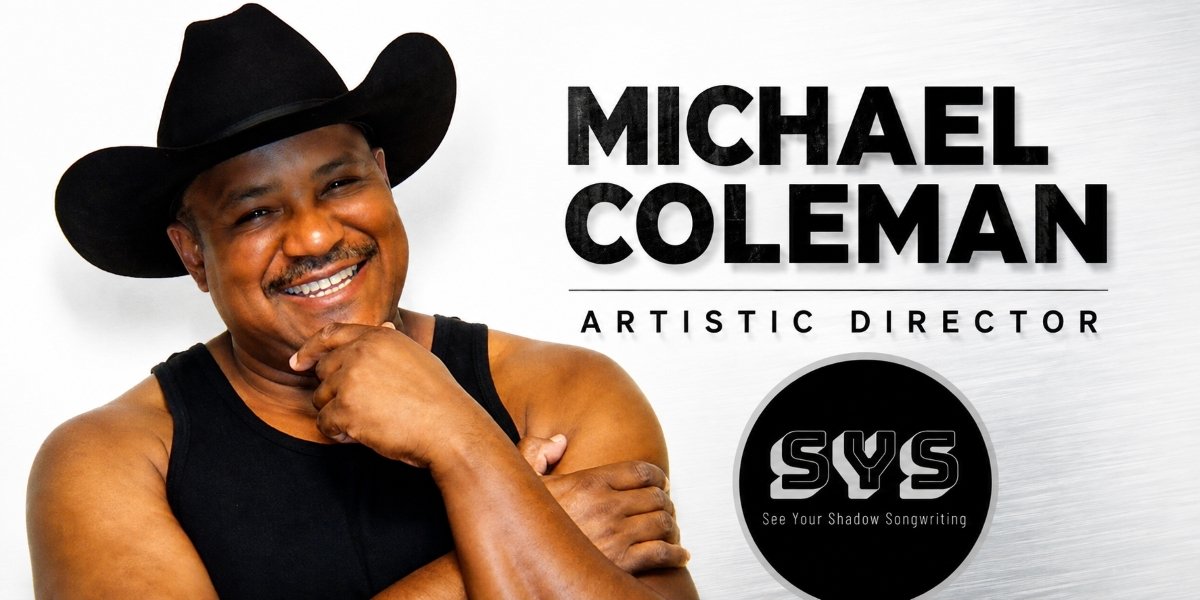
From the gritty blues of Muddy Waters to the poetic storytelling of John Prine, the city’s musical identity has been built upon authenticity, resilience, and the ability to transform ordinary experiences into something universal. It should come as no surprise, then, that Michael Coleman, the songwriter, producer, and Artistic Director behind the award-winning music collective See Your Shadow, feels a natural connection to the Windy City’s rich creative tradition.
For Coleman, authenticity has always been the foundation of his work.
“Absolutely,” he says when asked whether Chicago’s musical heritage has influenced his approach to songwriting. “At the heart of it all is authenticity and honesty. Those two things make stuff relatable. I try to incorporate those two elements in all the material I write and produce for See Your Shadow, no matter what the genre. Those two elements seem to always pack the most punch when we do our country work.”
That commitment to honesty has become one of the defining characteristics of See Your Shadow. Based in Phoenix, Arizona, the project has earned an impressive list of accolades, including multiple industry awards and an extraordinary run of eight consecutive chart-topping singles. Yet Coleman remains focused not on statistics or trophies, but on creating meaningful connections through music.
His latest single, “Another Saturday,” may be the clearest example of that philosophy.
The song tells the story of a woman struggling with loneliness, uncertainty, and the emotional aftermath of a failed relationship. Through vivid imagery and compassionate storytelling, Coleman explores themes of identity, perseverance, and redemption. While the story is deeply personal, he believes its message is universal.
“Most definitely,” Coleman says when asked whether Chicago audiences might identify with the song differently. “Chicago is unique in the fact that it is a metropolis that sits in the midst of Midwestern values stemming from those that came from the South. I think songs that have themes of perseverance and resilience connect because the people of Chicago have lived it. If ‘Another Saturday’ was rewritten about the struggles of the working people of Chicago, it would still work.”
That ability to create stories that resonate across geographical and cultural boundaries is something Coleman has carefully cultivated throughout his career.
Although See Your Shadow has enjoyed remarkable success, Coleman still approaches the project with humility.
“Sometimes I still can’t believe that we’ve been able to achieve that and the awards as well,” he says. “The advice that I would give to aspiring independent artists is to study and get to know your craft. The better you are at your craft, that will help you create the best work that will get noticed.”
That philosophy reflects another quality that Coleman admires about Chicago: its honesty.
“I love that about Chicago audiences, and that is how you know if your material establishes a connection with people,” he says. “It’s that raw and honest feedback.”
Asked what he would want audiences to take away from a performance of “Another Saturday” at a venue such as the House of Blues or the Chicago Theatre, Coleman’s answer speaks volumes about the heart of the song itself.
“I would hope that people would take away from this piece that this is a human piece performed in a country genre and that it could be in any genre,” he explains. “The next time they encounter somebody living like our protagonist in the song, you show them some grace.”
Among the many artists to emerge from Chicago, one figure stands above the rest in Coleman’s mind.
“Without a doubt, Quincy Jones,” he says. “I often refer to Quincy Jones and how much of a visionary he was and all the many pieces he was behind.”
That admiration makes perfect sense. Much like Jones, Coleman sees himself not simply as a performer, but as an architect of ideas. His “Network of Stars” approach to music-making brings together a diverse group of musicians and vocalists, all united by a common vision.
At the center of that vision is the importance of emotional connection.
“That is probably one of the most important elements,” Coleman says. “Art has to establish an emotional connection, no matter what the medium. If there is no emotional connection formed by those who are listening to music, viewing a painting, watching a film, or whatever, then more than likely the art will not land.”
Coleman has also spent years building communities beyond music. As the owner of NuTowne Saloon, one of Arizona’s oldest LGBTQ gathering place, he understands the importance of creating spaces where people feel welcome and understood.
“I have been very fortunate,” he says. “My responsibility was just to keep it going and make it stronger, and it is also that way with my art.”
When it comes to inspiration, Coleman says he finds it not amid the noise, but in the moments that exist around it.
“I find the most inspiration in what I would call the quiet among the chaos,” he says. “If you take a moment to pause and tune out the sounds, you get a clear picture of your surroundings and who makes up those surroundings. It is in those moments of clarity that I can find inspiration.”
For Michael Coleman, those quiet moments have become songs. And through See Your Shadow, those songs have become stories that audiences from Phoenix to Chicago can call their own.