
By: Michael Brantley – Evangelist/President, OneHopeOneVoiceOneSpirit Ministries
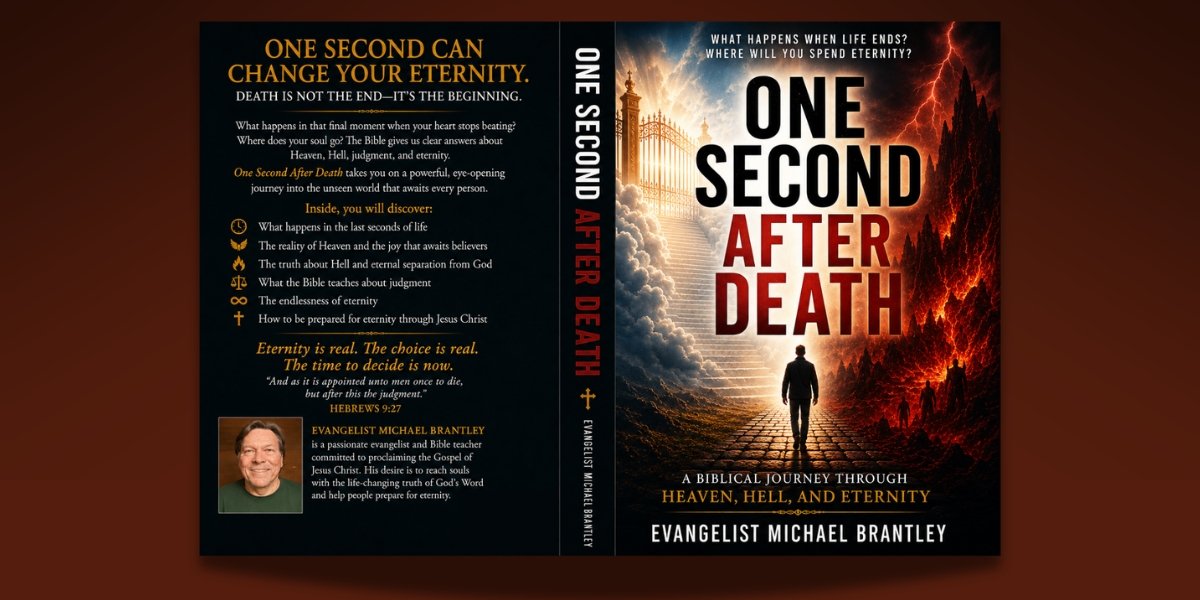
Humanity has achieved remarkable things. We carry powerful computers in our pockets, cure diseases that once wiped out entire populations, and send probes to distant planets while dreaming of colonizing Mars. Yet for all this progress, one wall still stands. We cannot stop the grave. Every king, every billionaire, and every celebrity eventually faces the same appointment. This is the reality that Evangelist Michael Brantley confronts head-on in his book, One Second After Death. The work is not a casual collection of thoughts. It grew out of a decade of biblical study and personal experience.
The Reality We Avoid
The modern world lives in denial of death. People spend billions of dollars on anti-aging creams, fitness programs, and medical treatments. They build fortunes and legacy systems, hoping to cheat the final hour. But the cemetery does not care about human achievement. It takes the rich and the poor alike. Hospitals see the final breath every single day. Funeral homes stay busy. The obituaries never stop printing. This is the one appointment every human being will keep.
Most people try not to think about it. They drown the thought with entertainment, work, and pleasure. Avoidance does not change reality, and Brantley refuses to let us look away. He presses the reader toward the question that matters most. What happens one second after death?
The Man Behind the Message
Many authors write about theology from a distance. They sit in quiet libraries and theorize about the afterlife. Brantley takes a different path. He is not a detached theologian in an ivory tower. He is a man who has experienced brokenness, felt the weight of suffering, and witnessed what he describes as the redeeming power of God firsthand. This personal journey lends real weight to his message. When he writes about restoration and eternity, he does so with raw honesty. He does not quote verses from a safe distance. He speaks from a heart he says has been rebuilt by grace.
That background shapes the tone of the whole book. It reads as the work of a messenger who understands the stakes. His biography reflects the same mission. He brings, in his words, the Good News to a bad news world, writing with compassion because he knows what it feels like to be lost, broken, and in need of a savior.
The Complete Journey Through Death and Eternity
Most books about death stop at the funeral. They discuss grief and offer emotional comfort. Brantley goes further. He takes the reader on a complete journey that does not end at the final breath on earth but pushes into eternity itself. He walks through the immediate seconds after death, describing the Christian crossing into paradise and the angels escorting the soul home.
He also describes the reality of eternal separation for the lost. He explains the Judgment Seat of Christ for believers, where faithfulness and motives are weighed. He looks ahead to the resurrection of the dead and the creation of the New Heaven and the New Earth. This is not a simple book. It reads as a comprehensive biblical roadmap that runs from the hospital bed to the throne of God.
The Practical Application
What sets the book apart in a crowded market? Many works on the afterlife stay abstract, leaning on human philosophy and subjective near-death accounts. Brantley takes the opposite approach and grounds every claim in the text of Scripture. He draws on passages such as Hebrews 9:27, which teaches that people die once and then face judgment. He points to Revelation 21, which describes a new creation where God wipes away every tear.
The book asks the reader to trust the Bible rather than the author’s opinion. It is also practical. At the end of each chapter, Brantley includes reflection questions and prayers. That structure turns a passive reading experience into an active spiritual exercise and invites a response from the reader.
What Sets It Apart for a Skeptical Generation
We live in a skeptical age. People demand evidence. They question absolute truth. They mock the idea of Hell and treat Heaven as a fantasy. Brantley does not shy away from that skepticism. He meets it with the authority of Scripture rather than trying to make the message more comfortable for modern ears. He does not soften the theme of judgment to avoid giving offense. Instead, he points to the cross.
He argues that faith in Jesus Christ is the way the book presents to escape eternal separation from God. For the skeptic, he frames the choice plainly. A reader can stay in denial or confront the question directly. Brantley writes with boldness because, in his view, eternity is too serious for polite silence. This is the voice of an evangelist more concerned with his message than with popularity.
A Call for Every Believer
Brantley wrote the book with pastors, grief counselors, and everyday believers in mind. He suggests it can help pastors preach with greater urgency and give them the biblical grounding to speak to their congregations about eternity. He also points to its value for grief counselors who sit with the brokenhearted. When a family loses a loved one, platitudes fall short.
What they need, he writes, is the solid rock of Scripture and the assurance that death is not the end. He aims the book at believers who want to replace the fear of death with confidence in the Gospel as well. Many Christians live with anxiety about dying, even when they feel secure in their faith. Brantley addresses that anxiety directly, pointing to the promise of resurrection and reunion. In his telling, the believer does not walk into darkness but into light.
A Doorway, Not an Ending

Brantley presents the book as a resource for the church. He describes it not as something to read once and forget but as a work meant to be studied, shared, and revisited. He frames it as a wake-up call for the complacent and a source of comfort for the grieving. Rather than offering easy reassurance, he roots his hope in Scripture and presents death as a doorway rather than an end.
For the Christian, he describes that doorway as an entrance into glory. For the unbeliever, he presents it as a moment of reckoning. The book leaves the question with the reader. It is a serious work on a serious subject, and it closes the decade-long project Brantley set out to complete, offering what he calls biblical hope to anyone willing to weigh what Scripture says about eternity.