The Chicago Journal

The Grainy Old Photo That Started an Epic: Kathleen McDonnell Rescues Her Great-Grandmother from the Shadows of History

By: Mitchell Bosco

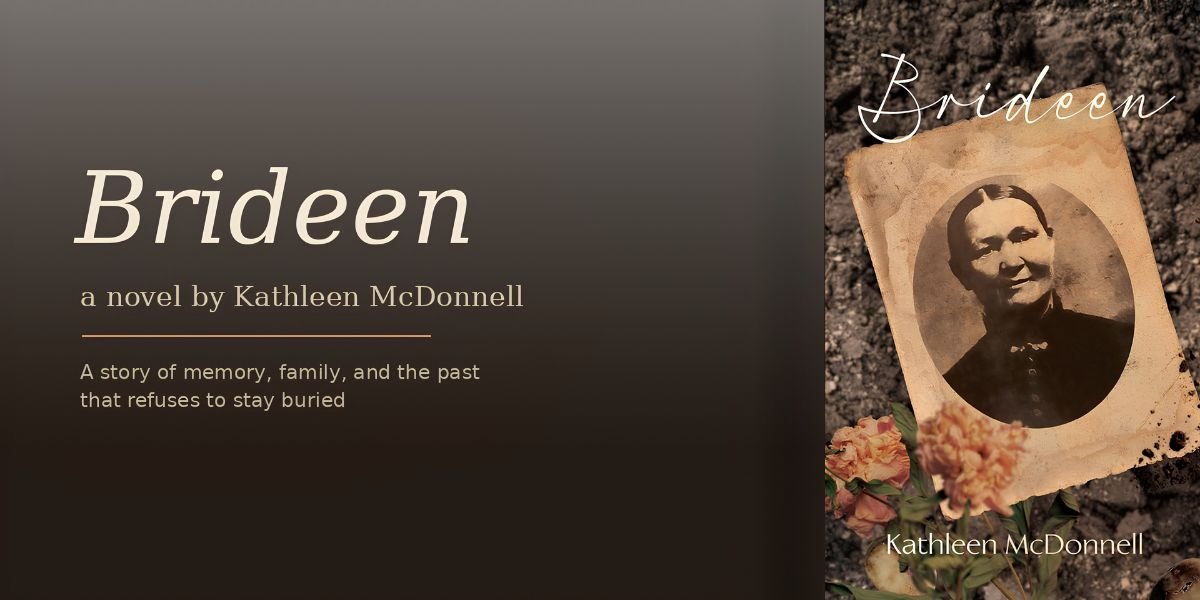
There is something quietly miraculous about the process by which a single faded photograph in a family album becomes a fully realized historical epic spanning three countries, three of the nineteenth century’s most devastating upheavals, and the full arc of one woman’s long and improbable life. Kathleen McDonnell is an author and playwright with eleven books of fiction and nonfiction behind her, a musician deeply immersed in Irish traditional music, and a descendant of Bridget Sweeney, who was born in County Mayo in 1838, survived the Great Hunger of 1847, and lived to the age of sixty-eight after crossing an ocean and building a life across England, the United States, and ultimately the American Midwest. Brideen is the book that McDonnell wrote to make sure that life would not be lost to history, and it is one of the most moving and most beautifully realized works of historical fiction to emerge from the Irish diaspora tradition in recent memory.

Reading this book produces the specific emotional quality of recovered presence, the sensation of someone who was lost to the vast anonymity of history becoming gradually and irreversibly real. McDonnell writes about nine-year-old Bridget Sweeney watching whole families stricken with fever, corpses on the roadsides, her own family evicted in the dead of night, with a restraint and a precision that makes the horror more affecting rather than less. She is not reaching for dramatic effect. She is trying to tell the truth about what a child in County Mayo in 1847 would have seen and felt and carried forward, and that commitment to truth over effect is what gives the novel its lasting emotional weight.

The research that underpins the book, drawn from fragmentary family records, centuries-old newspaper articles, and traditional Irish ballads that carried history in their lyrics when other forms of record-keeping were unavailable or inaccessible, is worn lightly throughout the narrative. McDonnell’s playwright’s instinct for scene and voice means that the historical documentation never feels like furniture. It feels like lived experience rendered back into the present, which is the highest achievement that historical fiction can reach. The Irish language woven through the text gives the novel a cultural authenticity that purely English-language treatments of the same material consistently lack, grounding Bridget in the specific cultural and linguistic world she came from rather than making her a generic figure of nineteenth-century suffering.

The scope of the journey McDonnell traces, from the devastated fields of County Mayo through the industrial revolution’s England to the American Civil War and beyond into the settlement of the Midwest, gives the book an epic quality that never loses sight of the intimate human story at its center. Bridget Sweeney is not a symbol of the Irish diaspora. She is a specific woman with a specific history, and McDonnell’s achievement is to make that specificity feel both true and representative, a needle pulled from the haystack of history with enough care and enough imagination to make readers understand what all the other needles might have looked like.

Brideen is the kind of historical novel that stays with you long after the last page because it has done something that the best fiction always does: it has made you care about someone whose existence you never knew to mourn. Kathleen McDonnell has written a book that her great-grandmother deserved and that the Irish diaspora tradition needed.

If you have ever looked at an old family photograph and wondered about the full story of the face staring back at you, Brideen by Kathleen McDonnell is the book that shows you what it looks like when someone finally has the courage, the skill, and the love to go find out. Grab your copy on Amazon today and meet Bridget Sweeney, a woman who survived one of the great catastrophes of human history and then kept living for sixty-eight years in ways that history never bothered to record and that this novel refuses to let disappear.

Tom Arnold Testified Before the U.S. Senate on Cybersecurity. Now He’s Trying to Reach Kids Who Haven’t Started High School Yet.

By: Christopher Graves

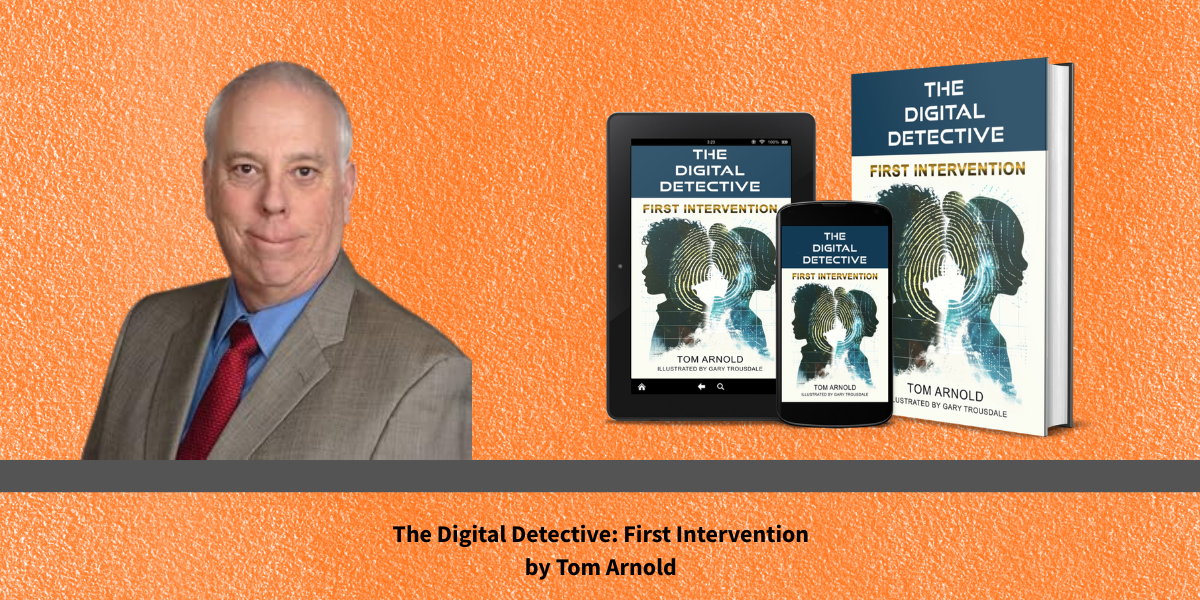
The gap between what cybersecurity experts know and what the general public understands has long been wide. Tom Arnold has spent his career operating at the expert end of that gap, co-founding a company that became part of a global security firm, leading breach investigations involving thousands of servers, and testifying before Congress on cybersecurity legislation.

He decided to help close the gap with a book for ten-year-olds. And he means that seriously.

Why Teaching Changed His Approach

Tom took on a part-time teaching position at a university partly for a reason that might surprise people: to constantly update and enhance his own knowledge of cyber threats. The field moves fast. Staying embedded in an academic environment that is tracking emerging threats, new tools, and evolving attack vectors can help keep his professional edge sharp in ways that purely operational work does not always allow.

But teaching also showed him something about communication that his career in investigation had not fully revealed. The way you explain something to a graduate student in a cybersecurity program is completely different from the way you explain it to a teenager who has not yet decided whether technology is interesting. And the way you explain it to that teenager is completely different from the way you explain it to their parent who does not know what digital forensics means.

The Digital Detective is his attempt to reach those last two groups simultaneously, the young person and the adult who needs to have a better conversation with them.

A Career Path Worth Considering

Tom’s advice for young readers interested in cybersecurity as a career is grounded and practical. Stimulate interest in technology through healthy curiosity. Explore and learn without crossing into actions that are against the law or harmful to others. Understand that the field has multiple disciplines, some of which may seem non-technical on the surface, but all of them ultimately require a strong foundation in how technology actually works.

The field is, in his assessment, likely to grow in importance. As technology becomes more inseparable from everyday life, the people who understand how to secure it, investigate it, and defend against its misuse may become more important across many sectors of society.

The Inseparability Problem

Tom uses a single word to describe where technology and everyday life are heading over the next decade: inseparable.

It is already true in many ways. Refrigerators, televisions, phones, cars. The intersection between daily life and connected technology is not approaching. It is already here. Security and personal privacy necessarily expand with that intersection. Any device that can make life more convenient can also collect data about the person using it.

He raises the more uncomfortable version of that reality directly. In a totalitarian environment, the same data that makes life convenient can become surveillance infrastructure. The raw information generated by connected devices, messages, voice calls, photos, and even how full a refrigerator is could be transformed into something entirely different in the wrong hands.

It is not a hypothetical he raises lightly. It is part of the context in which he believes cybersecurity education should be understood.

If there’s a curious, tech-minded young person in your life who hasn’t yet discovered what a career in cybersecurity could look like, The Digital Detective: First Intervention by Tom Arnold is available now on Amazon. It might just point them in a direction that changes everything.

Dr. Connor Robertson on the Flywheel Model for Self-Reinforcing Business Growth

A flywheel is a heavy wheel designed to resist changes in rotational speed, once spinning, it takes very little force to maintain momentum. According to Dr. Connor Robertson, founder of Elixir Consulting Group and host of The Prospecting Show, the most successful businesses operate the same way: they are not grinding every day for growth because they have built flywheels, and the flywheels are doing the work.

What Makes a Business a Flywheel

In Robertson’s framing, a flywheel business is one where growth reinforces itself: more customers generate more data, more data improves the product or service, an improved product attracts more customers, with each element strengthening the next and each rotation slightly easier because the previous one built momentum. He notes this dynamic operates in consulting firms, service businesses, media companies, and professional practices, the open question is whether it has been designed for deliberately.

Identifying the Elements of a Flywheel

Every flywheel, in Robertson’s account, has a specific sequence of mutually reinforcing elements. For a consulting firm: deliver excellent results, generate case studies, attract better-fit clients, deliver more excellent results. For a content business: publish consistently, build audience trust, attract premium sponsors, fund more and better content production. He frames the task as identifying which elements reinforce each other in a specific business and the sequence that makes the reinforcement most powerful.

Where Most Businesses Break the Flywheel

The most common failure, according to Robertson, is inconsistency in one element of the sequence, when a consulting firm stops generating case studies, the referral engine slows; when a content creator publishes inconsistently, audience trust erodes. The second most common failure, he says, is adding too many elements: a flywheel with six steps is harder to spin than one with three, and the goal is identifying the minimum number of elements that produce the maximum reinforcement.

How to Build a Flywheel Deliberately

Robertson’s process: map growth drivers on paper, identify which output from one driver becomes the input for the next, find the weakest link in the current sequence and invest there first, and measure rotation speed, how long one complete cycle takes from new

client to referral. In his view, getting that number down matters as much as the size of any single element in the sequence.

Why Robertson Treats Speed as the Underrated Variable

Most businesses thinking about their flywheel focus on the size of each element, bigger case studies, larger audiences, more premium sponsors. Robertson argues speed deserves at least as much attention, because a flywheel that completes a cycle in six weeks compounds meaningfully faster over a year than one that completes the same cycle in six months, even if the individual elements are comparable in size. In his framing, most businesses have never actually measured their own cycle time, which means they’re optimizing element quality while remaining blind to the variable that determines how many times that quality gets to compound before the year is over.

Distinguishing a Flywheel From a Streak

Robertson draws a distinction between a genuine flywheel and a lucky streak that merely looks like one from the outside. A streak depends on a person continuing to perform at a high level; a flywheel keeps turning even when that person’s attention shifts elsewhere, because the mechanism connecting each element to the next has been made structural rather than personal. His test for whether a business has actually built a flywheel, rather than just strung together a good run, is whether it would survive the founder taking a month away without anyone touching it.

About Dr. Connor Robertson

Dr. Connor Robertson is an entrepreneur, author, and strategic advisor based in Pittsburgh. He is the founder of Elixir Consulting Group, host of The Prospecting Show, publisher of The Pittsburgh Wire, and founder of The Grant Finder. He is also a six-time published author, with titles including Built to Run, available at

drconnorrobertsonbooks.com. More on his work is available at drconnorrobertson.com.

Abundance Was Never Something You Had to Earn: Julia Young Sandrock’s Decide, Now Is the Permission Slip and the Roadmap All at Once

By: Jenna Wilson

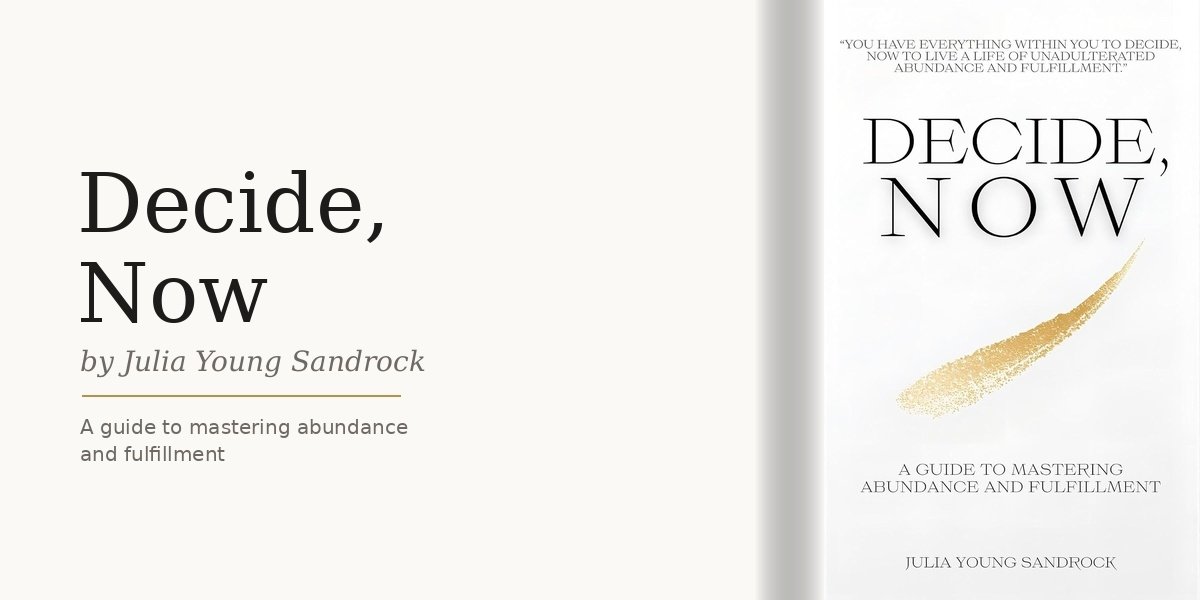
There is a particular kind of book that the personal development genre occasionally produces when a writer has genuinely lived what they are teaching rather than simply studied it, when the framework they are offering has been forged through actual experience of transformation rather than assembled from borrowed ideas given a fresh coat of language. Julia Young Sandrock’s Decide, Now is that kind of book, and the quality of presence it carries on every page reflects a Certified Wellness Coach and somatic healing practitioner who has spent years at the intersection of ancient spiritual wisdom and modern scientific research on consciousness, building a methodology that works because it was built from the inside out rather than from the outside in.

The central premise Sandrock is working with is one that most people in the personal development space have encountered in some form but that she articulates with unusual clarity and unusual conviction: that abundance is not a destination to be reached through sufficient achievement or sufficient acquisition but a state of being to be cultivated through conscious choice, intentional practice, and a willingness to dismantle the limiting beliefs and inherited stories that have been quietly determining the size of the life you allow yourself to live. That reframe, from abundance as reward to abundance as practice, is the philosophical anchor of the book and everything Sandrock builds from it is grounded in that understanding with remarkable consistency.

Reading Decide, Now produces the specific quality of gentle but persistent challenge that the best personal development writing generates at its most effective, the feeling of being simultaneously affirmed in your capacity for more and honestly confronted with the patterns that have been preventing more from arriving. Sandrock writes with the warmth of someone who genuinely believes in the reader’s potential and the directness of someone who understands that genuine belief in another person’s potential is not always expressed through comfort. She asks the uncomfortable questions and then stays with you through the discomfort of engaging with them honestly, which is a quality of accompaniment that the genre at its more motivational end rarely provides.

The Fulfillment Framework she has developed, organized into three interconnected stages of Insights, Introspection, and Integration, reflects the same quality of genuine structural intelligence that distinguishes professional practitioners from inspirational speakers. Each stage builds on the previous one with the logic of someone who has watched real people move through real transformation and understands that sustainable change requires the sequential development of awareness, alignment, and embodied action rather than the leap from inspiration to outcome that most frameworks implicitly promise. The somatic dimension she brings to the methodology, grounded in her certification in Somatic Reprocessing, gives the framework a depth that purely cognitive approaches to personal development consistently lack, addressing the ways that limiting patterns are stored not just in thought but in the body and the nervous system in ways that require more than mindset work alone to genuinely release.

The reflection prompts woven throughout the book are among its most practically valuable features, transforming the reading experience from passive reception into active engagement and ensuring that the insights the book generates have a pathway into the reader’s actual life rather than remaining in the comfortable abstraction of good ideas not yet embodied. Sandrock understands that the distance between knowing something and living it is where most personal development efforts fail, and she has built her book to address that distance directly rather than leaving the reader to bridge it alone.

Decide, Now is the book that meets you exactly where you are, takes the question of what a fully abundant life might look like for you completely seriously, and then walks with you through the specific inner work required to stop imagining it and start building it. Julia Young Sandrock has written something that earns its place on the short list of personal development books that actually change something in the people who read them with genuine openness and genuine commitment.

If you have been waiting for a personal development guide that meets you exactly where you are, takes the question of what a fully abundant life looks like for you completely seriously, and then walks you through the specific inner work required to stop imagining it and start actually building it, Decide, Now by Julia Young Sandrock is exactly that guide and it is waiting for you on Amazon. Grab your copy today and make the one decision that changes everything else: the decision to claim the abundance that has always lived within you and to stop waiting for the conditions to be perfect before you begin.

How “One Second After Death” Explores Eternity for Skeptical Readers

By: Michael Brantley – Evangelist/President, OneHopeOneVoiceOneSpirit Ministries

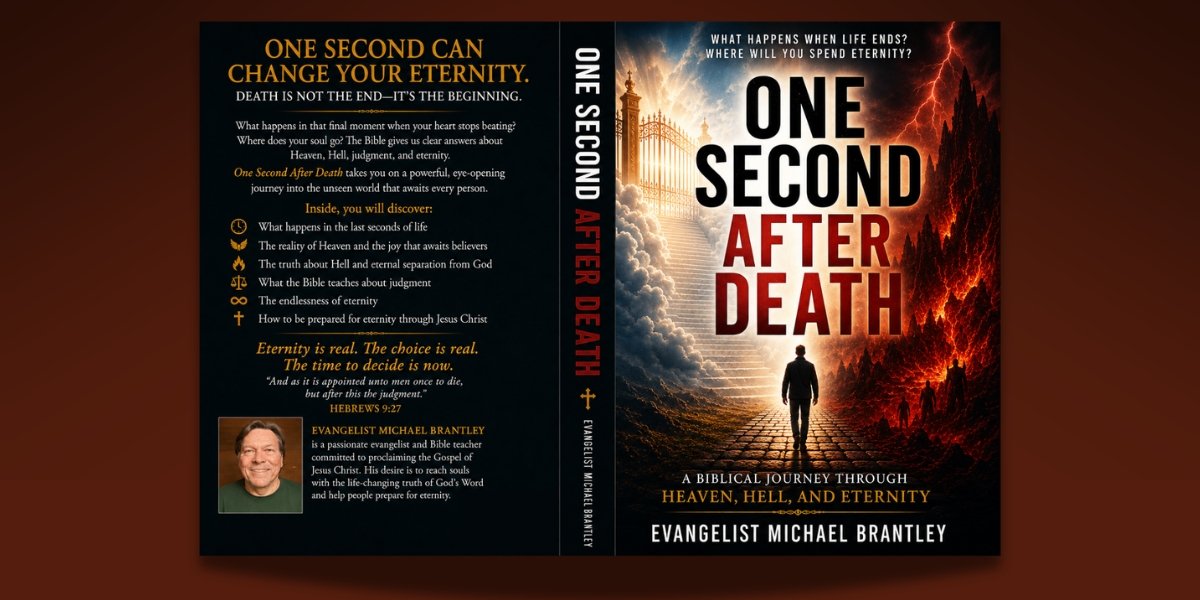
Humanity has achieved remarkable things. We carry powerful computers in our pockets, cure diseases that once wiped out entire populations, and send probes to distant planets while dreaming of colonizing Mars. Yet for all this progress, one wall still stands. We cannot stop the grave. Every king, every billionaire, and every celebrity eventually faces the same appointment. This is the reality that Evangelist Michael Brantley confronts head-on in his book, One Second After Death. The work is not a casual collection of thoughts. It grew out of a decade of biblical study and personal experience.

The Reality We Avoid

The modern world lives in denial of death. People spend billions of dollars on anti-aging creams, fitness programs, and medical treatments. They build fortunes and legacy systems, hoping to cheat the final hour. But the cemetery does not care about human achievement. It takes the rich and the poor alike. Hospitals see the final breath every single day. Funeral homes stay busy. The obituaries never stop printing. This is the one appointment every human being will keep.

Most people try not to think about it. They drown the thought with entertainment, work, and pleasure. Avoidance does not change reality, and Brantley refuses to let us look away. He presses the reader toward the question that matters most. What happens one second after death?

The Man Behind the Message

Many authors write about theology from a distance. They sit in quiet libraries and theorize about the afterlife. Brantley takes a different path. He is not a detached theologian in an ivory tower. He is a man who has experienced brokenness, felt the weight of suffering, and witnessed what he describes as the redeeming power of God firsthand. This personal journey lends real weight to his message. When he writes about restoration and eternity, he does so with raw honesty. He does not quote verses from a safe distance. He speaks from a heart he says has been rebuilt by grace.

That background shapes the tone of the whole book. It reads as the work of a messenger who understands the stakes. His biography reflects the same mission. He brings, in his words, the Good News to a bad news world, writing with compassion because he knows what it feels like to be lost, broken, and in need of a savior.

The Complete Journey Through Death and Eternity

Most books about death stop at the funeral. They discuss grief and offer emotional comfort. Brantley goes further. He takes the reader on a complete journey that does not end at the final breath on earth but pushes into eternity itself. He walks through the immediate seconds after death, describing the Christian crossing into paradise and the angels escorting the soul home.

He also describes the reality of eternal separation for the lost. He explains the Judgment Seat of Christ for believers, where faithfulness and motives are weighed. He looks ahead to the resurrection of the dead and the creation of the New Heaven and the New Earth. This is not a simple book. It reads as a comprehensive biblical roadmap that runs from the hospital bed to the throne of God.

The Practical Application

What sets the book apart in a crowded market? Many works on the afterlife stay abstract, leaning on human philosophy and subjective near-death accounts. Brantley takes the opposite approach and grounds every claim in the text of Scripture. He draws on passages such as Hebrews 9:27, which teaches that people die once and then face judgment. He points to Revelation 21, which describes a new creation where God wipes away every tear.

The book asks the reader to trust the Bible rather than the author’s opinion. It is also practical. At the end of each chapter, Brantley includes reflection questions and prayers. That structure turns a passive reading experience into an active spiritual exercise and invites a response from the reader.

What Sets It Apart for a Skeptical Generation

We live in a skeptical age. People demand evidence. They question absolute truth. They mock the idea of Hell and treat Heaven as a fantasy. Brantley does not shy away from that skepticism. He meets it with the authority of Scripture rather than trying to make the message more comfortable for modern ears. He does not soften the theme of judgment to avoid giving offense. Instead, he points to the cross.

He argues that faith in Jesus Christ is the way the book presents to escape eternal separation from God. For the skeptic, he frames the choice plainly. A reader can stay in denial or confront the question directly. Brantley writes with boldness because, in his view, eternity is too serious for polite silence. This is the voice of an evangelist more concerned with his message than with popularity.

A Call for Every Believer

Brantley wrote the book with pastors, grief counselors, and everyday believers in mind. He suggests it can help pastors preach with greater urgency and give them the biblical grounding to speak to their congregations about eternity. He also points to its value for grief counselors who sit with the brokenhearted. When a family loses a loved one, platitudes fall short.

What they need, he writes, is the solid rock of Scripture and the assurance that death is not the end. He aims the book at believers who want to replace the fear of death with confidence in the Gospel as well. Many Christians live with anxiety about dying, even when they feel secure in their faith. Brantley addresses that anxiety directly, pointing to the promise of resurrection and reunion. In his telling, the believer does not walk into darkness but into light.

A Doorway, Not an Ending

Photo Courtesy: Michael Brantley

Brantley presents the book as a resource for the church. He describes it not as something to read once and forget but as a work meant to be studied, shared, and revisited. He frames it as a wake-up call for the complacent and a source of comfort for the grieving. Rather than offering easy reassurance, he roots his hope in Scripture and presents death as a doorway rather than an end.

For the Christian, he describes that doorway as an entrance into glory. For the unbeliever, he presents it as a moment of reckoning. The book leaves the question with the reader. It is a serious work on a serious subject, and it closes the decade-long project Brantley set out to complete, offering what he calls biblical hope to anyone willing to weigh what Scripture says about eternity.