The Chicago Journal

The Guitar Is Back: How Rock and Indie Music Are Winning Over a New Generation


By: Conor Murray

For the better part of a decade, the guitar was eulogized. Streaming algorithms favored trap hi-hats over power chords, and the conventional wisdom held that rock music had aged out of cultural relevance. That consensus is now being dismantled, one distorted riff at a time.

Walk into any mid-sized venue on a Friday night in Chicago, Austin, or Brooklyn and you’ll find something that would have seemed unlikely just five years ago: rooms full of people in their early twenties losing themselves to guitar-driven music. Not as an ironic throwback. Not as a niche affectation. As genuine, chest-thumping, communal experience. The guitar’s obituary, it turns out, was written far too soon.

The Premature Death of Rock

The narrative of rock’s decline was always more complicated than the headlines suggested. Yes, guitar-driven music lost ground on the pop charts throughout the 2010s. Yes, streaming data initially seemed to confirm that younger listeners were gravitating toward hip-hop, pop, and electronic music almost exclusively. And yes, major labels responded to those signals by redirecting resources away from rock acts and toward whatever was trending on the platform dashboards.

But cultural movements rarely die cleanly. They submerge. They mutate. They find new channels. And while the mainstream was busy writing rock’s eulogy, something was quietly happening in DIY venues, on college radio stations, on Bandcamp pages and SoundCloud accounts and independent Spotify playlists curated by people who had never stopped believing in the power of six strings and a well-placed drum fill.

Rock wasn’t dying. It was reorganizing.

The Indie Vanguard

The current resurgence isn’t being led by arena-filling legacy acts, though some of those continue to draw enormous crowds. It is being driven by a wave of independent and indie-adjacent artists who have learned to operate with the agility of the digital era while maintaining the sonic vocabulary of guitar-driven music at its most expressive.

These are artists who grew up on streaming but fell in love with records. Who discovered Led Zeppelin and Pixies and Radiohead and Pavement through algorithm rabbit holes and older siblings’ hand-me-down vinyl. Who understood intuitively that there was something in the texture of a distorted guitar, the dynamics of a live band, the physical weight of a real drum kit, that no amount of digital production polish could replicate.

The result is a body of work that feels simultaneously nostalgic and urgent, music that honors the tradition it comes from without being imprisoned by it. These artists aren’t playing retro rock. They’re playing rock as a living language, one with something new to say.

Why Now?

Timing is everything in culture, and the conditions for rock’s resurgence have been building for years. Pandemic-era isolation created a profound hunger for music that felt physical, communal, and emotionally unguarded, qualities that guitar-driven rock delivers more viscerally than almost any other genre. When live music returned, audiences didn’t just want to attend concerts. They wanted to be inside them, pressed against a stage, feeling the bass in their sternum.

At the same time, a generation that came of age on algorithmically curated playlists has begun to push back against the frictionless, context-free nature of that listening experience. There’s a growing appetite for albums as complete statements, for artists with genuine aesthetic identities, for music that requires something from the listener. Rock and indie, genres built on exactly those values, are positioned perfectly to meet that appetite.

Social media has played its part too. TikTok, for all its reputation as a platform for hyper-compressed pop moments, has also become an unexpected vector for guitar music discovery. Clips of live performances, studio sessions, and bedroom recordings of artists playing real instruments have found enormous audiences among younger users who respond to the authenticity and craft on display. The algorithm, it turns out, is agnostic. It amplifies what people actually watch, and people are watching guitarists.

The Critics Are Paying Attention

Where artists lead, serious criticism follows. The conversation around guitar-driven music has shifted noticeably in recent years, with critics who once dismissed the genre’s commercial prospects now engaging with its current wave on genuinely enthusiastic terms. Publications that once devoted their limited rock coverage to legacy act anniversaries are now dedicating real estate to emerging guitar bands, recognizing that the story being written right now is as compelling as any in the genre’s history.

Voices like those behind Ezra Calloway rock reviews represent the kind of engaged, knowledgeable criticism that this resurgent moment deserves, writing that approaches guitar-driven music with the analytical rigor and cultural seriousness it has always merited, and that helps new listeners find their way into a genre richer and more varied than any single chart position could suggest.

Good criticism matters enormously during a genre’s resurgent moment. It contextualizes, it champions, it connects new listeners to the deeper catalog that gives current work its meaning. The fact that rock and indie are generating serious critical engagement again is not incidental to their resurgence. It is part of it.

The Sound of 2025

What does the current wave of guitar-driven music actually sound like? The honest answer is: many things at once. That internal diversity is one of its greatest strengths.

On one end of the spectrum, there are acts leaning into noise and abrasion, post-punk influenced bands with angular riffs, clipped rhythms, and lyrics delivered with a kind of controlled intensity that owes as much to Wire and Gang of Four as to anything released in the past decade. On the other end, there are artists making something far warmer and more melodic, introspective singer-songwriters whose guitar work is acoustic and fingerpicked, whose songs unfold slowly and reward patient listening.

Between those poles lies an enormous and genuinely exciting middle ground: bands blending shoegaze textures with pop songwriting instincts, artists pairing heavy riffs with vulnerable lyrical content, producers finding ways to make guitar music that sounds contemporary without abandoning the analog warmth that gives the instrument its emotional power.

The genre is not monolithic. It never was. But in 2025, its internal range feels wider and more creatively alive than it has in years.

The Live Music Connection

No discussion of rock’s resurgence would be complete without acknowledging the role of live performance. The relationship between guitar-driven music and the concert experience is not incidental, it is foundational. These are songs built to be played loud, in rooms, for people.

As live music continues its post-pandemic recovery, the pipeline between emerging guitar acts and dedicated live audiences is strengthening in ways that benefit the entire ecosystem. Artists are building loyal fanbases through relentless touring. Venues are rediscovering the commercial viability of booking guitar bands. Festival programmers are allocating more prominent slots to indie and rock acts after seeing the audience response firsthand.

This live infrastructure matters because it creates the kind of deep, sustained connection between artist and audience that streaming numbers alone cannot manufacture. A fan who has seen a band play in a sweaty three-hundred-capacity room is a different kind of fan than one who added a song to a playlist. They are an evangelist. And evangelists build movements.

A Genre Reclaiming Its Narrative

What is perhaps most striking about guitar-driven music’s current moment is the confidence with which its practitioners are operating. There is no defensiveness, no nostalgia-seeking, no anxiety about cultural relevance. The artists making the most compelling rock and indie music right now seem genuinely unbothered by the question of whether guitar music belongs in the conversation, because for them and their audiences, that question was never seriously in doubt.

They are simply making the music they believe in, finding the audiences that were always waiting for it, and building something that looks, increasingly, like a movement with real momentum behind it.

The guitar isn’t back because the industry decided to revive it. It’s back because it never stopped being one of the most expressive, emotionally direct instruments human beings have ever put their hands on. That’s not a trend. That’s a fact. And a new generation is discovering it for the first time, with all the intensity and devotion that discovery deserves.

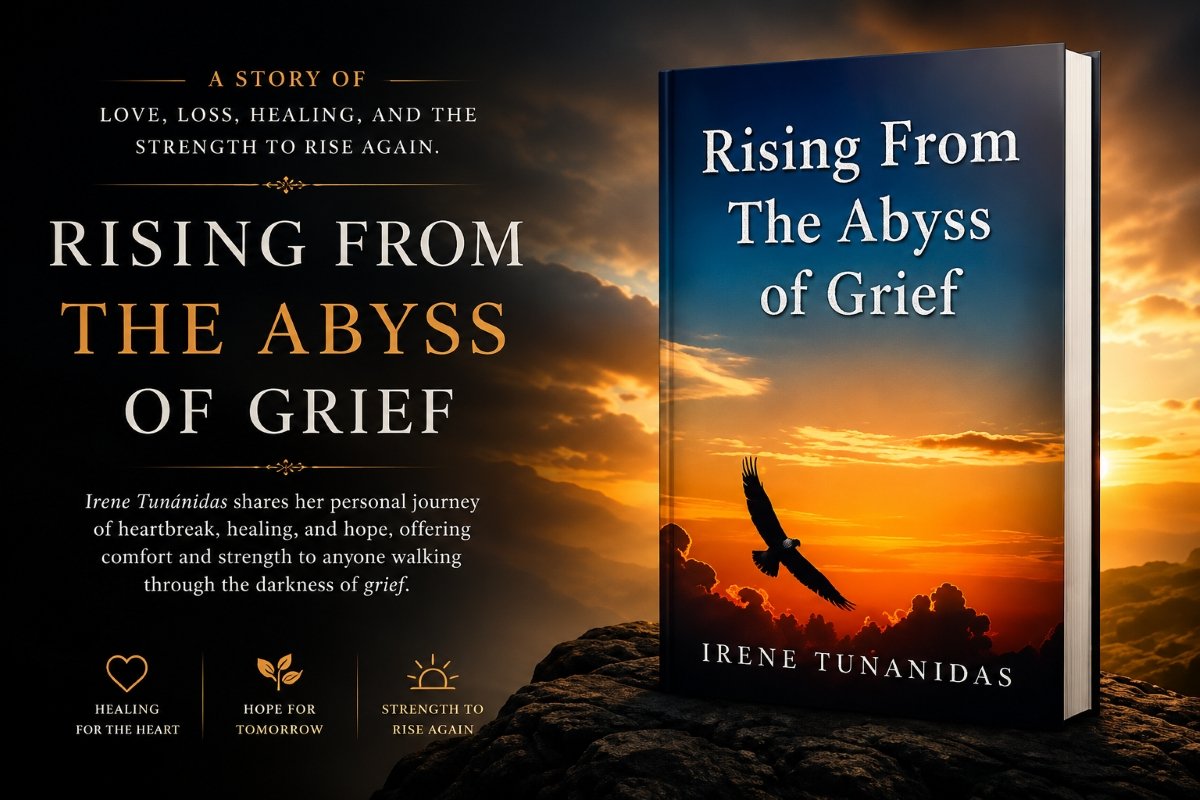
The Educator Who Advocated for Everyone Else, and What Happened When She Finally Had to Advocate for Herself

Irene Tunanidas spent a lifetime fighting for other people. The one person she consistently struggled to advocate for was herself.

There is a particular kind of person who moves through the world oriented entirely outward. They notice what other people need before they notice what they need themselves. They are good in a crisis, reliable in the long stretch, and genuinely skilled at showing up. What they are less practiced at is turning that same attention inward. Recognizing their own limits. Asking for help before the need becomes urgent. Irene Tunanidas is that kind of person. Her life is a detailed study in the weight that can come with that pattern.

It Started Before She Had a Career to Point To

Irene was still a teenager in the summer of 1963 when she began volunteering with Easter Seals. She was assigned to work with disabled children, and she did it without any professional framework for what she was doing or why. One child, a boy named Michael, had muscular dystrophy and could not feed himself. Irene helped him pick up food with a spoon. She helped another child with leg exercises. She showed up, figured out what was needed, and did it.

She was not paid. She was not trained. She was a teenage girl with a natural instinct for the needs of the people around her, and she acted on it. That instinct would define the next sixty years of her life in ways she could not have anticipated, standing in that Easter Seals room in 1963.

A Career Built Around Other People’s Needs

The teaching career that followed the Easter Seals summer was a natural extension of the same orientation. For more than thirty years in Youngstown City Schools and another decade at Poland Local Schools, Irene showed up for deaf children who needed someone to take their education seriously. She fought school districts to use ASL in her programs when administrators were resistant. She spent hours with her parents trying to give them tools they did not always want. She advocated, consistently and sometimes against significant institutional resistance, for the children in her classroom.

Outside the classroom, she continued. She joined organizations that supported the deaf and hard-of-hearing community in her area. She co-founded a fundraising chapter for the Youngstown Hearing and Speech Center that ran for twenty years. And when the Ohio Association of the Deaf needed a president, she stepped into that role too, bringing the same commitment to organizational leadership that she had brought to every room she had ever stood in.

All of this was real work. All of it mattered. And almost none of it left significant room for the question of what Irene herself needed.

The Three Years She Gave Everything She Had

When her mother became a quadriplegic in October 2003, Irene became a full-time caregiver without discussion or deliberation. It was simply the next thing that needed to be done, and she was the one who was going to do it.

For three years, she managed her mother’s complete medical care at home. She operated a Hoyer lift, managed catheter care and ostomy bags, monitored electrolytes, drove a secondhand ambulance to get her mother to church on good days, and checked on her after midnight before going to bed most nights. She did this while working a part-time tutoring job, and she did it largely alone after her most reliable aide left for a better-paying position.

She has said that she did not let depression get in the way during those years. She focused on the practical demands of keeping her mother well, and she leaned on her faith to carry what the practical work could not. That was her account of the period, and it also reflects how demanding those years became.

The person advocating for Zenovia Tunanidas’s wellbeing during those three years was Irene. The person advocating for Irene’s well-being was, largely, nobody.

What Happened After the Caregiving Ended

Zenovia died on January 2, 2007. When she was gone, Irene was left in a house that had been organized entirely around someone else’s needs for three years. The structure disappeared. The role disappeared. The calls slowed down. Her sister was in Florida. Her brother was not nearby. A neighbor offered help, but Irene was too far inside the grief to know what to do with it.

She has been direct about what followed. She experienced mental health struggles after the loss. She cried almost every day. She did not leave the house. She walked from room to room after the funeral, checking to see if her mother had come back.

This is the part of Irene’s story that the advocacy framework does not have a simple answer for. She had spent decades building the skills and institutional knowledge to fight for other people in systems that were not designed to accommodate them. She did not have the same fluency when it came to identifying and articulating her own need for support. The gap between those two things is not a personal failing. It reflects how difficult it can be for outward-focused caregivers and advocates to recognize their own needs with the same clarity.

Writing as the First Act of Self-Advocacy

In 2011, four years after her mother died, Irene started writing.

She did not frame it that way at the time. She was writing to cope, to process, to give her mental health weight somewhere to go. But looking at it from a distance, the decision to sit down and document her own experience was the first significant act of self-advocacy she had made since the caregiving began. It said, in effect, that her story mattered enough to put on paper. That was what she had lived through was worth examining. That she was a person whose interior experience deserved the same attention she had given to everyone else’s for decades.

The manuscript got set aside when her Ohio Association of the Deaf presidency demanded her focus. She finished it in 2024, after the term ended, working through arthritic joints and writing sessions interrupted by flashbacks she had not fully anticipated. The book took fourteen years from the first page to the last. That timeline is its own kind of statement about how long it can take a person who has spent a lifetime looking outward to finally turn the lens around.

Photo Courtesy: Irene Tunanidas

What the Book Does That the Advocacy Never Could

Rising From the Abyss of Grief is not a policy document or an organizational report. It is a personal account of what grief looks like from the inside, written by someone who spent years not having the language for her own experience and then, slowly, found it.

The 30-day devotional structure at its center is practical in the way that Irene’s advocacy was always practical. It does not ask the reader to feel differently. It offers something specific each day, something small and manageable, intended to help readers keep moving when movement feels difficult. It is the kind of guide she would have wanted someone to hand her in January 2007. Nobody did. So she wrote it herself.

That is, in the end, what self-advocacy can look like for someone like Irene Tunanidas. Not asking for help in the moment, because that was never going to come naturally. Building the resource after the fact, so that the next person in that situation has something to reach for. It is still oriented outward. But it started, finally, with her.

Photo Courtesy: Living Dayton / WBDT-TV Dayton’s CW

Taking the Story Public

This year, Irene appeared on WDTN-TV’s Living Dayton segment, sharing her story with a regional television audience through a sign language interpreter. She spoke openly about her mental health struggles after her mother’s death, about the years it took to find her way back, and about the book that came out of that process.

For someone whose instinct has always been to show up for other people rather than claim space for herself, the appearance represented a meaningful shift. She was not there only to represent a cause or advocate for a community. She was there to talk about her own life and what she had learned from it. The personal nature of the story gave the segment its emotional weight.

That is the thing about finally advocating for yourself. It does not diminish what you did for everyone else. It completes it.

Rising From the Abyss of Grief is available now. It is written by someone who spent a lifetime showing up for others and finally sat down to show up for herself.

Midnight Trains, Broken Elevators, and the Discipline of Not Quitting

By: Connor Clarke

There is a moment most people never see.

It is not the diagnosis. Not the accident. Not even the first time someone sits in a wheelchair and realizes life just shifted permanently.

The real moment comes later. Quiet. Uncelebrated. Usually at night.

For Eugen Ehrenberg, that moment looked like traveling alone to Hamburg, navigating the city with a wheelchair and hand bike, and getting home close to midnight.

No applause. No milestone banner.

Just movement. Freedom, slowly returning.

And that is where his story stops being about survival and starts becoming something sharper.

Freedom Does Not Come Back All at Once

It would be easy to assume that regaining independence feels like a switch flipping back on.

It does not.

Eugen describes it more like repetition. The first solo trips felt uncertain. Every station, every transfer carried a question mark. Would something break down? Would access fail? Would he get stuck somewhere with no way forward?

But he kept going back.

Each trip added a layer of familiarity. Each small success chipped away at the sense of limitation.

And somewhere along the way, the shift happened.

Not dramatic. Not emotional.

Just the realization that he could move through the world again on his own terms.

The Advice People Do Not Want to Hear

When people ask for practical advice after a life-changing diagnosis, they usually expect something tactical.

Routines. Tools. Systems.

Eugen goes in a different direction.

Do not give up.

That is his starting point. Not as a slogan, but as a rule.

It sounds simple until you actually try to live it on a day when nothing works. When your body does not cooperate. When plans collapse because something as basic as an elevator fails.

He pairs that mindset with something else that feels almost contradictory.

Stay calm.

Not passive. Not detached. Calm enough to keep looking forward instead of spiraling into worst-case scenarios.

Because in his experience, the future rarely unfolds the way you imagine it in those early moments of fear.

And more often than not, solutions show up from places you did not even consider.

Rebuilding a Life Without a Blueprint

Eugen does not pretend he handled everything well from the beginning.

He admits he underestimated his condition early on. That delay came with consequences. By the time reality fully hit, it was not a gentle transition. It was a full reset.

After the accident in 2011, he reached a point where the old version of his life was no longer accessible.

There is no guidebook for that moment.

You are left rebuilding piece by piece, often without knowing what the final shape will look like.

What stands out in his reflection is not regret. It is gratitude.

Not the polished kind. The kind that comes after going through something difficult enough that it forces you to rethink everything.

He does not romanticize the pain. But he acknowledges what it gave him.

Clarity. Perspective. A deeper sense that life does not stop just because it changes direction.

Humor Is Not Optional

There is a detail in Eugen’s story that could easily be overlooked but should not be.

He laughs.

Not occasionally. Regularly.

Standing in front of an elevator marked out of order is not funny in a practical sense. It is inconvenient at best and exhausting at worst.

But he chooses to see the absurdity in it.

There is a story he shares about arriving at a broken elevator with a station employee who had just used it moments earlier. The employee was shocked. Eugen was not.

He had seen it too many times.

Instead of frustration taking over, he laughed.

That reaction is not accidental. It is learned.

Without humor, those repeated obstacles pile up fast. They turn into frustration, then into something heavier.

Humor breaks that cycle. It does not fix the problem. It changes how you carry it.

Strength That Builds After the Fact

People often talk about inner strength as if it is something you either have or you do not.

Eugen’s experience suggests the opposite.

Strength shows up after you start moving.

Not before.

He did not feel capable at the beginning. There were moments where giving up felt like the only logical option. Times when the loss of mobility, the shift in identity, and the constant adjustments pushed him close to the edge.

What pulled him through was not a single breakthrough.

It was an accumulation.

Support from friends who refused to let him drift too far.

A sense of purpose that remained, even if it looked different than before.

Unexpected influences, like studying yoga texts, that opened new ways of thinking.

And most importantly, action. Small, repeated actions that slowly rebuilt both physical and mental capacity.

Trusting Yourself Again

One of the more subtle changes Eugen talks about is trust.

Not in the world. In himself.

There is a point in any major life disruption where self-trust erodes. You question your ability to handle what comes next. You doubt your capacity to adapt.

Through training, movement, and experience, that trust started coming back.

He noticed something that shifts the entire perspective.

Abilities you think are gone can return.

Not always in the same form. Not always completely. But enough to change what feels possible.

That realization rewires how you approach future challenges.

Instead of assuming limitations, you start looking for potential.

Forward Is a Decision, Not a Feeling

The title of Forward, Giving Up is Not an Option sounds bold.

But when you look closer, it is less about confidence and more about discipline.

Moving forward is not always motivated. It is often uncomfortable. Repetitive. Quiet.

It looks like getting on another train, even after the last trip went wrong.

It looks like adapting plans in real time when something breaks down.

It looks like refusing to let one bad moment define the rest of the day.

Over time, those decisions stack up.

And eventually, they create something that resembles freedom again.

The Part Most People Miss

What makes Eugen’s story resonate is not the adversity itself.

It is the way he talks about it without trying to make it sound bigger or smaller than it is.

There is no dramatic transformation moment where everything suddenly makes sense.

There is just a steady shift.

From resistance to acceptance.

From frustration to problem-solving.

From limitation to movement.

And underneath all of it, a simple principle that keeps showing up.

Life keeps going.

The question is whether you decide to move with it or let it pass you by.

For Eugen, that decision has already been made.

For more information, visit Eugen Ehrenberg’s official website or find his book on Amazon.