The Chicago Journal

Paul Davis Restoration of DuPage Brings People-First Property Restoration to Homes and Businesses Across DuPage County

Paul Davis Restoration of DuPage Combines Local Care, Advanced Technology, and Decades of Restoration Experience

When water, fire, storm, mold, or trauma damage disrupts a home or business, the restoration process can feel overwhelming from the very first moment. For residents and business owners across DuPage County, Paul Davis Restoration of DuPage is working to change that experience by combining technical expertise with compassion, transparency, and a deeply local approach to service.

As a locally owned and family-operated restoration company backed by the strength of the national Paul Davis network, Paul Davis Restoration of DuPage serves homeowners, property managers, insurers, and businesses throughout the county with 24/7 emergency service, insurance claim support, water mitigation, reconstruction, contents restoration, trauma cleanup, and related property recovery services.

The company’s mission is centered on restoring more than damaged property. Its team focuses on restoring confidence, comfort, safety, and peace of mind during some of the most difficult moments a property owner can face.

A Restoration Team Built on Trust, Transparency, and Local Accountability

Paul Davis Restoration of DuPage has served the community for nearly two decades, while its leadership and team bring more than 140 years of combined experience across restoration, water mitigation, reconstruction, contents services, and trauma-related cleanup. That depth of experience allows the company to handle a wide variety of situations, from flooded basements and smoke-damaged commercial properties to older homes that require careful craftsmanship and newer properties that involve smart-home technology.

The company stands apart through a commitment to clear communication and principled service. Rather than approaching restoration as a simple construction project, the team treats each job as a personal recovery process for the customer. That approach includes timely updates, careful documentation, advanced technology, and a preservation mindset designed to avoid unnecessary demolition whenever possible.

Customers have taken notice of that approach. One homeowner shared, “Our Insurance Company asked Paul Davis to come out for emergency remediation when we had a leak from an Ice Dam. Their staff was so professional and efficient that we chose to hire them for the restoration work.” The customer went on to praise the team’s drywall repair, painting, structural repair, and tiling, noting that the work was completed quickly and professionally.

Fast Emergency Response When Every Minute Matters

In the restoration industry, time can make a significant difference. Water that sits too long can lead to additional structural issues, mold concerns, and higher repair costs. Smoke and fire damage can continue to affect surfaces, contents, and air quality after the initial emergency has passed.

Paul Davis Restoration of DuPage offers 24/7 emergency response and aims to be on-site within 1 to 2 hours of a customer’s call. Because the team is local and experienced, it can move quickly to assess damage, begin mitigation, and help customers understand what comes next.

The company uses tools such as 3D imaging, moisture mapping, and real-time job tracking to support accurate assessments and efficient restoration. These tools help document damage, improve communication with insurers, reduce surprises, and keep projects moving with greater clarity.

For customers, that speed is paired with care. The goal is not simply to arrive quickly, but to arrive prepared, calm, and ready to guide people through the next step.

Serving the Entire DuPage Community Without Borders

Unlike restoration providers that operate within rigid service territories, Paul Davis Restoration of DuPage serves the entire county. The company’s team members live, work, and raise families in the same communities they serve, which gives their work a personal sense of responsibility.

That local connection influences how the company approaches each job. The team understands the area’s neighborhoods, weather patterns, home styles, schools, businesses, and community institutions. Whether responding to water damage in a family basement, smoke damage in a small business, or a complex cleanup that requires sensitivity and discretion, the company brings both technical skill and local understanding.

Paul Davis Restoration of DuPage also reflects the diversity of the county it serves. Its team includes people from different cultural backgrounds and with multilingual capabilities, helping the company connect with customers from many walks of life. In moments of stress, that ability to communicate with respect and understanding can make a meaningful difference.

A Preservation Mindset in an Industry That Often Moves Too Fast

Many property owners worry that restoration companies will remove more material than necessary, increase claim costs, or leave them confused about the insurance process. Paul Davis Restoration of DuPage is working to address that concern with a preservation-first approach.

The company focuses on saving structures and materials whenever it is safe and practical to do so. This can reduce disruption for the customer, help control costs, and support a smoother insurance process. Instead of creating larger scopes for the sake of the project, the team aims to advocate for what is best for the property and the person behind it.

Paul Davis Restoration of DuPage also helps customers and adjusters navigate documentation, approvals, and changing insurance requirements. Through detailed assessments, advanced imaging, moisture mapping, and open communication, the company helps reduce delays, misunderstandings, and costly mistakes.

National Strength With a Neighborhood Standard of Care

As part of the Paul Davis network, the DuPage team has access to national resources, established insurance relationships, innovation, and industry-leading standards. At the same time, the company remains locally owned and operated, giving customers a direct connection to a team that is accountable to the community.

That combination allows Paul Davis Restoration of DuPage to offer both scale and personal service. The company can handle complex residential and commercial restoration needs while maintaining the neighborly approach that defines its local reputation.

The company’s presence also extends online, where customers can learn more about its services and community-focused work through the Paul Davis Restoration of DuPage YouTube channel and Facebook page.

Restoring Property, Trust, and Peace of Mind

For Paul Davis Restoration of DuPage, restoration is about more than repairing walls, floors, and contents. It is about helping people feel safe again. It is about guiding families, businesses, and property owners through uncertainty with calm communication, reliable service, and skilled workmanship.

The company stands behind its work with the strength of a national brand and the accountability of a local team. Its promise is straightforward: if something is not right, the team will work to make it right.

With nearly two decades serving DuPage County, more than 140 years of combined team experience, 24/7 emergency availability, insurance claim support, advanced restoration technology, and a people-first culture, Paul Davis Restoration of DuPage continues to offer a trusted resource for residents and businesses facing property damage.

In an industry where customers often feel overwhelmed, the company is focused on delivering something different: care, clarity, craftsmanship, and confidence from the first call to the final walk-through.

Baltimore Executive Launches Elite Leadership Coaching Program, Drawing National Attention

Ascentim founder Lisa L. Baker, a former executive at Citigroup, Microsoft, and Synchrony, announces a 12-week group coaching cohort for senior leaders navigating pressure and performance demands.

BALTIMORE, MD Lisa L. Baker built her career at the top levels of American corporate life. For more than two decades, she navigated the executive floors of Citigroup, Microsoft, and Synchrony, companies that collectively shape the economic landscape of the nation. Then she made a decision that defines her work today: she left to build something of her own.

Baker is the founder of Ascentim, an award-winning leadership development firm, and this fall, she is bringing her most ambitious program to market, a 12-week virtual group coaching cohort designed exclusively for senior leaders operating under the weight of high expectations and complex decisions.

The announcement arrives at a moment when organizations across the country are grappling with a leadership readiness crisis that few are willing to name out loud.

A National Leadership Gap

The numbers are striking. According to DDI’s Global Leadership Forecast 2025, 80 percent of organizations report a lack of confidence in their own leadership pipelines. Only one in five human resources leaders says they have successors prepared for critical roles.

Baker has spent the past five years working closely with senior leaders in one-on-one coaching settings, and she has seen the effects of that gap up close.

“Many leaders have built successful careers, but they’re operating under constant pressure,” Baker said. “Over time, that pressure shapes how they think, what they believe they should do, and how they lead.”

Her fall cohort is a direct response to that reality, a structured, intentional space for leaders to examine the patterns driving their decisions and reconnect with what Baker describes as their Area of Greatness.

“Over time, that pressure shapes how they think, what they believe they should do, and how they lead,” Lisa L. Baker, Founder, Ascentim

The Program: Built on Five Years of One-on-One Work

The 12-week virtual cohort brings Baker’s established coaching methodology into a focused group environment for the first time. The program is organized around her G.R.O.W. framework, a four-part model developed through years of executive coaching practice:

Gain insight into the patterns and assumptions shaping how leaders operate. Realize new possibilities by moving beyond the expectations that have accumulated over a career. Overcome the obstacles, internal and external, standing between a leader’s current reality and what they actually want. Win at life and leadership in a way that is both effective and personally meaningful.

At the center of the experience is Baker’s concept of the Area of Greatness, the place where a leader’s strengths, passions, and purpose converge. Baker describes it as the foundation from which the most effective and sustainable leadership decisions are made.

The cohort is designed for a select group of participants, allowing for the depth of reflection and peer engagement that Baker says is essential to lasting change.

A Track Record That Speaks for Itself

Baker’s professional biography reads like a case study in American corporate achievement. Her leadership roles at Citigroup, Microsoft, and Synchrony gave her direct experience navigating the pressures, politics, and performance demands that define life at the top of large organizations.

When she founded Ascentim, she brought that experience into a firm focused on helping leaders operate in greater alignment with their strengths, values, and purpose , rather than simply responding to the next demand on the calendar.

The results have drawn recognition from some of the most respected names in business publishing. Ascentim has earned the Inc. Best in Business award in both 2022 and 2023 for coaching and career development, and Baker has been named Globée® Woman-Owned Startup of the Year, a distinction that places her among the country’s most notable women entrepreneurs.

Who the Program Is Designed For

Baker is direct about her intended audience. The cohort is built for senior leaders, those already operating at high levels of responsibility, who are ready to examine how they lead and make more intentional decisions about what comes next.

It is not a remedial program. It is, Baker says, a next-level one.

“My work focuses on helping leaders move beyond external expectations and operate in greater alignment with their strengths, values, and purpose,” she said. “The cohort creates the environment to do that work at depth.”

About Ascentim

Ascentim is a leadership development firm that works with leaders and their teams to strengthen how they lead, make decisions, and operate in high-pressure environments. Founded by Lisa L. Baker, the firm has earned national recognition for its approach to executive coaching and organizational leadership development.

The fall 2026 cohort is open to a select group of senior leaders. Baker is based in Baltimore, Maryland.

For more information, visit ascentim.com.

Andres Kuusk Broke Records Set by the Man Who Built Google DeepMind. Here’s What He Thinks They Have in Common.

By: Andrew Carter

Most people pick a lane and stay in it. Andres Kuusk has spent his entire life doing the opposite, and it turns out that’s exactly the point.

He’s a seven-time World Pentamind Champion, which means he didn’t just master one game. He had to perform at the highest level across multiple strategic disciplines simultaneously. Before him, the benchmark he eventually surpassed was held by Demis Hassabis, the chess prodigy turned neuroscientist turned founder of DeepMind, now one of the most consequential figures in the history of artificial intelligence.

What Andres finds interesting about that isn’t the record. It’s what the record reveals. Both of them built their success on the same underlying ability: understanding complex systems, moving fluidly across very different domains, and asking the same questions no matter what game they happened to be playing.

That insight eventually became the foundation of Unlocking the Success Puzzle.

Stop Trusting Your Gut. Start Understanding It.

One of the more provocative arguments in the book is that instincts, the thing most successful cultures tell people to follow unconditionally, are often the hidden source of their worst decisions.

Andres isn’t anti-instinct. He’s precise about what instincts actually are. They’re pattern-recognition systems built from previous experience. Sometimes those patterns are accurate and useful. Sometimes they’re outdated, incomplete, or shaped by environments that no longer exist.

The human brain evolved primarily for survival, not for optimal decision-making in modern life. Discomfort gets registered as danger even when it isn’t. Uncertainty feels threatening even when it’s actually an open door. A person preparing to launch a business, make a career pivot, or have a difficult conversation is running survival software in a situation that doesn’t require it.

The skill Andres wants readers to develop is the ability to pause and ask one question: is this instinct pointing toward genuine danger, or just toward discomfort? That distinction, he says, changes a surprising number of life decisions. Not by silencing instinct but by learning to read it more accurately.

The Card Game Nobody Wins by Wishing for Better Cards

One of the most useful reframes in the book is deceptively simple. Every person starts with a different hand. Some hands are stronger. Some are genuinely difficult. That’s real, and Andres doesn’t pretend otherwise.

But the question that actually matters isn’t whether the hand is fair. It’s whether you’re making the best decisions available from your current position.

Strong card players don’t waste energy wishing they’d been dealt something different. They focus entirely on extracting maximum value from what they actually have. And critically, they know how to recognize when the odds have shifted enough in their favor to move forward aggressively rather than waiting for perfect conditions that may never arrive.

That framing redirects attention away from things a person can’t control and toward the decisions they can make right now. It sounds straightforward. Most people still spend enormous amounts of energy negotiating with reality rather than working with it. The hand matters, Andres says. But how you play it matters far more.

The Same Rules Work for Organizations Too

Andres has spent years advising financial institutions and credit bureaus on strategy and risk management, and one of the things that experience reinforced is that organizations suffer from the same cognitive distortions as individuals.

Companies become overconfident after stretches of success. They get attached to assumptions that nobody thinks to challenge. They optimize for short-term optics instead of decision quality. They avoid information that makes the current strategy uncomfortable to defend.

Organizations have psychology. That’s easy to forget when you’re inside one.

The ten rules in the book scale from individual decision-making to team and organizational thinking with less adjustment than you’d expect. Thinking in sequences is as critical for strategic planning as it is for personal choices. Questioning assumptions is as valuable in a boardroom as it is in someone’s career. Curiosity is as much a competitive advantage for a company as it is for a person. The principles don’t shrink when they meet scale. They expand.

What Versatility Actually Teaches You About Leadership

The Pentamind Championship is built on a philosophy that cuts against most conventional thinking about expertise. It doesn’t reward the deepest specialist. It rewards the strongest all-round performer across multiple disciplines. To win it, you have to learn new systems quickly, recognize patterns in unfamiliar environments, and make sound decisions under pressure in situations where your previous experience doesn’t fully apply.

Andres spent years building exactly that muscle. And what he found when he moved into senior leadership and strategic advisory work was that the ability to transfer knowledge across domains turned out to be one of the most valuable things a leader can have.

Specialization creates real value. He’s not arguing against it. But at the level where the hardest decisions get made, leaders are constantly solving problems they’ve never encountered before. The ones who adapt fastest aren’t always the ones who know the most. They’re the ones who know how to learn quickly and how to apply thinking from one domain to the unexpected demands of another.

That’s what the Pentamind taught him. And it’s what he’s trying to pass on through the book.

The most important lessons, he keeps coming back to this, aren’t domain-specific. They’re transferable. Whether the game is played on a board, in a business, or in a life, the underlying questions stay remarkably similar.

Why do some decisions consistently outperform others? How do small advantages accumulate over time? What hidden assumptions are shaping the outcome?

Ask those questions well, and almost everything else gets easier.

If the way Andres thinks about decisions, distortions, and what actually separates high performers from everyone else resonates with you, his book Unlocking the Success Puzzle: Ten Practical Rules to Achieve Your Goals is available on Amazon. It lays out ten rules within a single framework for understanding why capable people win or fall short.

Bonphotage Explains the Role of Documentary Storytelling in Luxury Wedding Photography

By Matthew Keyser

Bonphotage has built its reputation on a conviction that most wedding photographers share in theory but fewer practice with genuine discipline, that the most powerful wedding images are witnessed instead of made.

Documentary storytelling in wedding photography is a fundamental orientation toward the subject, a decision to treat the wedding day as something worth understanding rather than simply something worth capturing.

That distinction shapes everything from how a photographer moves through a room to which moments earn a frame and which are allowed to pass. Luxury weddings present a particular set of documentary challenges as the productions are elaborate, the guest lists substantial, the timelines dense with formal obligations and carefully sequenced events.

What Documentary Storytelling Actually Means

The term documentary photography carries considerable weight in the broader history of the medium, and it is worth understanding what it means when applied specifically to weddings.

Wedding photojournalism draws from the traditions of editorial and news photography. A documentary wedding photographer is in position and anticipating the most important shots, which requires a fundamentally different relationship to preparation than posed or editorial-style wedding photography demands.

A photographer working in documentary mode must be sufficiently prepared, technically and creatively, to capture beautiful images from unpredictable moments. Preparation encompasses everything, start to finish, on the wedding day, and Bonphotage approaches that preparation with the thoroughness that leaves nothing to chance.

“We do a significant amount of work before the wedding day even begins,” says Bonphotage founder Lynzie Hazan. “Understanding the couple, the families, the venue, and the sequence of events is what allows us to be genuinely spontaneous when we’re actually there. You can’t improvise well without a foundation.”

The Architecture of a Wedding Day Story

Every wedding day has a narrative arc, and documentary storytelling requires a photographer to understand that arc well enough to move through it with intention. The story begins the moment a photographer arrives, often hours before the first formal event, when the getting-ready process is underway and the emotional tone of the day is still being established.

Those early hours frequently produce some of the most intimate and revealing images of an entire wedding day, and as the day progresses, a skilled documentary photographer is tracking multiple narrative threads simultaneously.

There is the central story of the couple, but there are also the peripheral stories that give a wedding day its texture, like the grandmother who traveled from another country to be present, the childhood friend who cannot quite hold it together during the toasts, or the flower girl who falls asleep in her father’s arms during the reception.

Secondary stories, documented honestly and with genuine affection, are what elevate a wedding gallery from a record of events to a portrait of a community gathered in celebration.

Why Luxury Weddings Demand a Documentary Eye

There is a temptation, when planning a wedding at the luxury level, to approach photography as primarily an aesthetic exercise, to select a photographer whose work matches the visual identity of the event, and to focus the photography conversation on portraits, venues, and styled details.

Those elements matter, and a skilled photographer will document them beautifully, but the couples who look back most gratefully on their wedding photographs are almost never the ones who prioritized aesthetic consistency above all else.

“Anyone can photograph a beautiful venue,” says Hazan. “What we’re trying to document is the human event taking place inside it, and those two things require completely different kinds of attention.”

The Relationship Between Trust and Truth

Documentary storytelling in wedding photography depends on trust, a quality for which no amount of technical skill can substitute. Couples who have genuinely connected with their photographer before the wedding day begins move through that day differently.

A less self-conscious, more emotionally available presence is visible in the images, and its absence is equally visible.

“The images we make are only as honest as the access we’re given,” says Hazan, “and couples give access to photographers they trust. That trust has to be built before we ever walk through the door.”

Photographers who earn that trust gain the invaluable ability to be genuinely invisible in that they are just present enough to capture everything but unobtrusive enough that people forget they are being photographed at all. Those are the conditions under which the most honest wedding images are made.

The Standard That Endures

Documentary storytelling in luxury wedding photography is ultimately a commitment to truth and to the belief that the real wedding day, with all its emotion and imperfection and unrepeatable humanity, is more worth preserving than any idealized version of it.

The couples who understand this are the ones who, decades from now, will pull out their wedding albums and find themselves genuinely moved by how real it all was. That realness is the gift that documentary photography, practiced with skill and integrity and genuine human attention, gives to the people it serves.

The finest wedding photographers working in the documentary tradition understand that their role is not to improve upon reality but to honor it. Bonphotage has carried that understanding across more than 1,000 weddings and 45 countries, building a body of work that stands as evidence of what becomes possible when a photographer commits fully to the truth of what is in front of them.

In an industry where imagery is increasingly produced, the documentary impulse remains radical in the best sense, a refusal to settle for anything less than the actual moment, faithfully and beautifully rendered.

Bonphotage is a Chicago-based luxury photography and cinematography studio founded in 2012 by Lynzie Hazan, a former international corporate attorney. Named among the top photographers in the world, the studio has documented over 1,000 weddings across more than 45 countries, with editorial work featured in Harper’s Bazaar, The Knot, and Women’s Wear Daily. Learn more at bonphotage.com.

How to Get a Business Loan After Bankruptcy or Bad Credit

A difficult credit history does not permanently close the door to business financing. What it does is change which door is open, when it opens, and what it takes to walk through it. Understanding those specifics gives business owners a realistic and actionable path forward.

Bad credit and prior bankruptcy are among the most emotionally charged topics in small business finance, and they are also among the most practically navigable once the landscape is understood clearly. The traditional bank lending market is largely closed to businesses or owners with serious credit history issues, and that is a real limitation that requires honest acknowledgment. But the traditional bank lending market is not the only market, and the emergence of performance based direct lending has created genuine pathways to business capital for businesses and owners whose credit histories would have left them with no options a decade ago.

This guide addresses the specific situation of business owners with difficult personal credit histories, prior bankruptcies, or businesses that have experienced financial difficulty, explaining what financing options are realistically available, what the qualification criteria actually require, and what the practical steps are to rebuild access to capital over time.

How Much Does Bad Credit Actually Affect Business Lending Access

The impact of bad personal credit depends heavily on lender type. Traditional bank and SBA products frequently decline applications with scores below 650 to 680 regardless of business performance. Direct lenders using performance based underwriting weight credit scores much less heavily. A business with consistent revenue and clean account activity can often access working capital and short term loans with personal credit scores in the 500 to 600 range.

The key distinction is between credit events that reflect past financial difficulty and the current operating performance of the business. A lender that evaluates current performance is asking a different question than one evaluating historical credit: not what happened to this person’s finances three years ago, but what is this business doing right now and does it generate sufficient cash flow to support repayment? Direct lenders whose underwriting is built around that second question provide access that the first question would deny.

After Bankruptcy: What Is Actually Possible and When

Business bankruptcy and personal bankruptcy create different obstacles for future financing. A personal Chapter 7 bankruptcy discharge typically removes the obligation from the credit file after ten years, though lenders can and do ask about prior bankruptcies directly on applications. A Chapter 13 bankruptcy, which involves a repayment plan rather than discharge, stays on the personal credit file for seven years. The practical effect on lending access is most severe in the two to three years immediately following discharge, when the bankruptcy is recent and the credit score impact is most pronounced.

Immediately following bankruptcy, the most accessible financing options are secured business credit cards against a cash deposit, revenue based financing from direct lenders that weight business performance over personal history, and invoice factoring for B2B businesses where customer creditworthiness is more relevant than the owner’s. As time passes and positive history is rebuilt, available options expand significantly.

Which Products Are Most Accessible With Bad Credit

Invoice factoring is often the most accessible capital product for business owners with bad personal credit, because factoring qualification depends primarily on the creditworthiness of the business’s customers rather than the business owner’s credit history. A business with strong corporate clients can access factoring regardless of personal credit score.

Revenue based financing from direct lenders is accessible for businesses with bad credit when the revenue and cash flow data is compelling. Most direct lenders offering revenue based financing will work with personal credit scores in the 500 to 600 range when monthly revenue is consistent, bank account activity is clean, and there are no active tax liens or other serious outstanding negative factors. The revenue performance is the primary evaluation criteria, and a business owner with a 550 credit score but $80,000 in consistent monthly revenue is a candidate for revenue based financing through the right lender.

Fundivi evaluates all funding applications based on real time business revenue and cash flow performance rather than leading with personal credit score thresholds. Business owners who have faced personal credit challenges but are running businesses with consistent revenue can often access working capital, revenue based financing, and other products through the platform based on what the business is doing now rather than what the owner’s credit history reflects. For business owners who want to find out what is accessible based on current performance, get a no credit barrier funding assessment today and see what your business performance supports.

Rebuilding Business Credit After Difficulty

The path from bad credit to good credit runs through consistent, documented positive behavior over time. For business owners whose personal credit was damaged, the priority is rebuilding through secured credit products that report to consumer bureaus, making all payments on time, and avoiding new negative events. For the business credit profile, which develops independently of personal credit, building through vendor trade lines, business credit cards that report to commercial bureaus, and responsible management of any direct lending products accessed is the construction work that produces a fundable business credit profile over twelve to twenty four months.

Business Loans IQ covers the specific financing options available to businesses and owners with credit challenges, including product specific minimum credit score requirements and lender specific flexibility on prior bankruptcy history. For business owners who want a clear roadmap from their current credit situation to a broader range of financing options, explore your options with a detailed credit challenge guide. Fundivi was recently featured in Entrepreneur for its platform that serves businesses at all credit stages: read the full coverage here.

Frequently Asked Questions

Can I get a business loan with a 500 credit score?

Yes, in specific product categories through specific lenders. Invoice factoring, revenue based financing, and some short term working capital products are available through direct lenders for businesses with personal credit scores as low as 500 to 550 when the business revenue is strong and consistent. Traditional bank loans and SBA programs are generally not accessible at that score level. The practical path is identifying which direct lenders evaluate primarily on business performance data and approaching them with a well organized application that leads with the business’s revenue strength rather than the personal credit profile.

How long after bankruptcy can I get a business loan?

Some direct lending products are accessible within months of a bankruptcy discharge, particularly for businesses with documented revenue and clean bank account activity since the discharge. The critical factor is not the time elapsed since bankruptcy but the quality of the business’s current operating performance. A business that discharged bankruptcy 18 months ago and has since built consistent revenue and a clean financial operating record is in a meaningfully different position than one that discharged last month with no operating history. Revenue based financing and invoice factoring are typically the most accessible products in the first one to two years post discharge.

Will a lender automatically decline me if I have a prior bankruptcy?

Traditional bank lenders and SBA programs will typically decline applications from owners with recent bankruptcies. Direct lenders using performance based underwriting take a more nuanced approach: they evaluate the bankruptcy as one factor in the broader context of the business’s current financial performance. A prior bankruptcy that is more than two to three years old, combined with a documented positive operating track record since then, is treated differently by most direct lenders than a very recent discharge. The specific treatment varies by lender, and it is worth asking directly how a specific lender evaluates prior bankruptcy before investing time in an application.

Does the type of bankruptcy, Chapter 7 vs Chapter 13, affect financing access differently?

Yes. Chapter 7 bankruptcy, which involves liquidation and discharge of most debts, stays on the personal credit file for ten years and represents a more complete financial restructuring. Chapter 13, which involves a court supervised repayment plan, stays on the credit file for seven years and demonstrates a commitment to repaying obligations over time, which some lenders view more favorably than Chapter 7 discharge. Both create significant obstacles for traditional lending in the years immediately following filing, but direct lenders generally treat both with similar flexibility when the business’s current performance is strong.

What is the fastest way to improve my chances of getting a business loan after bad credit?

The fastest improvements come from actions that directly strengthen the signals that direct lenders evaluate most heavily: building three to six months of clean bank account activity with positive balances and no overdrafts, ensuring all business revenue flows through the primary bank account being reviewed, addressing any outstanding tax liens or establishing formal payment plans, and avoiding any new negative credit events. These steps do not repair the credit history that already exists, but they build the current performance picture that performance based lenders evaluate as the primary basis for their decisions.

How Charles Sims Is Helping Heal Old Racial Wounds

By: Lennard James

In a time when division often dominates headlines and historical wounds continue to shape conversations across America, Charles Sims is offering a different message, one rooted in truth, accountability, healing, and hope. His story is not one many would expect, yet it may be one of the most important examples of reconciliation in modern America.

Charles Sims is the great-great-great-grandson of James Z. George, the former Mississippi senator widely known as one of the principal architects of the 1890 Mississippi Constitution, legislation that became a foundation for Jim Crow laws throughout the South. Those laws institutionalized racial segregation and voter suppression for generations of African Americans, leaving behind a painful legacy that still impacts communities today.

Yet rather than ignore that history, Sims has chosen to confront it openly.

A Friendship Built Across Painful History

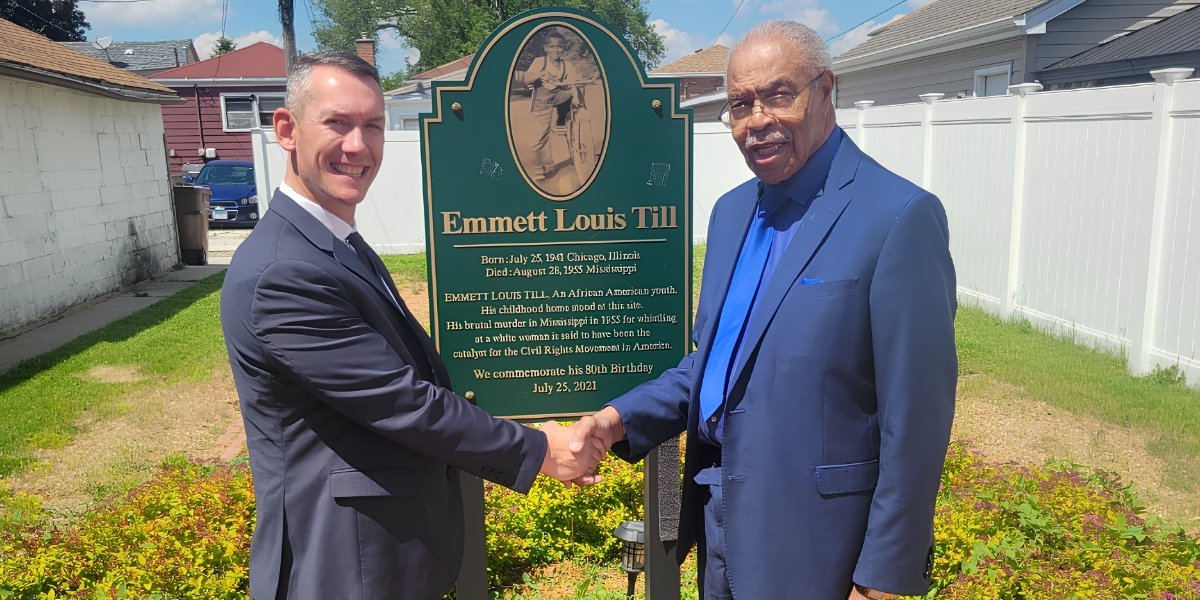
Photo Courtesy: Charles Sims

His recent appearance alongside Rev. Wheeler Parker Jr., cousin of Emmett Till, became a powerful symbol of what healing can look like when individuals are willing to face the truth of the past with humility and compassion. The two men, whose family histories stand on opposite sides of one of America’s darkest racial chapters, came together not in anger, but in unity.

Rev. Parker, who witnessed the kidnapping of Emmett Till in 1955, has spent decades preserving the story of his cousin whose brutal murder helped ignite the Civil Rights Movement. Sims, understanding the painful role his family history played in America’s racial divide, made the courageous decision to stand publicly beside Parker in a gesture of reconciliation and healing.

Their meeting was more than symbolic. It was deeply human.

For Sims, acknowledging history is not about carrying guilt for actions committed generations ago. Instead, it is about accepting responsibility to help build a better future. In doing so, he is showing others that confronting uncomfortable truths does not weaken people, it strengthens communities.

“Love is stronger than pain,” Sims said during his appearance at Argo Temple Church of God in Christ in Summit, Illinois. Those words resonated deeply because they reflected more than a slogan. They reflected intentional action.

Choosing Bridge-Building Over Blame

At a time when conversations around race often become polarized, Sims is choosing bridge-building over blame. His willingness to engage in honest dialogue demonstrates that healing cannot happen through silence, denial, or division. It requires courage, empathy, and a willingness to listen.

The friendship between Sims and Rev. Parker also sends an important message to younger generations. It proves that history does not have to imprison the future. While the scars of racism and injustice are real, reconciliation remains possible when people choose humanity over hatred.

Their public appearance together inspired many because it represented something rare in modern society, accountability without hostility and healing without forgetting history. Sims has not attempted to erase or defend the painful actions connected to his family lineage. Instead, he has acknowledged them while actively working toward unity and understanding.

That approach matters.

Why Personal Reconciliation Matters

Across the country, communities continue to wrestle with questions surrounding race, inequality, and historical injustice. While policies and legislation remain important, personal relationships often become the true starting point for lasting change. Sims understands that reconciliation begins one conversation, one gesture, and one relationship at a time.

By standing beside the family of Emmett Till, Charles Sims demonstrated that reconciliation is not a weakness, it is leadership.

His efforts also highlight a broader truth. Healing America’s racial wounds will require people from every background to participate honestly and compassionately. The burden cannot rest solely on those who suffered injustice. It also requires descendants of those connected to systems of oppression to engage in the process of restoration.

Charles Sims is helping model what that can look like.

In many ways, his story is ultimately about redemption not of history itself, because history cannot be undone but of the future. Through humility, dialogue, and intentional acts of unity, Sims is showing that even the deepest pain does not have to define the generations that follow.

As America continues working through difficult conversations about race and justice, the friendship between Charles Sims and Rev. Wheeler Parker Jr. remains a reminder that love, truth, and reconciliation are stronger than pain.

And perhaps that is exactly the kind of leadership the world needs right now.

How Charles Sims Is Helping Heal Old Racial Wounds

By: Lennard James

In a time when division often dominates headlines and historical wounds continue to shape conversations across America, Charles Sims is offering a different message, one rooted in truth, accountability, healing, and hope. His story is not one many would expect, yet it may be one of the most important examples of reconciliation in modern America.

Charles Sims is the great-great-great-grandson of James Z. George, the former Mississippi senator widely known as one of the principal architects of the 1890 Mississippi Constitution, legislation that became a foundation for Jim Crow laws throughout the South. Those laws institutionalized racial segregation and voter suppression for generations of African Americans, leaving behind a painful legacy that still impacts communities today.

Yet rather than ignore that history, Sims has chosen to confront it openly.

A Friendship Built Across Painful History

Photo Courtesy: Charles Sims

His recent appearance alongside Rev. Wheeler Parker Jr., cousin of Emmett Till, became a powerful symbol of what healing can look like when individuals are willing to face the truth of the past with humility and compassion. The two men, whose family histories stand on opposite sides of one of America’s darkest racial chapters, came together not in anger, but in unity.

Rev. Parker, who witnessed the kidnapping of Emmett Till in 1955, has spent decades preserving the story of his cousin whose brutal murder helped ignite the Civil Rights Movement. Sims, understanding the painful role his family history played in America’s racial divide, made the courageous decision to stand publicly beside Parker in a gesture of reconciliation and healing.

Their meeting was more than symbolic. It was deeply human.

For Sims, acknowledging history is not about carrying guilt for actions committed generations ago. Instead, it is about accepting responsibility to help build a better future. In doing so, he is showing others that confronting uncomfortable truths does not weaken people, it strengthens communities.

“Love is stronger than pain,” Sims said during his appearance at Argo Temple Church of God in Christ in Summit, Illinois. Those words resonated deeply because they reflected more than a slogan. They reflected intentional action.

Choosing Bridge-Building Over Blame

At a time when conversations around race often become polarized, Sims is choosing bridge-building over blame. His willingness to engage in honest dialogue demonstrates that healing cannot happen through silence, denial, or division. It requires courage, empathy, and a willingness to listen.

The friendship between Sims and Rev. Parker also sends an important message to younger generations. It proves that history does not have to imprison the future. While the scars of racism and injustice are real, reconciliation remains possible when people choose humanity over hatred.

Their public appearance together inspired many because it represented something rare in modern society, accountability without hostility and healing without forgetting history. Sims has not attempted to erase or defend the painful actions connected to his family lineage. Instead, he has acknowledged them while actively working toward unity and understanding.

That approach matters.

Why Personal Reconciliation Matters

Across the country, communities continue to wrestle with questions surrounding race, inequality, and historical injustice. While policies and legislation remain important, personal relationships often become the true starting point for lasting change. Sims understands that reconciliation begins one conversation, one gesture, and one relationship at a time.

By standing beside the family of Emmett Till, Charles Sims demonstrated that reconciliation is not a weakness, it is leadership.

His efforts also highlight a broader truth. Healing America’s racial wounds will require people from every background to participate honestly and compassionately. The burden cannot rest solely on those who suffered injustice. It also requires descendants of those connected to systems of oppression to engage in the process of restoration.

Charles Sims is helping model what that can look like.

In many ways, his story is ultimately about redemption not of history itself, because history cannot be undone but of the future. Through humility, dialogue, and intentional acts of unity, Sims is showing that even the deepest pain does not have to define the generations that follow.

As America continues working through difficult conversations about race and justice, the friendship between Charles Sims and Rev. Wheeler Parker Jr. remains a reminder that love, truth, and reconciliation are stronger than pain.

And perhaps that is exactly the kind of leadership the world needs right now.

How to Choose a Book Publishing Company You Can Trust

Choosing a book publishing company is one of the most important decisions an author will make after finishing a manuscript. The right company can help turn a draft into a polished, professional book, while the wrong company can waste time, create unnecessary costs, or leave the author with unclear rights and disappointing results. For writers who have spent months or years working on a book, choosing a trustworthy publishing partner matters.

A reliable publishing company should provide professional support, clear communication, transparent pricing, and respect for author rights and royalties. Lumera Publishing works with authors through a fee-based model, offering book publishing, editing, formatting, cover design, distribution, and marketing services, while helping writers retain 100% of their rights and royalties. This article explains what to look for in a trustworthy publishing partner and how to avoid companies that may not have the author’s best interests in mind.

Why Trust Matters in Book Publishing

Publishing a book is not just a technical process. It involves creative work, financial decisions, ownership rights, and long-term author branding. When an author hires a book publishing company, they are trusting that company with the presentation, production, and release of their book. That trust should be earned through honesty, professionalism, and clear deliverables.

A trustworthy company does not confuse authors with vague promises or unclear terms. Instead, it explains what services are included, what the process looks like, what the author pays for, and what the author keeps. This level of transparency helps writers make confident decisions and protects them from arrangements that may cost them control of their own book.

Look for Clear Publishing Services

A reliable book publishing company should be specific about the services it provides. Authors should know whether the package includes editing, proofreading, formatting, cover design, publishing setup, distribution, or book marketing services. Clear service details help authors understand exactly what they are receiving before they commit.

Professional book publishing services should prepare the book for the marketplace, not just upload a file. A strong publishing partner helps improve the manuscript, design the interior, create a professional cover, prepare platform-ready files, and support the book’s release. Lumera Publishing provides publishing services for authors who want structured, professional support from manuscript to finished book.

Understand Fees Before You Sign

One of the biggest warning signs in publishing is unclear pricing. Authors should be cautious of companies that avoid explaining their fees, pressure them into quick decisions, or add unexpected charges later. A trustworthy company should clearly explain the cost of each service and what is included.

This is especially important when comparing a self-publishing company or assisted publishing services. A fair fee-based model means the author pays for professional services while keeping ownership of the book. The company earns through service delivery, not by taking the author’s rights or royalties. Before signing anything, authors should understand the full cost, the scope of work, and whether any future fees may apply.

Protect Your Author Rights and Royalties

Author rights and royalties should always be discussed clearly before an agreement is signed. Some publishing arrangements may require authors to give up rights or accept a reduced royalty share. Others may include terms that are difficult to understand but have long-term consequences.

A trustworthy publishing company is clear about ownership from the beginning. Authors should ask who owns the final files, who controls the publishing accounts, and what percentage of royalties the author keeps. Lumera Publishing’s model allows authors to keep 100% of their rights and royalties, giving writers professional publishing support without taking ownership away from them.

Watch for Vanity Press Warning Signs

Not every company that offers publishing services operates fairly. Some companies make unrealistic promises, charge high fees for low-quality work, or use sales pressure to push authors into fast decisions. These vanity press warning signs should not be ignored.

Authors should be careful with any company that guarantees bestseller status, promises massive sales, refuses to explain fees, avoids answering rights questions, or makes the author feel rushed. No honest publishing partner can guarantee fame or sales. A reliable company focuses on professional production, clear support, and realistic expectations.

Ask the Right Questions

Before choosing a book publishing company, authors should ask direct questions. What services are included? Who owns the rights? What royalties does the author keep? What is the timeline? What kind of editing is provided? Is cover design included? Will the book be formatted for print and eBook? Are book marketing services available?

The answers should be clear and easy to understand. A professional publishing partner will welcome these questions because they show that the author is taking the process seriously. If a company avoids answering or gives confusing responses, that may be a sign to look elsewhere.

Choose Professional Publishing Support

Professional publishing support helps authors avoid the common mistakes that make books look unfinished. A finished manuscript still needs careful editing, clean formatting, strong cover design, publishing setup, and distribution planning. When these steps are handled well, the book looks more credible and has a better chance of reaching readers.

Lumera Publishing provides assisted publishing services for authors who want guidance without surrendering ownership. The company helps writers prepare their books professionally while keeping the author in control. This balance is especially valuable for authors who want the freedom of self-publishing with the polish of professional production.

Look for a Partner That Respects Your Goals

A trustworthy publishing partner should not force every author into the same path. Some writers need editing first. Others need formatting, cover design, distribution, or marketing. Some are publishing their first book, while others are building a long-term author brand. The right company should understand the author’s goals and recommend services that fit the book’s needs.

Lumera Publishing supports authors across genres and publishing stages, helping them choose the right services to achieve their goals. Whether an author needs full book publishing services or selected support, the focus should remain on creating a polished book while protecting the author’s rights, royalties, and creative ownership.

Choosing With Confidence

Choosing a book publishing company you can trust means looking beyond promises and focusing on proof, transparency, service quality, and ownership terms. Authors should choose a company that clearly explains its process, provides professional publishing support, respects authors’ rights and royalties, and offers realistic guidance rather than empty guarantees.

Lumera Publishing gives authors a full-service, fee-based publishing option built around professional quality and full author ownership. From editing and formatting to cover design, distribution, assisted publishing, and book marketing, Lumera Publishing helps writers publish professionally while keeping 100% of their rights and royalties. Authors who want a trustworthy publishing partner can contact Lumera Publishing to discuss the right path for their book.

About Lumera Publishing

Lumera Publishing is a full-service, fee-based book publishing company based in New York, USA. The company offers ghostwriting, editing, formatting, cover design, assisted publishing, book publishing, and book marketing services for authors across all genres. Lumera Publishing helps writers self-publish professionally while keeping 100% of their rights and royalties.

Learn more at lumerapublishing.com or call +1 (888) 477-8199. Media contact: info@lumerapublishing.com.

Richard Lynch Turns Country Music Into a Mission Through the Love Tattoo Foundation and 2026 Benefit Concert Series

Many artists measure success by streams and social media followers. Country music traditionalist Richard Lynch has built his legacy on something far more enduring, and that is service.

For years, the Ohio-based singer-songwriter has been one of independent country music’s most passionate advocates for preserving traditional country music. Beyond the chart success, sold-out shows, and industry accolades lies a mission that has become central to his life’s work, honoring America’s veterans through the Love Tattoo Foundation.

That mission takes center stage once again in 2026 as Lynch and his wife Donna prepare to host another season of Love Tattoo Foundation Benefit Concerts at their beloved Keepin’ It Country Farm in Waynesville, Ohio.

The concert series has become one of the region’s most unique country music destinations, attracting fans from across the Midwest to experience live performances in an intimate barn-style venue nestled on a working farm. This year’s lineup is among the strongest in the series’ history, featuring Mo Pitney, the French Family Band, Rhonda Vincent, Buddy Jewell, Billy “Crash” Craddock, Suzy Bogguss, and a season-ending Richard Lynch & Friends showcase.

For Lynch, however, the concerts are about far more than entertainment.

How the Love Tattoo Foundation Began

The Love Tattoo Foundation was born from a deeply moving story shared by law enforcement officer Charles “Chuck” Brisbin. After hearing about a young soldier who returned from Afghanistan carrying life-altering injuries, Brisbin was inspired to write a poem titled Love Tattoo. Wanting the poem’s message to reach a wider audience, he approached Lynch about turning it into a song.

The result struck a powerful emotional chord.

Veterans who heard the song often found themselves moved to tears. Families connected with its message of sacrifice and resilience. What began as a song quickly evolved into a larger calling.

Lynch and Brisbin recognized a painful reality. Thousands of veterans carry physical and emotional scars from their service yet often feel overlooked or forgotten once they return home. Determined to make a difference, they established the Love Tattoo Foundation, a nonprofit dedicated to honoring and assisting veterans who bear those invisible and visible wounds.

“Veterans have sacrificed opportunities so that the rest of us could enjoy ours,” Lynch has often said. “The least we can do is make sure they know they are appreciated.”

A Working Farm Built on Faith and Family

That philosophy is woven into every aspect of Keepin’ It Country Farm.

Located in the historic town of Waynesville, the farm is far more than a concert venue. It is a living expression of the values Richard and Donna Lynch hold dear, including faith, family, patriotism, agriculture, and traditional country music.

Over the years, the property has grown into a cultural landmark. It serves as home to the Ohio Country Music Hall of Fame, hosts the Traditionally Lynch television and radio programs, and welcomes countless visitors who share a love for authentic country music and rural living.

Most importantly, it serves as a gathering place where music becomes a vehicle for giving back.

Inside the 2026 Benefit Concert Series

The 2026 concert series reflects that spirit perfectly.

Fans will have the opportunity to see some of country and bluegrass music’s most respected performers in an atmosphere unlike any commercial venue. Grammy-winning bluegrass icon Rhonda Vincent brings her musicianship to the stage in August. Country hitmaker Suzy Bogguss follows in October with the songs that made her a staple of country radio. Buddy Jewell, the first winner of Nashville Star, and country-rock pioneer Billy “Crash” Craddock add further star power to the lineup.

Younger artists like Mo Pitney and the French Family Band continue the tradition of keeping classic country sounds alive for new generations of listeners.

For attendees, the concerts offer more than great music. Every ticket purchased helps support the Love Tattoo Foundation’s ongoing work on behalf of veterans and their families.

Music as a Force for Community

That blend of entertainment and purpose has become the hallmark of Richard Lynch’s career.

While many artists use their platforms to build personal brands, Lynch has used his to build community. Through his music, his farm, and his charitable efforts, he has shown that country music can still serve as a powerful force for connection, gratitude, and service.

As the 2026 season approaches, Keepin’ It Country Farm stands as a reminder that some of country music’s most meaningful stories are not found on award show stages or streaming charts. They are found in small towns, around family farms, and in the hearts of people committed to making a difference.

For Richard Lynch, that may be the most important legacy of all.

Tickets and season passes for the 2026 Love Tattoo Foundation Benefit Concert Series are available now. Every show promises an evening of authentic country music, and every ticket helps honor the men and women who have sacrificed for America’s freedom.

How “Super You!! Building Wellness in Every Way!” Turns Everyday Habits Into Real-Life Superpowers for Children

Children often grow up hearing about superheroes with incredible strength, magical abilities, and world-saving powers. But in Super You!! Building Wellness in Every Way!, Dr. Tina Fournier introduces a different kind of superhero… one built through healthy habits, emotional resilience, kindness, curiosity, and self-awareness.

The children’s wellness book presents an imaginative approach to personal development by helping young readers understand that some of the most important “superpowers” are the ones they build within themselves every day.

Centered around the idea of the “Five Dimensions of Wellness,” the book transforms topics such as emotional health, physical wellness, gratitude, friendship, and mental growth into accessible lessons designed specifically for children. Rather than presenting wellness as a complicated concept, the story frames it as a team of superhero abilities that work together to help children become stronger, healthier, and more confident.

Guided by the familiar character Sam, readers are introduced to five wellness superheroes:

The Body Builder, The Brain Trainer, The Heart Helper, The Peace Finder, and The Friendship Builder.

Each character represents a different dimension of wellness and demonstrates how small daily actions contribute to overall well-being.

The Body Builder focuses on physical wellness and teaches children about movement, healthy eating, hydration, rest, and self-care. Through simple examples and practical routines, the book encourages readers to understand how caring for the body supports energy, growth, and confidence.

The Brain Trainer explores mental wellness by encouraging creativity, learning, problem-solving, and curiosity. Children are reminded that their minds grow stronger when they challenge themselves, ask questions, and stay open to new experiences.

The Heart Helper introduces emotional wellness through lessons about recognizing feelings, managing emotions, expressing thoughts, and practicing healthy coping skills. The book emphasizes that emotions are a normal part of life and that learning to navigate them is a valuable strength.

The Peace Finder focuses on spiritual wellness by introducing children to gratitude, peaceful reflection, mindfulness, and purpose. Instead of presenting spirituality through a single perspective, the book encourages children to explore calmness, kindness, and connection in ways that feel meaningful to them personally.

The Friendship Builder highlights the importance of social wellness through empathy, teamwork, communication, listening, and kindness. The book reinforces the idea that supportive relationships and caring interactions are important parts of a healthy and balanced life.

One of the book’s most notable features is its activity-driven structure. Throughout the story, children are encouraged to participate directly through creative exercises and wellness missions. Activities include building wellness shields, creating gratitude trees, tracking moods, writing compliment notes, and developing personal wellness goals.

These interactive elements transform the reading experience into a practical learning tool that can be used both at home and in educational settings. Parents, teachers, counselors, and wellness educators may find the book particularly useful for starting conversations about emotional intelligence, self-care, healthy habits, and personal growth in ways children can easily understand.

The book also reflects a growing shift in children’s education toward holistic wellness. Increasingly, conversations about youth development include emotional resilience, mental health awareness, social confidence, and mindfulness alongside physical health. Super You!! Building Wellness in Every Way! contributes to this broader discussion by presenting these concepts through positive, encouraging, and age-appropriate storytelling.

Another central message throughout the book is balance. In the final chapter, readers are introduced to the “Wheel of Wellness,” which explains that all five dimensions work together like parts of a complete system. If one area is ignored, life can begin to feel unbalanced. However, the book reassures children that wellness is not about perfection. Instead, it is built through small choices repeated consistently over time.

By combining superhero themes with practical wellness education, the book creates a learning experience that is both imaginative and meaningful. It encourages children to recognize their strengths, care for themselves thoughtfully, and understand that healthy habits can become lifelong tools for confidence and resilience.

At its core, Super You!! Building Wellness in Every Way! delivers an empowering message: every child already has the ability to become their own kind of superhero through kindness, healthy choices, emotional growth, and self-belief.

Bringing the Book Into Homes and Classrooms

Families, educators, counselors, and wellness-focused learning environments looking for engaging ways to introduce children to holistic wellness concepts can explore Super You!! Building Wellness in Every Way! through major online book retailers and educational book platforms. The book offers a creative starting point for important conversations about confidence, resilience, emotional health, and lifelong well-being.

Order your copy today!