
Geographic dispersion of tourism has also taken place in Portugal in recent years. While it is true that tourists continue to arrive mainly in Lisbon and Porto, travel in Portugal does not always have to be within these cities only. As stated by Turismo de Portugal, Portugal attracted over 31 million tourists in 2024, with over 80 million night stays being recorded in the same year. It is important to mention here that the majority of tourists visiting Portugal belong to foreign countries.
That movement pattern matters for cycling tourism. Bicycle travel is built around distance and transition. Riders pass through regions instead of remaining inside them. Portugal’s geography supports that. The country is compact enough that multiple landscapes can be connected within a single week. Coastal roads, inland valleys, and rural farmland sit within short travel gaps.
Top Bike Tours Portugal operates across that structure. Its routes cover Northern Portugal, Porto, the Atlantic coast between Porto and Lisbon, the Douro Valley, Alentejo, and the Algarve. The company began in 2013 in Porto under the name Fold n’ Visit and later shifted in 2017 toward longer cycling itineraries under its current identity.
Northern Portugal appears frequently in its route network. The terrain shifts quickly there. River valleys cut into inland hills, and small towns connect through secondary roads. Parts of the Portuguese Camino also pass through this region. By 2025, the Portuguese Way recorded more than 100,000 pilgrims in a single year. Porto remains one of the main starting points for that route, which overlaps with cycling traffic in the north.
The Atlantic corridor between Porto and Lisbon is a long coastal stretch with mixed conditions. Some sections run through developed beach towns with steady tourism activity. Others pass through quieter fishing areas and open coastline with limited settlement. Wind is a constant factor along this route. It can be strong and irregular, especially on exposed sections facing the Atlantic Ocean. That influences daily riding conditions more than distance alone.
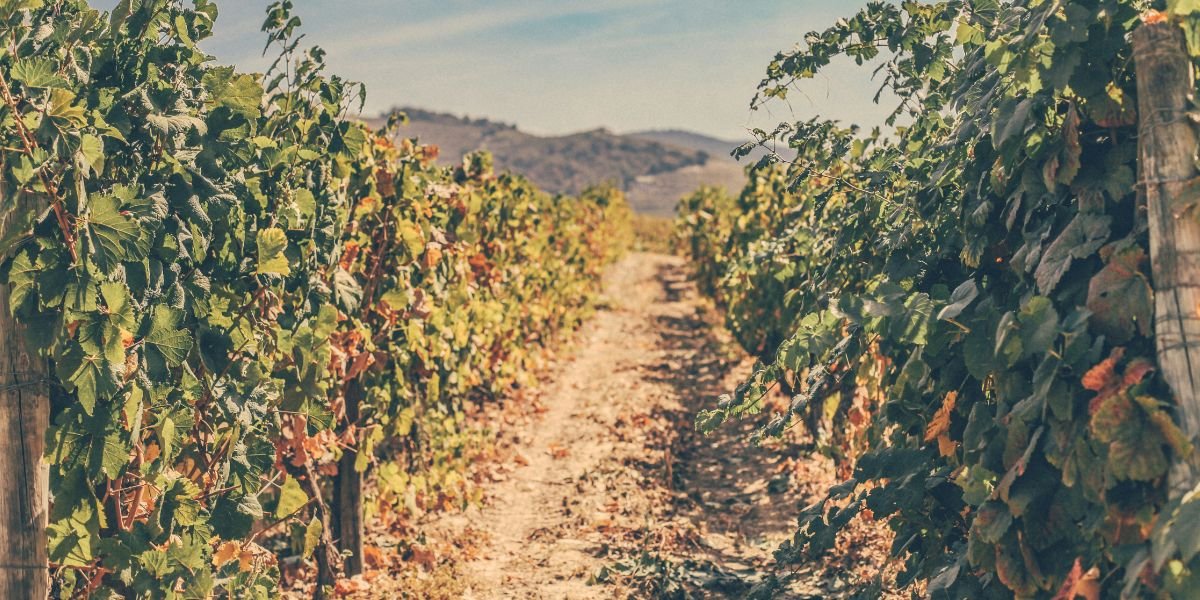
The Douro Valley is an inland region with a totally different configuration. The area is listed in UNESCO’s World Heritage Sites as a landscape designation and has been since 2001. The geography of the region includes the slopes along the Douro River as well as vineyard terraces. The type of cycling involved requires climbing and descending at regular intervals. Villages along the route do not cluster, creating another rhythm of traveling.
Alentejo is a vast inland territory with a sparse population. Long stretches of countryside separate villages and towns. Compared to other areas of Portugal, there is less concentration of cities. As a result, there are many stretches of cycling routes without rest stops between one and the next.
The Algarve, especially the western coast near Costa Vicentina, differs again. It is less urbanized than the central and eastern Algarve, which are more associated with resort tourism. The western coastline includes cliffs, protected natural areas, and small fishing villages. Infrastructure is lighter in many sections. Weather plays a stronger role here. Heat and Atlantic wind can change conditions quickly, even on short stretches of road.
Across all regions, routes are not treated as separate, standalone products. They are linked into longer itineraries that move across Portugal over several days. A single trip can include multiple environments in sequence. Accommodation, luggage transfers, and route planning are coordinated across the full journey so that riders move continuously between regions.
That structure spreads tourism activity beyond major cities. Smaller towns and rural areas become part of regular travel routes. Inland valleys, coastal roads, and agricultural zones are included in the same flow as urban centers. Tourism is not concentrated in one place. It is distributed along movement corridors.
Top Bike Tours Portugal’s geographic model follows that pattern. Northern Portugal connects to pilgrimage routes. The Atlantic coast links Porto and Lisbon. Douro and Alentejo extend inland into wine and rural regions. The Algarve completes the southern coastal section. Each region functions as part of a wider cycling system rather than an isolated destination.