Chicago’s claim as the birthplace of the modern poetry slam now has a permanent home in one of the city’s most important research institutions. Marc Kelly Smith, the founder of the Uptown Poetry Slam, has formally donated his personal archive of the influential performance poetry event to the Newberry Library, the city’s storied independent research library on the Near North Side. The donation, reported by the Chicago Sun-Times on May 12, 2026, anchors Chicago’s role at the origin of a global art form ahead of the slam’s 40th anniversary this summer.
For a movement that began in a Chicago jazz club and spread to more than 500 cities worldwide, the archive’s preservation closes an open loop in American cultural history.
A 40-Year Chicago Story
Smith, now 76 and living in Savanna, Illinois on the banks of the Mississippi, drove three hours to deliver the latest installment of his materials to the Newberry despite battling bronchitis. The collection is a mix that, in his own words, could easily be mistaken for garbage: flyers, clippings, letters, photos, doodles, VCR tapes, sheet music, address books, and decades of administrative paperwork tied to the slam’s run.
The Uptown Poetry Slam has its origins in an open-mic event Smith started at the Get Me High Lounge in November 1984, then called the Monday Night Poetry Reading. He launched the weekly slam format in July 1986, and it found its permanent home at the Green Mill Cocktail Lounge in Chicago’s Uptown neighborhood that same year, where it has run every Sunday night for four decades.
That makes it the longest-running weekly poetry show in the country and one of the longest-running shows of any kind in Chicago. The format Smith built — open mic, featured poet, competitive slam — became the template for a global performance poetry movement.
“This Didn’t Happen by Chance”
Smith framed the donation as an act of historical correction. “To make people understand that this didn’t happen by chance. There was lots of intention, and it was here in Chicago. The roots and history of it is not as preserved in the minds out there as it should be,” Smith told the Sun-Times. “In America there are dozens of slam organizations who don’t know how the art form originated. They’re from the slam world and don’t even know. Not their fault, we didn’t broadcast it.”
The point is more than nostalgic. The poetry slam has expanded into a worldwide movement that touches Germany, Switzerland, France, England, Italy, Canada, Ireland, Madagascar, Singapore, and according to Smith’s own count, has spread to over 500 cities. The National Poetry Slam, first held in San Francisco in 1990 with just three city teams including Chicago, has at times drawn more than 80 teams. A clean primary-source record of how that movement began has been missing from most institutional archives.
What the Newberry Will Preserve
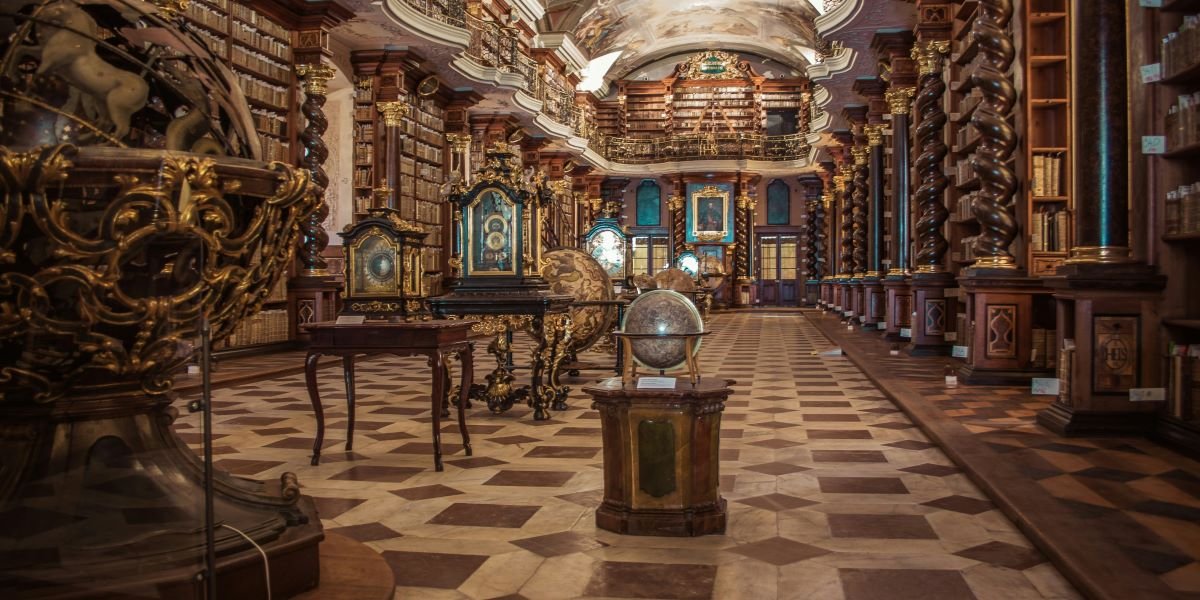
The Newberry Library, founded in 1887, holds roughly 5 million pages of manuscripts across some 15,000 linear feet, or roughly 2½ miles, of original materials tied to Chicago and American history. Alison Hinderliter, the library’s manuscripts and archives librarian, met with Smith for the latest installment of the donation, which will be the subject of a video and a special anniversary event in July marking the slam’s 40th year.
“There is going to be so much of this archive that is not documented anywhere,” Hinderliter told the Sun-Times. “It’s an ephemeral art form, so we capture what we can. This is like gold, primary source material for anyone studying either a particular poet, a poetic movement, something about local history and Chicago, the intersection of arts, because it’s poetry and music, sometimes even dance and theater.”
Smith has already brought roughly 30 boxes to the library, with more on the way. The materials include photographs, flyers, clippings announcing performances, reviews, feature articles, and administrative records that detail the planning of European tours and grant applications. Hinderliter and four staff members will work through the collection, checking for preservation issues such as mold, mildew, and pest infestation, before creating online finding aids that make the archive accessible to researchers.
Chicago’s Enduring Cultural Footprint
The donation reinforces Chicago’s broader cultural claim. Smith’s poetry slam is part of a Chicago tradition that runs from Carl Sandburg through Gwendolyn Brooks, Studs Terkel, and the Poetry Foundation, which is itself headquartered in the city. The Newberry already serves as a primary repository for Chicago’s literary history, and the Uptown Poetry Slam archive adds a contemporary performance dimension to that record.
Smith’s archive will sit alongside material tied to other Chicago-born movements and authors. The Newberry published The Encyclopedia of Chicago History in 2004, a reference work that itself includes entries on the slam movement and its origins.
For Chicago institutions, the slam’s preservation also represents a recognition that performance poetry is not merely a popular entertainment form but a serious subject of academic study. Universities across the country now include slam and spoken word texts in their literature and performance studies curricula, and the Newberry’s archive will become a primary research stop for scholars in those fields.
The Anniversary and What Comes Next
The 40th anniversary celebration in July will mark the formal public unveiling of the archive’s significance. The Uptown Poetry Slam, now sometimes referred to as the Uptown Poetry Cabaret, continues to run weekly at the Green Mill, drawing standing-room crowds and rotating featured poets from across the country and abroad.
Smith continues to perform, including a recent one-man show at the 50-seat Kimball Arts Center in Chicago. “It’s kind of my obligation to these younger generations to get that out there,” he said of the archive donation.
For Chicago, the move ensures that one of the city’s most exported cultural products will be studied for as long as the Newberry stands.