The Chicago Journal

Uptown Poetry Slam Founder Marc Kelly Smith Donates Archive to Chicago’s Newberry Library


Chicago’s claim as the birthplace of the modern poetry slam now has a permanent home in one of the city’s most important research institutions. Marc Kelly Smith, the founder of the Uptown Poetry Slam, has formally donated his personal archive of the influential performance poetry event to the Newberry Library, the city’s storied independent research library on the Near North Side. The donation, reported by the Chicago Sun-Times on May 12, 2026, anchors Chicago’s role at the origin of a global art form ahead of the slam’s 40th anniversary this summer.

For a movement that began in a Chicago jazz club and spread to more than 500 cities worldwide, the archive’s preservation closes an open loop in American cultural history.

A 40-Year Chicago Story

Smith, now 76 and living in Savanna, Illinois on the banks of the Mississippi, drove three hours to deliver the latest installment of his materials to the Newberry despite battling bronchitis. The collection is a mix that, in his own words, could easily be mistaken for garbage: flyers, clippings, letters, photos, doodles, VCR tapes, sheet music, address books, and decades of administrative paperwork tied to the slam’s run.

The Uptown Poetry Slam has its origins in an open-mic event Smith started at the Get Me High Lounge in November 1984, then called the Monday Night Poetry Reading. He launched the weekly slam format in July 1986, and it found its permanent home at the Green Mill Cocktail Lounge in Chicago’s Uptown neighborhood that same year, where it has run every Sunday night for four decades.

That makes it the longest-running weekly poetry show in the country and one of the longest-running shows of any kind in Chicago. The format Smith built — open mic, featured poet, competitive slam — became the template for a global performance poetry movement.

“This Didn’t Happen by Chance”

Smith framed the donation as an act of historical correction. “To make people understand that this didn’t happen by chance. There was lots of intention, and it was here in Chicago. The roots and history of it is not as preserved in the minds out there as it should be,” Smith told the Sun-Times. “In America there are dozens of slam organizations who don’t know how the art form originated. They’re from the slam world and don’t even know. Not their fault, we didn’t broadcast it.”

The point is more than nostalgic. The poetry slam has expanded into a worldwide movement that touches Germany, Switzerland, France, England, Italy, Canada, Ireland, Madagascar, Singapore, and according to Smith’s own count, has spread to over 500 cities. The National Poetry Slam, first held in San Francisco in 1990 with just three city teams including Chicago, has at times drawn more than 80 teams. A clean primary-source record of how that movement began has been missing from most institutional archives.

What the Newberry Will Preserve

The Newberry Library, founded in 1887, holds roughly 5 million pages of manuscripts across some 15,000 linear feet, or roughly 2½ miles, of original materials tied to Chicago and American history. Alison Hinderliter, the library’s manuscripts and archives librarian, met with Smith for the latest installment of the donation, which will be the subject of a video and a special anniversary event in July marking the slam’s 40th year.

“There is going to be so much of this archive that is not documented anywhere,” Hinderliter told the Sun-Times. “It’s an ephemeral art form, so we capture what we can. This is like gold, primary source material for anyone studying either a particular poet, a poetic movement, something about local history and Chicago, the intersection of arts, because it’s poetry and music, sometimes even dance and theater.”

Smith has already brought roughly 30 boxes to the library, with more on the way. The materials include photographs, flyers, clippings announcing performances, reviews, feature articles, and administrative records that detail the planning of European tours and grant applications. Hinderliter and four staff members will work through the collection, checking for preservation issues such as mold, mildew, and pest infestation, before creating online finding aids that make the archive accessible to researchers.

Chicago’s Enduring Cultural Footprint

The donation reinforces Chicago’s broader cultural claim. Smith’s poetry slam is part of a Chicago tradition that runs from Carl Sandburg through Gwendolyn Brooks, Studs Terkel, and the Poetry Foundation, which is itself headquartered in the city. The Newberry already serves as a primary repository for Chicago’s literary history, and the Uptown Poetry Slam archive adds a contemporary performance dimension to that record.

Smith’s archive will sit alongside material tied to other Chicago-born movements and authors. The Newberry published The Encyclopedia of Chicago History in 2004, a reference work that itself includes entries on the slam movement and its origins.

For Chicago institutions, the slam’s preservation also represents a recognition that performance poetry is not merely a popular entertainment form but a serious subject of academic study. Universities across the country now include slam and spoken word texts in their literature and performance studies curricula, and the Newberry’s archive will become a primary research stop for scholars in those fields.

The Anniversary and What Comes Next

The 40th anniversary celebration in July will mark the formal public unveiling of the archive’s significance. The Uptown Poetry Slam, now sometimes referred to as the Uptown Poetry Cabaret, continues to run weekly at the Green Mill, drawing standing-room crowds and rotating featured poets from across the country and abroad.

Smith continues to perform, including a recent one-man show at the 50-seat Kimball Arts Center in Chicago. “It’s kind of my obligation to these younger generations to get that out there,” he said of the archive donation.

For Chicago, the move ensures that one of the city’s most exported cultural products will be studied for as long as the Newberry stands.

Bonphotage on Balancing Innovation and Authenticity in Wedding Imagery

Bonphotage, a luxury wedding and cinematography studio, has devoted over a decade to building a body of work that refuses easy categorization. Not quite photojournalism, not quite editorial, their images are entirely at home in the pages of publications like Harper’s Bazaar and Women’s Wear Daily. The distinguishing factor of Bonphotage’s work is a philosophy that holds innovation and authenticity in deliberate, productive tension.

In the past 15 years, wedding photography has substantially changed, and today’s couples arrive to book their wedding photographer with carefully curated visual references, mood boards populated by years of saved images, and expectations shaped by the constantly moving aesthetic trends.

Some studios are chasing those trends, while Bonphotage studies them to determine what’s worth carrying forward and what belongs to a passing moment. While the former produces images that feel current, the latter produces those timeless images that feel true.

The Foundation Beneath Every Frame

Every wedding that Bonphotage photographs is treated as a case worth making. Here are two people, here is the world they’ve built together, here is why it matters. The studio’s editorial sensibility comes from that instinct toward meaning over mere beauty.

Documentary storytelling is central to the Bonphotage method, so rather than engineering moments and directing couples through a series of staged interactions, the studio’s approach prioritizes genuine emotional currency.

Tears that fall without prompting, laughter that erupts between sentences, the quiet weight of a parent’s hand on a shoulder are the sorts of frames that endure.

“Authenticity isn’t something you can manufacture on a wedding day,” says Lynzie Hazan, the founder of Bonphotage, who left her corporate law career to establish and grow her globally recognized wedding photography studio. “It’s something you have to earn by making people feel seen rather than photographed.”

Committing to earned authenticity informs the decisions the studio makes. This includes every choice, from the way Bonphotage structures a wedding day timeline to the lens choices made during a first dance. The standard is refinement minus the artifice, and maintaining that standard requires constant recalibration.

Innovation as an Act of Editing

There’s a version of innovation in wedding photography that prioritizes novelty. While other studios are pursuing new equipment, new angles, and new post-processing aesthetics that announce themselves loudly in each frame, Bonphotage takes a quieter view.

For the studio, genuine innovation means expanding what’s possible within the frame while never abandoning the emotional core that makes wedding imagery matter from the word go. Reframing the approach from what’s new to what’s useful allows choices to be made that serve the story being told through images and video.

Bonphotage has photographed celebrity weddings, destination weddings, intimate gatherings with as few as twenty guests, and elaborate multi-day celebrations spanning continents. Each context demands different vocabulary, and the studio’s ability to adapt its visual language is, itself, a form of creative innovation.

While a beachside ceremony in Greece may call for something different than a candlelit cathedral in Prague, what stays consistent is the underlying commitment to images that carry emotional weight that surpasses their surface beauty.

Cinematography has become an increasingly important dimension of the Bonphotage offering, and the studio approaches moving image work with editorial rigor equal to that which it brings to still photography.

“Film allows us to capture the texture of a wedding day in a way that photographs alone can’t fully hold. The sound of vows being exchanged, the energy in the room during the first dance, those are things that deserve to be preserved with the same care as any still image,” says Hazan.

Integrating photography and cinematography under a single creative vision gives couples a coherent visual archive as opposed to two parallel but disconnected records of their day.

Luxury Defined by Intentionality

Among the studios operating on the luxury side of the wedding photography market, Bonphotage occupies its own position defined less by price point than by intentionality. Every element of the client experience, from the initial consultation to final image delivery, reflects the studio’s belief that documentation and artistry are not competing values.

The studio occupies editorial spaces where visual standards are uncompromising. Celebrity clients have trusted Bonphotage with moments that exist, by definition, where private and public life intersect.

Navigating that space requires a particular kind of discretion and emotional intelligence. The ability to be fully present without being intrusive is key to quality work. Such qualities have developed across hundreds of weddings on multiple continents, allowing the studio to operate at an elite level where the margin of error is practically nonexistent.

The Bonphotage portfolio reads less like a catalog of weddings and more like a collection of human moments brought together to tell a story.

“We think of ourselves as archivists of love, treating every detail as worthy of the utmost attention,” says Hazan.

Carrying the Standard Forward

The conversation around innovation and authenticity in wedding photography was never unique to a single studio. It’s the defining tension of the craft itself, and every photographer who picks up a camera on a wedding day must balance shaping what they observe with bearing witness to the events of the day.

The answer to that balance lives somewhere in the middle and requires a genuine point of view about what wedding imagery is actually for. Trends will continue to cycle through the industry as lighting aesthetics shift, editing styles fall in and out of favor, and new tools consistently promise to change what’s possible in the frame.

What endures is the couple at the center of the image, and the studios that understand this are those whose work ages gracefully, outlasting the trends of the day. Bonphotage represents one of the clearest articulations of that understanding currently working in the luxury wedding space.

More than a decade into building a globally recognized body of work, the studio has demonstrated that innovation and authenticity are complementary forces to be cultivated congruently. The images that result carry the weight of the conviction in every frame.

Wedding photography, at its best, has always been about making something that lasts. The balance Bonphotage strikes is the masterclass in how.

Bonphotage is a Chicago-based luxury photography and cinematography studio founded in 2014 by Lynzie Hazan, a former international corporate attorney. Named among the top photographers in the world, the studio has documented over 1,000 weddings across more than 45 countries, with editorial work featured in Harper’s Bazaar, The Knot, and Women’s Wear Daily. Learn more at bonphotage.com.

Expanding Excellence with a Strategic Move into Chicago’s Legal Landscape

In an increasingly interconnected legal environment, growth is no longer defined solely by scale, but by the ability to deliver consistent, high-quality advocacy across jurisdictions. For one established firm, the expansion into Chicago marks not only a geographic milestone but a deliberate step toward broadening impact, deepening community engagement, and reinforcing a client-first philosophy that has guided its work in other major markets.

Chicago, often regarded as a microcosm of the United States, presents a unique and compelling opportunity. With its rich diversity, complex legal ecosystem, and expansive population, the city mirrors and amplifies the dynamics seen in other metropolitan hubs like Atlanta. For the firm, this expansion is rooted in a clear objective: to extend its reach and provide meaningful legal support to a wider range of individuals. The move is less about entering a new market for its own sake and more about fulfilling a broader mission, helping more people work through challenging moments with trusted legal guidance.

Establishing the Practice Across State Lines

Successfully practicing law across state lines requires more than foundational expertise. It demands a thorough understanding of local statutes, procedural nuances, and cultural expectations. In preparation for entering Illinois, the firm undertook extensive research to ensure alignment with state-specific legal frameworks. While acknowledging jurisdictional differences, leadership maintains that the core principles of effective legal practice remain unchanged. Mastery of the craft, grounded in diligence, preparation, and experience, transcends geography. This perspective allows the firm to maintain consistency in its standards while adapting thoughtfully to local requirements.

Establishing credibility in a new market is often one of the most critical and challenging steps for any legal practice. Rather than focusing exclusively on building relationships within traditional legal circles, the firm has prioritized partnerships with medical providers. This strategic decision reflects a deeply held belief that strong client representation begins with proper care and documentation. By connecting clients with reputable medical professionals who can provide timely treatment and thorough records, the firm strengthens its case preparation. This approach not only supports the legal process but also underscores a commitment to client well-being beyond the courtroom.

A Universal Mindset for Client Advocacy

Despite variations in procedural rules from one jurisdiction to another, the firm approaches client advocacy with a universal mindset. The legal process centers on people, individuals seeking justice, clarity, and resolution during difficult times. According to the firm’s leadership, these fundamental needs do not change based on location. By following a consistent approach to case management and client communication, the firm extends its established methodology while remaining responsive to local nuances. The emphasis remains on understanding each client’s experience and translating that into effective legal representation.

To keep its strategies both locally informed and rigorous, the firm places significant emphasis on continued education. As members of the Illinois Bar, attorneys are required to complete ongoing legal training. The firm goes beyond minimum requirements, investing additional time and resources into mastering the intricacies of Illinois law. This proactive approach helps the team distinguish between state-specific differences and apply considered strategies for each case, supporting representation that is both informed and substantive.

Scaling Operations Without Sacrificing Service

Operationally, expansion into a major metropolitan area like Chicago calls for thoughtful scaling. Rather than attempting to manage increased demand with limited resources, the firm has adopted a growth model centered on strategic hiring. By bringing in additional specialists and expanding its support staff, the firm aims to maintain personalized attention for each client. This commitment to quality over quantity reflects a broader philosophy. Growth should enhance service, not dilute it.

In a city known for its competitive legal market, differentiation often becomes a focal point. The firm approaches this challenge with a different mindset. Instead of attempting to redefine itself to stand out, it remains grounded in the values and practices that have shaped its work so far. Authenticity, consistency, and a commitment to excellence serve as the foundation of its strategy. By focusing on delivering thoughtful representation rather than reacting to competitors, the firm positions itself as a steady presence in the market.

Engaging With Chicago’s Communities

Beyond litigation, the firm recognizes the importance of community involvement and social responsibility. Chicago, like many major cities, is home to historically underrepresented communities that often face barriers to accessing quality legal services. With a diverse team and client base, the firm is committed to meeting individuals where they are, both literally and figuratively. This means engaging directly with communities, understanding their unique needs, and providing tailored legal support that reflects those realities. On a personal level, the expansion also carries added significance, with existing familial ties to the city further strengthening the firm’s connection to the community.

Looking ahead, the firm’s vision for its Chicago presence is both ambitious and grounded. The goal is not only to extend the work it has built in Atlanta but to establish itself as a dependable voice for the people. Reliability, compassion, and dedicated advocacy are central to this vision. Clients, the firm believes, want more than just representation. They want to feel heard, understood, and effectively supported. By prioritizing these elements, the firm aims to build lasting relationships and provide meaningful service that extends beyond individual cases.

At a personal level, this expansion reflects a deeper sense of purpose. Guided by faith and a commitment to service, the firm’s leadership views growth as an opportunity to make a broader impact. With the resources and experience to help more individuals, the decision to expand is rooted in a belief that success carries a responsibility to give back. Having already made a significant difference in Atlanta, the firm now looks to bring that same level of dedication and care to Chicago, and potentially beyond.

In an industry where reputation is earned through results and trust is built over time, this expansion represents more than a new office. It is a continuation of a mission to provide exceptional legal advocacy, support clients, and serve communities with integrity and purpose.

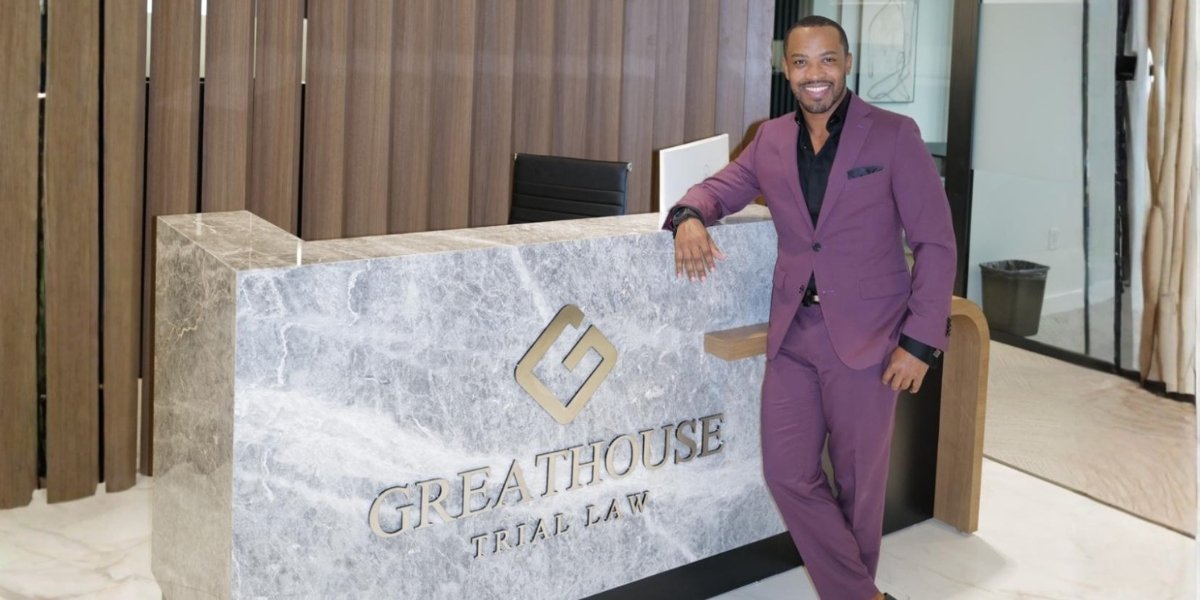
To learn more about how Greathouse Trial Law can help you, visit Greathouse Trial Law, LLC or call 888-82-FG-LAW.

Disclaimer: This article is intended for general informational purposes only and does not constitute legal advice. Reading this article does not establish an attorney-client relationship between the reader and Greathouse Trial Law, LLC. Past case results are no guarantee of future outcomes, as each legal matter is unique and depends on its specific facts and circumstances. Anyone seeking legal counsel should consult a qualified attorney licensed in their jurisdiction.