The Chicago Journal

From Minor League Fields to Talent Evaluation: Examining Cade Griffis’s Professional Baseball Career and His Transition into Scouting

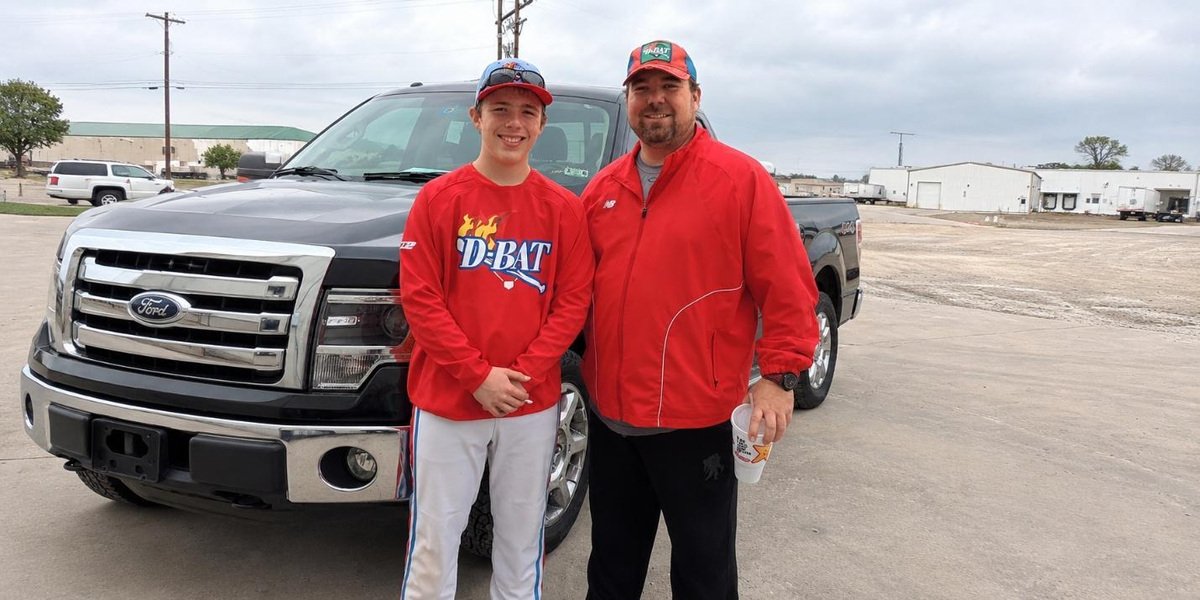
Minor league baseball is not only a proving ground but also a training ground for baseball players entering the world of professional baseball. New recruits enter through either the MLB Draft or as a free agent. Once they’re on board, they immediately get to work with a rigorous schedule of daily batting practice, defensive work, and competition. With over 130 games in a minor league season, there is no shortage of statistics to measure a player’s progress. Statistics such as batting average, fielding percentage, on-base percentage, and situational hitting and pitching provide the yardstick.

To this world of minor league baseball entered Cade Griffis in the mid-1990s. In 1996, Griffis signed with the Kansas City Royals organization as a free agent. The Royals were established in 1969 and are based in Kansas City, Missouri. Their minor league system is expansive and is meant to provide a fertile environment to grow talent to be used by the big league team. Within the Royals’ system, Griffis took on multiple roles: catcher, third baseman, and left fielder. These positions are all defensive positions that require very specific skill sets.

Being a catcher means providing guidance to pitchers, direction to the team’s defense, and managing the running game. Third base means handling line drives and eliminating base runners with throws to first base. Left field means covering a great deal of territory, catching fly balls, and limiting an opponent’s scoring chances. To be versatile means to be able to play multiple positions and be valuable to any team.

Minor league competition exposes players to a demanding schedule and varied travel across regional leagues. A team may play six or seven games a week during the regular season. This means that an athlete has to be able to endure over a period of time and keep an eye on what is going on at the same time. How a player hits a baseball, how they play defense, and how well they can read a given situation all play a part in how a team evaluates an athlete. There are many players who move through the minor leagues and ride a rollercoaster of progress and adjustments as they hone their skills and face tougher competition.

In terms of the professional developmental system, it is common to find that daily routines are very similar to what an MLB team would be doing. Pre-game work would be typical of what any team would be doing before a game. There would be batting practice that is focused on swinging and timing. There would be defensive work that is focused on footwork and reaction time. Video and statistical trends would be used to measure an athlete’s progress over time. It is through all of these means that teams would be able to chart an athlete’s progress and determine where they would fit best with their team.

After his career ended, Griffis continued to be involved with baseball scouting. Griffis would go on to be a professional scout with the Chicago White Sox. The Chicago White Sox is an MLB team that was established in 1901. It is based in Chicago, Illinois. One of the most enduring scouting operations is with the White Sox. It is not uncommon to find that scouting is used to determine what kind of talent is out there at the high school level, at the collegiate level, and at the professional level. Scouts travel all over to watch games and tournaments and provide detailed reports on players who are under consideration.

Griffis spent twelve years working in this role with the White Sox organization. Scouting positions require a combination of observational skill and familiarity with player development standards. Evaluators examine aspects such as hitting mechanics, defensive range, throwing accuracy, and overall athleticism. Reports typically include both statistical analysis and qualitative observations gathered during live game situations. These assessments assist front office personnel when determining draft selections or monitoring potential acquisitions.

For Griffis, the progression from minor league competition to scouting reflected a continued involvement in baseball’s evaluation framework. The professional environment he experienced as a player provided context for later work identifying talent and assessing performance across different levels of the sport. Over time, this transition connected two related aspects of professional baseball. Playing gave him first-hand experience of what it’s like to be in the heat of competition within the Royals system, whereas scouting allowed him to stay connected to the game by way of evaluating players and assessing their talents.

In a broader sense, there are several careers that involve a combination of playing and scouting, which illustrate the idea of time spent in the game affecting decision-making. The game of professional baseball is a complex web of coaches, evaluators, and development staff working to identify and evaluate players at both the amateur and professional levels. Many people have experienced both worlds, from a player’s perspective to a world of scouting and developing players. Cade Griffis’s professional baseball career, from a player to a scout for over a decade for the Chicago White Sox, can be considered a notable example of being in the trenches and working to identify and develop future players.


How Far Would You Go to Protect the Ones You Love and What If the Cost Is a Lifetime of Secrets: K.S. Lynn Finally Wrote the Novel That Answers That Question Honestly

By: Christopher Miller

The question that K.S. Lynn has placed at the beginning of A Thousand More, how far would you go to protect the ones you love, and what if the cost is a lifetime of secrets, is one that the novel takes seriously enough to follow all the way to its most uncomfortable implications. The cost of Ann Carrington’s 1982 choice is not abstract, not a narrative device, but a specific and accumulating reality that manifests in the haunted sense of loss that Michelle carries throughout her privileged childhood and the resilience that Shelby builds in response to tragedy without ever understanding its original source. Lynn does not look away from what the secret costs the people who were not consulted about it, and that refusal to look away is what gives the eventual revelations their full force.

A Thousand More began with a dream in 2005. Lynn abandoned the story until 2019, when her desire to write returned, and the novel that emerged has been recognized with the Literary Titan Book Award and multiple other honors for its powerful storytelling, emotional depth, and unforgettable exploration of family, identity, forgiveness, and love.

The trajectory from dream to award-winning debut is itself a narrative about patience and persistence that mirrors the novel’s own themes, the idea that the things that are most worth doing take the time they need and produce something more substantial for having waited. A Thousand More feels like a novel that was allowed to become fully what it needed to be rather than rushed into publication before its full shape was clear.

Literary Titan praised the novel as a tender and twist-laden story about the families we lose, the families we make, and the love that keeps arriving after we think our hearts are already full.

That image of love that keeps arriving is the most accurate description of what the novel ultimately delivers, the understanding that the capacity for connection and for forgiveness is not fixed and finite but expandable in ways that the characters themselves did not anticipate, that the revelation of a decades-long secret does not have to be only a destruction but can also be a strange and painful and ultimately life-giving opening.

If you want a family saga that asks the hardest questions about love and loyalty and the cost of protection and follows those questions all the way to their most honest and most hopeful answers, A Thousand More by K.S. Lynn is the novel that does exactly that. Head over to Amazon and get your copy today and let Ann Carrington’s impossible choice become the gateway to one of the most emotionally complete reading experiences currently available.

Chicago Public Market Network Takes Shape Under New Market City Executive Order

Chicago will pursue a network of indoor, year-round public markets under a Market City executive order Mayor Brandon Johnson signed October 22, 2026. The Chicago public market plan pairs those markets with support for farmers markets and food entrepreneurs, with the South Side’s 51 percent household food insecurity rate framing the need.

Key Takeaways

  • The executive order establishes a steering committee of city departments and community members to carry out the Market City Action Plan.
  • The city’s strategy calls for a coordinated network of farmers markets, indoor year-round public markets, neighborhood food hubs and other community-based market models.
  • The plan was developed over the past year with the Chicago Food Equity Council, the Greater Chicago Food Depository, residents, entrepreneurs, farmers and market operators.
  • The Greater Chicago Food Depository’s 2026 report found food insecurity at 51 percent on the South Side, 45 percent on the West Side and 41 percent on the Southwest Side, compared with 20 percent on the North Side.
  • No market locations, operators or funding amounts have been announced.

Market City Executive Order Creates a Steering Committee to Carry Out the Plan

The executive order signed October 22 moves Chicago’s Market City Action Plan from planning into implementation. It sets up a steering committee that brings together city departments and community members, giving the effort a standing body responsible for turning the plan’s goals into specific projects.

The plan itself took shape over the past year. The city developed it with the Chicago Food Equity Council, a cross-sector body created in 2021 to address food access, along with the Greater Chicago Food Depository and community stakeholders, including residents, entrepreneurs, farmers and market operators.

Chicago Public Market Plan Builds a Network, Not a Single Store

The Market City approach marks a change in strategy. The city first explored a city-owned grocery store in 2023, then shifted in 2025 toward a public market that would sell staples alongside space for local farmers and food sellers. The current plan widens that idea into a system. According to the city, the strategy calls for a coordinated network of farmers markets, indoor year-round public markets, neighborhood food hubs and other community-based market models.

A network carries a practical advantage over a single building. A grocery store depends on one location and thin margins to succeed. A mix of markets and food hubs can spread access across neighborhoods, operate on different schedules and give small vendors a place to start. The tradeoff is coordination: a network needs sustained management, which is the job the new steering committee is meant to take on.

Food Insecurity in Chicago Concentrates on the South and West Sides

The need behind the plan is documented in the Greater Chicago Food Depository’s 2026 hunger report, produced with NORC at the University of Chicago and based on a June survey of 1,200 residents. The report found that more than one in three Chicago households lack consistent access to enough food.

The gaps are sharpest by region. Food insecurity reached 51 percent on the South Side, 45 percent on the West Side and 41 percent on the Southwest Side, compared with 27 percent on the Northwest Side and 20 percent on the North Side. Those same areas have lost grocery options recently, and the city has already moved to fill some of the gap, including free grocery rides for seniors after seven Save A Lot stores closed on the South and West Sides. The Market City plan is a longer-term answer to the same problem.

Farmers Markets Chicago Vendors Already Use Are Part of the Network

The plan builds on markets that already operate across the city. Under city rules, independent farmers markets can register with the Department of Cultural Affairs and Special Events at no cost. Markets that need street closures, curb lane parking, tents larger than 400 square feet or stages taller than two feet must apply for a special events permit.

Including existing farmers markets in the strategy matters for vendors. Growers and small food businesses who already sell at neighborhood markets are positioned to benefit first from any new support, before an indoor market is built.

Locations, Operators and Funding for a Chicago Public Market Remain Open

The order sets the structure, but the specifics are still to come. The city has not announced where indoor public markets would be located, who would run them or how much funding the effort will receive. The steering committee’s first recommendations will show whether the network starts with new buildings or with support for markets already serving the South and West Sides.

FAQs

What is a public market?

A public market is a shared marketplace, often supported by a city or nonprofit, where independent vendors sell food and goods under one roof or at one site. Chicago’s plan envisions year-round indoor markets as part of a broader network of food access points.

What is Chicago’s Market City plan?

Chicago’s Market City Action Plan is a food access strategy built around a coordinated network of farmers markets, indoor year-round public markets, neighborhood food hubs and other community-based markets. An executive order signed October 22, 2026, created a steering committee to implement it.

Where will Chicago’s public markets be located?

The city has not announced locations for indoor public markets. The plan focuses on improving food access, and the highest food insecurity rates are on the South, West and Southwest Sides.

How many Chicago households face food insecurity?

More than one in three Chicago households lack consistent access to enough food, according to the Greater Chicago Food Depository’s 2026 report. Rates reach 51 percent on the South Side.

How do farmers markets register in Chicago?

Independent farmers markets can register with the city’s Department of Cultural Affairs and Special Events for free. Markets that need street closures, curb lane parking or large tents and stages must apply for a special events permit.

How a Tasting Brought Yelophant and the New York Knicks Together

By: James

A Chinese breakfast brand’s partnership with the NBA champions connects arena dining, North American retail and youth sports.

Starting this season, a breakfast brand familiar to families in China will be part of the dining program at the home of the NBA champions.

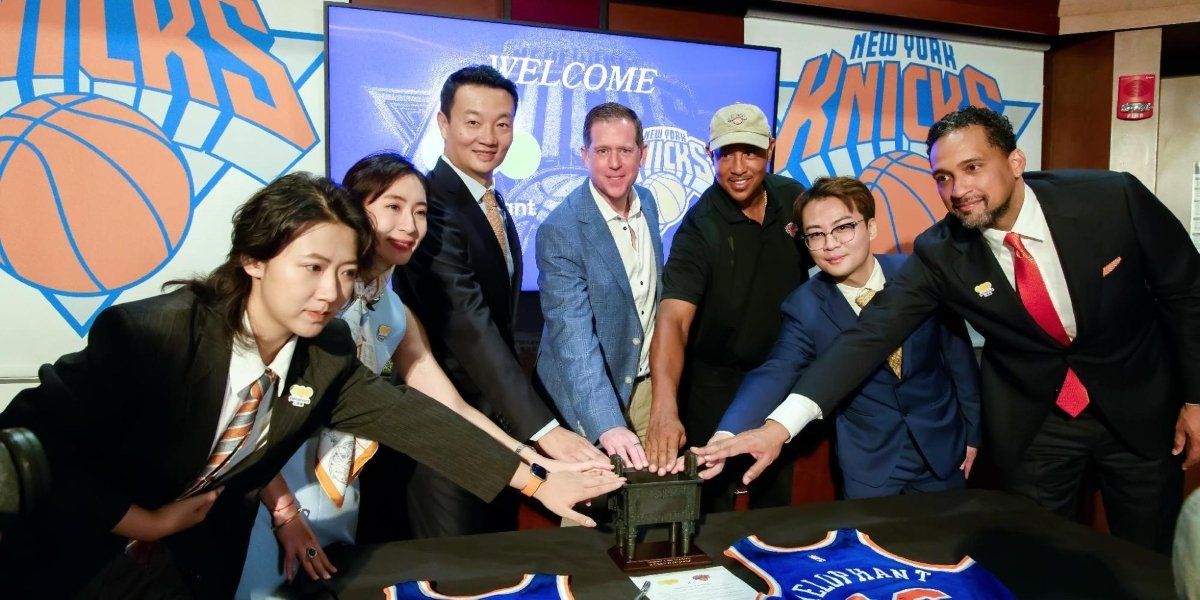
On Oct. 19, Beijing time, Yelophant, a Chinese food company specializing in breakfast for children and teenagers, announced a strategic partnership with the New York Knicks, the 2025-26 NBA champions. The agreement makes Yelophant an official global partner of the team, with its products carrying the designation “Official Pre-Packaged, Ready-to-Heat Asian Breakfast Product of the New York Knicks.”

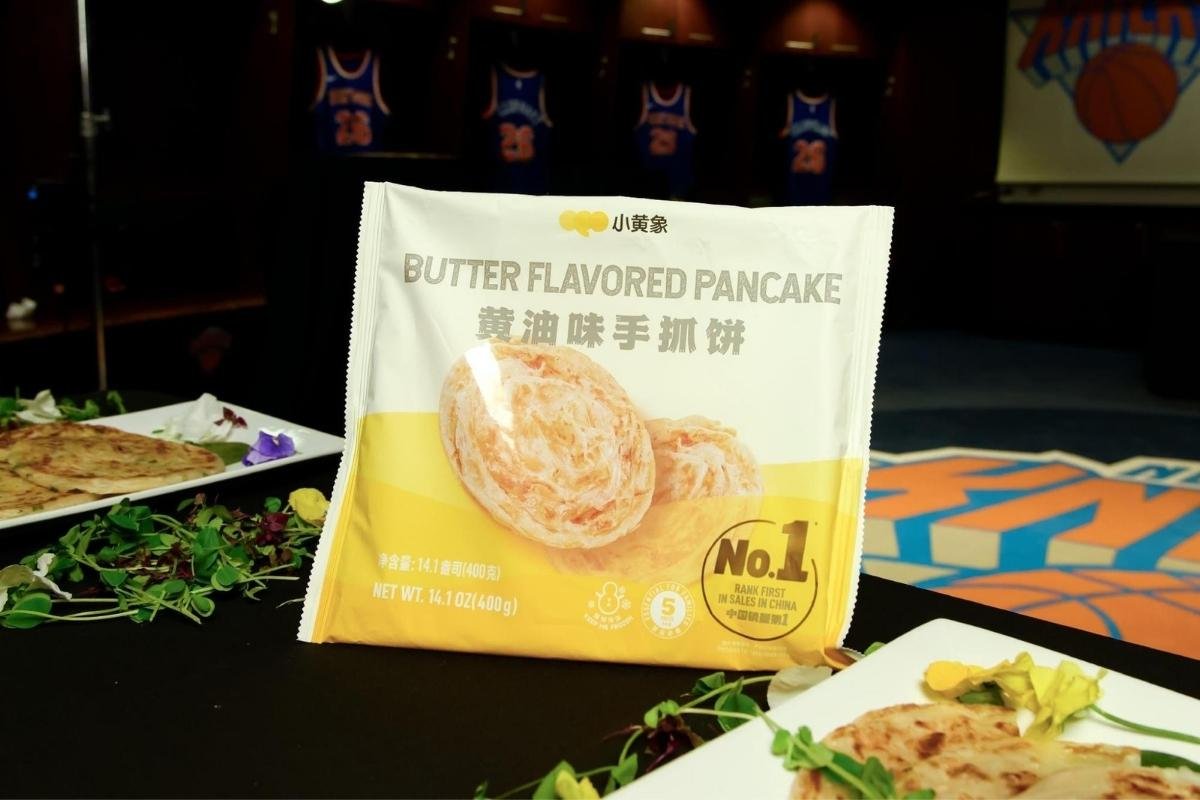
Under the announced plans, products including butter-flavored flaky pancakes, scallion pancakes and cheese pancakes will enter the food service program at Madison Square Garden (MSG), giving fans new dining options at the Knicks’ home arena.

Known to basketball fans as “the Mecca,” Madison Square Garden has been the setting for some of the NBA’s most memorable moments. The Manhattan venue is also a major sports and entertainment business, combining games and live performances with premium hospitality.

The Knicks’ 2026 championship ended a 53-year wait for their fans. It also brought renewed attention and commercial momentum to one of the league’s most established franchises.

Work on the Yelophant partnership, however, began before the title run was complete. The relationship grew out of discussions about food quality, healthy living and the markets each side hoped to reach. At its center was a practical question: What would people think when they tasted the food?

A Partnership That Began With the Product

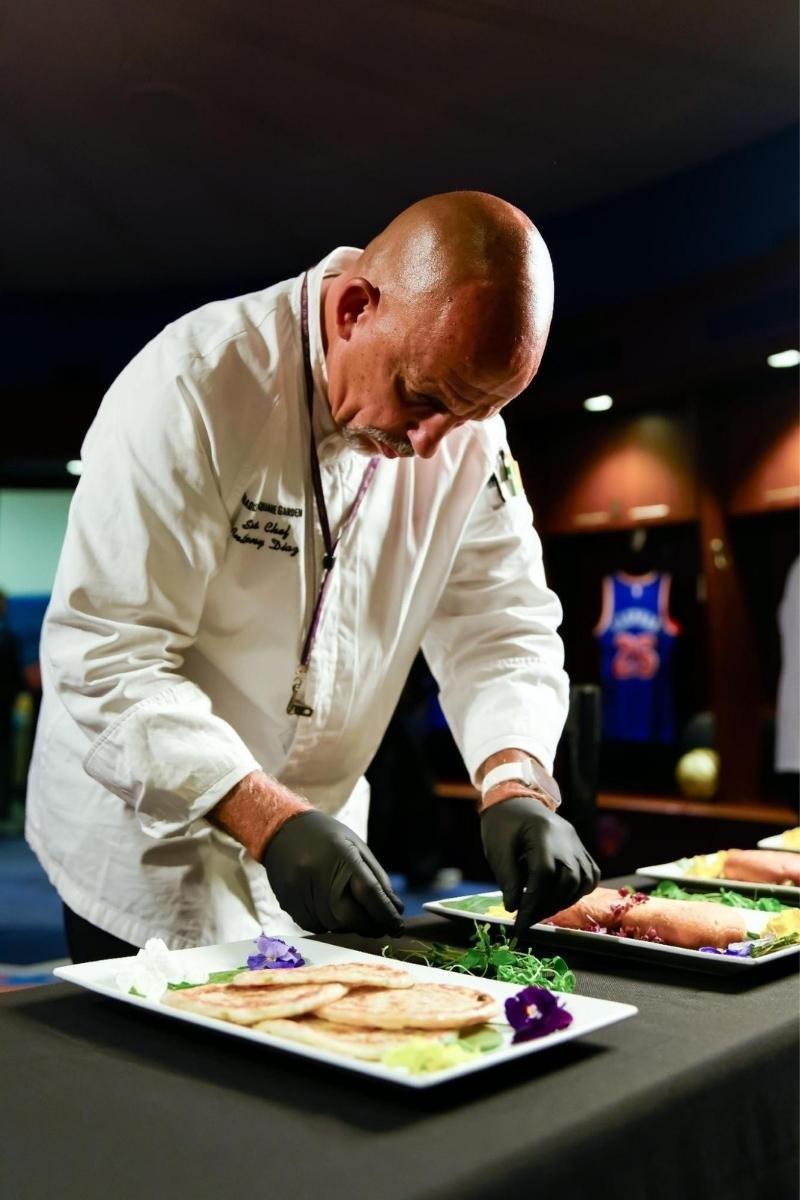
According to Chinese sports-business publication Sportsmoney, Yelophant’s team brought a substantial selection of products to MSG during the early business discussions, introducing them to Knicks and arena executives. MSG arranged for its chefs to prepare the food on-site so the management team could taste it.

The tasting helped establish the basis for a broader partnership. For a food company, even a persuasive brand story eventually comes down to a direct consumer judgment: Does the food taste good? When some prospective customers are less familiar with a cuisine, flavor, texture and preparation can make a stronger impression than a marketing pitch.

Photo Courtesy: James

MSG already has an established premium hospitality operation alongside its sports and entertainment programming. It has previously enlisted prominent chefs, including Michelin-starred chefs, to help develop suite menus. Food served there is expected to complement the experience of attending a major event.

The tasting gave both sides a way to discuss those expectations in concrete terms. Yelophant also walked the Knicks and MSG teams through its ingredient lists, sourcing choices, production methods and its own manufacturing operation.

Those discussions offered a closer look at the company’s investment in product development and its supply chain, while providing a basis for exploring the partnership further. For foods intended for children and teenagers, ingredients, nutrition, taste and safety all matter to consumers. Meeting those expectations places demands on how a brand sources and manufactures its products.

Yelophant founder Wang Yi has described the company as a brand that takes its time, pursuing long-term growth and what he calls “championship standards” for family breakfasts. Internally, the team works through two questions: Would parents be willing to give this food to their children every day? And would the children want to eat it every day?

The first question concerns quality and nutrition; the second concerns taste and the experience of eating the product. Together, they express the company’s guiding idea: making nutritious food taste good and good-tasting food nutritious.

That emphasis on patient, consistent work offers a parallel with professional sports. A championship team relies on daily training, informed management and teamwork to remain competitive. A food company needs continued investment in product development and its supply chain to earn consumer trust. In that sense, the partnership began with a shared appreciation of the products and the thinking behind them.

From the Arena Menu to the Family Kitchen

The next step is to turn that initial product experience into something consumers can try for themselves. Under the partnership plans, Yelophant foods will feature on dedicated menus in MSG’s suites and hospitality spaces, adding Asian flavors to the options available to guests.

Visibility has long been a central return on sports sponsorship. A sign inside an arena or a logo seen during a broadcast puts a brand in front of an audience. Food, however, depends heavily on direct experience. Recognizing a brand and tasting what it makes are different stages in a consumer’s relationship with it.

The Knicks partnership gives Yelophant a way to connect the two. MSG attracts fans from around the world, corporate clients and guests purchasing premium hospitality. A meal is part of the overall experience of attending a game. Serving Yelophant’s flaky pancakes and scallion pancakes there places the products in front of an international audience in a setting where people can try them.

Photo Courtesy: James

That has a practical connection to the company’s overseas business. Before reaching the Knicks agreement, Yelophant had already begun building a North American retail presence. Its products are now available through retailers in markets including New York, Los Angeles, Boston, Dallas and Vancouver.

As it learned about eating habits in those markets, the company chose to present its U.S. range as Asian foods with a focus on nutrition, rather than limit it to breakfast. A flaky pancake can be eaten in the morning, but different fillings, accompaniments and preparation methods can also make it part of lunch, dinner or a snack. Convenience, flavor and versatility all help consumers understand how an unfamiliar product might fit into their own meals.

Arena dining offers a way to make that first encounter easier. Chefs can demonstrate different uses for the products through their preparation and choice of accompaniments. The same food can work in a premium hospitality setting and, with different ingredients or cooking methods, fit into familiar routines at home.

A fan who enjoys a product at the game can then look for it in a local store and bring the experience back to the family kitchen. That possible journey, from arena to supermarket to home, is a central part of the partnership’s commercial logic.

The exchange also runs in both directions. China has a large basketball audience and growing family demand for foods that support healthier eating. Yelophant’s established focus on breakfast for children and teenagers overlaps with the younger fans and families the Knicks want to reach.

The partners say they want to support access to nutritious, high-quality breakfasts for young people in China while introducing U.S. consumers to convenient, flavorful Asian foods. By combining their brands and market relationships, they are exploring how sports and everyday food purchases can reinforce each other.

Nourishing the Next Generation

The partnership’s ambitions extend beyond getting Yelophant onto MSG menus. Both sides also see an opportunity to connect food and physical activity in ways that support children as they grow.

For families in China, breakfast helps children prepare for a day of school and activity. Sports offer opportunities to develop physical fitness, confidence and a sense of responsibility through teamwork and interaction with peers. Food and exercise address different needs, but both are part of growing up healthy.

Yelophant had already established a presence in youth sports before partnering with the Knicks. Since 2024, it has become an official sponsor of China’s national U16–U17 basketball teams and an official partner of China’s national U18 ice hockey team. It has also signed a three-year strategic partnership with the National Youth Basketball Open (NYBO) and become an official partner of the Li-Ning China Primary School Basketball League and its training camps.

From national teams to youth competitions, those relationships center on the families the brand serves. For a company focused on nutritious breakfasts for children ages 4 to 14, they offer both a way to reach parents and a practical setting for their stated mission of supporting the next generation through nutritious food.

The Knicks agreement extends that approach. The partners plan to host a breakfast watch party in Beijing around the NBA season opener, inviting fans and families to share a meal while watching the game.

They also plan to hold Fuel the Future Week in China, with youth basketball, community basketball and fan activities intended to get more children and families involved in sports. In New York, Yelophant will serve as presenting partner of the Knicks’ Lunar New Year Theme Night, sharing Chinese food and holiday traditions with U.S. fans.

The common aim is to make nutritious food and participation in sports part of family life, supporting children’s physical health as well as their personal development through play and teamwork.

From a business perspective, repeated engagement around family routines may create more lasting connections than short bursts of sponsorship visibility. A season ends; families’ interest in breakfast and their children’s development continues.

Partnering with an NBA champion can raise Yelophant’s profile. The longer-term question is how the two organizations turn that association into experiences families value, at a game, on a neighborhood court, or around the breakfast table.