The Chicago Journal

From Healing to Purpose: DeAnna Armstrong Brathwaite’s All for His Glory Inspires Readers to Live by Faith

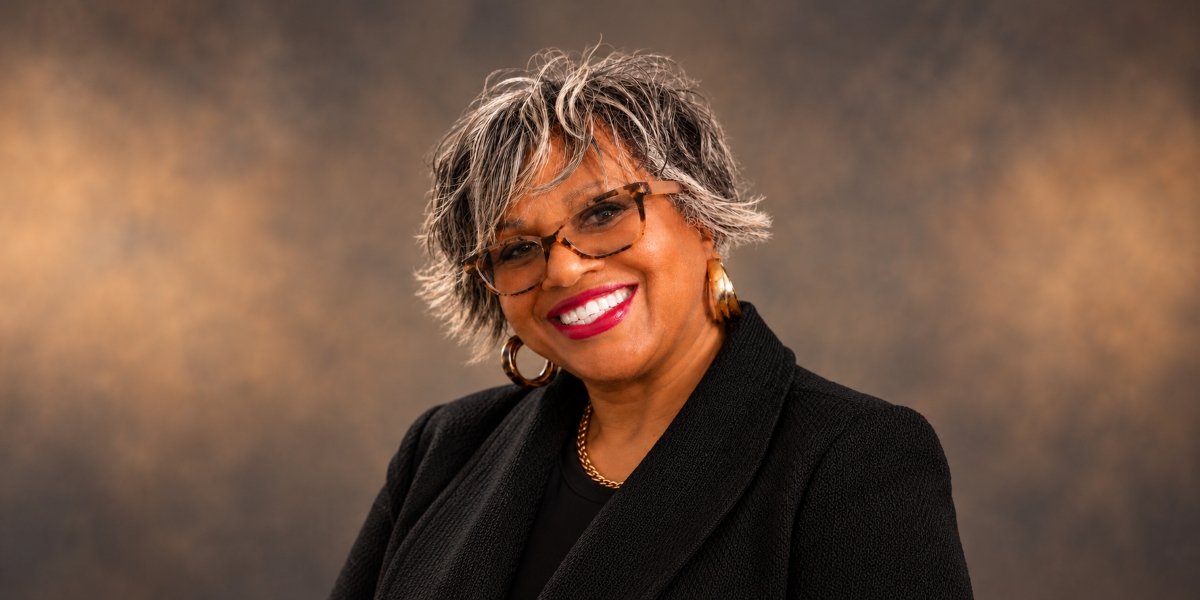
By: Lennard James

Some books are written to tell a story. Others are written to challenge the reader to look at their own. DeAnna Armstrong Brathwaite’s All for His Glory: Living Redeemed, Walking by Faith, and Reflecting God’s Glory takes the second approach. Rather than focusing only on what she has endured and overcome, Brathwaite turns the conversation toward a more personal question: What does your life say about your faith?

For Brathwaite, Christianity is not simply about believing in God during difficult moments. It is also about what happens when the prayer has been answered, the crisis has passed and another day has been given. What will you do with that day? How will you treat people? How will you use your gifts? What will your children and grandchildren learn from watching your life? Those questions give All for His Glory a perspective that moves beyond inspiration and into personal responsibility.

Brathwaite is a Christian author, evangelist and inspirational speaker whose work centers on faith, healing, identity and purpose. Her own experiences with brokenness and restoration have influenced her writing, but All for His Glory is not presented simply as a testimony about surviving pain. It is about learning how to live differently because of what God has brought you through. “God brought me out of the shadows, restored what pain tried to take, and reminded me who I am in Him but He was not finished with my story,” Brathwaite says.

That final thought changes the direction of the conversation. What if God is not finished with your story either?

The title itself provides three stages of spiritual growth: living redeemed, walking by faith and reflecting God’s glory. Each carries a different responsibility. Living redeemed means accepting that the past no longer deserves control over the future. Walking by faith requires moving forward even when there are unanswered questions. Reflecting God’s glory means allowing what you believe privately to become visible through the life you live publicly.

That last stage may be the most challenging. It is relatively easy to talk about faith when everything is going well. It is different to demonstrate faith through forgiveness, patience, service, compassion and perseverance. Brathwaite encourages readers to consider whether their relationship with God is changing the way they actually live.

Throughout the book, the message is the presence of God’s grace. Grace is not presented merely as something that comforts people during difficult seasons. It is also what makes another beginning possible. A person can make mistakes without becoming permanently defined by them. Someone can experience rejection without spending the remainder of life feeling rejected. A painful relationship can end without destroying the ability to love. A dream can be delayed without necessarily being dead.

For women especially, Brathwaite wants that message to become personal. Women can spend years fulfilling roles for everyone around them, mother, wife, daughter, caregiver, professional, friend, while gradually losing sight of the woman underneath all those responsibilities. All for His Glory creates space for the reader to ask who she is in God when the titles, expectations and opinions of others are removed.

That makes the book relevant not only to someone experiencing a crisis but also to the woman who appears to have everything together. She may be successful professionally and still question her purpose. She may care deeply for her family while privately feeling spiritually empty. She may have survived the hardest chapter of her life but still be afraid to turn the page.
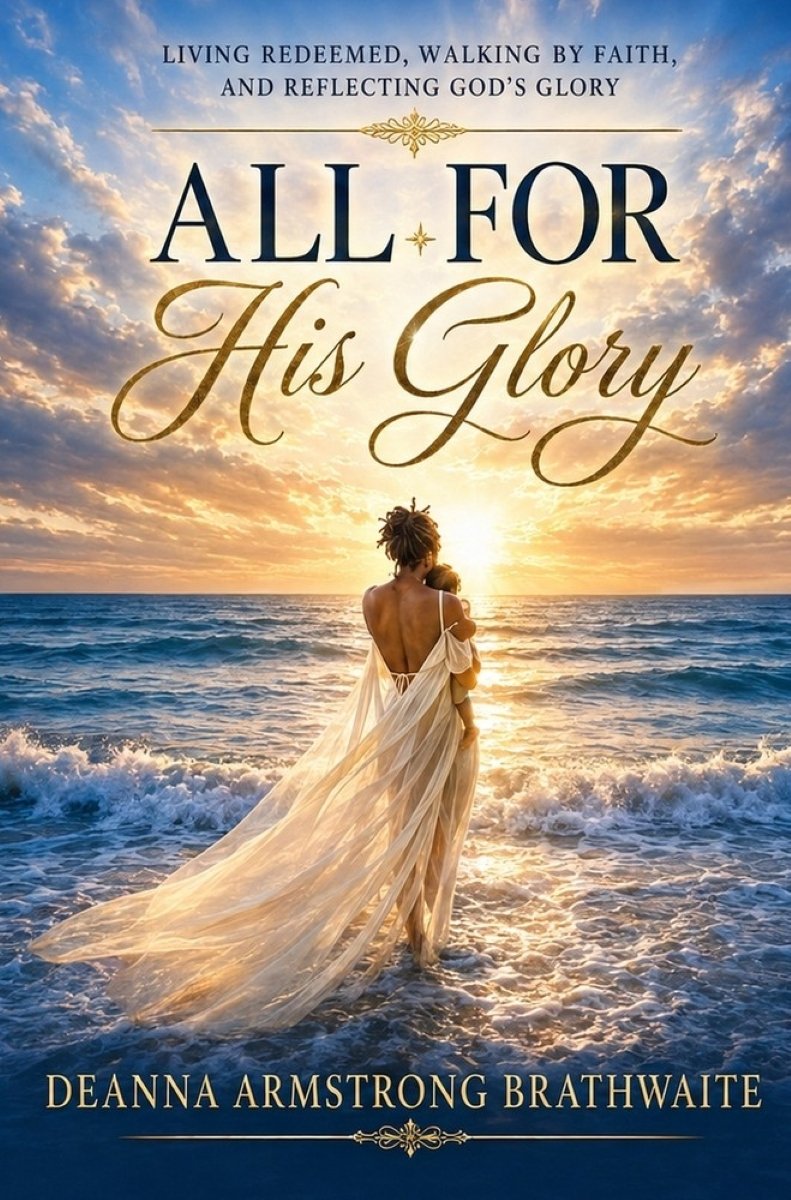
Photo Courtesy: DeAnna Armstrong Brathwaite

Brathwaite’s message is that there is more.

“My prayer is that readers will be stirred to know and trust Him, live for His glory, and share His good news with others,” she explains. That statement reveals that All for His Glory is ultimately about movement. The reader is encouraged to move from knowing about God toward trusting Him, from receiving grace toward extending it, and from possessing gifts toward actually using them.

The book also raises an important question about legacy. One day, people will remember more than what we owned, what titles we held or how successful we appeared. They will remember how we made them feel, what we taught them and what we demonstrated through our choices.

For Brathwaite, faith can become part of that inheritance.

A daughter who watches her mother rebuild after disappointment learns something about resilience. A granddaughter who hears how her grandmother trusted God during uncertainty receives something money cannot purchase. A family that witnesses forgiveness, generosity and perseverance receives a spiritual legacy that can continue long after one person’s lifetime.

That perspective makes All for His Glory particularly thought-provoking. The book encourages readers to stop asking only, “What do I want from God?” and begin asking, “What does God want to do through me?” That is a very different question.

Brathwaite summarizes her message with words that speak to people at virtually any stage of the journey: “You are not alone. There is hope. There is healing. There is purpose.”

Perhaps you have already survived your hardest season. Perhaps nothing is visibly wrong with your life, yet you know something is missing. Perhaps you have been blessed with another opportunity but have not decided what you will do with it.

All for His Glory invites you to explore those questions.

The book is not simply asking readers to look backward at what God has already done. It encourages them to look forward to and consider what their lives could become.

Because eventually the question changes from “How did I survive?”

It becomes something far more powerful:

“Now that God has given me another chapter, what will I do with it?”

DeAnna A Brathwaite- Author Website – Home

Will County Jury Awards $3.6M After 2020 Joliet Rear-End Crash

Will County, IL – A Will County jury has awarded more than $3.6 million to two people who were injured in a January 2020 rear-end collision in Joliet, resolving a case in which the insurer’s final pretrial offers totaled $50,000, according to McCreadyLaw Injury Attorneys.

The case stemmed from a low-speed collision in which the plaintiffs were traveling in a vehicle that was struck from behind. Although there was little to no visible damage to the at fault driver’s vehicle, both occupants later underwent surgery for injuries they attributed to the crash. One reported lower back pain, while the other reported shoulder pain.

During the trial, the defense disputed whether the impact could have caused the claimed injuries, trying to rely in part on the limited visible damage to the vehicle. The Will County jury ultimately found for the plaintiffs, awarding $925,523 to one and $2,685,957 to the other.

According to McCreadyLaw, State Farm’s final offers before trial were $5,000 for one plaintiff and $45,000 for the other, for a combined $50,000. The verdict exceeded those offers by more than $3.55 million. The firm expects the plaintiffs’ combined recovery to reach approximately $4.6 million after prejudgment interest.

“The difference between the insurance company’s $50,000 combined offer and the jury’s $3.6 million verdict shows why injured parties need attorneys who are willing to fight for them,” said Jess Jordan, an equity partner at McCreadyLaw. “We trusted the evidence, prepared the case, and gave our clients the opportunity to have their injuries and losses heard by a jury.”

Jordan tried the case alongside John D. Risvold, a partner at Collins Law Group, P.C. Jordan represents plaintiffs in injury and negligence cases and is licensed to practice in Illinois, Iowa and Arizona. Through trial, arbitration, mediation and settlement, Jordan has secured more than $85 million for clients.

For Will County residents, the verdict also illustrates how disputes following seemingly minor-looking collisions can ultimately become significant civil cases. The amount of visible vehicle damage was one of the issues contested at trial, while the jury ultimately considered the evidence presented regarding the plaintiffs’ injuries and losses.

McCreadyLaw was founded in 1999 and handles personal injury matters including car accidents, slip and fall incidents, wrongful death, premises liability, product liability and medical malpractice cases. The firm has 14 offices serving the greater Midwest.

What a Bad Legacy Costs Besides Money: Trust, Identity and the Family’s Shared Story

A poorly handled transition costs more than assets. A New Orleans tax attorney describes the harder-to-measure losses of a bad legacy, such as trust, identity and shared purpose, and how a coordinating structure with a plan for values can prevent them, with Illinois’s estimated $774,921 top 1% line and current national transfer data.

By Dr. Tamara Patzer

When families lose a business or an estate, the story told afterward is about dollars: how much was lost, to whom, because of what. The harder losses are rarely itemized. Siblings stop speaking. A story the family told about itself is replaced by a dispute. A grandchild learns the family name from a lawsuit. Chicago readers who run family companies may find a useful voice in Todd M. Villarrubia, a New Orleans attorney focused on tax and estate planning, who wrote Entrepreneurial B.E.A.S.T. Mode™ with those losses in mind. In his view, they are the strongest argument for treating legacy as a plan.

What does the book say a bad legacy does?

It describes the damage in terms that go past the balance sheet: “A bad legacy doesn’t just deplete wealth; it erodes the family’s identity, ultimately leaving them fighting over nothing but rubble.” The word rubble is deliberate. It suggests that what remains after a failed transition is not a smaller fortune but a ruin.

Whether or not a reader agrees with the framing, the pattern is familiar to anyone who has watched a family fight over an estate. The money is the occasion. The cause is usually older.

How large is the transfer ahead?

Large enough that more families will face the question. Cerulli Associates projects a $124 trillion generational transfer in the United States through 2048, including $105 trillion for heirs and $18 trillion for charity2. Illinois will see its share, and the state’s owners hold businesses, buildings and portfolios that will pass to the next generation.

The 2026 SmartAsset estimate for Illinois, a projection from IRS data that counts filers and not households, is $774,921 for the top 1%1. Families at many levels will need to decide how their wealth is passed on, and the costs of getting it wrong are not limited to the wealthiest.

What are the non-financial losses?

Four stand out.

  • Trust: heirs who feel excluded or deceived stop believing what they are told.
  • Identity: the family stops being the people who built something and becomes the people who fought about it.
  • Continuity: the values that held the family together are not passed on.
  • Time: years go into disputes that could have gone into work and relationships.

None of these appears on a tax return. All are visible to anyone who has lived through them.

Why do documents not prevent them?

Because documents settle ownership and leave out meaning. The book is blunt about it. In its words, “Succession planning ensures that wealth endures and, more importantly, doesn’t fracture your family after you’re gone.” The measure of success is not just that the assets pass, but that the family stays intact.

This is a modest ambition. It asks that the plan be judged by what happens to people. A plan that transfers every dollar correctly and leaves the family in pieces has failed.

What does a plan for values look like?

It starts with a conversation, not a form. The founder says what the family stands for, what the money is for and what the founder hopes the heirs will do. The heirs say what they hope and fear. The advisers listen. Someone writes it down.

The product might be a short family statement, a letter of wishes or a set of guiding principles tied to the governing documents. The document is less important than the discussion. The book treats the purpose behind a plan as its center: “The greatest risk to wealth isn’t taxes or markets, but forgetting why the plan exists.”

How does the family office help?

By making the conversation a recurring part of the family’s life. A coordinating structure, whether a full office or a lead adviser with a calendar, schedules the yearly meeting, keeps the family statement current and ensures that heirs hear the same message from the advisers. Without it, the plan relies on the founder’s memory and energy.

The federal estate picture adds a reminder that the legal side matters too. The IRS lists $15,000,000 per person as the 2026 basic exclusion amount3. Families whose estates approach that level have a financial reason to plan carefully, and every family has a human one.

What are the warning signs?

Silence about the plan. Heirs who learn of provisions from the lawyer after a death. Disagreement about the company that has never been aired. A founder who will not name a successor. Advisers who have never met the next generation. Any one of these is a reason to start.

What should an Illinois family do this year?

Hold a conversation about purpose, even if it is awkward. Write a page. Share it with the advisers. Ask the attorney whether the documents reflect it. Schedule the next conversation before leaving the room.

Do not wait for perfect words. A rough statement that is shared beats a polished one that stays in a drawer.

What does a good result sound like?

It sounds ordinary. Heirs who can describe, in a sentence, what the family stands for. Advisers who know one another. A founder who has said the hard things while there was still time. A good result does not mean the absence of disagreement. It means disagreement has a place to go and people who know how to listen.

What if the family is already divided?

Then bring in help. An attorney can recommend ways to structure agreements that account for differences. A neutral facilitator can help the conversation along. Division is not a reason to avoid planning. It is a reason to plan with care.

Common questions

Is this a legal matter or a family one? Both. The legal documents carry out the family’s choices.

What if the founder refuses to discuss it? Start with the advisers, who can raise the topic gently.

How long does the process take? Usually months, and then it becomes a yearly habit.

Sources

  1. SmartAsset, Income Needed to Be in the Top 1% in Every State (2026)
  2. NAPA-Net, Wealth Transfers Expected to Hit $124 Trillion Through 2048 (reporting Cerulli)
  3. Internal Revenue Service, What’s New: Estate and Gift Tax

About the author. Dr. Tamara Patzer is a publisher and former newspaper editor. She was on the staff of The Charlotte Sun when it was named a 2005 Pulitzer Prize finalist for its Hurricane Charley coverage.

About the source. Todd M. Villarrubia is an attorney with an LL.M. in Taxation and a Juris Doctorate. He is an Accredited Estate Planner, a Board Certified Expert in Estate Planning and Administration, and a Fiduciary Investment Advisor Representative. He is the author of Entrepreneurial B.E.A.S.T. Mode™. Wealth Planning Law Group, 101 W. Robert E. Lee Blvd., Ste 404, New Orleans, LA 70124. Phone: 504-982-8207; email: todd@lawealthplan.com; website: https://lawealthplan.com/?utm_source=newsanchored&utm_medium=chicago-journal&utm_campaign=family-office

Attorney advertising. Sponsored feature written on behalf of Todd M. Villarrubia. This article is general information, not legal or tax advice, and reading it does not create an attorney-client relationship. Results vary.