The Chicago Journal

Author Website Design Services Delivered by Author Path Publishers


You know you need a website, and you have probably opened a builder, chosen a template, and closed the tab again an hour later. The question that stops most authors is not which colours to pick but how much of the work lands on them. Good author website design services answer that plainly before any money changes hands: who writes the words, who supplies the images, who presses publish, and who fixes things in a year. Author Path Publishers runs website projects to a stated sequence, so your own part in it is clear from the start.

What Author Website Design Services Cover From Brief to Launch

A build begins with a conversation rather than a design. Your designer asks what you write, what you publish next, whether you speak or teach alongside your books, and what a visitor should do within thirty seconds of arriving. Those answers decide the structure, and structure decides the rest.

The next stage is a page map: which pages exist, what sits on each, and how a reader moves between them. It is agreed as a plain outline before anything is styled, because moving a page then costs a sentence and moving it after the build costs a day.

Design follows, usually a home page and one interior page shown for approval, with the rest built to match. Two review rounds are typical, one on the design and one on the assembled site with your real content in place. A launch checklist closes the project: links and forms tested, the site checked on a phone, and search engines allowed in.

What You Are Asked to Supply

Your author website designer cannot invent your material, so the project moves at the speed of what you send. Expect to provide your covers at full resolution, the title, subtitle, series order and formats of each book, and a working buy link for every retailer and edition you sell.

You will also need an author photograph you are happy to see everywhere, a short biography and a longer one, and any review quotes you hold, with their sources. A sample chapter or a set of book club questions enriches a book author website far more than extra design flourishes.

Two practical decisions are yours as well. Register the domain in your own name, and choose the email platform you intend to keep. Both are easier to settle at the start than migrated later.

How the Site Connects to Your Books and Your List

A site that looks handsome and sells nothing has usually been built without wiring. Each title needs its own page carrying the cover, the description, the formats available, and buttons that reach the right store for the reader’s country. Those links are checked again in launch week, when store addresses often change.

The mailing list connection matters just as much. Your signup form is embedded from your email platform so addresses arrive where you can use them, the welcome email is set to send automatically, and any free chapter or bonus is delivered by that platform rather than by you at your desk.

Sensible writer website design plans for growth. Speaking dates, a blog or a course page can be added later without a rebuild if the structure allows for them, and an author portfolio site holding articles, essays and ghostwritten work follows the same principle.

Handover, Training and Who Looks After It Later

Handover is where many projects quietly fail. Ask, before signing anything, who owns the domain, who holds the hosting account, and whose name is on the licences. The answer should always be yours. You should leave with every login, not a promise that someone else keeps them safe.

You should also receive a short walkthrough of the tasks you will actually repeat: adding a new book page, swapping a preorder button for buy links, posting an update, and changing your bio. Most authors want that much control and no more.

After that, choose a maintenance arrangement honestly. Some authors update everything themselves, some prefer a retainer covering updates, backups, and launch changes, and some send a list twice a year. Author Path Publishers supports any of the three, with support available around the clock when a launch is live.

Plan Your Website with Author Path Publishers

Your site is where every advert, interview and book listing eventually sends people, so it should be built once and built properly. The author website design services at Author Path Publishers cover the brief, the page map, the design, the build, the book and mailing list connections, testing, and a handover that leaves the accounts in your name. Pricing is confirmed before work begins, your unpublished material stays confidential, and you keep full rights to your books and royalties.
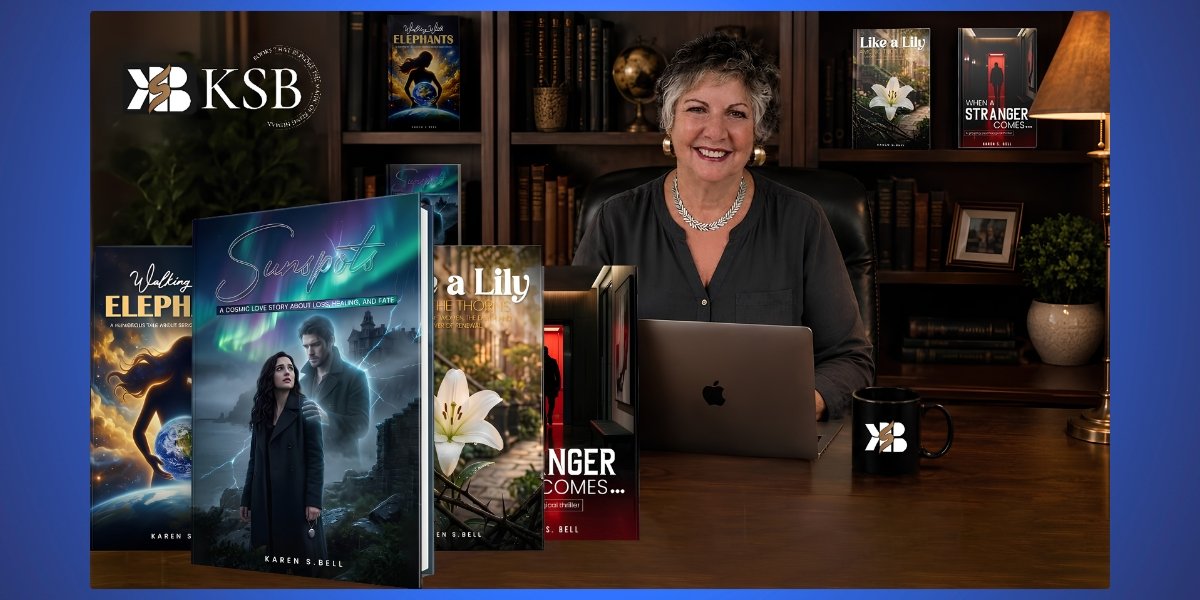

What Working Women Still Carry: Karen S. Bell on Career, Motherhood, and the Meaning Behind Walking with Elephants

Drawing from her own return to the workplace, Bell examines the pressures placed on working mothers, the competition women can face in professional spaces, and the value of creating systems built around cooperation rather than exhaustion.

When Karen S. Bell returned to the workplace after spending years raising her children, she expected professional life to bring a new sense of purpose. Instead, she encountered a culture that often felt strangely familiar. The competition, cliques, and tension among women reminded her of high school, except the stakes were now careers, advancement, income, and professional credibility.

That experience eventually became the foundation of Walking with Elephants, Bell’s first novel and one of her most direct examinations of women’s lives.

Bell had been fortunate enough to stay home while her children were young. When they grew older, she earned a master’s degree in mass communication and entered the workforce, expecting education and experience to help her build a meaningful career. She found capable women doing valuable work, especially in writing, editing, administration, and communication. She also noticed how easily professional environments could turn women into competitors.

Bell came to see that behavior within a larger structure. For many years, women had fewer opportunities to rise into senior positions, particularly in industries dominated by men. When advancement felt scarce, cooperation could become difficult. Women who shared many of the same pressures sometimes found themselves competing for the same limited space.

Her own position added another complication. She had entered professional life after raising children, while many younger colleagues had moved directly from college into their careers. Bell sometimes felt that her work was treated as less serious, as though returning to employment later in life meant she was working for extra money rather than pursuing something meaningful.

That perception stayed with her.

It also raised a larger question about how society measures ambition. A woman who spends years raising children may later enter the workplace with education, skill, and serious professional goals. Her earlier decision to focus on family does not erase those ambitions. Bell’s experience showed her how easily motherhood could still shape how a woman’s commitment was judged.

Walking with Elephants gave her a place to explore those contradictions with humor.

The title came from a documentary Bell watched about elephant herds. She learned that elephant society is matriarchal. Female elephants remain together in family groups, care for their young, protect one another, and follow the guidance of an experienced matriarch. Males eventually leave the herd after reaching maturity.

Bell was fascinated by the structure. She saw in it an image of female leadership centered on memory, protection, shared responsibility, and collective survival. That idea became the novel’s organizing metaphor.

The book asks what professional and social life might look like if women were given more authority to shape the systems around them. Bell approaches the idea with humor, yet the question underneath it is serious. Women have entered workplaces in enormous numbers, but many expectations around family life have changed much more slowly.

Bell understood that tension firsthand.

Working a full day did not remove the responsibilities waiting at home. Children still needed dinner. School schedules still mattered. Illness could interrupt the workday without warning. Household tasks remained. A project that required extra hours in the office could immediately collide with a family’s needs.

Bell remembers asking her husband to handle dinner when she needed to work late. He was supportive, although his version of handling dinner often meant ordering Chinese food. She tells the story with affection because it captures something familiar about the uneven ways domestic responsibility can be divided.

The larger question remains more difficult: when two parents both have demanding careers and a child becomes sick, who leaves work?

For generations of families, that responsibility has frequently fallen to the mother, even when her job carries equal professional importance.

Bell also remembers considering working for a magazine in Manhattan while living in New Jersey. For a writer, Manhattan represented an exciting professional opportunity. Then she considered the commute. If one of her children became sick at school, reaching home could take an hour or longer. The distance between career opportunity and family responsibility suddenly became very practical.

That experience helped shape Bell’s thinking about the way workplaces are designed.

In Walking with Elephants, she imagines systems where work and family life exist closer together. A parent with a demanding job should not necessarily have to choose between professional responsibility and being physically available to a child. Bell raises the possibility of schools, workplaces, and family services operating in closer proximity and with greater flexibility.

These ideas were written into fiction years ago, yet many of the questions remain familiar today.

Working arrangements have changed. Remote work, flexible scheduling, expanded childcare discussions, and changing expectations between partners have altered parts of professional life. The underlying pressure has not disappeared. Women still ask how much of themselves they can divide among career, caregiving, marriage, household management, personal ambition, and the desire for a life that includes room to breathe.

Bell’s contribution to that conversation comes from experience rather than theory alone. She lived through several stages of womanhood and employment. She raised children, returned to school, entered professional life, experienced workplace tension, and eventually turned those observations into fiction.

Her later novels expanded into grief, ambition, environmental responsibility, spirituality, and alternate realities, yet Walking with Elephants remains especially connected to the everyday structures of women’s lives. It began with a workplace observation and grew into a broader question: what could women build if cooperation carried more value than competition?

Bell has called writing a vocation. That distinction matters because Walking with Elephants grew out of something she genuinely wanted to understand.

The novel asks readers to look closely at the systems women move through every day and consider whether those systems support the lives people are actually living.

Years after Bell first asked the question, the elephant herd still offers a compelling image: experience shared across generations, responsibility carried together, and leadership grounded in the group’s strength.

City of Big Shoulders, Songs of Heavy Feelings: Cello’s Singing to Serpents Finds a Home in Chicago

By: Marcus Callahan

Chicago has never had much patience for phoniness. This is a city that can smell a manufactured personality from halfway across the Loop. Its musical history was built by people who meant what they played, from blues musicians working clubs on the South Side to the house pioneers who transformed warehouses into laboratories, and generations of rock, punk, gospel, jazz and hip-hop artists who understood that technique matters, but conviction matters more.

That makes Chicago fertile territory for Cello’s Singing to Serpents.

The nine-song LP is a restless examination of desire, resentment, spirituality, insecurity and the exhausting business of trying to understand yourself while simultaneously trying to be understood by somebody else. Cello doesn’t arrive pretending to possess answers. He brings questions, contradictions and emotional bruises.

Chicago listeners should appreciate the distinction.

Opening track “Stay Here” immediately establishes the album’s emotional temperature. There is longing in the song, but little romantic serenity. Cello takes the familiar desire for another person to remain and pushes it toward fixation. The repetition becomes important: “stay” stops sounding like a casual request and begins carrying the psychological weight of somebody terrified of what happens when the other person walks away.

Imagine it playing during a late-night ride down Lake Shore Drive, Lake Michigan disappearing into blackness on one side while the illuminated skyline hangs on the other. Chicago can look spectacular at night while remaining brutally cold.

“Stay Here” works similarly.

Beauty and discomfort coexist.

“Elevate” changes the posture. Cello reaches for confidence and ambition, but Singing to Serpents repeatedly demonstrates that swagger and insecurity aren’t opposites. Sometimes swagger is simply insecurity wearing a better jacket.

That tension becomes sharper on “Sucks to Be Used.” The song carries anger without pretending anger equals strength. Cello allows resentment to remain complicated. His narrator can be wounded without automatically becoming heroic, which gives the writing a refreshing lack of polish in the best possible sense.

Chicago music has always respected a little dirt beneath the fingernails.

Then come “Full Moon,” “So Long,” and “Cravings,” a stretch that pushes the album deeper into its nocturnal psychology. Desire becomes something simultaneously attractive and threatening. Relationships aren’t safe havens here; they’re places where ego, longing, sexuality, loneliness and fear collide.

It’s tempting to assign Cello a tidy genre, but Singing to Serpents resists that impulse. Alternative music, atmospheric pop, hip-hop cadences, singer-songwriter confession and spoken-word instincts all wander through the record.

Again, that makes sense in Chicago.

This is a city where musical cultures have spent generations talking across neighborhood and genre lines. Cello’s refusal to choose one identity feels less indecisive than instinctive. He follows the emotional requirements of the song instead of a marketing department’s preferred category.

His neurodivergence provides additional context for that approach. Cello is autistic and has ADHD, and he has increasingly spoken about those experiences as part of both his artistic identity and advocacy work. On Singing to Serpents, repetition, emotional intensity, and fixation often feel central to the architecture of the songs.

But autism and ADHD aren’t presented as novelties.

They’re part of the perspective.

That matters because Cello’s greatest accomplishment is making intensely individual experiences accessible without sanding away their specificity. A listener doesn’t need to be autistic to understand obsessive thinking. You don’t need ADHD to recognize a mind refusing to quiet down. You simply need to have spent one sleepless night replaying a conversation that ended six hours earlier.

Chicago provides plenty of appropriate places for that kind of thinking.

An empty CTA platform after midnight will do nicely.

The album’s most intriguing shift comes with “Pray” and “Faith.” After so much romantic and psychological turbulence, Cello turns toward spirituality. Yet he doesn’t suddenly become certain. Belief remains another complicated relationship.

That’s precisely why these songs succeed.

“Faith” isn’t a victory lap for somebody who has discovered every answer. It sounds more like someone reaching into darkness and hoping something reaches back.

There’s something profoundly human about that gesture.

Finally, “Sleeping” arrives not so much as a resolution as an exhale. After the emotional acceleration of everything preceding it, the closing track feels like the hour when the city finally quiets down, the bars have emptied, the trains carry fewer passengers, and morning is close enough to become imaginable.

Cello hasn’t defeated the serpents.

Maybe that’s the point.

The album title suggests confrontation, but Singing to Serpents isn’t about killing the creatures that frighten us. It’s about communicating with them. Anxiety, desire, ego, loneliness, self-doubt, and faith are allowed to speak.

Cello answers with songs.

Chicago understands artists who make beauty from uncomfortable material. Blues itself was built upon that proposition: pain transformed rather than denied.

Singing to Serpents belongs somewhere within that broader tradition, not because Cello is making Chicago blues, but because he understands its fundamental bargain.

Tell the truth.

Make something out of it.

And play it like you mean it.

Michael Beas Discusses What Every Author Needs to Know About Building a Brand

By: Michael Beas, CEO of Atlas Elite Publishing Partners

Publishing a book has never been the finish line.

For authors trying to build sustainable careers, getting a book into the marketplace is only the beginning. Once it is there, the larger challenge begins: giving readers a reason to notice it, remember it, and ultimately remember the person who wrote it.

That is where branding enters the equation.

The word “branding” can make authors uncomfortable. Writers generally enter publishing because they have something to say or a story they feel compelled to tell, not because they dreamed about developing marketing strategies, choosing website colors, or analyzing social media.

But an author brand is not a logo. It is not a color palette, a clever tagline, or the number of followers attached to an Instagram account.

Your brand is the expectation attached to your name.

When readers encounter your name, what do they expect? How would they describe you to someone else? What themes, ideas, emotions, or experiences do they associate with your work?

Authors who understand those questions have an enormous advantage because they stop marketing individual books and begin building something that can last across an entire career.

After years of working with authors and helping them position their books in an increasingly competitive marketplace, I believe there are several fundamental ideas every author should understand about building a recognizable brand.

Your Book Is a Product. You Are the Brand.

This distinction changes everything.

Authors understandably become intensely focused on the book directly in front of them. They may have spent two, five, or even 10 years writing it. For months surrounding publication, virtually every marketing decision revolves around that title.

But what happens when the launch is over?

If all of the attention, recognition, and marketing identity were attached exclusively to the book, the author can find themselves starting almost from zero when the next one arrives.

A strong author brand works differently.

The book introduces readers to the author, and the relationship continues after the final page.

Consider the authors whose books people buy simply because their names are on the covers. Readers may know very little about the new title, but they already have an expectation. The author’s name itself communicates something.

That level of recognition is built over time, but the process can begin with a first book.

An author should be able to answer a deceptively simple question:

What do I want people to associate with my name?

For a novelist, the answer might involve a particular emotional experience, genre, worldview, or style of storytelling. For a nonfiction author, it may be expertise, transformation, leadership, or a specific problem the author helps readers understand.

The answer should be bigger than the title of one book.

This becomes particularly important for authors who want their books to lead to other opportunities. Speaking engagements, media appearances, consulting, teaching, workshops, podcasts, and future books are connected to the author, not merely to a single publication.

A book can open a door.

A brand gives people a reason to keep that door open.

Consistency Builds Recognition Without Requiring Repetition

One of the most common branding mistakes is fragmentation.

An author’s website presents one identity. Their social media presents another. Their biography sounds as though it belongs to someone else entirely. Their book covers have no visual relationship to one another, and when they appear for an interview, they describe themselves differently again.

Individually, none of those things may be disastrous.

Collectively, they make the author harder to remember.

Branding works through accumulated recognition. Every time someone encounters you, through a book, article, podcast, social post, interview, event, website, or newsletter, they should receive another piece of the same larger story.

That does not mean authors need to say the same thing repeatedly.

Consistency is about having a recognizable center.

Your photographs can change. Your website can evolve. Your content can explore different subjects. Your books can even cross genres if there is a thoughtful strategy behind them.

But people should still be able to recognize you.

This matters even more in the digital environment because readers often encounter authors in fragments. Someone may first discover you through a short video. Another person may see an article with your name attached to it. Someone else may hear you on a podcast, see your book recommended online, or land on your website after a search.

You do not control which doorway they use.

You can control what they find when they enter.

That is why authors should look at their public presence as an interconnected ecosystem rather than a collection of unrelated marketing channels.

Does your author biography reinforce your positioning? Does your website immediately communicate who you are and what you write? Does your social presence feel connected to the person readers encounter in interviews? Does your book presentation support the audience you are trying to reach?

Brand recognition is rarely created by one spectacular marketing moment.

More often, it is created by dozens of smaller moments that reinforce one another.

The Strongest Author Brands Create Connection, Not Constant Promotion

Readers do not want to feel as though they are being sold something every time an author appears on their screen.

“Buy my book” is a call to action.

It is not a brand.

Authors sometimes mistake visibility for promotion and begin treating every post, interview, or interaction as another opportunity to sell. The result can be an audience that knows the title of the book without ever feeling that it knows, or cares about, the author behind it.

The stronger approach is to give people reasons to engage with you even when they are not buying a book.

Share ideas. Tell stories. Talk about the subjects that inform your work. Give readers a glimpse behind the curtain. Participate in conversations connected to your expertise or genre. Celebrate other writers. Let people understand why you write what you write.

For nonfiction authors in particular, this may mean becoming a trusted voice around the issue at the center of the book. For novelists, it may mean allowing readers into the themes, inspirations, worlds, and creative personality behind their fiction.

The objective is not to manufacture intimacy or turn every aspect of your private life into content.

Authenticity does not require overexposure.

It requires alignment.

The person readers encounter publicly should feel connected to the voice, values, and experience represented by the work.

When that happens, something important changes.

Readers stop merely following a book and begin following an author.

That relationship is what allows an audience to travel with a writer from one release to the next.

Branding Is a Long Game

There is a natural temptation in publishing to concentrate on immediate results: launch week, rankings, reviews, sales numbers, and media placements.

Those things matter.

But an author’s career is larger than any single week and, ideally, larger than any single book.

The most valuable question may therefore not be, “How do I sell this book?”

It may be:

“What am I building around this book that will still have value when I publish the next one?”

That is the real power of author branding.

Know what your name represents. Present it consistently. Build genuine connections with the people most likely to care about your work.

Do those things well, and marketing stops being a series of disconnected campaigns.

It becomes momentum.

And in publishing, momentum is one of the most valuable things an author can build.

Michael Beas is the CEO of Atlas Elite Publishing Partners. His work focuses on publishing, author visibility, branding, and helping writers position their books in an increasingly competitive marketplace.

Chicago Records First West Nile Virus Death of 2026 as Heavy Rainfall Fuels Mosquito Breeding Across the City

The Chicago Department of Public Health confirmed the first death from West Nile virus in Illinois this year on September 1, alongside the city’s first two confirmed human cases of the mosquito-borne disease. CDPH did not release identifying details about the person who died. The announcement follows one of the wettest summers Chicago has recorded in years, a weather pattern that public health officials say has created widespread conditions for mosquito breeding across all five sides of the city.

Key Takeaways

  • One person in Chicago has died from West Nile virus, the first fatality in Illinois in 2026; CDPH also confirmed the city’s first two human cases
  • Midway Airport recorded more than 20 inches of rainfall between June 1 and early August, well above the roughly 13-inch average for that period
  • CDPH has sprayed insecticide across 15 community areas over recent weeks and treats more than 80,000 catch basins citywide with larvicide
  • Cook County’s Department of Public Health reported the season’s first four suburban cases the previous week; a Piatt County resident was the state’s first confirmed case
  • Illinois reported 150 human cases and 10 deaths from West Nile virus in 2025
  • The CDC has recorded 407 human cases across 40 states nationally so far in 2026, including 285 neuroinvasive cases

Record Summer Rainfall Has Expanded Mosquito Habitat Across Chicago

CDPH Commissioner Dr. Garth Walker tied the timing and severity of this year’s West Nile cases directly to weather conditions. Chicago’s Southwest Side gauge at Midway Airport logged more than 20 inches of rainfall between June 1 and early August. The typical accumulation for that same period is approximately 13 inches. The surplus has left standing water in catch basins, residential yards, construction sites, vacant lots, and drainage-poor corridors across the city, creating the stagnant conditions that Culex mosquitoes, the primary carriers of West Nile virus, require to breed.

The rainfall data tracks with what Chicago residents have been experiencing at street level. WTTW reported on August 31 that Chicagoans are seeing increased mosquito and tick activity this summer in connection with the persistent storms. The convergence of above-average precipitation and sustained warm overnight temperatures through August has extended the window in which mosquito populations can reproduce. Public health officials have noted that nighttime temperatures remaining elevated means the breeding cycle has not yet been interrupted by the kind of cool-down that typically slows mosquito activity heading into fall.

The City Has Sprayed Insecticide Across 15 Community Areas

In the weeks leading up to the September 1 announcement, CDPH deployed insecticide spraying operations targeting adult mosquito populations in 15 community areas. The affected neighborhoods span much of the South and West Sides, along with one Far Northwest Side community area. Spraying has been conducted in Beverly, Burnside, Chatham, East Garfield Park, Lower West Side, Morgan Park, Near West Side, North Lawndale, O’Hare, Pullman, Roseland, South Deering, Washington Heights, West Lawn, and West Pullman.

The city’s mosquito control program also operates a larvicide treatment system that covers more than 80,000 catch basins across Chicago. Larvicide targets immature mosquitoes before they reach the adult stage, reducing the overall population in areas where standing water collects in storm drains and street-level infrastructure. The dual approach of larvicide treatment and targeted adult spraying reflects a strategy designed to address both the breeding pipeline and the active mosquito population simultaneously.

West Nile Virus Cases Are Emerging Across the Region and the Country

Chicago’s cases are part of a broader pattern. The Cook County Department of Public Health reported the season’s first four human cases in suburban Cook County the week before the city’s announcement. A Piatt County resident, located in central Illinois, was confirmed as the state’s first human case of the year before the Chicago cases were identified.

Nationally, the Centers for Disease Control and Prevention had recorded 407 human cases of West Nile virus across 40 states as of the September 1 reporting period. Of those, 285 were classified as neuroinvasive, meaning the virus had affected the brain or spinal cord. More than 130 deaths had been reported nationally.

Illinois has historically been among the states with higher West Nile virus activity. In 2025, the state recorded 150 human cases and 10 deaths. The 2026 season started later than last year’s but is now accelerating as mosquito populations remain elevated heading into the weeks before the first hard frost, which typically arrives in Chicago in mid to late October.

Most Infections Produce No Symptoms, but Severe Cases Can Be Fatal

West Nile virus is transmitted to humans through the bite of an infected mosquito. The disease does not spread from person to person. According to the CDC, approximately 80% of people infected with the virus experience no symptoms at all. About one in five develop a fever and flu-like symptoms, including headache, body aches, joint pain, vomiting, diarrhea, or rash, typically appearing three to 15 days after infection.

In rare cases, the virus causes severe neuroinvasive illness. Symptoms of severe infection include high fever, stiff neck, disorientation, muscle weakness, tremors, and inflammation of the brain. These cases can result in permanent neurological damage or death. Older adults, individuals with chronic medical conditions, and immunocompromised persons face the highest risk of developing severe illness.

Illinois Department of Public Health Director Dr. Sameer Vohra described the year’s first death as a reminder that West Nile virus should be taken seriously, particularly by people in higher-risk categories. There are no specific antiviral medications or vaccines available to treat or prevent West Nile virus in humans. Prevention remains entirely focused on reducing exposure to mosquito bites.

Public Health Officials Are Urging Chicagoans to Take Precautions Through the Fall

CDPH is advising Chicago residents to take protective measures that target both personal exposure and the conditions that allow mosquitoes to breed near homes. The department’s recommendations include wearing long sleeves and pants during peak mosquito hours around dusk and dawn, applying EPA-approved insect repellent, ensuring that window and door screens are intact, and eliminating standing water from containers around the home, including flowerpots, gutters, pet dishes, and birdbaths.

Residents can report areas of stagnant water where mosquitoes may be breeding to 311 or the Chicago Department of Public Health. The city’s mosquito surveillance and control operations will continue through the fall until sustained cold weather ends the breeding season. Historically, West Nile virus transmission in the Chicago area does not subside until the first hard frost kills off the adult mosquito population, a threshold that typically falls in the second half of October.

Financial Infidelity in Marriage and Hidden Debt Before the Secret Comes Out

By: Audrey Denise B. Cachuela

A spouse opens a credit card statement that was never meant for their eyes. The number doesn’t match what they were told. That’s financial infidelity in practice, and it happens more often than most couples want to admit. It’s the act of hiding money, debt, or spending from a partner who would reasonably expect to know about it. Sometimes it reshapes a marriage for years before anyone actually says the word “secret.”

Amber Duncan, founder of Life After Debt, has worked with hundreds of people carrying debt they haven’t told a spouse about. Over time, she’s noticed something researchers are only now starting to write papers about: the debt itself usually isn’t the hard part. The hiding is.

Financial Infidelity In Marriage Is More Common Than Most Couples Realize

Most people assume hidden debt is rare. A handful of troubled relationships, maybe, but not something that touches their own life. The numbers say otherwise. Forty percent of U.S. adults who are married, in a civil partnership, or living with a romantic partner said they had committed or were currently committing financial infidelity against their current partner (Source: Bankrate, 2025).

That figure isn’t one vague category. Break it down, and you get specifics: 33 percent had spent more than their partner would be comfortable with, 23 percent had kept secret debt, 17 percent had hidden a credit card (Source: Bankrate, 2025). Any one of those numbers on its own looks manageable. Stack them together, and you get a pattern that cuts across a huge share of committed relationships, income level, and personal responsibility aside.

Separate finances muddy things further. An open arrangement and a hidden one can look exactly alike from the outside. Sixty-two percent of people in committed relationships keep at least some money separate from their partner, and most of them do it openly, no deception involved (Source: Bankrate, 2025). The line gets crossed somewhere else entirely, when one partner starts making financial decisions the other has no way of knowing about.

That distinction is worth sitting with, because it’s really what makes financial infidelity damaging in the first place. Not the separate account. Not the private purchase. The distance between what one partner believes about the household’s finances and what’s actually true.

Recent research treats that distance as something that happens between two people, not a behavior that belongs to one of them alone. Couples where one partner hid financial information far more than the other were more likely to have individualized financial goals instead of shared ones. That imbalance predicted lower financial well-being and lower relationship satisfaction for the couple (Source: International Journal of Research in Marketing, 2026).

Sit with that for a second and the real issue comes into focus. A household can’t build toward one financial future while one partner is steering decisions based on information the other has never seen. Savings, housing, retirement, the next big purchase, all of it gets decided on two different sets of facts, even though only one couple has to live with what happens next.

Why Financial Secrets In Relationships Stay Hidden Longer Than They Should

People rarely hide debt because they set out to deceive their spouse for years. Most start hiding because they’re scared of what happens the moment the truth comes out.

Forty-five percent of Americans in committed relationships say they don’t know everything about their partner’s finances (Source: Bankrate, 2026). Among those not sharing financial information, 15 percent said they simply didn’t want their partner to know. Fourteen percent said they’d feel embarrassed if their partner found out (Source: Bankrate, 2026).

That embarrassment compounds. Someone falls behind, tells themselves they’ll fix it quietly on their own, and stays silent while the problem gets big enough that the eventual conversation feels impossible. A manageable balance turns into a number too big to explain. The bigger it gets, the stronger the case for waiting just a little longer.

Financial stress makes that silence worse at the exact moment honesty matters most. Across eight studies involving 8,474 participants, people experiencing higher financial stress were less likely to talk with their partner about money, largely because they expected the conversation to spark more conflict. Willingness to communicate went up when people saw the problem as something they could actually solve (Source: Journal of Consumer Psychology, 2024). Debt stops feeling like a shared problem and starts feeling like a confession waiting to happen. So the conversation keeps getting pushed back.

That avoidance cycle also explains why there’s no clean disclosure timeline. It would be convenient if research pointed to a typical window, six months, a year, before financial secrets in relationships surface on their own. No credible study backs a claim that specific. What the evidence does show is more useful anyway: the longer information stays hidden, the more the relationship pays for that silence.

A longitudinal study following 124 couples over a month found that participants who hid more financial information reported lower relationship satisfaction by the end of the study. Financial harmony declined for couples where a partner hid more information or engaged in more financial snooping (Source: Journal of Family and Economic Issues, 2024). The length of the secret matters less than how many decisions got made while it stayed buried.

How Financial Secrets Affect A Marriage, And How To Rebuild Trust After Financial Infidelity

Financial trust in marriage rests on something couples rarely say out loud, that both people have the information they need to make decisions together. Financial infidelity breaks that assumption, often long before either partner names what’s happening.

Forty-three percent of U.S. adults said keeping financial secrets from a partner is at least as bad as physical infidelity. That includes 38 percent who consider the two equally serious and 5 percent who consider financial secrecy worse (Source: Bankrate, 2026). The comparison shows how directly people connect money and trust, even if not every unreported purchase carries the weight of an affair.

Once hidden debt surfaces, a partner is usually absorbing two discoveries at once. There’s the number itself: the balance, the missed payments, the account nobody knew existed. Then there’s the second, quieter realization that past conversations and plans happened without the full picture. That second discovery tends to be the one that sticks around, because it calls into question every financial decision the couple made while the secret was still in place.

What to do when a spouse hides debt is a different question from how the debt happened, and it’s the question that actually determines what comes next. Rebuilding trust after financial infidelity takes more than a commitment to honesty going forward. It starts with both partners working from the same version of the financial facts: the debts, the accounts, the required payments, the income, the recurring costs that shape the household. The real work happens after the confession. That’s where the distance closes, when two separate financial realities finally become one.

From there, the couple has to agree on what transparency actually looks like. Some move to joint accounts. Others keep things separate but set clear disclosure thresholds and shared goals. The structure matters less than whether it’s specific enough that nobody can drift back into old habits without noticing.

Communication skills play a bigger role here than most people expect. Weaker communication skills were linked to more favorable attitudes toward both hiding financial information and covertly checking up on a partner’s finances. Greater secrecy tracked with worse outcomes overall (Source: Journal of Family and Economic Issues, 2024). Regular, low-stakes check-ins about money give both partners somewhere to raise a concern before it turns into something hidden again.

Start With The Full Number

Financial infidelity does its damage well before either partner says the word out loud. The partner who doesn’t know the real number can’t plan around it. The partner who does know is usually carrying the debt and the fear of disclosure at the same time, while the relationship runs on incomplete information underneath it all.

Once both partners have the same number, decisions that were made on incomplete information can actually get revisited together. Budgeting. The order debts get paid down. The timeline for shared goals. All of it changes once it’s based on one version of reality instead of two.

Getting to that starting point doesn’t require having every answer figured out first. It requires an honest accounting of where things stand, even if the plan for fixing it comes together later. Separate the act of disclosure from the pressure of arriving with a perfect solution, and the conversation starts to feel less like a confession and more like the first step of something.

What to do when your spouse hides debt, or when you’re the one holding the secret, comes down to the same move either way: get an honest, complete picture of the numbers before deciding what happens next. Financial infidelity doesn’t shrink by staying hidden. It starts changing the moment the truth is finally on the table for both people to see.

Amber Duncan, founder of Life After Debt, offers a free 15-minute Clarity Call for anyone who wants a straightforward starting point for that conversation.

Disclaimer: The information provided in this article is for general informational purposes only and is not intended as legal, financial, or professional advice. While we strive for accuracy, we make no representations or warranties, express or implied, about the completeness, accuracy, reliability, suitability, or availability of this information. Use of this information is at your own risk.