The Chicago Journal

Chicago’s 1901 Project Seeks $55M Tax Break — What It Means for the West Side

Mayor Brandon Johnson has thrown his weight behind a $54.7 million property tax incentive to kick off the most ambitious private development project Chicago’s Near West Side has seen in a generation — and the debate over who pays for it is already beginning.

The project in question is the 1901 Project, a sweeping $7 billion redevelopment plan from the ownership families behind the Chicago Bulls and Blackhawks. Named for the United Center’s address at 1901 W. Madison St., it envisions transforming more than 50 acres of surface parking that ring the arena into a dense, mixed-use neighborhood — one that would reshape the Near West Side in ways that haven’t been seen since the United Center itself was built more than 30 years ago.

What Mayor Johnson Proposed

Johnson introduced the estimated $54.7 million in property tax incentives to the City Council on March 18. The Cook County Class 7(b) designation would reduce the property’s assessment level from 25% to 10% for a decade, with gradual step-ups through year 12.

The incentive targets the first phase of the project, planned for approximately 12.3 acres of surface parking located south and west of the stadium along Damen Avenue and Adams Street. That initial phase consists of a 6,000-seat music hall, retail and restaurant space, a hotel, parking garages, and green space — totaling 800,000 square feet of new development.

At a City Hall news conference Tuesday, Johnson defended the proposal directly. “This is a project that is going to create thousands of jobs and opportunities for the people across the city, but particularly for development on the West Side,” he said.

The Economic Case for the Incentive

The administration is making a specific fiscal argument: the tax break does not represent a net loss to Chicago’s coffers. Over the same 12-year term as the incentive, the planned improvements would generate a net increase of $46.3 million in tax revenue compared to current levels — meaning the development of 800,000 square feet of commercial and entertainment space would ultimately contribute more to the city’s tax base than the parking lots sitting on that land today.

The first phase alone is projected to create nearly 2,000 construction jobs, 600 permanent jobs, and 180 part-time positions. For the Near West Side — a corridor that has seen long stretches of disinvestment despite its proximity to one of the country’s most iconic sports venues — those numbers carry real community weight.

Chicago’s Department of Planning and Development reviewed the 1901 Project and found it met the requirements for Class 7(b) classification. A department spokesperson said: “DPD reviewed a comparative financial analysis with and without the 7(b), and phase one would not proceed as planned without the incentive due to market conditions, elevated interest rates and private capital return requirements for new and unproven entertainment facilities.”

The Broader Vision

The first phase is only the beginning. The broader $7 billion 1901 Project would ultimately transform more than 50 acres around the United Center into a dense mixed-use district, including as many as 9,463 residential units.

In addition to the music hall and hotel anchoring the initial phase, subsequent phases envision a public plaza, athletic courts, green corridors, and acres of open space designed to stitch the arena complex into the surrounding neighborhood rather than continue its current existence as an island surrounded by parking. Discussions between the United Center’s owners — the Wirtz and Reinsdorf families — and the city are also ongoing regarding potential public funding for a new CTA Pink Line station near the United Center, which would significantly improve transit access to the development.

For local Alderman Walter Burnett, the project represents an inflection point for a community long left waiting. “The 1901 project is a true catalyst for growth on the Near West Side and beyond,” Burnett said in a statement. “I firmly believe we should support those who are willing to step up, invest, and inspire positive change in communities that have too often been overlooked.”

The Critics’ Question

Not everyone is ready to celebrate uncritically. The proposal has surfaced a tension that Chicago development debates reliably produce: the gap between a project’s public-facing framing and the public tools it quietly requires to get off the ground.

The 1901 Project has been widely described as “privately funded” since it sailed through zoning last year without opposition. The new tax break request exposes a reliance on public tools early in the development timeline, even as other major projects — including the Bally’s casino — failed to secure similar tax treatment.

Critics have also raised concerns about the project’s potential impact on Chicago’s broader fiscal ecosystem. The city and its public schools are already navigating persistent financial pressure, and diverting property tax revenue — even with a net-positive argument — draws scrutiny in that context. Plans for a nearby CTA Pink Line station remain in flux, and the project’s future phases could hinge on additional public investment beyond the current tax incentive.

What Comes Next

The proposal is expected to go before the full Chicago City Council as soon as next month. Given that the broader 1901 Project zoning passed unanimously in 2025, the City Council is widely expected to approve the incentive — though the debate leading up to that vote may surface deeper questions about the mechanics of large-scale development on Chicago’s West Side and who ultimately shoulders the cost of transformation.

For residents of neighborhoods like East Garfield Park, North Lawndale, and the Near West Side who have watched the United Center operate as a self-contained destination for three decades without generating significant spillover development in their communities, the 1901 Project represents something that has been long-promised but never delivered: a sustained investment in the blocks beyond the arena’s walls.

Whether a $55 million tax concession is the right mechanism to unlock that investment — or simply the first in a longer line of public subsidies behind a project the city’s wealthiest sports owners have positioned as self-sustaining — is the question that Chicago’s neighborhoods, watchdog groups, and aldermen will be weighing in the weeks ahead.

Disclaimer: This article is intended for informational purposes only and does not constitute financial, investment, tax, or legal advice. The figures and projections cited — including job creation estimates, tax revenue forecasts, and incentive valuations — are sourced from official City of Chicago press releases, public City Council filings, and reporting by the Chicago Sun-Times and WTTW Chicago. Projections are subject to change based on market conditions, legislative outcomes, and project timelines. The Chicago Journal does not endorse or oppose any development project, public incentive program, or policy position referenced herein. Readers seeking guidance on tax policy, real estate development, or municipal finance should consult a qualified professional.

The Sound of Resilience Behind Marcus Jordan’s Gospel Journey

By: Ethan Lee

The gospel music industry is witnessing a powerful shift as independent artists break through traditional barriers to reach global audiences. For many listeners, the challenge lies in finding music that feels both professionally polished and spiritually authentic. In an era of manufactured sounds, there is a growing hunger for artists who possess a genuine connection to their community and a message that transcends the airwaves.

Marcus Jordan, the 2026 Recording Artist of the Year and Pastor of Praise City Family Church, brings that authenticity to gospel music in a way few artists can. With a career spanning from the police force to the pulpit, Jordan has bridged the gap between traditional worship and contemporary gospel-pop, culminating in his latest hit single, “Thank You.” His journey from a seven-year-old piano prodigy in Houston’s 5th Ward to an award-winning artist is one built on faith, persistence, and genuine connection to community.

How Does Winning Recording Artist of the Year Validate an Independent Journey?

Q: You recently took home the 2026 Recording Artist of the Year award; how does this specific recognition validate your journey as an independent artist from Houston?

Marcus Jordan: Winning this award reminds me that when I keep the message first and give my very best to serve God, He honors that commitment. Matthew 6:33 says He’ll add things to your life, and I’m seeing that unfold in real time. It’s a humbling and powerful feeling to know that my contribution to the gospel industry is being recognized. As an independent artist from Houston, it affirms that staying authentic, staying faithful, and staying the course truly pays off.

What Role Has Humility Played in Shaping Marcus Jordan’s Ministry?

Q: Your mother taught you the importance of “blending into the background” at a young age; how has that humility helped you navigate your rise to the forefront of the gospel industry?

Marcus Jordan: Growing up, my mother’s teachings grounded me before I ever knew where music would take me. “Blend into the background” was about understanding the power of humility, the value of community, and the beauty of serving before you lead.

In the gospel world, your gift might put you on the stage, but your character is what keeps you there. Learning to support others, to harmonize instead of always needing the mic, taught me discipline and deep respect for the craft. Perfecting my voice and my approach took years of standing behind someone else, listening more than I spoke, and letting the ministry, not the spotlight, shape me.

Now, as God continues to elevate my platform, I’m able to lead with confidence because I spent so much time faithfully following. I never want to lose that posture. Staying grounded keeps me relatable, keeps me teachable, and keeps my focus right where it belongs, on using this gift to serve people and inspire them, the same way others poured into me.

How Do Law Enforcement and Pastoral Leadership Shape His Songwriting?

Q: From serving as a police officer to leading a congregation as a Pastor, how do these diverse roles influence the stories you tell through your songwriting?

Marcus Jordan: Stepping into both law enforcement and pastoral leadership has given me a front-row seat to people’s real, everyday struggles. In both roles, you quickly learn that titles don’t matter, but relationships do. Whether I was in uniform or standing behind the pulpit, the heart of the work was the same: serving people with honesty, compassion, and consistency.

Those experiences taught me how powerful genuine connection can be. I have family, friends, and a community I deeply care about, so I try to treat everyone the way I’d want someone to treat them. That mindset shows up in my songwriting. Every lyric is rooted in humanity, in community, in the desire to uplift people right where they are.

My music is a reflection of all those moments, protecting, comforting, praying, listening. Those roles have been pivotal in shaping the way I see the world and the way I share my heart through every song.

What Does “I Can” Teach About Divine Timing?

Q: Your single “I Can” was written years ago but hit #1 on the Billboard Gospel Airplay chart much later. What does that journey teach other aspiring artists about divine timing?

Marcus Jordan: It shows that you should never give up on your dreams. A song I wrote more than twenty years ago reached number one over two decades later. I always believed in the song, and I refused to give up on it. I’m so glad I held onto that belief. Today, it’s a Billboard #1 record, and I’m grateful. My journey with “I Can” is proof that when God breathes on something, it doesn’t matter how much time passes, its moment will still come.

What Can Listeners Expect from the Album “Praise to You”?

Q: With your upcoming album “Praise to You” generating significant buzz, what specific message or “atmosphere” are you hoping to create for your listeners this time around?

Marcus Jordan: My heart for Praise to You is simple: I want this album to be a space where people feel God’s presence, God’s power, and God’s encouragement. I’m praying it becomes a soundtrack that lifts people out of doubt, reminds them to trust God fully, and inspires them to increase their faith in every area of their life.

I want listeners to know that giving your life to Jesus Christ is a journey filled with grace, growth, and purpose. If these songs can push someone to believe again, dream again, or hold on when life gets heavy, then I’ve done what God called me to do with this project.

At its core, Praise to You is about hope. It’s about worship. It’s about reminding people that no matter what they’re facing, God is still worthy of praise, and He’s still working behind the scenes. My prayer is that every track plants a seed of strength and faith in someone’s heart.

What Advice Does Marcus Jordan Have for Those Told Their Dreams Are Impossible?

Q: You have reached over a million streams and shared stages with gospel icons; looking back at your roots in the 5th Ward, what is the most important piece of advice for someone told their dreams are impossible?

Marcus Jordan: Coming from 5th Ward of Houston, TX, I know what it feels like to be told your dreams are too big, too farfetched, or meant for somebody else. But the truth is, if God planted that dream in you, He also gave you everything you need to see it come to pass. My biggest advice is this: trust God. He’ll manifest what others said was impossible.

The feeling of seeing your dreams come alive, little by little, is indescribable. It’s confirmation. It’s God showing you that your background doesn’t limit your future, and your starting point doesn’t define your destiny. If He can elevate a kid from the 5th Ward to stages I once only dreamed about, He can do the same, and more, for anyone willing to believe.

The insights shared by Marcus Jordan reflect a career shaped by faith, patience, and a deep connection to the people around him. His transition from a background musician for artists like Solange Knowles to a chart-topping solo artist shows what can happen when ministry remains at the center of an artist’s work, regardless of the platform.

Looking ahead, Marcus Jordan’s ministry and musical career continue to expand within the gospel genre. As he prepares to tour and share his new album, “Praise to You,” his path as an independent artist shows what persistence and an unwavering commitment to faith can accomplish on the global stage.

To learn more visit www.marcusjordanmusic.com

Chicago’s Office Return Rate Lagging Behind National Recovery Trends

The pandemic reshaped the way people work, and while many cities have seen a significant rebound in office occupancy, Chicago’s office return rate is still trailing behind the national recovery trends. According to recent data, Chicago’s return-to-office rate sits at just 34.5%, well below the national average of 47%. This discrepancy highlights the challenges the city’s business and real estate sectors are facing as they work to bring employees back to the office post-pandemic.

Chicago’s Slow Office Comeback

In cities across the U.S., office return rates have been steadily increasing as companies adjust to a new normal. Cities like New York and San Francisco have seen return-to-office rates jump past 40%, while Chicago continues to struggle with a recovery rate of just over 30%. This lag is even more noticeable when compared to other major markets like Houston and Atlanta, where office occupancy has nearly reached pre-pandemic levels.

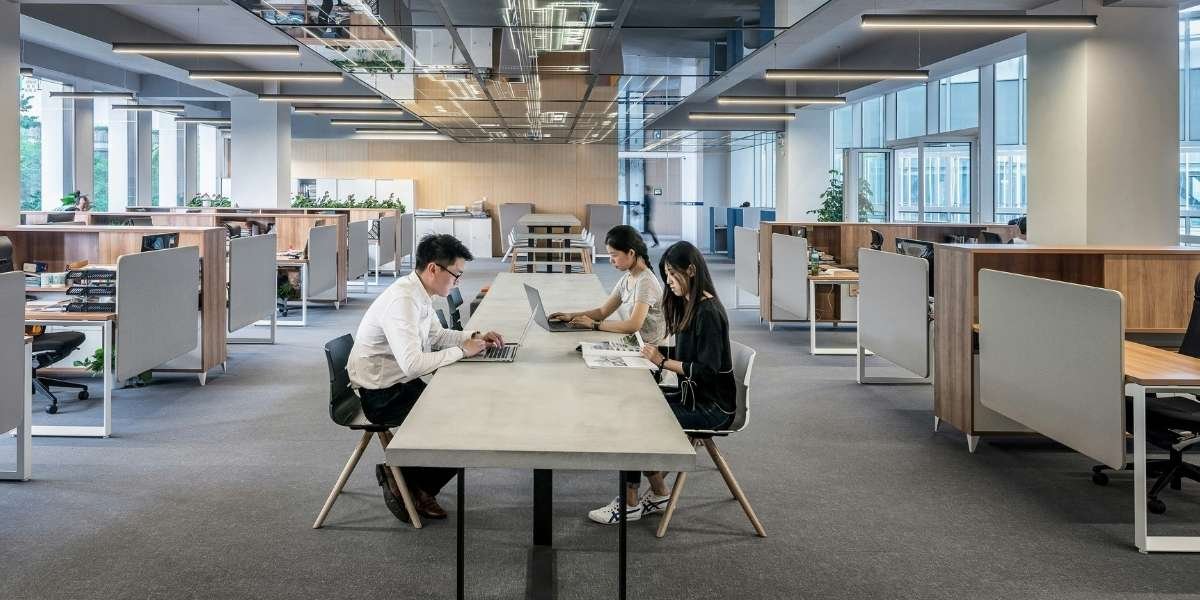
Chicago's Office Return Rate Lagging Behind National Recovery Trends

Photo Credit: Unsplash.com

Why is Chicago trailing behind? The city’s business landscape is uniquely shaped by industries that have been slower to return to office life. Many large Chicago firms in sectors like law, finance, and consulting have embraced hybrid work models, allowing employees to work remotely for a few days a week. For these sectors, remote work remains a viable option, and many employees have expressed reluctance to return to the office full-time.

The Hybrid Work Model Gains Ground

One of the main reasons for Chicago’s lagging office return rate is the widespread adoption of the hybrid work model. Unlike pre-pandemic times, when office work was the default, Chicago-based companies have found that hybrid arrangements not only benefit employees but also lead to cost savings. With many employees opting to work remotely for part of the week, businesses have rethought their need for large office spaces.

Many office buildings in Chicago are now seeing fewer tenants. For example, the Merchandise Mart, a landmark in the city’s tech hub, remains 20% vacant. This shift has forced landlords and building owners to rethink how to attract businesses back to office spaces. The hybrid model, while offering flexibility for workers, has left office buildings with more empty desks than they are accustomed to.

Office Buildings Adapt to New Demands

As office space occupancy rates continue to lag behind, property managers and developers are taking steps to make office buildings more appealing. In response to changing employee expectations, many office buildings in Chicago are upgrading their amenities. The introduction of flexible workspaces, modernized meeting rooms, and enhanced digital infrastructure is becoming more common.

For example, companies like Google and Salesforce have been leading the charge in transforming their office spaces into hubs for collaboration and innovation. These tech giants are investing in work environments that promote creativity and teamwork, even as employees split time between home and office. Chicago businesses are looking to this trend to enhance their offerings.

However, these changes come at a cost. Property owners are pouring substantial resources into redesigning their spaces to align with post-pandemic work habits. Some are even experimenting with more casual environments, where workers can drop in as needed and collaborate in more relaxed settings. This shift could ultimately reshape the city’s office real estate market.

The Future of Chicago’s Office Market

The future of office spaces in Chicago largely depends on how businesses balance the need for physical space with the growing demand for flexible work arrangements. It’s clear that remote work is not going away, and the hybrid model is here to stay. This could mean that the traditional office environment in Chicago, and nationwide, will continue to evolve.

For companies that do want to bring workers back to the office, there will need to be clear incentives. Whether it’s upgrading office amenities, offering more flexible hours, or providing collaborative workspaces, businesses will need to meet the expectations of employees who have grown accustomed to working from home.

Moreover, city officials and business leaders will likely continue to face challenges as they try to rejuvenate the downtown area, which has been struggling with reduced office foot traffic. There is hope that as more businesses settle into permanent hybrid models, Chicago’s office market can stabilize, but the path forward is uncertain.

A Long Road to Recovery

Chicago’s office market has faced hurdles in the aftermath of the pandemic, and its return-to-office rate remains one of the lowest among major cities. While national recovery trends show positive growth in office occupancy, Chicago businesses are finding their own rhythm, balancing hybrid models with the need for physical office space.

Ultimately, the city’s office market will need to adapt to the new expectations of workers. As businesses continue to embrace flexible work arrangements, Chicago’s office buildings will evolve into spaces that promote collaboration and innovation, while also offering workers the freedom to work remotely when needed.

While recovery may take longer for Chicago compared to other cities, the evolution of office spaces in the city could signal a more permanent shift in the way businesses operate in a post-pandemic world.