The Chicago Journal

Rabbi Shaul B. Danyiel’s Journey: From Soldier to Spiritual Leader and Author

By: Seraphina Quinn

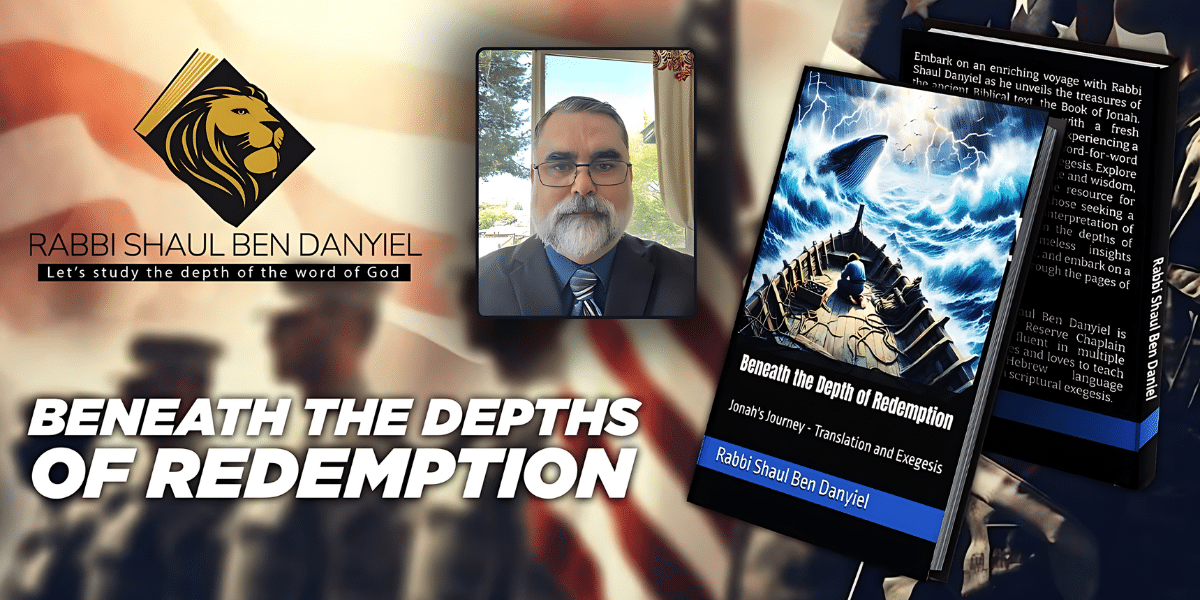
Rabbi Shaul B. Danyiel has lived a unique life. He started as a paratrooper in the U.S. Army, then became an Arabic translator, and later a full-time rabbi and author. His new book, Beneath the Depths of Redemption: Jonah’s Journey – Translation and Exegesis, shows how his knowledge of languages, strong faith, and love for teaching come together to offer a new view of the Book of Jonah.

Rabbi Danyiel’s journey is a powerful example of dedication and determination. Like many people, he faced challenges along the way. After high school, he joined the Army and served as a paratrooper in the 82nd Airborne. His military service took him worldwide, where he learned Arabic and later became a chaplain in the Army Reserve. These experiences greatly impacted him and eventually led him to focus on writing, especially about religion and translation. His story shows how our life experiences can shape our passions and guide us to new paths.

In a recent interview, Rabbi Daniel shared that he had always wanted to be a writer. However, the responsibilities of supporting his family meant that he had to put his dream on hold while he worked as an accountant auditing defense contracts. It wasn’t until later in life that he decided to take a leap of faith and fully committed to writing and spiritual leadership.

Rabbi Danyiel’s book on the Book of Jonah isn’t just about translating words. It’s about exploring the original Hebrew text to find the deeper meanings that can get lost when texts are translated into different languages. When we read religious texts in our own language, we might not realize that some of the true meanings and subtle details don’t always come through.

Rabbi Danyiel, who speaks five languages, believes it’s essential to understand the text’s original language to grasp its whole meaning. By carefully studying the Hebrew words and phrases, he helps uncover these hidden meanings, giving us a clearer and richer understanding of the scriptures. This approach allows readers to connect more deeply with the messages in the text, making the lessons more meaningful and relevant in their lives. During his time in Kuwait, while on a military mission, he had an important realization. He discovered that many modern translations of the Book of Jonah fail to capture the full depth of the original Hebrew text. This inspired him to create his own translation, one that stayed true to the language and culture of the time.

Rabbi Danyiel’s book Beneath the Depths of Redemption: Jonah’s Journey – Translation and Exegesis offers a new way of looking at the story of Jonah. By carefully studying the original Hebrew text, Rabbi Danyiel uncovers important details and themes that are often missed in regular translations. His book doesn’t just retell the story; it explores the deeper emotions and lessons in Jonah’s journey, like the struggle to follow God’s commands, the nature of God’s mercy, and the challenge of facing our fears. This book is not just for experts but anyone who wants to understand the Bible better. Rabbi Danyiel’s analysis helps readers see Jonah’s story as more than just an old tale—it’s a lesson we can apply today. It encourages us to face our challenges with faith and to show kindness and forgiveness, even when it’s hard. The book helps readers connect with the deeper meanings and values in the story of Jonah.

Rabbi Danyiel’s family has played a crucial role in his journey. He dedicated his book to his wife and children, who have supported him through his career changes and writing projects. He shared how much their encouragement has meant to him, especially during the times when he was away on military deployments. Looking ahead, he has many more projects in the works. With over fifty-six ideas for books, he plans to continue exploring the connections between language, faith, and history. His next focus is a historical narrative on the Book of Jonah, written to combine accurate history with engaging storytelling.

Rabbi Shaul B. Danyiel’s life and work show the power of dedication, faith, and the importance of understanding the true meanings behind ancient texts. His translation of the Book of Jonah offers readers a fresh perspective on a well-known story, encouraging us all to think more deeply about the words we read and the beliefs we hold.


Published By: Aize Perez

Defying Time: The Legacy of Resistance in Elizabeth Van Doren’s Narrative

By: Seraphina Quinn

In a time when historical amnesia seems pervasive, one voice resounds with the clarity of remembrance. Elizabeth Van Doren’s moving debut, Crossing the Line, transports readers to the harrowing landscapes of 1930s Berlin, narrating a tale not just of despair but of defiance against tyranny.

Born amidst the remnants of World War II in Europe, Elizabeth’s formative years oscillated between Germany and France, steeped in the narratives of a war-torn continent. Each summer, she returned to these roots, absorbing tales that would later form the backbone of her literary pursuit. It wasn’t until a stark shift in America’s political rhetoric that these dormant stories ignited Elizabeth’s resolve to leave her medical practice and pen a narrative that she felt was urgent. 

As a medical practitioner in the United States, a country that often relegates the horrors of the Old World to a single day of remembrance, Elizabeth found herself driven by a necessity that transcended her medical practice. The rhetoric of the past began to resurface in our country’s political landscape, reflecting on the initial spark that drove her to the keyboard. In an era where history is often sanitized to the point of sterility, her mission became clear: to dredge the depths of her family’s past and bring its cautionary tales to the fore.

Her story isn’t just a retelling of events; it’s a stark reminder of the cyclical nature of history. In contrast, America’s collective memory seems to engage only in annual remembrances. There’s a profound disparity in how history is lived and learned. 

The concerns that she poses resonate deeply within the contemporary context, where historical events are often reduced to mere dates and facts, stripped of their emotional and moral weight. Elizabeth’s narrative approach seeks to remedy this disconnection by intertwining the personal with the historical, making the past palpable and urgent. This method is not merely academic; it’s a lifeline to understanding and navigating the currents of contemporary political undercurrents.

The book revolves around her family’s resistance against the Nazi regime—an epitome of ordinary people’s capacity to act with extraordinary bravery. Central to her narrative are her grandparents, Andre and Herta, who, despite the risks, chose to defy Hitler in Berlin. Through their eyes, readers experience the perilous tightrope of resistance within an increasingly hostile environment.

Crossing the Line extends beyond mere historical recount. It takes a deeper dive into the moral dilemmas that pervaded every corner of life under the Third Reich. The title itself is a metaphor for the multiple boundaries—ethical, personal, and political—that her characters navigate. Their choices are a reflection of a broader question that underlies the narrative: What does it mean to act rightly in a world that has skewed moral compasses?

Moreover, the significance of the book’s title, Crossing the Line, is multifaceted, symbolizing the literal and metaphorical lines her characters must navigate. These lines represent the barriers imposed by oppressive regimes and the moral decisions individuals must make in response to such regimes.

In discussing the development of her characters, Elizabeth describes the careful balance she maintained in portraying their complex human emotions and moral choices against the backdrop of 1930s Germany. She emphasizes the importance of understanding the historical context to appreciate the complexities of her characters’ decisions.

Hence, her characters and their journeys are a mosaic of courage, loss, and the quest for moral clarity. Elizabeth doesn’t just paint a picture of resistance; she challenges the reader to consider their stance in the face of injustice. “Each time you cross a line, you confront your own values,” she remarks.

Central to her book are her grandparents, Andre and Herta, whose lives in Berlin during the Nazi regime epitomize the courage and moral fortitude that Elizabeth seeks to illuminate. Living in a city where the majority supported Hitler posed immense risks for those who dared to resist. This commitment to authenticity shapes her portrayal of Andre and Liliana, characters whose lives exemplify the wrenching choices faced by those under oppressive regimes.

Andre, modeled after Van Doren’s own grandfather, is a beacon of resilience and moral fortitude. An engineer by training, his academic pursuits and personal integrity put him at odds with the escalating brutality of Nazi Germany. His story is not just one of opposition but of a profound moral reckoning. However, Liliana’s character, while inspired by a real person whose background Van Doren had to imagine, represents the myriads of unnamed souls swept up by the tide of history. Her narrative arc, from Warsaw to the Robbins Brook concentration camp, illustrates the harrowing, often hidden personal stories of the era. She emphasizes that her tale, woven into the fabric of her family’s broader narrative, sticks closely to the documented truths given that the whole book is a personal story that she grew up with, whereas everything else in the book is completely factual, all of the people, all of the stories, everything is true. 

She also explores the dual impulses to conform or resist, a central theme that resonates throughout her work. This dichotomy is not merely historical but intensely personal, echoing the decisions her own family faced. 

Through her narrative, Elizabeth aims to demonstrate that ordinary people can perform extraordinary acts of bravery. The dynamics of family and loyalty are key themes, underscoring the personal stakes involved in historical and political turmoil. She hopes readers take away an understanding of the profound impact individual actions can have on wider historical events, encouraging a reflection on the power of personal conviction and the importance of standing firm in one’s beliefs, even in the face of overwhelming opposition.

In writing Crossing the Line, Elizabeth Van Doren has not only crossed a literal threshold from practitioner to author but has also bridged a gap in historical understanding. Her book is a clarion call to remember, reflect, and resist, ensuring that the lessons of the past are not just remembered but are actively used to shape a more just future. Crossing the Line is more than a book; it’s a movement back to the roots of remembering why history matters.


Published By: Aize Perez

The Hidden Motivations of Leaders: Perspectives from Patricia McLagan

By: Seraphina Quinn

What drives people to seek leadership roles? How do they handle the power that comes with these positions? These important questions are at the heart of Patricia McLagan’s timely and thought-provoking book, “The Shadow Side of Power: Lessons for Leaders (and Their Supporters).” In a recent interview, McLagan explained what inspired her to write the book, the main ideas in it, and the storytelling approach she used. Her short novel makes a compelling argument for why it is essential that appointed and elected leaders understand the deeper emotional energy that goes with the power of their role – and how it operates for good or ill.  

McLagan wrote “The Shadow Side of Power” because of two big events: the 2007 financial crisis and recent political situations. She saw these events as problems of leadership, which made her want to explore the corrupting, the “shadow” sides of power. She draws on decades of work with top leaders in global businesses and governments and during transition years in South Africa. She has seen many leaders who were not conscious of or ready for the power their roles gave them. Her book tries to fix this problem by teaching both leaders and followers about the responsibilities and dangers of having official power.

Inspired by Dante’s “Divine Comedy,” McLagan uses a symbolic story to explore leadership power. Her fictional hero, Adderley, goes on a journey through seven circles of a metaphorical hell, facing different levels of leadership failures. Each level shows different ways leaders fail to use, misuse, or abuse power. This creates a story that is both  compelling  and educational. By using this symbolic approach, she discusses serious topics without being too preachy, making the book easy to read and thought-provoking.

McLagan identifies three types of power in her book: personal power, the power of the role, and the power attributed to followers. Personal power stems from personal qualities, including charisma, skills and knowledge. Appointed and elected roles have the amplified power of their official positions — power that often catches new leaders off guard. Lastly, there is the power attributed to leaders by followers. It draws on psychological factors and collective experiences that operate, often unconsciously, between leaders and followers. These can distort relationships and decision-making processes. Understanding these types of power is crucial for effective and trustworthy leadership and aware and responsible followership.

The book highlights seven ways leaders can fail, categorized into misuses and abuses of power. For instance, ignorance, short-sightedness, and cowardice are common misuses, while abusive disrespect and corruption are the most severe abuses. She explains that these power failures can have long-lasting impacts on institutions and individuals. For example, a corrupt leader can create toxic cultures that persist long after they leave or make business decisions that are personally beneficial but have consequences for the business, environment, public health, and the direction of society itself. The insight is that through their often vast institutional power, formal leaders can change the course of individual lives, institutions, and even history.  

One of the most critical lessons in McLagan’s book is the importance of power awareness. Leaders must be conscious of and take responsibility for the role power they wield and its effects on their relationships and decisions. Followers, including employees and voters, also need to be aware of and understand their own reactions to power and be able to detect misuses and abuses in their current leaders or those they may choose. McLagan argues that heightened awareness can lead to better decision-making and healthier organizational and societal cultures.

While the qualities of good leaders transcend time, how they use these qualities changes with modern challenges. McLagan stresses that leaders should know when to act decisively and when to involve others in making decisions, especially in today’s complex and connected world. She argues for power awareness and six other “virtues” to redirect power’s shadow energy toward the light. Like Luke Skywalker’s saber in Star Wars, Harry Potter’s wand,  and the ring in Lord of the Rings, power is a kind of electricity to be used, misused, or abused.

For those who want to become leaders, McLagan’s advice is simple: understand the power you will have and the shadows that come with it. Knowing the responsibilities and possible temptations to misuse or abuse their role power is crucial for being ethical, effective, and leaving a lasting legacy. Aspiring leaders should get ready for the special challenges and opportunities that the power of their roles and confronting their own shadow side will bring.

McLagan continues to support both leaders and followers through different projects. In addition to The Shadow Side of Power book, she created an app called SMARTInside: Brain Training HQ, which you can find in the Apple Store. This app is made to train the brain and improve learning. She also plans to write more about leadership, warning about its shadow sides and sharing her thoughts through articles and blog posts on her website, www.patriciamclagan.com.

“The Shadow Side of Power” gives a detailed and insightful look at how power affects appointed and elected leaders and their followers. McLagan mixes storytelling, real-world examples, mythology, and psychological insights to make this book useful for both current and future leaders – and their supporters. By looking at the darker sides of power, McLagan shows a way to have more ethical and effective leadership in today’s complicated world. For anyone who wants to learn more about the dynamics of power and leadership, McLagan’s book is a breakthrough read, especially in today’s fast-changing world.

Published by: Holy Minoza

Skyline Chicago Limo Services: Luxury Service for Every Occasion

In the bustling city of Chicago, where the architecture reaches for the sky and the streets thrum with life, there exists a service dedicated to transforming ordinary journeys into extraordinary experiences. Skyline Chicago Limo, a premier black car and limousine service, stands out as a beacon of luxury and reliability in the Windy City. Specializing in airport transportation, corporate limousine service, and various celebrations and special occasions, Skyline offers an unparalleled travel experience tailored to those who seek comfort, style, and efficiency.

The essence of luxury transportation is not merely about bridging distances from point A to point B; it’s about enhancing the journey itself. Understanding this principle deeply, Skyline Chicago Limo ensures that each trip is imbued with a sense of exclusivity and sophistication. Whether it’s navigating through the city’s vibrant streets to catch a flight at O’Hare Airport or making an entrance at a high-profile event, clients can expect to do so with grace and panache.

Skyline takes pride in its fleet of high-quality vehicles that cater to diverse preferences and needs. From sleek sedans for solitary travelers seeking solace amidst their busy schedules to stretch limos for groups looking forward to celebrating milestones together—each vehicle represents pinnacle comfort and safety standards. Meticulously maintained and regularly serviced, these cars promise not just a ride but a journey enveloped in luxury.

Corporate clients find a reliable ally in Skyline’s corporate transportation services. Tailored meticulously to meet business needs—whether it’s impressing clients with punctual pickups or providing employees with stress-free rides to important meetings—Skyline emerges as more than just a service; it becomes an indispensable part of their professional image.

Choosing Skyline Chicago Limo translates into choosing excellence. Their unwavering commitment to quality sets them apart from other services in the region. It’s not merely about traveling; it’s about experiencing true luxury that leaves lasting impressions. For those accustomed to expecting nothing but the ideal—in terms of both comfort and convenience—Skyline stands as the ultimate choice.

Offering an array of services—from airport transfers that guarantee timely arrivals for flights out of O’Hare to elegant solutions for weddings, parties, or any special occasion—Skyline caters to every need with precision. Each service is designed not just to meet expectations but exceed them significantly.

Behind every successful ride is Skyline’s team of professional chauffeurs—individuals selected not only for their driving expertise but also their dedication to providing exceptional customer service. Courteous, discreet, and knowledgeable about navigating Chicago’s complex landscape—they ensure your journey is smooth from start to finish.

In today’s fast-paced world where time is often seen as more valuable than gold, relying on Skyline’s efficient airport Chicago limo services provides passengers peace of mind—a priceless commodity indeed. Recognizing the importance of punctuality especially when catching flights or attending crucial meetings, they focus on ensuring clients arrive at their destinations not just on time but also refreshed and ready for what lies ahead.

Whether planning ahead for future travels or seeking an immediate solution for upscale transportation within Chicago IL., exploring what Skyline has to offer promises not only satisfaction but also an introduction into how journeys should always feel: exclusive, comfortable, safe—and above all else—exceptional.

As cities like Chicago continue evolving rapidly embracing new technologies while fostering global connections – having access reliable yet luxurious means travel remains essential everyone from busy professionals leisure seekers alike And when comes finding perfect blend between modernity tradition ease accessibility combined sheer elegance choice clear – It’s time elevate your experience The choice unequivocally remains with choosing excellence choosing make every moment count Welcome aboard welcome difference Welcome unparalleled world awaits discover through doors opened by none other than – Skyline Chicago Limo. To stay updated follow the hashtag #limoservices on social media

Media Contact:

Company: Skyline Chicago Limo

Contact Person: Vladimir Sotirov
Phone Number: (872) 256-0444

Address: 2416 W Bryn Mawr Ave APT 3S

City: Chicago
State: IL
Postal Code: 60659
Country: United States
Website: https://www.skylinechicagolimo.com/

Social Media:

Facebook
YouTube

Published by: Holy Minoza

Stress to Serenity: The Therapeutic Power of Jigsaw Puzzles

In a world that often feels overwhelming, finding ways to unwind and reset is crucial. One surprisingly effective method of achieving this serenity comes in the form of an age-old pastime: jigsaw puzzles. While seemingly simple, these intricate puzzles offer a multitude of therapeutic benefits that can help reduce stress, enhance cognitive function, and foster a deep sense of accomplishment.

The Calming Power of Focus and Mindfulness

When stress levels rise, it’s easy to feel overwhelmed by the constant barrage of tasks and responsibilities. Jigsaw puzzles offer a powerful antidote to this chaos by encouraging a state of mindfulness. As you sift through pieces, seeking the perfect fit, your mind shifts from the hustle and bustle of daily life to the present moment. This focus on the here and now is a key aspect of mindfulness, a practice shown to significantly reduce anxiety and stress.

The repetitive nature of puzzle-solving has a meditative quality, guiding you into a flow state where time seems to disappear. This is the same state that artists and athletes experience when they are fully immersed in their craft. As you work on a puzzle, your brain is gently stimulated, providing just the right amount of challenge to keep you engaged without overwhelming you. The result is a soothing, almost hypnotic effect that can help lower cortisol levels, the body’s primary stress hormone.

Incorporating jigsaw puzzles into your routine, even for just 15-30 minutes a day, can provide a meaningful escape from the pressures of life. The process of piecing together a complex image, bit by bit, mirrors the idea of resolving the scattered thoughts in your mind, leading to a greater sense of calm and balance.

Cognitive Benefits That Go Beyond the Surface

While the therapeutic benefits of jigsaw puzzles are often associated with relaxation, they also provide a significant cognitive boost. Engaging with a puzzle requires a combination of problem-solving skills, visual perception, and memory. These activities stimulate different parts of the brain, particularly the areas responsible for spatial awareness and short-term memory.

As you work on a puzzle, your brain constantly processes and stores information about the pieces—their shapes, colors, and patterns. This not only sharpens memory but also enhances your ability to recognize and retain visual information, a skill that can be beneficial in many aspects of daily life.

Moreover, jigsaw puzzles challenge you to think critically and creatively. They require you to approach problems from different angles, testing various solutions until you find the right one. This type of cognitive flexibility is crucial for mental agility and can help keep your brain sharp as you age. Studies have even suggested that regularly engaging in activities like puzzles can delay the onset of cognitive decline and reduce the risk of dementia.

The therapeutic benefits extend beyond the mind, as solving puzzles can also have a positive impact on your emotional well-being. The satisfaction of placing that final piece is not just a small victory; it’s a powerful affirmation of your problem-solving abilities, reinforcing self-esteem and boosting confidence. This sense of achievement can be particularly rewarding for those struggling with feelings of inadequacy or low self-worth.

A Shared Experience That Builds Connections

Jigsaw puzzles are not only a solitary activity but also a powerful tool for building connections with others. Working on a puzzle with family or friends encourages collaboration, communication, and teamwork. Each piece placed becomes a shared victory, fostering a sense of unity and camaraderie.

This social aspect is especially important in an age where meaningful human interaction is often replaced by digital communication. Gathering around a table to work on a puzzle allows for organic conversations and bonding moments that can be rare in today’s fast-paced world. It’s a chance to disconnect from screens and reconnect with the people around you.

Even when done alone, jigsaw puzzles offer a unique way to connect with yourself. They provide a quiet, reflective space where you can engage in self-care away from the noise of daily life. While enjoying the therapeutic benefits of solving puzzles, it’s important to keep them in good condition, which includes tasks like cleaning your jigsaw puzzles to remove dust and dirt. This act of care extends the life of the puzzle, ensuring that it remains a source of relaxation and enjoyment for years to come.

In essence, jigsaw puzzles offer a simple yet profound way to enhance mental well-being. They invite us to slow down, focus, and enjoy the journey of creating something whole from scattered pieces. Whether alone or with others, the process of solving a puzzle can transform stress into serenity, offering a peaceful refuge in the midst of a chaotic world.

Published by: Holy Minoza

Philanthropy Spotlight: Vanessa Valente’s ‘Community First’ Vision

By: Hanna Scott

Philanthropy is more than just a lofty word; it’s about making a tangible impact, giving time, resources, and part of oneself to improve the lives of others. Imagine being the reason behind a sigh of relief from a struggling family or a smile on a child’s face—how would that make a person feel?

For many, these acts of ‘giving’ represent hope and transformation, weaving a vibrant tapestry of charitable endeavors. 

At the forefront of this movement is Vanessa Valente, a seasoned professional with a rich background in procurement and acquisition. Beyond her impressive career, Vanessa’s true passion lies in her role as President of C.H.O.W. – Community House of Worship, a 501(c)(3) nonprofit organization, and her leadership of a wellness group dedicated to holistic well-being.

Vanessa explains her outlook on philanthropy, “Philanthropy is the very core of my being. It’s not just about aid but connecting hearts and empowering communities to stand strong together. It’s about giving back to the community for me.” 

This blend of professional acumen and heartfelt giving perfectly sets the stage for exploring the broader benefits of philanthropy.

The Impact of Philanthropy: Why It Matters

Research on the subject has revealed that philanthropy benefits both the recipients and the givers. A report by Charity Navigator proves that charity activities make people happier and strengthen society. 

Consider any natural disaster in the past five years and how philanthropy helped millions of people survive the financial chaos it caused. During the COVID-19 pandemic, staying healthy was just one part of the battle; countless individuals also faced job loss and financial uncertainty. Philanthropic efforts significantly alleviated these hardships by funding emergency relief, healthcare support, and food security programs.

Vanessa adds, “Every act of giving plants a seed of change,” reflecting on the transformative power of philanthropy. This personal philosophy propels her to be part of change and lead efforts that have a lasting impact on society.

But how can one individual’s passion for change translate into a widespread movement for community empowerment? 

Founding Peaceful Pathway: Empowering Communities

Vanessa answered this by founding Peaceful Pathway to further the message and have a more substantial, direct, positive social change impact. It is a community service and social responsibility program that empowers people by utilizing their potential and efforts to better everybody. 

Peaceful Pathway has developed several programs to educate the people and help maintain good health within the community, such as their healing group. But what do these efforts look like on the ground?

Impact on the Community: Real Stories, Real Change

The true testimonial of Vanessa’s work can be found in the words of those whom she assisted. Peaceful Pathway has touched many lives, one beneficiary of which is Jacqueline.

Jacqueline was struggling with job loss and caring for her sick mother when a friend introduced her to Peaceful Pathway, Vanessa’s support group. Skeptical but desperate, she attended a session and found a community that offered support and understanding.

Six months later, Jacqueline had secured a new job and developed a newfound resilience and sense of purpose. She reflects, “It saved my life, giving me hope when I felt lost.”

Jacqueline transformed her life through Peaceful Pathway’s support and now volunteers to help others. 

Wrapping Up: The Ripple Effect of One Woman’s Vision

All in all, philanthropy is not just about writing checks; it is weaving the fabric of the community with the threads of love and strength. People like Vanessa, whose work is outside the conventional paradigms of philanthropy, are leading such change. She adopts a systems perspective and aims to achieve positive change that will have long-term impacts on the community.

Vanessa eloquently captures the essence of her mission, stating, “Every small action counts. We’re all part of a larger narrative, and together, we can craft a story of hope and resilience.”

Vanessa’s philanthropic efforts highlight the impact of personal commitment on community progress. Her work emphasizes the importance of human connections in driving change. She inspires everyone to think bigger and act kinder in their everyday lives so everyone can chip in to help others. 

For those questioning whether small efforts can significantly impact the lives of many in need, remember Margaret Mead’s words: “Never doubt that a small group of thoughtful, committed citizens can change the world; indeed, it’s the only thing that ever has.

Published by: Holy Minoza

Wesley Swainston’s Run for Homeless Shelters and Social Change

Wesley Swainston is not just a runner; he’s a man on a mission. Combining his passion for running with a deep commitment to making a difference, Swainston has embarked on a journey that goes beyond personal fitness goals. His mission is clear: to raise awareness and funds for those in need, particularly focusing on providing shelter for the homeless. Through his dedicated efforts, Swainston is proving that running can be more than just a sport—it can be a powerful tool for social change.

The Inspiration Behind the Mission

Wesley Swainston’s mission began with a simple yet profound observation: the growing number of people without a place to call home. Moved by the plight of the homeless in his community, he decided to act in a way that resonated with his interests and strengths. An avid runner, Swainston realized he could use his running to draw attention to this pressing issue and raise funds to support homeless shelters and other related initiatives.

Running long distances and participating in marathons, Swainston uses each race as an opportunity to spread his message. He partners with local organizations and sponsors to create fundraising campaigns tied to his race, encouraging others to contribute to the cause. Through his efforts, Swainston has not only raised significant funds but has also inspired others to get involved in their communities and support those who are less fortunate.

Impact and Achievements

Swainston’s commitment to his cause has had a tangible impact on his community. The funds he has raised have gone towards expanding shelter facilities, providing essential supplies, and supporting programs aimed at helping individuals transition out of homelessness. His work has not gone unnoticed, earning him recognition from both local and national organizations dedicated to fighting homelessness.

One of the most notable achievements of Swainston’s mission is the awareness he has brought to the issue of homelessness. By sharing his story and the stories of those he meets along the way, he has helped to humanize the homeless population and challenge the stereotypes that often surround them. His running events often feature talks and discussions about homelessness, further educating the public and encouraging a broader dialogue on how to address this complex issue.

Looking Ahead: The Future of Swainston’s Mission

Wesley Swainston’s mission is far from over. He continues to train and participate in races, each one to raise more awareness and funds. Swainston is also expanding his efforts and working on new initiatives that will provide even more support to the homeless community. This includes collaborating with other runners and athletes to create a more extensive network of advocates who use their platforms to make a difference.

In the future, Swainston hopes to establish a foundation dedicated to supporting long-term solutions to homelessness. This foundation would provide immediate relief through shelters and resources and focus on prevention and rehabilitation programs that address the root causes of homelessness. His vision is one where every step he takes brings society closer to a world where everyone has a place to call home.

Wesley Swainston’s journey is not only about raising funds and awareness—it’s about building a sense of community and solidarity. By engaging with fellow runners, supporters, and even those who benefit from the shelters he champions, Swainston fosters connections beyond his mission’s monetary impact. He often organizes community runs where participants can meet and learn from individuals who have experienced homelessness, creating an environment of empathy and understanding. These events have become a powerful reminder that homelessness is not just a statistic; it’s a human experience that can be alleviated through collective effort and compassion.

For more on Wesley Swainston’s mission, visit groovetribune.com. The article dives into the heart of his work and offers insights into how small actions can contribute to significant social change.


Published By: Aize Perez

Gaming Culture: The Key to Unlocking Gen Z Brand Loyalty

By: John Higgins, CEO — OS Studios

Every generation has its own form of brand loyalty. Trends, fads, fashion, and culture all feed the brand beast, leading each one to create its own cultural touchstones that end up defining the entire generation. 

For example, consider Millennials’ attraction to Apple devices or the recent Volkswagon ad campaign that has sought to reach Baby Boomers and Gen X through a nostalgic look back at how VW has cropped up during important parts of their lives. Brand loyalty isn’t just a generational concept, but brands that can discover the key to unlocking generational cohort brand loyalty can be wildly successful. 

Gen Z, those born between the late 1990s and the early 2010s, has proven to be a particularly hard nut to crack for brands. They are bombarded with advertisements from every angle, viral trends emerge and then vanish within days, and tend to gravitate toward media that has not been traditionally courted by brands, such as gaming. 

However, by embracing gaming culture, brands can bridge the gap between what they are trying to offer and Gen Z as a target audience. This generation is reachable — brands just have to go where they are. 

The Rise of Gaming Culture

Gen Xers and some Millennials may fondly remember their childhoods and teen years playing “Duck Hunt” or “Double Dragon” in our basements. For them, that was gaming culture — a bag of Doritos, some soda, and some friends over after school to play Nintendo — but gaming culture has drastically evolved since then. With the emergence of the internet and 5G networks, gaming culture has connected people worldwide and become a $217 billion market.

Gaming has become woven into the Gen Z lifestyle. It is where they meet their friends, hang out, get creative, and spend their money. Some enterprising Gen Z’ers have even made jobs out of gaming, from Twitch streaming to YouTube channels featuring play-thrus. Among Gen Z viewers, gaming content is among the most viewed content on YouTube, and some studies have shown that up to 90% of Gen Z can be considered “game enthusiasts.” This is a massive target market that is just waiting to be engaged. 

Unlocking Gen Z Brand Loyalty

The thing about Gen Z that many brands fail to recognize until it’s too late is that they are very savvy consumers. They can spot an inauthentic pitch from a mile away, are digital natives who have grown up with social media, understand the nuances of social media marketing, and know that brands will say just about anything to try to have a viral moment. To gain loyalty from Gen Z gamers, brands have to tap into authenticity, gamification, personalization, and immersive experiences. 

To tap into the Gen Z market, brands must understand their generational values, interests, and digital habits. 

Gen Z values authentic engagement, which has led them to more frequently connect with particular influencers or streamers in the gaming community, so they may be more apt to take brand recommendations from these influential people. Brands that find a way to authentically engage with Gen Z gamers rather than overtly market to them will find better success with this group. 

Brands have to seek to understand gamer culture. Otherwise, they risk finding themselves in the middle of a “How do you do, fellow kids?” moment. 

Today’s gaming community and culture have moved out of the basement to encompass in-person and online events, e-sports competitions, popular stream events, and trending content. To keep up, brands must be active participants in the culture — not passive observers. 

Today’s gamers are also endlessly creative. They actively participate in creating game lore, servers, and gaming-related content like original characters (OCs) and entire worlds in games like Minecraft. Brands can harness this creative energy by incorporating fan art into campaigns, hosting challenges, and weaving the results of those challenges into in-game content. 

Brands can also find a way to incorporate their brand names into games in a non-intrusive way. One example is the  high-fashion brands like Louis Vuitton and Prada that have appeared in the uber-popular game “The Sims.” The inclusion of these brands helps strengthen brand awareness while making the game more realistic. 

Another way to get recognition is through brand tie-ins. Pizza Hut had one of the talked-about brand tie-ins in decades with its collaboration with “Everquest II,” which allowed players to order a pizza right from the game. 

One of the important aspects of tapping into Gen Z brand loyalty is to remain focused on community-building. Gen Z can be fiercely loyal to the community built around their games. If brands participate in building communities, hosting events, and starting conversations, they will create trust with Gen Z. 

Engaging Gen Z gamers is all about keeping it real and staying on  trends. Brands should not be shy about diving into the gaming scene head-first and building genuine connections with Gen Z through immersive experiences and community-building. 

Ultimately, unlocking Gen Z brand loyalty is not just about slapping your logo on a game or an event and calling it a day. It’s about truly understanding what this generation is all about and joining them in this new age of gaming culture. 

Published by: Holy Minoza