

By: Cameron Wells
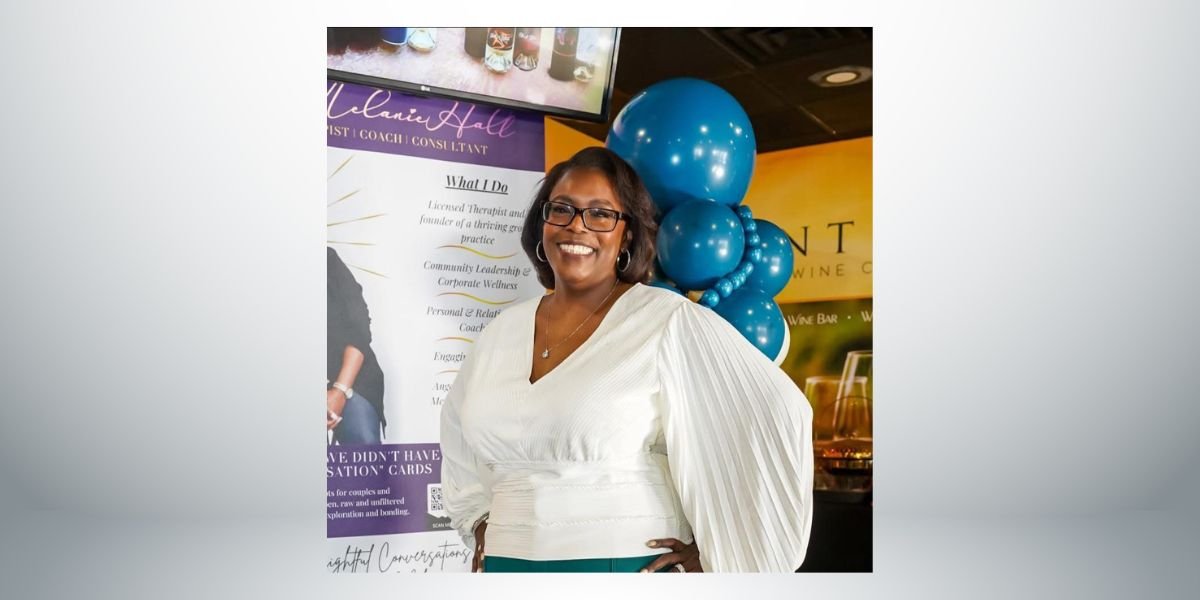
Licensed Clinical Professional Counselor Melanie Hall is helping transform how Chicagoans approach mental health—one conversation at a time.
The disparities were impossible to ignore, even for a child. Driving through different Chicago neighborhoods, young Melanie Hall could see the stark contrasts without needing an adult to explain the obvious: some communities had more, others had less, and people were struggling. While her mother tried to shield her from the harsh realities, her father took a different approach, pointing out what to avoid as they walked certain streets. But where others saw danger, Melanie saw need.
“I remember thinking ‘if people are begging for money or food and living on the street, it’s because they need help,'” recalls Hall, now a Licensed Clinical Professional Counselor and founder of a thriving group practice. “I wanted to help people be better, especially if they WANTED to be better.”
That childhood empathy, born on Chicago’s streets, would eventually grow into an approach to mental health that’s been helping to transform lives across the city and beyond.
The Making of an Urban Healer
Growing up in Chicago’s inner city taught Hall early lessons about unspoken struggles. “You learn how much anger, grief, financial strains, and survival stress show up in households, relationships, and communities,” she explains. But it took years for her to recognize her natural calling as a healer.
She was always the friend people called for advice or just to listen. It was her sister, also a therapist, who first pointed out Hall’s gift for dissecting issues and her relentless need to understand the “why” behind human behavior. Even during her time as a licensed realtor in Illinois, Hall found herself spending more time helping clients navigate the emotional complexities of buying and selling property than discussing square footage or market values.
“I realized how much time I spent helping them manage their feelings around money, financial wealth, and the grief of letting go of property that no longer suited their needs,” she says. “I wanted people to feel grounded in what they were doing.”
When Hall finally entered clinical mental health counseling, she brought with her both professional expertise and lived experience. “Counseling gave me the language, the science, and the structure. But the heart of it? That’s always been there,” she reflects. “Now, when I sit with clients, I carry both pieces. That combination is what helps me connect on a deeper level.”
Meeting Chicago’s Unique Challenges
Chicago’s mental health landscape presents distinct challenges that Hall knows intimately. “As a Chicagoan, your emotions can fluctuate as much as the weather,” she observes. Her practice regularly encounters clients who are either survivors of systemic inequities still carrying PTSD or those currently experiencing the daily impact of these challenges.
“Before you can get to some of the clinical tools, you’re having to meet clients where they are, and sometimes that means discussing resources for basic needs,” Hall explains. “When clients are concerned with how they will meet the needs of tomorrow for themselves or others, their emotional needs are constantly put on the back burner.”
This reality has shaped her therapeutic approach. Sometimes she’s working on helping clients access resources and regulate their nervous systems before diving into deeper therapeutic work. It’s a holistic understanding that healing happens differently in different communities.
Building Community, One Conversation at a Time
Hall’s group practice represents more than expanded mental health services—it’s become a community hub for healing. From day one, her vision was clear: build a space where people could feel truly seen while closing the gap between struggling and thriving.
“We try to show up differently. We show up as a member of the same community,” Hall says. Her team actively engages with schools, community events, churches, and offices, hosting fireside chats, couples’ events, and therapeutic conversations that feel “like a family dinner with impact.”
The results speak for themselves. Clients have confronted generational trauma, processed grief, identified their purpose, and changed the tone of their households. “That’s healing that spreads,” Hall emphasizes. “It’s the impact and transformations we show up for, not just sessions.”
Innovation Born from Real Conversations
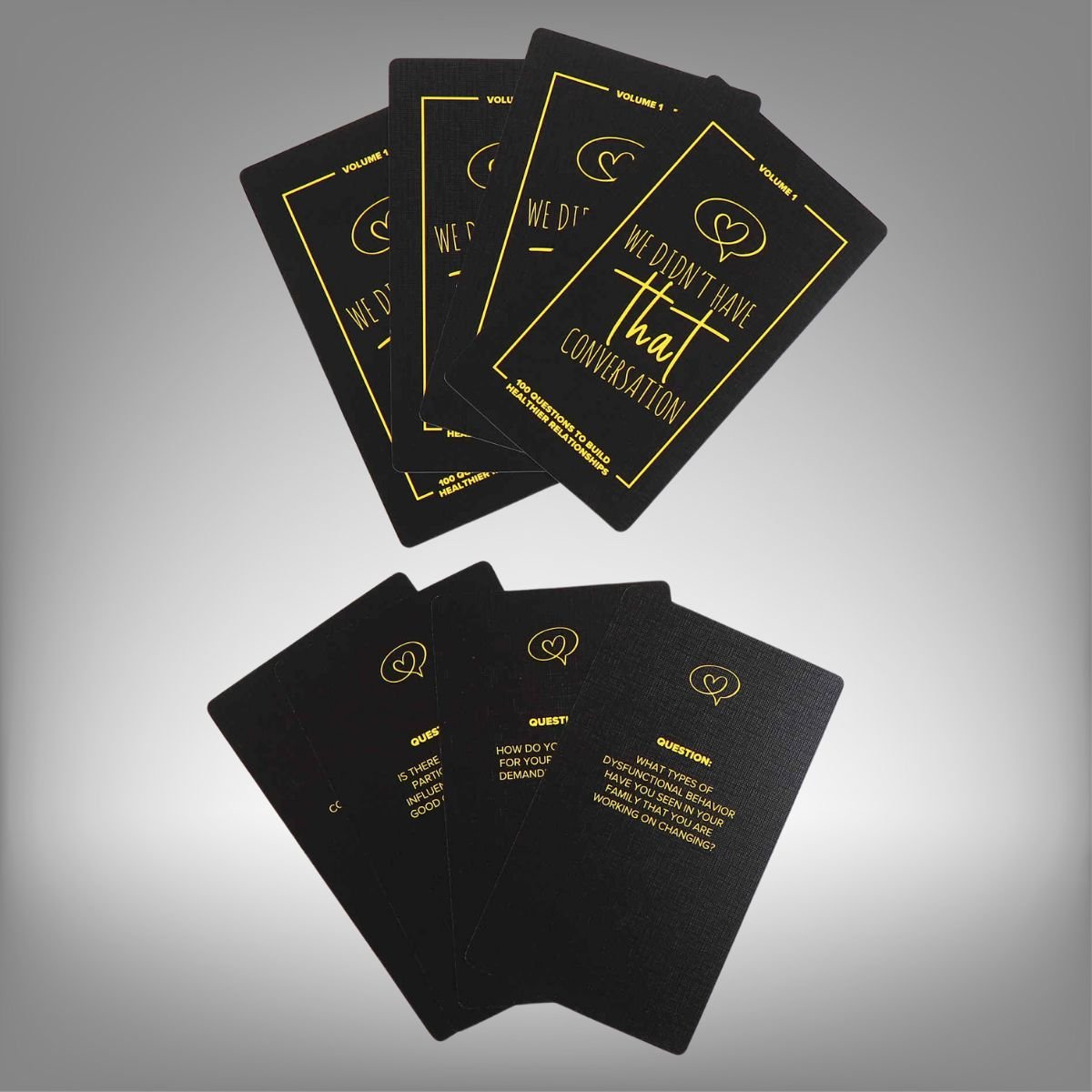
Photo Courtesy: Melanie Hall
Hall’s “We Didn’t Have That Conversation” relationship communication cards emerged directly from her Chicago practice, addressing a pattern she witnessed daily: couples who loved each other deeply but lacked the tools for healing dialogue.
“I realized quickly that people were avoiding hard conversations not only because they didn’t have the language but to avoid fear, pain, heartbreak, and exhaustion,” she explains. In Chicago, there’s often pressure to “look strong,” to not “air dirty laundry,” or to avoid anything that sounds like therapy-talk.
Her solution was characteristically practical and culturally aware. “So I stripped all that out. I made sure the questions felt like things you’d talk about at the kitchen or at a gathering with friends.” The cards are designed to be disarming, easing people into honesty without clinical overtones.
Training Tomorrow’s Mental Health Advocates
As a Mental Health First Aid Trainer, Hall is expanding her impact by training other Chicagoans to recognize and respond to mental health crises. “As a clinician, I cannot be everywhere,” she acknowledges. “It’s helping people develop an awareness and interest in how to help those around them that might be struggling.”
For Hall, this work represents active participation in building resources for Chicago’s most vulnerable populations. “Chicago is a great city, and just like other cities, the communities are in need of trained individuals to help at the most critical moments.”
From Chicago Grit to National Grace
While deeply rooted in Chicago, Hall’s influence is expanding beyond city limits. Her book “Change Your Words to Change Your World” and frameworks like “Keep it, Tweak it, Trash it” are gaining recognition nationally. But she credits Chicago with giving her the foundation for this broader impact.
“Being rooted in Chicago means something to me because my grit and grace intersect,” Hall reflects. “Chicago gave me resilience and realness that make my messages accessible and adaptable across state lines, especially with people and communities who’ve felt unseen or underserved.”
Her vision is expansive: frameworks being used “in boardrooms, classrooms, barbershops, and kitchens”—universal tools grounded in emotional intelligence but delivered in language that makes sense to real people facing real challenges.
From a child witnessing disparities on Chicago streets to a mental health innovator transforming how we approach healing, Melanie Hall’s journey embodies the city that shaped her: resilient, authentic, and committed to lifting others up. Her approach remains rooted in that early insight—as long as people are asking for help, she’ll share every tool available to provide it.
In a city that’s seen its share of struggles, Hall represents something powerful: the possibility that our deepest empathy, when paired with professional expertise and community commitment, can create ripple effects of healing that extend far beyond any single therapy session. She’s not just treating symptoms—she’s transforming lives, one honest conversation at a time.