By: Mark Wallace
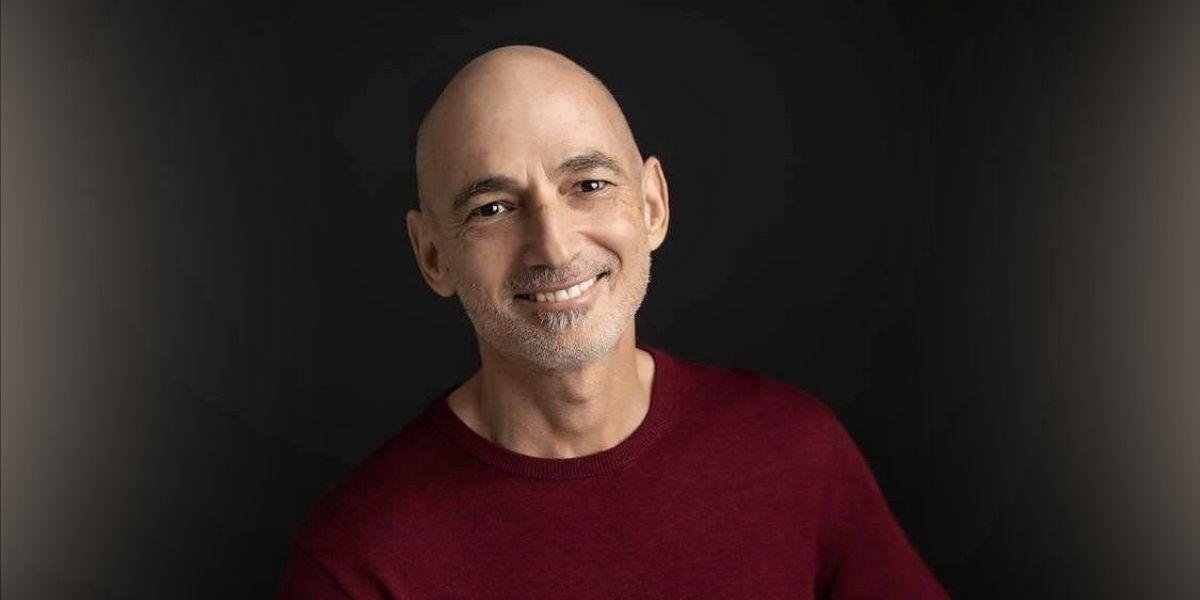
Nir Peled had built his identity around cognitive speed. He could assess pressure, make decisions quickly, and communicate with force and clarity. That ability had served him as an officer in an elite IDF unit and later as a Fortune 500 technology executive. Then, at 49, a stroke took the very qualities he had always relied on. He could not move. He could not speak. The man who had spent a career solving complex problems was suddenly living inside the hardest system failure imaginable: his own body and brain.
Peled had already survived more than most people can imagine. There had been a bombing in Sinai, anaphylaxis that ended his military career, the 2004 Indian Ocean tsunami, a violent kidnapping and robbery in the Amazon, fast-spreading cancer, and a serious motorcycle accident. But the stroke was different. “The stroke was different because it took the thing I had always relied on, my cognitive speed, my ability to think and communicate fast, and made that the very thing I had to rebuild,” he says. “For someone whose identity was built on intellectual horsepower, that was the deepest test.”
That test became the heart of his book, Beyond 100%: Rebuilding Life After It Breaks. The book did not begin as a public project. It began as evidence that he was still here. “The book started as my recovery journal,” Peled says. “I used video to record myself learning to speak again. I called it ‘captain’s log.’ Later, when I learned how to type, first with one finger, then two, then a real keyboard, then both hands, it was my recovery journal.”
In those entries, Peled tracked far more than rehabilitation exercises. He wrote about the hidden losses that come after a stroke: the loss of identity, the loss of assumed competence, the instability of progress, and the emotional cost of being seen as both survivor and patient. Recovery was not a straight line. It was physical, mental, relational, and spiritual, even for someone who does not define spirituality through religion.
“The Spirit pillar is about meaning-making, purpose, and connection,” he says of the framework he eventually built. “It is grounded in those things regardless of belief.” In practice, that means recovery requires more than movement drills and cognitive exercises. A person needs a reason to continue through fatigue, embarrassment, grief, and the slow rebuilding of trust in the body.
The turning point came early, when Peled was lying on the floor of his office, unable to move. “I felt the world closing in,” he says. “I was not afraid. I was calm, and deeply sad, like a kid being told to leave the park.” In the hospital, his defenses fell. “I cried. My whole body cried, all defenses down, completely surrendered. In that moment, I felt more alive than I had ever felt.” What looked like collapse became the first opening.
Peled does not use surrender to mean giving up. In Beyond 100%, surrender means the end of wasting energy on denying reality. Once he stopped fighting the fact of what had happened, he could begin building inside it. “That surrender was not weakness,” he says. “It was the beginning of everything.”
From there, Peled applied a systems mindset to recovery. He created a structure around Body, Mind, and Spirit; seven recovery rules; four stages of rebuilding; and a recovery blueprint that maps how capabilities return. First comes manifestation, when a possibility appears. Then comes a sign of life, the first evidence that something is returning. Practice follows, and finally, complex integration, when the skill can be used in real life.
The approach was practical because Peled needed it to be. “I am a practical man,” he says. “I like motivation and inspiring stories, but I need something tangible. Something I can use tomorrow morning.” His book, he adds, is designed to give readers tools for recovery, not just inspiration.
Today, Peled teaches yoga and meditation to stroke and brain injury survivors. The work carries unusual authority because he does not stand outside the experience. He has been the person who could not speak, could not move, and could not rely on the mind that once moved faster than everyone else’s. He also knows that progress may look too small to count until it compounds.
His message to survivors is not a promise that they will return to who they were. It is a more durable promise: a way forward. “There is always a path forward,” he says. “Not back. Forward. And it starts with one very small step tomorrow morning.” For someone beginning again after the brain breaks, that one small step may be the first sign that life is not over. It is being rebuilt.
Beyond 100%: Rebuilding Life After It Breaks is now available on Amazon,