The Chicago Journal

From Lifelong Digestive Struggles to Everyday Rituals: The Personal Story Behind Tera Barnes’s One Bite at a Time


By Liam Wilson

In an industry where wellness professionals are often expected to appear unshakably confident, author Tera Barnes speaks openly about the experiences that shaped her work. Her interest in Ayurveda is not only philosophical. It is also personal, informed by years of navigating digestive difficulties and learning how to care for herself within the demands of daily life.

Barnes, an Ayurvedic Health Counselor and Digestive Specialist, is the author of One Bite at a Time: A Gentle Ayurvedic Journey to Transform Your Habits, Reduce Your Suffering, and Enhance Your Well-Being in One Year, a book that draws on traditional Ayurvedic philosophy while examining the practical challenges of incorporating personal care into everyday life.

Barnes has described living with digestive issues throughout her life. “Food became my ally,” she wrote in responses about her journey. “As someone with lifelong digestive issues, I had to relearn how to nourish myself in a way that felt healing, not harmful.”

That experience has shaped her focus on nourishment without rigid rules. Barnes describes coming to see meals as opportunities to pay closer attention to her needs, rather than as another test she had to pass.

That history helps explain the tone of her book. “I didn’t write it from a place of having it all figured out. I wrote it from the trenches,” she says. The phrase suggests less a story of having arrived at perfect health than an account of learning, adjusting, and continuing.

In her original responses, Barnes also acknowledges the exhaustion of feeling that nothing seems to work. “I’ve been there,” she says. Her advice in such moments is not simply to do more, but to become “more present, more in tune, more forgiving.”

Ayurveda, the traditional Indian system informing her work, offers language for looking at daily rhythms, eating practices, and personal experience. Its historical concepts and remedies vary in scientific support; they are not substitutes for medical diagnosis or treatment. For Barnes, they became one way to think more deliberately about ordinary choices.

For Barnes, one of the tradition’s most meaningful ideas is its recognition that people do not necessarily thrive under identical circumstances.

That perspective is especially evident in the way she describes balancing her interests with a working life. “I believe in practical Ayurveda, making it fit into real life. I’m a working woman, not living in an ashram. So I don’t follow rigid rules.”

That philosophy informs the way she discusses personal routines, particularly the tendency to adopt sweeping lifestyle changes without considering whether they can be sustained.

Her examples include preparing meals with Ayurvedic principles in mind and adapting daily rituals to available time. Their importance in her account lies less in a prescribed protocol than in giving herself permission to find workable forms of care.

The distinction may seem subtle, but it changes the questions people are invited to ask.

Barnes also speaks about the emotional realities that accompany difficult periods. She says her book discusses “grief, shame, and the emotional release that came with shifting habits,” offering space for readers to reflect without treating every struggle as a failure of discipline.

This interest in making wellness accessible is central to the structure of her book.

Organized as a year-long sequence of weekly invitations, One Bite at a Time offers readers opportunities to explore individual adjustments without requiring a complete lifestyle overhaul.

The title itself is deliberately accessible: a reference to food, but also to a manageable pace of change. In the book’s year-long progression, Barnes offers weekly invitations rather than a demand for immediate transformation.

“It’s both literal and metaphorical,” she says. “But it’s also about the idea that big change happens in small bites.”

Her practical suggestions include paying attention at mealtimes, taking short pauses, and returning to routines after disruptions. None is presented here as a cure for chronic illness, and readers with persistent symptoms should seek appropriate professional care.

Some of her suggestions are informed by traditional Ayurvedic practices, including warm beverages and seasonal adjustments. These are presented within the tradition’s lifestyle framework rather than as medically established treatments for specific conditions.

What distinguishes Barnes’s perspective is not the novelty of any single suggestion, but her emphasis on making personal choices without turning them into another demanding obligation.

Her experience also shapes her advice about advocacy. “Be your own advocate, and don’t give up hope,” she tells people navigating chronic health challenges. She emphasizes finding practitioners who respect a person’s voice and making room for rest and support.

Barnes does not present a personal experience with Ayurveda as proof of clinical effectiveness. Instead, she draws from that experience to explain why individual circumstances, choice, and access to appropriate care all matter.

Barnes translates that emphasis into a contemporary message about adaptability.

For people balancing employment, caregiving, family responsibilities, and other demands, the ability to adjust expectations can be as important as the desire to establish a new habit.

Perhaps the most revealing aspect of her work is its willingness to discuss the uncomfortable emotions that can accompany change. Barnes does not write about shame and grief as abstract topics; she identifies them as part of her own experience.

The wellness industry often rewards definitive answers. Barnes’s language is less absolute. She speaks about listening, observing, and responding, rather than achieving a prescribed version of success.

Her reflections place the book within a wider conversation about daily wellness without claiming that attentiveness can replace professional medical advice. The distinction allows her personal story to remain central without assigning universal outcomes to it.

There is a certain practicality in that perspective. A routine that looks impressive on paper may offer little value if it cannot survive an ordinary workweek. A simpler approach may be less dramatic, but it can leave more room for the unpredictable nature of everyday life.

Barnes’s contribution to the conversation is grounded in the idea that personal care should accommodate human circumstances rather than demand that those circumstances disappear.

That may be what makes her comment about writing “from the trenches” so illuminating: the book is shaped not only by what Barnes has studied, but also by what she has lived.

The resulting message is less about mastering every habit than about making room for imperfect progress, difficult feelings, and the everyday work of beginning again.

Barnes describes wellness as “feeling at home in yourself.” For readers who recognize the strain of trying to get everything right, that may be a more approachable starting point than another ideal routine.

To learn more about Tera Barnes and One Bite at a Time, check out her book and Instagram.

Beyond the Medal: How Book Awards Shape an Author’s Brand

By: Michael Beas

A literary award can do more than recognize a well-written book. It can become a lasting part of an author’s professional identity, strengthening credibility, attracting attention, and creating opportunities that extend well beyond the initial recognition.

Authors today face a challenge that goes beyond writing a compelling book. They must establish their reputation, connect with readers, and distinguish their work in a marketplace filled with competing titles. While advertising and social media can generate visibility, recognition from a credible literary competition offers something different: an independent acknowledgment of a book’s achievement.

Yet the true value of an award is not simply receiving a medal. It lies in what an author does with that recognition and how it becomes part of a broader strategy for building a lasting literary career.

Why Literary Recognition Matters

A medal on a book cover can help a title stand out on a bookstore shelf or online retail page. But what gives that distinction lasting value is the credibility behind it. Recognition from an established competition with transparent judging standards offers an independent assessment of a book’s merits, adding a measure of validation beyond the author’s own promotional efforts.

For independent authors, that distinction can be particularly valuable. Without the publicity resources of major publishing houses, many writers must create their own opportunities for exposure. A respected award can provide journalists, podcast hosts, booksellers, and literary organizations with another reason to discover and consider their work.

Beyond immediate visibility, literary recognition can strengthen an author’s professional biography, media kit, website, and speaking credentials. It becomes part of a publishing history that can remain relevant long after a book’s initial release.

The objective is not simply to collect medals, but to build a body of work whose achievements contribute to a credible and enduring literary reputation.

Choosing Recognition That Supports an Author’s Goals

Not every medal contributes equally to an author’s reputation. A distinction from a respected competition aligned with a book’s genre may be more meaningful than collecting numerous awards without considering their relevance.

Before submitting, authors should examine a competition’s history, judging standards, previous winners, and intended audience. A literary fiction award may serve a novelist differently than recognition for a business or children’s book.

Entry fees also deserve consideration, particularly when submitting to multiple competitions or categories. A selective approach allows authors to align award opportunities with their publishing objectives and marketing budgets.

The strongest strategy is not to pursue every available distinction, but to identify recognition that meaningfully supports an author’s work and intended readership.

Turning Literary Recognition Into Meaningful Visibility

Winning an award creates a moment of recognition. Turning that moment into lasting visibility requires thoughtful communication.

Authors can incorporate distinctions into book descriptions, professional biographies, websites, newsletters, and media materials. Recognition also provides a timely reason to contact journalists, approach literary podcasts, or reconnect with bookstores and event organizers.

For example, an author whose historical novel receives recognition might approach podcasts covering historical fiction or organizations interested in the book’s subject matter. The award provides context for the outreach, while the book itself remains central to the conversation.

Unlike a short-term advertising campaign, literary recognition can remain part of an author’s professional identity for years. An award can support future book launches, strengthen media introductions, and provide readers discovering a new title with a broader picture of the author’s publishing history.

Accuracy remains essential. Winning an award, becoming a finalist, receiving an honorable mention, and being shortlisted are different accomplishments. Authors should describe each distinction precisely rather than overstating its significance.

What Book Awards Can and Cannot Do

Literary recognition should never be confused with ensured commercial success. An award may create publicity opportunities, but it does not automatically produce higher sales, bookstore placement, expanded distribution, or media coverage.

Those outcomes depend on factors including a book’s audience, availability, subject matter, and broader promotional efforts. Even a respected award may have limited influence outside the communities familiar with the competition.

Awards also reflect the judgments of particular evaluators. Their absence does not diminish a book’s quality, just as receiving one does not ensure universal approval.

For many writers, recognition carries personal significance beyond marketing. An award can acknowledge years of writing, revision, research, and persistence, especially for independent authors who manage both the creative and business responsibilities of publishing.

Building a Literary Identity Beyond the Medal

The larger challenge in publishing is not simply attracting attention to one book, but building a professional identity that grows with an author’s body of work.

Literary awards can play a meaningful role in that journey, providing recognition that extends beyond a single publication. When supported by thoughtful publicity, consistent reader engagement, and a commitment to the craft, those achievements can become lasting elements of an author’s professional reputation.

Ultimately, an award is not the culmination of an author’s journey, but another opportunity to move it forward.

The medal recognizes a book. What an author builds around that recognition can help shape a career.

To learn more about Michael Beas, a publishing industry executive and founder/CEO of Atlas Elite Publishing Partners, explore his work helping authors strengthen their brands, expand their visibility, and work within a competitive publishing market through his website.

Little Village And Pilsen Mark Día de los Muertos Weekend With Xempasúchil, A 5K And Memorial Bike Rides

Little Village and Pilsen mark Día de los Muertos this weekend, Saturday, October 31, and Sunday, November 1, with ofrendas inside 26th Street businesses, the 19th Carrera de los Muertos 5K, and two memorial bike rides honoring neighbors killed in traffic crashes. Nearly every event is free, and most take place on Saturday.

Key Takeaways

  • Xempasúchil runs 11 a.m. to 6 p.m. on October 31 and November 1, with ofrendas, free traditional food and photo booths at Little Village businesses.
  • The 19th UNO Carrera de los Muertos 5K starts at 8 a.m. October 31 at Benito Juárez Community Academy in Pilsen.
  • Gage Park Cyclists rides at 10 a.m. October 31 to visit ghost bikes on the Southwest Side.
  • The Little Village Environmental Justice Organization holds its first Ofrendas in Motion ride from 10 a.m. to noon November 1 along 26th Street.
  • The National Museum of Mexican Art’s free Día de Muertos exhibition stays open through November 29.

Xempasúchil Opens Ofrendas Along 26th Street On October 31 And November 1

Xempasúchil, named for the marigold that colors Día de los Muertos altars, turns the Little Village commercial strip into a weekend-long walking route. The Little Village Chamber of Commerce organizes the event, officially titled Xempasúchil: Día de los Muertos en la Calle 26, from 11 a.m. to 6 p.m. on both Saturday and Sunday.

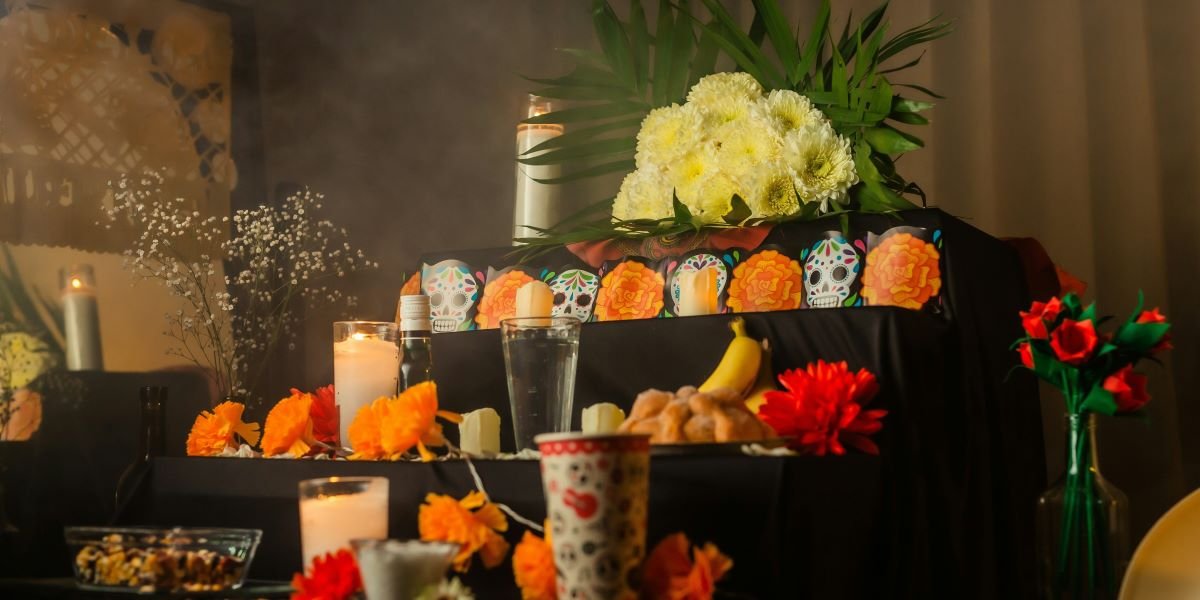
Participating businesses set up traditional ofrendas, the home altars families build with photographs, candles, flowers and the favorite foods of loved ones who have died. Visitors can expect free traditional food and drinks, commemorative photo booths, and costumed Catrinas and Catrines inside the stores.

The format reflects what 26th Street has long been: a corridor where family businesses carry the neighborhood’s culture. Holding the celebration inside those shops, rather than on a single stage, sends visitors door to door along a street the chamber promotes as the heart of Little Village.

Carrera de los Muertos 5K Marks Its 19th Year In Pilsen

On Saturday morning, the United Neighborhood Organization holds the 19th UNO Carrera de los Muertos, or Race of the Dead, 5K. The race starts at 8 a.m. at Benito Juárez Community Academy, 1450 to 1510 W. Cermak Road.

Runner activities, including gear check, food sales and face painting, open at 6 a.m., and entertainment begins at 7 a.m. The course takes runners and walkers past Pilsen’s murals, with live Latin music, folkloric dance groups and Chicago house music DJs along the route.

Awards are presented on the main stage at 9:40 a.m., followed by a post-race party with Mexican and Latin American food and Día de los Muertos activities for children. The event wraps up at 11:30 a.m., leaving time to head to 26th Street for Xempasúchil.

Two Bike Rides Turn Remembrance Into A Call For Safer Streets

Two Southwest Side groups are using the holiday to honor people killed in traffic crashes. Both are asking officials to invest in street-safety upgrades.

Gage Park Cyclists hosts a Día de los Muertos ride at 10 a.m. Saturday. The route visits several ghost bikes, the white-painted bicycles placed where cyclists have been killed, across the Southwest Side.

On Sunday, the Little Village Environmental Justice Organization holds its first Ofrendas in Motion ride from 10 a.m. to noon. Riders are invited to decorate their bikes as ofrendas and follow a route of about two miles along the 26th Street commercial corridor, starting at La Villita Farm. The ride passes directly through the Xempasúchil celebration.

LVEJO’s analysis of city traffic data found that 17 people were killed and 201 were seriously injured in traffic crashes in Little Village from 2020 to 2024. The organization frames the ride as a way to honor those neighbors while making the case for safer streets. The pairing makes sense: Día de los Muertos is about keeping the dead present in community life, and the ride carries that idea onto the street where many of those crashes happened.

Museum Exhibition Anchors The Season Through November 29

For visitors who want context before or after the weekend, the 40th annual Día de Muertos exhibition at the National Museum of Mexican Art runs through November 29 at 1852 W. 19th St. in Pilsen. Admission is free.

This year’s exhibition, Where Memory Lives: 40 Years of Día de Muertos, draws on the museum’s Permanent Collection and honors Dr. Gilberto Cárdenas, a Chicano Studies scholar who died in 2026. The museum describes the holiday as rooted in ancient Mesoamerican beliefs and Catholicism, with each region of Mexico adding its own customs over centuries. Youth artists from Yollocalli Arts Reach designed the courtyard installation, where visitors can add a note, drawing or memory to a community ofrenda.

Weekend Schedule Across Pilsen And Little Village

Saturday, October 31

  • 6 a.m.: Carrera de los Muertos runner activities open at Benito Juárez Community Academy.
  • 8 a.m.: The 5K starts.
  • 10 a.m.: Gage Park Cyclists Día de los Muertos ride.
  • 11 a.m. to 6 p.m.: Xempasúchil along 26th Street.

Sunday, November 1

  • 10 a.m. to noon: Ofrendas in Motion ride from La Villita Farm.
  • 11 a.m. to 6 p.m.: Xempasúchil along 26th Street.

FAQs

When Is Día de los Muertos In 2026?

Día de los Muertos is observed November 1 and 2, which fall on a Sunday and a Monday in 2026. In Chicago, most neighborhood celebrations take place over the weekend of October 31 and November 1.

Where Can I Celebrate Día de los Muertos In Chicago This Weekend?

Little Village hosts Xempasúchil along 26th Street on October 31 and November 1, and Pilsen hosts the Carrera de los Muertos 5K on October 31. The National Museum of Mexican Art’s free exhibition is open through November 29.

What Time Does The Carrera de los Muertos 5K Start?

The race starts at 8 a.m. Saturday, October 31, at Benito Juárez Community Academy, 1450 to 1510 W. Cermak Road. Runner activities open at 6 a.m.

Is The National Museum of Mexican Art’s Día de Muertos Exhibition Free?

Yes. Where Memory Lives: 40 Years of Día de Muertos is free and runs through November 29 at the museum in Pilsen.

“`

**SEO Title:** Día de los Muertos Chicago 2026: Weekend Events Guide

**Meta Description:** Little Village and Pilsen mark Día de los Muertos Oct. 31 to Nov. 1 with Xempasúchil ofrendas, the 19th Carrera de los Muertos 5K and bike rides.

**Slug:** dia-de-los-muertos-chicago-2026-pilsen-little-village-weekend

**Focus Keyphrases:** dia de los muertos chicago, dia de los muertos 5k chicago, day of the dead pilsen

**Unsplash Keywords:** Día de los Muertos ofrenda, marigold flowers altar, Catrina face paint, Pilsen Chicago mural, Day of the Dead celebration, sugar skulls, bicycle decorated flowers, Chicago neighborhood street festival