The Chicago Journal

Javier Guzman’s Riptide Tells a Story of Failure, Faith, Family and Redemption

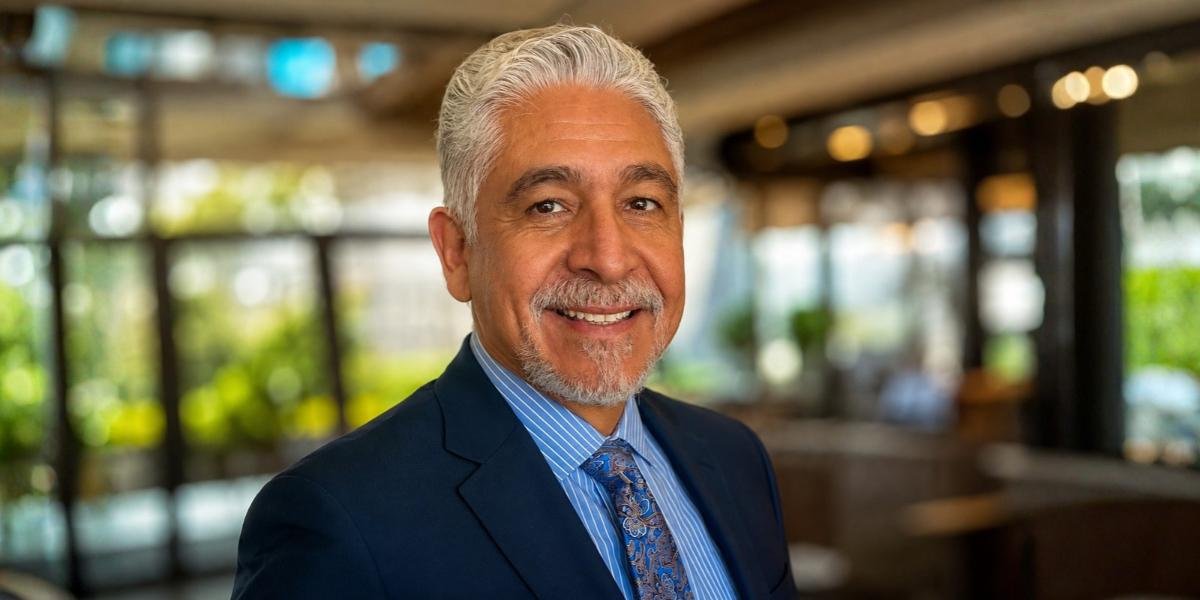
By Janice O’Brien

The public story of Javier Guzman once appeared to have a clear ending. A decorated Tampa narcotics detective who had worked undercover with the DEA was arrested, labeled a dirty cop, convicted, and sent to prison. In Riptide: Cartels, Cocaine, and an Undercover Cop’s Fall from Grace, Guzman returns to that collapse, but he also describes the life that continued after the headlines disappeared.

Riptide is an action-filled memoir about cartel investigations and the dangerous performance required of an undercover officer. Guzman does not ask readers to forget what he did. He asks them to consider whether a person can take responsibility for serious failure and still become useful to a family and community.

“Ultimately, the responsibility is all on me,” Guzman said. “I made the decisions that landed me in prison, and I own that.”

Before his fall, Guzman was known as a talented, fearless investigator. His Puerto Rican and South Bronx roots gave him bilingual skills and cultural familiarity. He moved from patrol to vice, became a detective, and joined a DEA task force. His undercover work contributed to major investigations and an Officer of the Year honor.

The same qualities that helped him succeed also drew him deeper into a dangerous double life. Guzman spent extensive time with informants, traffickers, and their families. He became emotionally attached to targets and increasingly identified with the people he was supposed to arrest. During Operation PROMO, a complex money-laundering case, he crossed the legal and ethical line by accepting money.

Guzman estimates that he took approximately $20,000 to $25,000. He says he stopped after a short period because of guilt and gave some of the money to homeless people. He distinguishes explanation from excuse.

“Were there other factors that contributed to my poor decisions? Yes,” he said. “But I missed some off-ramps that in retrospect I should have taken.”

Those missed exits included his emotional reaction to the arrest of a target, his decision to go absent without leave rather than return to uniform duty, and a police psychologist’s recommendation that he be removed from the operation. Guzman now recognizes each moment as an opportunity to step away before the damage became permanent.

When he was arrested, the language used to describe him became part of his punishment. Headlines framed him as a superstar cop who had fallen from grace, betrayed the badge, and become a criminal. Guzman says those labels shattered his sense of identity because he still believed in law enforcement and the rule of law.

“I pled guilty, got sentenced, and did my time,” he said.

Prison became the beginning of the book. Guzman started writing for therapeutic reasons, using the page to examine how he had moved from decorated detective to convicted felon. After his release, however, he hesitated to make the story public. He feared renewed attention could disrupt the life of his wife, Elizabeth, and their family.

Elizabeth’s loyalty forms an emotional center of Riptide. Guzman describes the memoir as a love story about his wife’s devotion as well as a testament to faith, redemption, and hope. Her presence shows the consequences borne by those closest to him.

A turning point came when Guzman was invited to speak at a law enforcement conference in San Diego. The experience convinced him that disclosure could serve a purpose. Instead of treating his past only as a source of shame, he could use it to warn officers, supervisors, and agencies about isolation, blurred boundaries, and ignored signs of distress.

After prison, Guzman focused on rebuilding. He worked, started his own business, formed friendships, attended church, and served as a pastor for five years. He knew that a felony conviction would remain part of his public identity and that some people would never accept his transformation. Still, he chose to measure redemption through conduct rather than reputation.

“I was determined though to do whatever I needed to do to serve my family and community well, to put the past behind me,” Guzman said.

Reconnection has also played a role in his healing. Some police friends remained loyal throughout his legal ordeal. More recently, after he began sharing parts of his story on social media, former colleagues reached out to reconnect. Guzman describes the effect as miraculous.

The memoir does not offer an easy verdict on whether Guzman deserves redemption. Its power lies in leaving that question with the reader. It acknowledges betrayal, punishment, and lasting consequences while insisting that failure need not become a person’s only identity.

“I truly hope that my readers see that our failures in life don’t have to define us,” Guzman said.

Riptide is available on Amazon.

How Billy Planer Turned Cross-Country Teen Journeys Into Lessons for Conversations That Matter

By: Brenda Myles

Long before Billy Planer began writing Conversations That Matter, he was putting its central idea into practice on buses, in meeting rooms, at historic sites, and across communities throughout the United States. His work has taken more than 35,000 people on educational journeys built around listening, identity, public issues, and firsthand encounters. The best-known early example was Etgar 36, the five-week summer program he created in 2003 to help teenagers examine what they believed by meeting people who strongly disagreed with one another.

The concept grew out of Planer’s experience leading youth groups. He had already been taking teens on annual weekend trips to different cities to explore local history, culture, and civic issues. He wanted participants to understand how those places and stories related to their own identities as Americans. Eventually, he expanded the idea into a national journey focused on history, politics, and activism.

Rather than presenting one approved viewpoint, Etgar 36 placed opposing perspectives in front of participants. Planer describes the purpose as giving teens the opportunity to discover what they thought by engaging in civil discourse with people they disagreed with. In one sequence, the group met with a father whose son was murdered at Columbine High School in 1999 and who became a national activist for gun safety. Two days later, the same teenagers met with a gun-rights lobbyist and activist. The structure required them to listen across a divide rather than learn an issue from a single source.

Planer used similar encounters on abortion, marriage equality, climate change, marijuana legalization, and wealth disparity. The point was not to make every participant reach the same conclusion. It was to make sure their conclusions had been tested by contact with arguments, experiences, and people they might otherwise never encounter. That method became one of the foundations of Conversations That Matter.

Planer summarizes the book this way: “Conversations That Matter is about how and why we must talk with people who don’t look, think, pray, love, and in 2026, vote like us.” He adds, “We must become comfortable being uncomfortable, having what I term a conversation that matters.” For readers who have seen political or cultural disagreement end relationships, the phrase is an invitation to stay in the room longer and learn how to manage discomfort rather than treating discomfort as a signal to leave.

His approach also asks people to examine the strength of their own beliefs. Planer compares disagreement to a test drive. “All we are doing when we speak to someone who we disagree with is we are test driving our thoughts, beliefs, and opinions,” he says. “You would never buy a car without test driving it and seeing how it handles curves, potholes, etc. Why would you hold on to core beliefs without seeing how they stand up to any pushback? If you can’t defend your views, how strong are they really?”

The work eventually expanded well beyond the original teen journey. In 2004, Planer began leading three-day Civil Rights journeys in the American South for both adult and teen groups. He says those experiences reinforced his belief that leaving familiar surroundings can make people more open to ideas and encounters they might normally avoid. A new setting can interrupt routine, lower defenses, and make it easier to ask questions that might feel too risky in an ordinary social environment. That insight now appears in the book as a broader invitation to stretch conversational boundaries.

That does not mean Planer expects disagreement to become pleasant. He says difficult conversations may never feel comfortable. The more realistic goal is to become more capable inside them. The techniques in his book are intended to help readers remain calm and confident, reduce the chances that a discussion becomes overheated, and avoid taking every challenge as a personal attack.

The same philosophy explains why Planer values travel as a teaching tool. New places disrupt routine. They expose participants to histories, communities, and perspectives outside their ordinary environment. In Planer’s view, that physical movement can mirror the intellectual movement required by a serious conversation: leaving what is familiar, crossing into discomfort, and returning with a broader understanding.

More than two decades after Etgar 36 began, Conversations That Matter translates those experiences for readers who may never board one of Planer’s buses. Its lessons come from thousands of face-to-face encounters and a belief that disagreement can sharpen ideas without destroying relationships. The book asks readers to approach conversation not as a contest to win, but as a chance to understand what they believe, why they believe it, and who is standing across from them.

Conversations That Matter is available on Amazon.

Chicago Fed Data Shows Midwest Manufacturing Rebound as Service Businesses Lag in October

Two new Federal Reserve Bank of Chicago reports point to a Midwest economy picking up speed, driven by factories rather than service businesses. The national activity index rose to 0.07 in September. The bank’s regional survey climbed to +6 in October, with manufacturing at +45 while nonmanufacturing stayed negative at -14.

Key Takeaways

  • The Chicago Fed National Activity Index rose to 0.07 in September from a revised -0.08 in August. That signals national growth slightly above its historical trend.
  • The Chicago Fed Survey of Economic Conditions activity index rose to +6 in October from -4 in September, which the bank describes as growth near trend.
  • Manufacturing activity among surveyed Midwest businesses jumped to +45 from +24.
  • Nonmanufacturing activity improved to -14 from -20 but remains below average.
  • Both the current and planned hiring indexes in the regional survey stayed negative.

Chicago Fed National Activity Index Turns Positive in September

The Federal Reserve Bank of Chicago released its September national activity index on Monday, October 26. The index combines 85 monthly indicators of U.S. economic activity into a single number. A reading of zero means the economy is growing at its long-run average pace. Positive readings mean faster growth, and negative readings mean slower growth.

The index rose to 0.07 in September after a revised reading of -0.08 in August. Its three-month average rose to 0.03 from 0.01. Indicators tied to production and income led the gain, and sales, orders and inventories also added to it. Employment-related indicators were neutral. The personal consumption and housing category pulled the index down.

That breakdown matters for readers in Chicago. The national gain came mostly from making and selling goods, not from consumers spending more or from hiring.

Midwest Economy Picks Up in October, Led by Factories

The Chicago Fed’s regional survey, released October 22, shows a similar picture closer to home. The Chicago Fed Survey of Economic Conditions asks business contacts across the bank’s district, which spans Illinois, Indiana, Iowa, Michigan and Wisconsin, to rate conditions at their own firms. Each answer is compared with that firm’s own history. The index runs from -100 to +100, and zero means average growth.

The overall activity index rose to +6 in October from -4 in September. The Chicago Fed describes that level as growth near trend. After a below-average September, Midwest economy news turned modestly positive.

Manufacturing in the Midwest Outpaces Service Businesses

The gap between sectors is the most striking part of the October survey. The manufacturing activity index nearly doubled, rising to +45 from +24. That means a clear majority of factory respondents reported above-average activity at their firms. Manufacturing in the Midwest has long anchored the region’s economy, and this year’s manufacturing technology show at McCormick Place showed how much of that industrial base still runs through Chicago.

Service businesses tell a different story. The nonmanufacturing index improved to -14 from -20 but stayed below zero. That category covers a wide range of employers, from retailers and restaurants to professional and business services. The economy of the Midwest is therefore running at two speeds: factories are reporting strong activity, while much of the service sector is still recovering from a softer stretch.

Hiring Remains Below Average as Activity Improves

Stronger activity has not yet turned into hiring. According to the Chicago Fed, the pace of current hiring among survey respondents slowed in October. Expectations for hiring over the next 12 months improved, but both hiring indexes remained negative.

Other parts of the survey point the same way. Respondents’ outlook for the U.S. economy over the next 12 months slipped slightly, and 31 percent expected economic activity to increase. Plans for capital spending, meaning investment in equipment, buildings and similar assets, eased but stayed positive. Labor and nonlabor cost pressures both declined and remained below average.

What the Numbers Mean for Chicago-Area Workers and Employers

For employers, the survey suggests demand is improving, especially for goods, while costs are easing. That combination can give businesses room to plan, though many appear to be waiting before adding staff.

For workers, the message is mixed. Growth in the economy in the Midwest is real, but hiring remains below its usual pace. Factory workers may see more stable conditions sooner than service workers, given the gap in activity between the two sectors. Job seekers should expect a cautious hiring market through the end of the year, even as business activity improves.

What to Watch Next in Midwest Economy News

The Chicago Fed publishes its next labor market indicators on Thursday, October 29. Those will show whether employment data catches up with the gains in activity. The October national activity index follows on November 23. Together, the releases will show whether the factory-led rebound spreads into services and hiring heading into 2027.

FAQs

How Is the Economy of the Midwest Changing?

Midwest economic activity improved in October, rising to near-trend growth according to the Chicago Fed’s regional survey. Manufacturing is driving the gain, while service businesses and hiring remain below average.

What Is the Chicago Fed National Activity Index?

The Chicago Fed National Activity Index is a monthly measure built from 85 indicators of U.S. economic activity. A reading of zero means the economy is growing at its historical average rate, and the index stood at 0.07 in September 2026.

What Is the Chicago Fed Survey of Economic Conditions?

The Chicago Fed Survey of Economic Conditions is a monthly survey of business contacts across Illinois, Indiana, Iowa, Michigan and Wisconsin. It measures activity, hiring, capital spending and cost pressures against each firm’s own historical average.