The Chicago Journal

More Than 1,000 Birds Killed Or Injured In Chicago Building Collisions As Bird-Safe Ordinance Waits In Committee

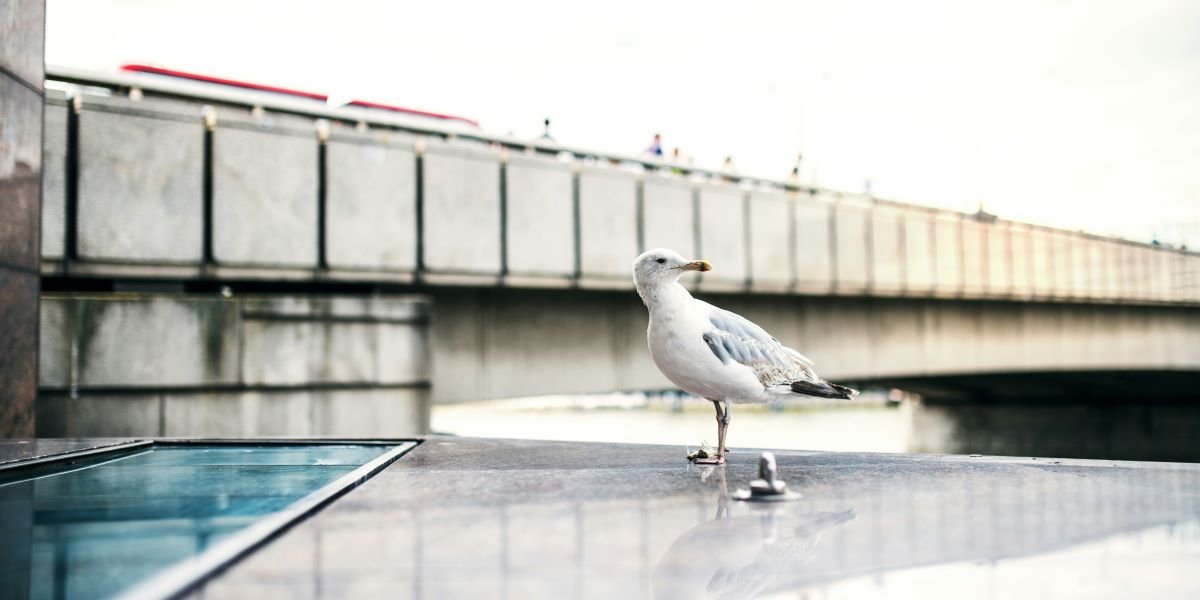
More than 1,000 migratory birds were killed or injured after colliding with buildings in Chicago and Evanston on October 17 and 18, 2026, according to Chicago Bird Collision Monitors. The mass collision has renewed calls for a bird-friendly building ordinance that has been waiting in the City Council’s Zoning Committee since July.

Key Takeaways

  • Volunteers collected the birds in downtown Chicago and on Northwestern University’s Evanston campus over the October 17–18 weekend.
  • BirdCast estimated that about a billion birds were in flight over the contiguous United States on the night of October 17.
  • The proposed ordinance would set bird-safe glass and lighting standards for new construction and major renovations in Chicago.
  • After 960 birds died at McCormick Place Lakeside Center in a single night in October 2023, markers added to its glass cut collisions by 95%, according to Bird Friendly Chicago.
  • Chicago Bird Collision Monitors typically recovers 5,000 to 6,000 birds a year within a 1.5-square-mile downtown zone.

Why Do Birds Fly Into Windows In Chicago

Chicago sits along one of North America’s major migratory routes, and the city’s glass skyline lies directly in the path. “Major events like this occur because Chicago is a major migratory path for millions of birds,” said Annette Prince, director of Chicago Bird Collision Monitors.

Two factors drive most collisions. Reflective glass can look like open sky or trees to a bird, which gives it no signal that a solid surface is there. Artificial light at night compounds the problem by drawing nocturnal migrants toward buildings. Research at McCormick Place found that shutting off even half of the building’s lights reduced bird collisions by six to 11 times.

The weekend of October 17 combined both factors with unusually heavy migration. BirdCast, the migration forecasting project, estimated that about a billion birds were in flight over the contiguous United States that Friday night. Chicago Bird Collision Monitors volunteers, who routinely search downtown before sunrise during spring and fall migration, said the weekend’s numbers were especially high.

Bird Migration Chicago Volunteers Track Collisions Year-Round

Chicago Bird Collision Monitors is a volunteer-led conservation group that rescues injured birds and documents those that die after striking buildings. Over the October 17–18 weekend, volunteers searched downtown Chicago and Northwestern University’s Evanston campus, collecting dead birds and rescuing injured ones.

The weekend stood out against the group’s regular numbers. Chicago Bird Collision Monitors typically recovers between 5,000 and 6,000 injured or dead birds a year within a 1.5-square-mile downtown zone. More than 1,000 in a single weekend represents a large share of that annual total arriving in two days.

Chicago has seen events like this before. In early October 2023, 960 birds died at McCormick Place Lakeside Center in a single night. Experts described it as the highest number of bird-collision deaths recorded in the United States in one day.

Bird Safe Glass Ordinance Moves Slowly Through City Council

The policy response has been years in the making. In 2020, rather than pass a bird-friendly building law, the City Council directed the Department of Planning and Development to give greater weight to bird-friendly design within the city’s Sustainable Development Policy. That approach rewards developers for including bird-safe features but does not require them.

A new ordinance was introduced in 2026, the second attempt since 2019. At the March 18 City Council meeting, Ald. Anthony Beale (9th) sent it to the Rules Committee. In July, supporters freed the measure from Rules, and it was sent to the Zoning Committee, where it remains. The proposal would establish bird-safe glass and lighting standards for new construction and major renovations. Its lead sponsor, Ald. Maria Hadden (49th), chairs the Committee on Environmental Protection and Energy.

Advocates point to other cities as models. New York, San Francisco, and Toronto have all passed bird-friendly building laws. “Chicago must require that future buildings use bird-friendly building designs and materials so we do not add to the devastating toll existing structures take on bird life,” Prince said after the October weekend.

The building industry has raised cost concerns. At a 2025 City Council hearing, opponents argued that an ordinance would add regulation and expense to new construction. The Building Owners and Managers Association of Chicago said owners would struggle to absorb the cost of any requirement to retrofit existing glass. The current proposal focuses on new construction and major renovations rather than requiring retrofits across existing buildings.

McCormick Place Shows What Bird-Safe Design Can Do

The clearest local evidence comes from McCormick Place. After the 2023 collision event, visible markers were added to the Lakeside Center’s glass. Bird collisions at the building later dropped by 95%, according to Bird Friendly Chicago.

Chicago also relies on a voluntary approach. Lights Out Chicago, which has run since 2000, encourages building managers to turn off decorative upper-story lights after 11 p.m. during migration. Bird Friendly Chicago is urging continued support for the program alongside the ordinance, arguing that voluntary dimming and mandatory glass standards address different parts of the same problem.

FAQs

Why Do Birds Fly Into Windows?

Birds often cannot see glass. Reflective windows can mirror the sky or trees, and lights at night draw migrating birds toward buildings, which raises the risk of collisions during spring and fall migration.

What Is Bird Safe Glass?

Bird-safe glass uses patterns, markers, or other treatments that make windows visible to birds. Chicago’s proposed ordinance would set bird-safe glass standards for new construction and major renovations.

How Do You Prevent Birds From Hitting Windows?

Common approaches include visible markers or patterned glass, exterior screens, and reducing nighttime lighting. At McCormick Place, adding visible markers to the glass cut bird collisions by 95%, according to Bird Friendly Chicago.

What Is Lights Out Chicago?

Lights Out Chicago is a voluntary program, running since 2000, that encourages building managers to turn off decorative upper-story lights after 11 p.m. during migration seasons to reduce bird collisions.


AI Takes On Accounting Work as CPAs Rethink Their Roles

For years, artificial intelligence in accounting was discussed mainly as a productivity tool. It could summarize tax research, draft client communications, extract information from documents and help staff move more quickly through the administrative work surrounding a tax return.

That distinction is beginning to blur.

AI systems are increasingly able to coordinate work that once required people to move manually between documents, tax software and research tools. Through integrations with specialized tax platforms, users can provide financial information and source documents through an AI interface and move much closer to a completed return than would have been practical only a short time ago.

For CPA and tax firms, that raises a question that goes beyond whether AI can save staff time.

If technology continues to reduce the effort required to prepare returns, firms may eventually compete less on their ability to produce the forms themselves and more on the broader value they provide around the client relationship.

Tax Preparation Is Becoming More Automated

Tax preparation has always involved more than filling out forms. Complex clients still require judgment, interpretation, planning and professional accountability.

At the same time, the production side of the work is changing.

Document intake, classification, data extraction, research, workpaper preparation, drafting and review assistance are all becoming increasingly susceptible to automation. As AI integrates more deeply with tax software, portions of return preparation that historically required significant staff time may become faster and less expensive to perform.

That does not mean the CPA disappears. It does, however, change the economics of the service.

“The firms that are most exposed are the ones that continue to view the completed tax return as the primary product,” said Val Kharkover, founder of Oakspring Labs. “As AI improves, the production layer is likely to become faster and less expensive. The long-term question is what additional value the firm provides when producing the form itself is no longer the hardest part of the engagement.”

Larger Firms Are Already Moving

The largest accounting and professional-services firms have spent years investing in technology designed to make traditional work more efficient.

AI is increasingly being applied to tax research, document processing, workflow management and other areas that historically required substantial professional labor. At the same time, larger firms are expanding advisory services around automation, data, AI implementation and technology strategy.

That combination has competitive implications.

If technology lowers the cost of serving a client, businesses that were once too small for a national firm may become more attractive. A larger organization can automate portions of the compliance work while using broader technology capabilities to sell higher-value advisory services into the same relationship.

Myron Kharkover, co-founder and head of technology at Oakspring Labs, said smaller firms should pay attention to that shift.

“Automation changes more than the cost of completing the work,” he said. “It gives firms more capacity and allows them to broaden the services they can offer. Regional firms do not need to become software companies, but they do need to become more differentiated and more valuable to the client.”

The competitive risk is therefore not simply that AI replaces individual accounting tasks. It is that technology-enabled firms become capable of serving more clients while providing a broader range of services.

The Client Relationship Remains the Advantage

Regional CPA firms still possess an advantage that technology alone cannot easily reproduce: long-standing relationships with business owners.

A CPA who has advised the same company for years may know where margins are under pressure, where cash flow becomes tight and where operational problems repeatedly appear. Those observations increasingly overlap with technology decisions.

A business owner complaining about headcount may have an automation problem. A company producing reports late may have a data problem. A recurring reconciliation issue may point to disconnected systems.

The CPA or fractional CFO is often already close enough to recognize those needs.

Historically, however, the technology work itself has often been referred elsewhere because most accounting firms do not employ engineers, AI specialists or implementation teams.

As technology becomes more important to business operations, repeatedly referring that work away carries a strategic cost. Outside providers begin learning the business, building relationships with management and becoming involved in operational decisions.

Over time, some of the influence that once belonged to the CPA relationship can move elsewhere.

A Technology-Enabled Advisory Model

That does not mean accounting firms need to build large technology practices internally.

For many regional firms, hiring AI engineers, technical salespeople and implementation teams would require substantial capital and management attention.

A partnership model provides another option.

Oakspring Labs works with CPA firms and fractional CFOs that want to expand the technology-enabled advisory services they offer existing clients without building those capabilities themselves.

The CPA firm remains closest to the client. Oakspring works behind the relationship to identify technology opportunities, evaluate the business case, support the sales process, design and implement systems and provide ongoing technical delivery.

The goal is not to turn accountants into software developers. It is to allow them to participate in technology needs already emerging inside their client base.

A CPA firm may identify a client spending hundreds of employee hours manually preparing reports. A fractional CFO may see that a company is poorly using its CRM. Another client may be struggling with document management, internal workflows or disconnected systems.

Each of those problems can become an advisory opportunity.

The Opportunity May Already Be Inside the Client Book

Accounting firms may not need to acquire entirely new customers to build a technology-enabled advisory practice.

Their existing clients are already spending money on software, AI, cybersecurity, automation and consultants. The question is whether the CPA firm remains connected to those decisions.

Val Kharkover has previously described participating in a Big Four client-expansion initiative that used Salesforce and AI-assisted prioritization to identify potential opportunities within an existing client base.

The important point is where those opportunities came from. They already existed within relationships the firm had built.

Regional firms often possess the same fundamental asset: years of knowledge about their clients. What they frequently lack is the technical infrastructure to turn that knowledge into a broader service offering.

Where the Durable Value May Be

AI is unlikely to eliminate the need for professional judgment, planning and accountability. What it may do is reduce the economic value of routine production work.

As that happens, the accountant’s role may shift toward interpretation, planning, strategic advice and helping clients make better business and technology decisions.

The firms that adapt successfully may still prepare returns and provide compliance services, but those services may become part of a broader advisory relationship rather than the primary source of value.

Technology can automate portions of accounting work. It cannot easily replicate years of trust between an adviser and a business owner.

For CPA firms and fractional CFOs, that may be the more durable advantage as AI continues to improve.

What Happens After a Hotel Injury During a Weekend Getaway

The trip may last two days, with treatment and questions about an injury continuing well afterward.

An injured traveler can arrive home with a hotel receipt and discharge papers from the same afternoon. Those documents mark the point when a weekend away turned into time spent arranging care. A Chicago personal injury lawyer may assess the circumstances later, drawing on information collected before the return journey.

Back at the destination, a companion may have dealt with reception while the injured person waited to be seen. Their recollection adds another account of a day that became unexpectedly busy.

Holiday Injury Care in an Unfamiliar Place

Medical care abroad can start with local emergency services when an injury is serious, or symptoms are concerning. For help locating a facility, the CDC lists U.S. embassies and consulates as a resource overseas.

At the appointment, the clinician assesses the injury and discusses continuing treatment. Discharge records become part of that treatment history when the traveler sees a provider in Chicago. The overseas facility may provide additional documents afterward, extending the correspondence beyond the trip.

What Remains After a Hotel Accident

The guest’s account may eventually be discussed with someone who saw the fall and has since returned to another city. Contact information exchanged at the hotel makes that possible. It also provides a way to reach an employee whose shift ended during the medical visit.

A companion’s photographs can preserve the surroundings. A close image of water near an elevator records the surface, and a wider photograph shows the approach through the lobby, provided both can be taken safely. Signs in the area also form part of that record.

A management report establishes when staff were told about the injury and what the guest described. Where a written incident report is available, a copy adds the property’s account to the paperwork. The guest’s dated recollection can capture the conversation and the fall, leaving a record of details that may be discussed again weeks later.

Travel Injury Expenses After the Weekend

An extra night near the clinic comes with a room charge. Back in Chicago, the traveler may have to miss work for a follow-up appointment and return the next week for another visit. Receipts document the amounts paid, and appointment records help place those expenses within the course of treatment.

A room bill also tells a story. Discharge instructions may explain the delayed journey, connecting the additional accommodation to the injury.

Between appointments, a dated account of symptoms can capture what recovery has involved at home. Stairs or workday pain may come up at the next medical visit. Any potential recovery of expenses or other losses depends on the relevant insurance terms and applicable law.

Responsibility Depends on the Holiday Accident

A wet hotel floor brings the maintenance arrangements into the discussion. Who was responsible for that area, how long the condition existed, and what staff knew may all become relevant.

In Illinois, the Premises Liability Act provides a reasonable-care standard for owners or occupiers toward covered entrants. The circumstances of the fall determine how that standard applies.

Excursions can involve another business relationship. The hotel that took a reservation may have arranged an outing run by an outside operator. Booking documents help establish that relationship and the terms accepted when the activity was purchased.

Location also shapes the review, particularly when the trip crosses a state or national border.

Holiday Injury Follow-Up Back in Chicago

Coming home puts familiar medical care within reach. Records from the destination give the next provider details about the initial assessment and treatment.

The paperwork may also reveal insurance reporting requirements or questions about filing deadlines. A legal review can establish which jurisdiction’s laws may apply and where a potential claim belongs.

FAQ

What does the immediate aftermath of a holiday injury involve?

Medical care may happen alongside changes to travel arrangements and conversations with the property’s management.

Can an injured hotel guest pursue a claim?

A claim may be available depending on the circumstances and applicable law.

What records help explain a holiday accident?

Medical documents describe treatment. Photographs, incident reports, and witness accounts provide details about what happened.

Can a Chicago lawyer assess an injury elsewhere?

An initial review can address the location, parties involved, and appropriate representation.

Disclaimer: This article is provided for general informational and educational purposes only and does not constitute legal advice. Laws governing premises liability, personal injury claims, insurance coverage, filing deadlines, jurisdiction, and liability for accidents can vary depending on the location of the incident and the specific circumstances involved. The information presented, including references to Illinois law, may not apply to every situation and should not be relied upon as a substitute for advice from a qualified attorney. Anyone involved in a hotel, travel, or other personal injury matter should consult an appropriate legal professional to evaluate the facts of their individual case and applicable law.