
Maggie Keith and Foxhollow Farm Are Leaving the Next Generation Something Worth Continuing

By: Kate Sarmiento
At one point, the milking parlor at Foxhollow Farm was converted into a yoga studio, and a medical clinic went up next to the old dairy barn. That is a lot of history for a farm that now raises 100% grass-fed, grass-finished beef on 1,300 acres in Crestwood, Kentucky, and it makes Foxhollow a useful place to look at what succession involves. Anyone who has inherited a family business knows which sentence tends to show up first, and it is “we’ve always done it this way.” The phrase ends the conversation before anyone has checked whether the old way still works, and it tends to get said most by the people who love the business the most.
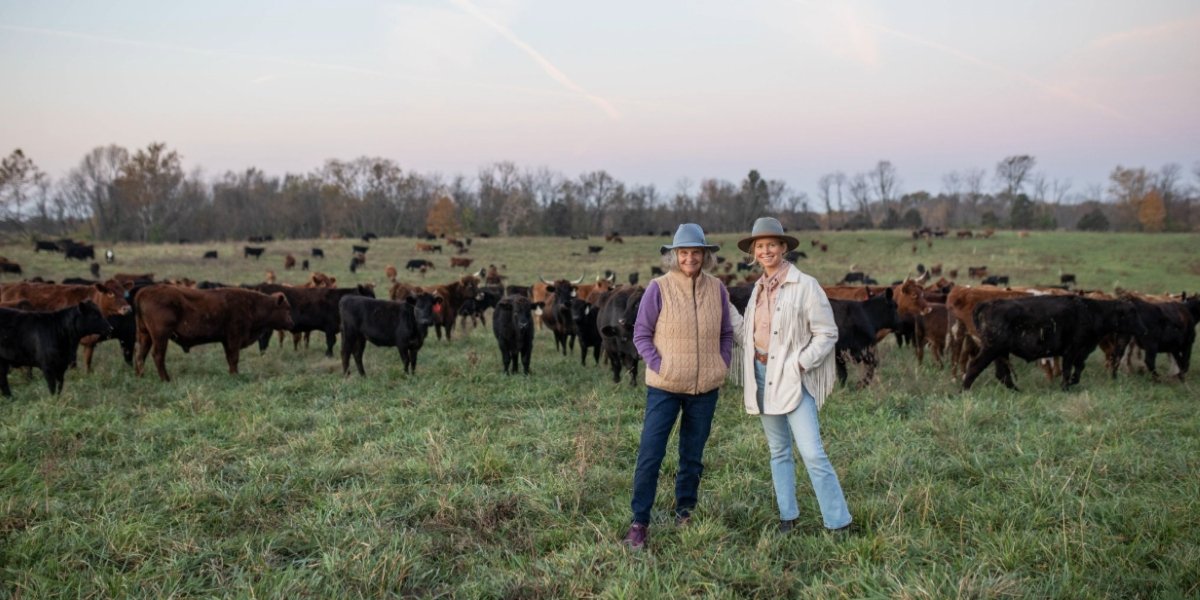
Foxhollow is Demeter Certified Biodynamic, holds Regenified Level 5 certification, which is the highest level of that regenerative agriculture standard, and sells its beef directly to customers. Maggie Keith, the farm’s fourth-generation steward, co-founder, and CEO, has had to decide which parts of the family legacy deserve protecting and which parts have to change for the farm to have a future. Her situation is more common than it might seem, because American farming is heading into a big handoff.
The average U.S. farm producer was 58.1 years old in 2022, and 38% of producers were 65 or older (Source: USDA National Agricultural Statistics Service, 2024). The number of producers 65 and up grew 12% between 2017 and 2022, while the number between 35 and 64 dropped 9%, and family-owned and operated farms make up 95% of all U.S. farms, so plenty of those handoffs will happen at family kitchen tables (Source: USDA National Agricultural Statistics Service, 2024).
Nobody Told the Milking Parlor It Was Permanent
The land that became Foxhollow Farm started out as a family property with a tenant farmer running a small dairy, a haying operation, a four-acre plot of tobacco, and an apple orchard. In 1972, Mary Shands moved her family out to the farm, and she later turned some of the old farmhouses into a health spa and bed-and-breakfast. By 1992, she had built the medical clinic and converted the milking parlor into the yoga studio, which gave the property a new life as a retreat for people who needed time in nature.
Mary’s three children, including Janey Newton, took over as stewards in 2005, stopped chemical farming, and chose biodynamics, a method built on the ideas of Rudolf Steiner, an Austrian teacher and scientist from the early 1900s. The first 30 head of cattle came home in July 2006, and Janey’s daughter, Maggie Keith, has worked alongside her mother since that year. The farm that once ran a dairy also hosted a wellness retreat and now raises grass-fed beef, which means the family has picked a new direction for the same piece of land more than once.
Plenty of family businesses struggle to make a handoff like that. Among U.S. family businesses, 73% had no documented succession plan for senior roles, two in five leaders expected it to be hard to fully hand over control, and 56% expected to stay involved longer than ideal to keep the transition smooth (Source: PwC, 2015). PwC’s family business leader gave the pattern a name, “sticky baton syndrome,” which describes older generations that hand over management in theory while staying in charge of the decisions that matter (Source: PwC, 2015). The next generation notices, since 47% of next-generation family members working in their businesses said the growing age gap with current leadership was making succession harder (Source: PwC, 2015).
Signing the Papers Takes an Afternoon
Transferring ownership is paperwork, and paperwork does not answer the harder question of whether the next person is allowed to change anything. Real succession includes permission to ask why a practice exists and to hear an answer better than “because that is how it was done.” More than half of family business leaders, 53%, believe family businesses reinvent themselves with each new generation (Source: PwC, 2015), which suggests the appetite for change already exists in many of them.
That permission matters for the money, too. Foxhollow’s position is that the next generation will only farm if farming pays, and the farm has spent nearly 20 years building a model that works financially. It sells beef directly to customers through online orders and subscription boxes, runs an on-farm market, and hosts farm experiences, which gives the farm several ways to earn a living from the same land. Selling directly is a growing route in American farming, since 116,617 farms sold directly to consumers in 2022 and the value of those sales rose 16% from 2017 (Source: USDA National Agricultural Statistics Service, 2024).
Younger farmers are showing up, too. Slightly over 1 million U.S. farmers had 10 or fewer years of experience in 2022; they averaged 47.1 years old, and their farms were smaller than average in both acres and sales (Source: USDA National Agricultural Statistics Service, 2024). Small farms run by new operators need a way to make money, and that puts a lot of weight on whether a farm can pay the people who work it.
Leave Them Something Worth Continuing
A legacy is easier to defend when it still works. After nearly 20 years, Foxhollow says it has moved past experimenting and now shows what regenerative agriculture can do, with Demeter Biodynamic, Regenified, and American Grassfed Association certifications behind the beef. Foxhollow’s stance is that people deserve to know their farmer and trust their food again, and a farm with a farmer they can meet and a pasture they can visit has a real way to offer that.
Maggie Keith lives on the farm with her husband and three children while serving as CEO, co-hosting Emmy-winning The Farmer and The Foodie, and chairing the board of The Berry Center. Foxhollow points to that mix of business, family, and land stewardship as a working picture of what modern farm leadership can look like. The farm’s own vision statement talks about honoring its roots while building resilience and abundance for future generations, and the history above shows what that looks like over decades, with the land staying in the family and the way it gets used changing along the way.
Succession asks one thing above all of the people handing over a business, and that is to leave the next generation something worth continuing. A farm frozen in place would make a fine museum, and museums rarely need a fourth generation.
Come See a Farm That Kept Asking Why
Foxhollow Farm invites visitors to see the result in person. Anyone curious about the beef can order 100% grass-fed, grass-finished cuts shipped regionally, and anyone who wants to see the land can plan a farm visit and stop by Foxhollow Market, which is open daily from dawn to dusk. Each order and each visit supports a farm that keeps asking why.