The Chicago Journal

Who Runs It Next? The Question Every Successful Family Business Has to Answer in Writing

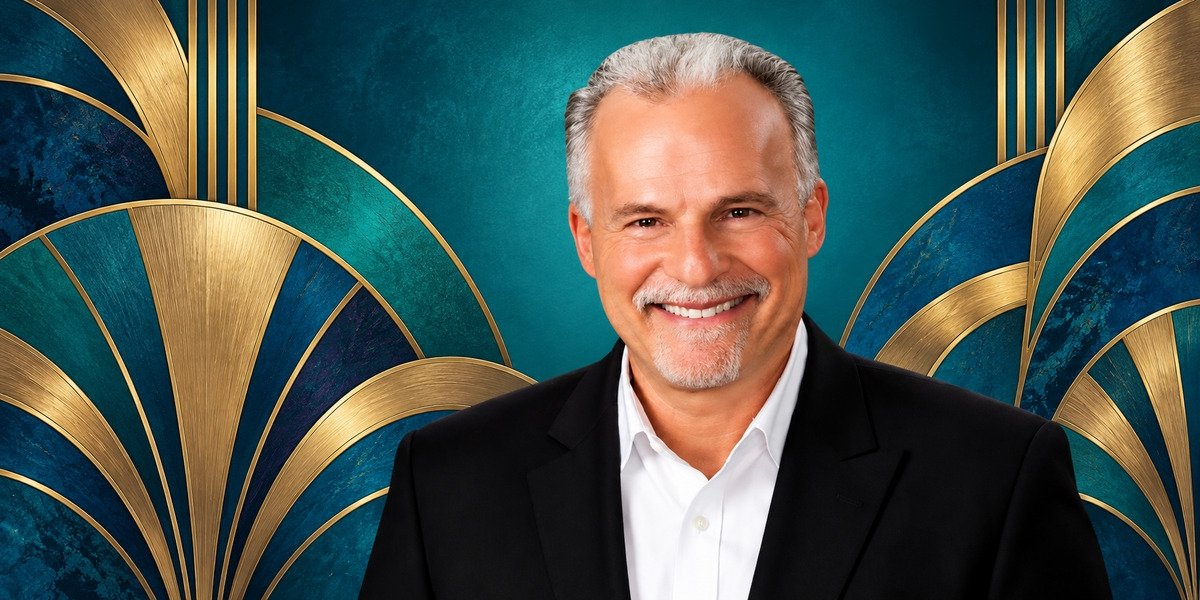
With the top 1% of Illinois filers starting near $774,921 and 36.2 million small businesses nationwide, many successful owners hold a company that depends on a single person. This feature explains why succession is more than a handoff, what a New Orleans tax attorney says breaks down, and what a written plan covers.

By Dr. Tamara Patzer

Ask a founder who will run the company in twenty years and the answer is often a pause. Illinois filers needed roughly $774,921 in adjusted gross income to reach the top 1% in SmartAsset’s 2026 projection1. Many owners who clear that mark do it with a company that depends on one person: themselves. Todd M. Villarrubia, a tax and estate attorney in New Orleans and author of Entrepreneurial B.E.A.S.T. Mode™, says the plan for what comes next is a business decision as much as a family one, and that it belongs on paper.

What does it take to reach the top 1% in Illinois?

Roughly $774,921, in SmartAsset’s projection for 20261. It is a 2026 projection of 2022 IRS data, counting filers rather than households1. Chicago owners will find the number lower than California’s $987,325 and higher than Georgia’s $714,2431.

An owner can reach that level through wages, a professional practice or the profits of a company. In the last case, the income depends on the company continuing to run well, which depends on who runs it.

How many businesses depend on one owner?

No single source says how many of those depend on one owner, but the scale is large. The U.S. Small Business Administration counts 36,207,130 small businesses in the country, which employ 62.3 million people, or 45.9 percent of private-sector workers2. Each has an owner, and each owner will eventually step aside.

The wave is arriving now. Cerulli Associates expects 105 trillion) and charity ($18 trillion)3. A large part of that will take the form of businesses and the property they sit on.

Why do successions fail?

Rarely because of the market. Villarrubia’s book makes the point in a single line: “The empire doesn’t fall from competition but from internal confusion.” A business that survives its rivals can still be undone by a family that does not know who is in charge.

The causes are familiar. No one was named. Two people were named and no one decided between them. The owner assumed the children would want the company, and they did not. Or they wanted it and were never prepared. Without a plan, the owner’s death or incapacity forces all of these questions at once.

Does succession mean treating everyone equally?

No, and the book is firm about it. In Villarrubia’s words, “Succession planning is not about treating everyone the same; it’s about ensuring the family enterprise survives.” A child who runs the company, a child who works elsewhere and a child who wants nothing to do with it may all deserve something, though not the same thing.

He ties the point to the cost of getting it wrong: “Succession planning ensures that wealth endures and, more importantly, doesn’t fracture your family after you’re gone.” Fairness and continuity are not the same, and a plan has to address both.

What does a written succession plan cover?

The details differ by family and by company, but the basic questions are the same:

  • Who is expected to lead, and what does that person need to learn first?
  • Who owns the company, and who controls it? The two can be different.
  • What happens if the named leader cannot serve?
  • How will family members who are not in the business be treated?
  • When will the plan be reviewed and revised?

A plan that answers these in writing gives everyone the same facts. It also forces the hard conversations to happen while the owner can still guide them.

How does the business keep running in the meantime?

A sensible approach, consistent with the book’s emphasis on early planning, is to treat succession as a process, not an event: start years before a handoff, bring the next leader into decisions in stages and keep outside advisers informed. The book also stresses a point that many owners overlook: the plan must fit the company’s structure and the family’s wishes, and both change.

The book frames the goal in terms of endurance: “wealth isn’t measured by what you create; it’s measured by what endures.” For a family business, endurance is the test of a succession plan.

What role do outside advisers play?

A larger one than many families expect. The lawyer who drafts the documents, the accountant who files the returns and the adviser who manages the money each see part of the succession picture. If they do not talk, the plan can contain conflicts that nobody notices until a death or a sale brings them out. Villarrubia’s book returns to this theme often: the quality and coordination of the team set the limit on the result.

A practical step is to share the succession outline with every adviser at the same time, and to ask each of them what in the plan would affect their own work. The answers often surface problems early, while they can still be fixed quietly.

What belongs in a one-page succession note?

Four lines. Who runs the company if the owner cannot, for the first thirty days. Who has authority over money in that period. Who tells employees, customers and the bank. And which adviser calls the others together. It is not a replacement for a full plan. It is a bridge that keeps the company running while the family and the advisers find their footing. Write it, share it with the people named and keep a copy where they can reach it. Then ask each person named whether they are willing, because a note that names an unwilling person is worse than no note at all.

Common questions

Is succession planning only for large companies? No. Any company that depends on its owner can benefit from a plan.

Does the plan have to name a family member? No. Some families name a manager, a partner or a buyer. The right answer depends on the family and the company.

What if the children do not want the business? The plan can say so openly, and the family can consider other options with a licensed attorney and a tax professional.

Sources

  1. SmartAsset, Income Needed to Be in the Top 1% in Every State (2026)
  2. U.S. Small Business Administration, Office of Advocacy, Frequently Asked Questions About Small Businesses 2026
  3. NAPA-Net, Wealth Transfers Expected to Hit $124 Trillion Through 2048 (reporting Cerulli)

About the author. Dr. Tamara Patzer is a publisher and former newspaper editor. She was on the staff of The Charlotte Sun when it was named a 2005 Pulitzer Prize finalist for its Hurricane Charley coverage.

About the source. Todd M. Villarrubia is an attorney with an LL.M. in Taxation and a Juris Doctorate. He is an Accredited Estate Planner, a Board Certified Expert in Estate Planning and Administration, and a Fiduciary Investment Advisor Representative. He is the author of Entrepreneurial B.E.A.S.T. Mode™. Wealth Planning Law Group, 101 W. Robert E. Lee Blvd., Ste 404, New Orleans, LA 70124. Phone: 504-982-8207; email: todd@lawealthplan.com; website: https://lawealthplan.com/?utm_source=newsanchored&utm_medium=chicago-journal&utm_campaign=top-1pct

Attorney advertising. Sponsored feature written on behalf of Todd M. Villarrubia. This article is general information, not legal or tax advice, and reading it does not create an attorney-client relationship. Results vary.

Constance E. Wills Brings Message of Mindset and Reinvention to Leadership Experience Tour

TROY, Mich. – A packed room at the Leadership Experience Tour got a lesson on August 8 in how much of daily decision-making runs on autopilot, and what it takes to interrupt it.

Constance E. Wills, a Tucson entrepreneur and retired criminal justice professional, delivered her featured presentation, “The Right Fit: Purpose, Vision, and the Power of Mindset,” on August 8, drawing on nearly 35 years inside the justice system to make a case that most people never examine the beliefs actually steering their choices.

“Change starts with recognition,” Wills told the audience, the idea that before anyone can choose a different response, they first have to notice the thought quietly driving the moment in front of them.

A Framework Rooted in Decades of Observation

Wills spent her career watching how repeated behavior, and a person’s willingness to change it, shaped outcomes inside the justice system, insight she has since incorporated into the mindset framework and tools she now teaches to a very different audience.

The Mindset Reset™ Framework helps people trace a decision back to the belief that produced it, separating inherited or automatic thinking from choices that reflect what someone actually wants. Thought Break™, a tool within the framework, builds a deliberate pause into the moment of decision itself, a chance to name the thought behind a reaction before acting on it, rather than recognizing it only after the fact.

Attendees in Troy said the shift was noticeable once Wills moved from concept to the Thought Break™ exercise, with the room growing quieter as people began applying the framework to their own recent decisions rather than simply listening to a talk.

From Criminal Justice to Mindset Education

Following her retirement, Wills founded Beauty Beyond The Wall, LLC, a Tucson-based company built around motivational speaking, coaching, mentoring, and mindset education. The company’s focus is specific: women in midlife and beyond navigating career transitions, identity shifts, leadership roles, and what Wills calls “renewed purpose.”

Through speaking engagements, mentoring, mindset education, and individual and group coaching, Wills works with clients to identify the thought patterns holding them back, whether that means a career pivot, reclaiming an identity set aside for years, or simply redefining what comes next.

She has also built a media presence around the same message, hosting A Moment With Constance and co-hosting Choose to Challenge: Mindset Alchemy on e360tv, extending her framework to audiences beyond the events she speaks at in person.

What Comes Next

Wills closed her Troy remarks by asking attendees to sit with one question: does what you’re choosing right now actually match the direction you say you want to go?

The Troy appearance also served as an early look at a larger initiative. Beauty Beyond The Wall is preparing to launch The Master Thinker Reset by the end of 2026, a new educational program built on the same mindset framework Wills introduced in Michigan. The company has not yet released further program details.

AT A GLANCE

Speaker: Constance E. Wills

Talk: “The Right Fit: Purpose, Vision, and the Power of Mindset”

Date: August 8, 2026

Event: Leadership Experience Tour

Location: Troy, Michigan

Company: Beauty Beyond The Wall, LLC, Tucson, Arizona

About Constance E. Wills

Constance E. Wills is the founder of Beauty Beyond The Wall, LLC, a motivational speaker, mentor, media host, and retired criminal justice professional with nearly 35 years of experience observing how mindset and decision-making shape outcomes. She developed the Mindset Reset™ Framework and Thought Break™ and hosts media programming focused on helping women navigate transition and reinvention with clarity and confidence.

About Beauty Beyond The Wall, LLC

Beauty Beyond The Wall, LLC is a Tucson, Arizona-based company offering motivational speaking, coaching, mentoring, and mindset education focused on personal reflection, decision-making, and self-awareness, with a particular focus on supporting women in midlife and beyond through transition, reinvention, identity, leadership, and renewed purpose.

Media Contact: Tish Brown, Fair Consulting Group | TBCOMM@me.com | +1 (424) 378-8491 | fairconsultinggroup.com

Northwestern Launches Four Research Initiatives, Including a Community-Engaged Research Center, for Its 175th Year

Northwestern University’s Office for Research announced four initiatives on October 13, 2026, as part of the university’s 175th year. They include $250,000 seed awards for interdisciplinary teams, a new Center for Community-Engaged Research, a strategic study of arts research, and expanded undergraduate research funding aimed at raising student participation by 50%.

Key Takeaways

  • The new Northwestern Nexus Lab Awards will give multiple interdisciplinary teams $250,000 each for 12 to 18 months of work aimed at major external funding competitions.
  • The Center for Community-Engaged Research (CCER) will be led by Michelle Shumate, the Delaney Family University Research Professor in the School of Communication.
  • Nexus Lab proposals that involve collaboration across the Chicago region are especially encouraged.
  • About one-third of Northwestern undergraduates currently do research, and the university is targeting a 50% increase in participation.
  • Brian Mustanski, associate vice president for research in social sciences, humanities and the arts, will lead a strategic study of research in the visual and performing arts.
  • The Provost’s 2026–27 Humanities, Social Sciences and the Arts Grant is getting additional pilot funding.

The Nexus Lab Awards Put Seed Money Behind Large Collaborations

The largest of the four initiatives is the Northwestern Nexus Lab Awards. Multiple interdisciplinary teams will each receive $250,000 for 12 to 18 months of work toward a major external funding competition. Teams will be chosen through proposal review and a pitch competition, so researchers will have to make their case directly.

The program welcomes ambitious proposals, including ones with significant uncertainty, as long as they have a realistic path to sustained outside support from industry, foundations, philanthropic organizations, or government agencies. The goal is to build research programs that last. Northwestern says successful teams could grow into university research institutes or centers.

The university also says it especially encourages collaborations across the Chicago region. That means the awards could connect Northwestern teams with hospitals, cultural institutions, and research partners well beyond Evanston. Teams that do not win an award will still have access to Office for Research resources for pursuing external funding.

Northwestern’s New Center Targets Durable Community Partnerships

The Center for Community-Engaged Research, housed in the Office for Research, takes on a long-standing problem in university-community research: partnerships that end when a single grant runs out. CCER is meant to help faculty and community organizations find each other, design projects together, and keep working together over time.

Michelle Shumate, the center’s inaugural director, said that durable networks built on shared goals and trust are what make progress on complex social problems possible. She described the center’s purpose as producing research that “creates meaningful community benefits” as well as new knowledge.

The center’s initial priorities are practical. It will help community groups and researchers identify potential collaborators, provide guidance on building fair and lasting partnerships, help teams with administrative processes, and offer training to faculty, staff, and students. It will also look for institutional barriers that make these partnerships harder.

For Chicago neighborhood organizations, the last priority could matter most. Community groups that have worked with universities often cite slow contracting, unclear expectations, and short project timelines as problems. Making those barriers part of the center’s mission signals that Northwestern sees some of the problems as internal.

A Strategic Study Aims to Strengthen Arts Research

The third initiative focuses on the visual and performing arts. Northwestern will fund a study to find ways to strengthen research and creative work at The Block Museum of Art, the Bienen School of Music, the School of Communication, Weinberg College of Arts and Sciences, and other arts programs. Brian Mustanski will lead the study.

The university is also adding pilot funding to the Provost’s 2026–27 Humanities, Social Sciences and the Arts Grant. Interim Vice President for Research Sumit Dhar said this kind of scholarship helps people understand human experience and question assumptions. The study adds to Northwestern’s other investments in the arts in a city where universities and cultural institutions often share audiences and talent.

Undergraduate Research Funding Grows

The fourth initiative focuses on students. About one-third of Northwestern undergraduates currently take part in formal research, and the university will pilot increased funding for the Office of Undergraduate Research to raise that share by 50%.

The office already helps students find faculty mentors, write proposals, work as research assistants, and pursue independent projects during the academic year and summer. Director Peter Civetta said research teaches students to evaluate evidence, change course when an approach fails, and explain their findings, skills that apply to any career.

Raising participation from roughly one in three students to about one in two would expand the number of undergraduates working alongside faculty. Many will be in Chicago-area labs, clinics, and cultural institutions.

The 175th Year Connects Northwestern’s History to Its Next Investments

Northwestern presented the four initiatives as a way to support discovery at every stage, from a student’s first project to a team pursuing a new field. President Mung Chiang said they share a goal of giving students and colleagues more opportunities to pursue their best ideas.

The announcement adds to the wave of research partnerships taking shape across Chicago’s universities. Northwestern’s focus on regional collaboration and community partnership points to research that is meant to have an impact well beyond campus.

FAQs

What are the Northwestern Nexus Lab Awards?

They are competitive seed awards of $250,000 each for interdisciplinary research teams. They fund 12 to 18 months of work aimed at winning major external grants, and teams are selected through proposal review and a pitch competition.

What is Northwestern’s Center for Community-Engaged Research?

The CCER is a new center in the Office for Research that helps faculty and community organizations build lasting research partnerships. Michelle Shumate of the School of Communication is its inaugural director.

How many Northwestern undergraduates do research?

About one-third of undergraduates currently take part in research. Northwestern is increasing funding for its Office of Undergraduate Research to raise participation by 50%.

Which Northwestern arts programs are included in the new study?

The study covers The Block Museum of Art, the Bienen School of Music, the School of Communication, Weinberg College of Arts and Sciences, and other programs that support the arts.

Why did Northwestern announce these initiatives now?

The four initiatives are part of Northwestern’s 175th anniversary and are meant to connect the university’s research history with new investments in collaboration and discovery.