The Chicago Journal

Tony Robbins: Taking Chicago Entrepreneurs from Operating Their Business to Owning It

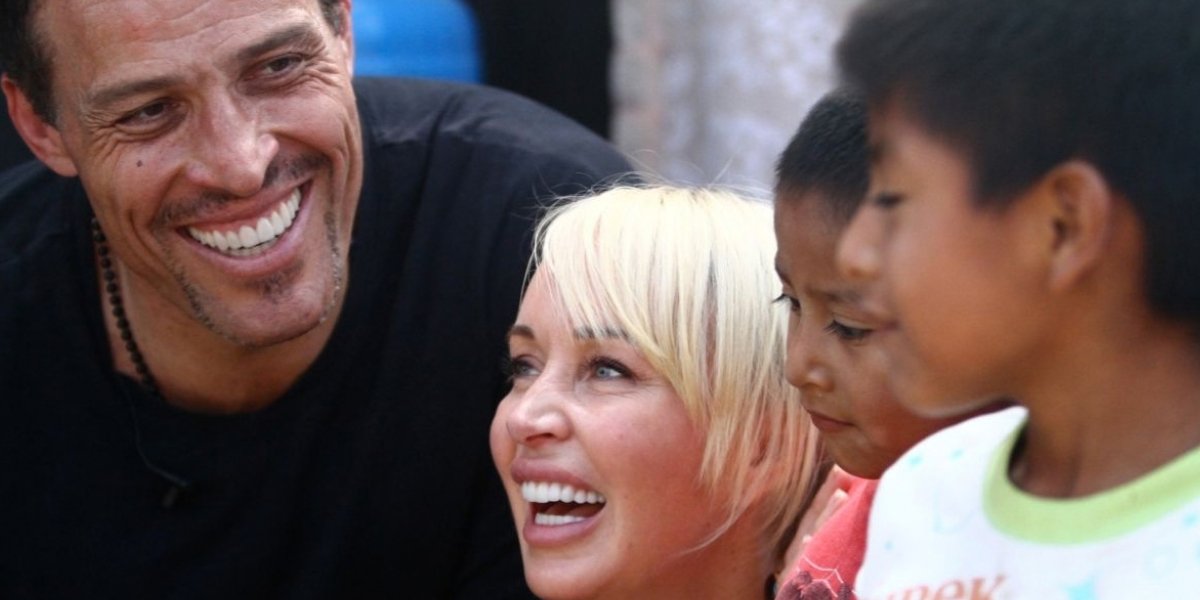
From its bustling business scene to its rich entertainment landscape, Chicago is a city built to work hard and play hard. To master that combination, Chicago entrepreneurs are turning to Tony Robbins, one of the world’s most recognized results coaches. Robbins is helping these entrepreneurs embrace the skills and systems that unlock unprecedented business growth without jeopardizing their personal lives.

Events that Inspire Chicago Entrepreneurs

Chicago entrepreneurs have been a major presence at Robbins’ business growth events, including the five-day Business Mastery event. Chicago’s economy is shaped by demanding industries ranging from finance and manufacturing to health care and technology. Robbins’ events help business leaders across these industries scale and sustain their companies without getting lost in the operations.

Business Mastery speaks to the major levers that determine business success, including strategic innovation, marketing mastery, sales systems, and financial optimization.

Business Mastery was originally created during the 2008 recession to help business owners succeed when everything else seemed to be falling apart. That origin story resonates with Chicago, a city that has rebuilt itself more than once and continues to push forward.

But business success shouldn’t come at the expense of personal fulfillment, and Robbins helps clients run the business instead of letting their business run them.

“People start their own businesses because they want more freedom, not less,” said Robbins. “We help them master the skills and capabilities to scale their business without sacrificing their personal lives.”

That balance involves transitioning out of daily operations and building a roadmap for sustainable growth. It’s a “less grinding, more growing” approach made possible by Robbins’ proven systems.

Results Coaching that Resonates

In addition to hosting business growth events, Robbins and his team provide business coaching and mentoring.

Just like the best athletes have coaches, so do the best business owners. Those coaches can condense years of learning into weeks. They can see a business’s blind spots and help its leaders prepare for disruptions that may be coming in the future.

Robbins’ business coaching is based on proven methodologies and techniques that have helped thousands of businesses get clear on their goals and catalyze unparalleled growth.

Robbins walks the walk in his own business endeavors, chairing a holding company with more than 120 privately held businesses and combined sales topping $22 billion a year. Harvard Business Press named Robbins one of the “Top 200 Business Gurus,” and American Express named him one of the “Top Six Business Leaders in the World.” Fortune has dubbed him the “CEO Whisperer.”

Inspiring Greatness Beyond the Office

Robbins’ systems go beyond Chicago boardrooms into the personal lives of people who feel stuck in some aspect of their lives. Through results coaching, Robbins helps people create massive change in their financial situation, relationships, health, and more. Clients start by getting clear on their goals and creating an action plan to achieve them. Coaching provides not only the systems to help people level up but also the accountability and momentum.

Robbins’ methods are so successful that he has been called upon to coach four U.S. presidents, top entertainers from Aerosmith to Green Day, and athletes like Serena Williams, Andre Agassi, and the Golden State Warriors NBA team.

In addition to coaching, Robbins holds self-development seminars such as Unleash the Power Within, which has been hosted multiple times in Chicago. Through in-person and live sessions, the four-day event has inspired millions of attendees worldwide to replace fear-based mindsets and limiting beliefs with concrete skills for creating lasting change.

Robbins also hosts the six-day Date with Destiny personal development conference. This event helps attendees stop being controlled by external forces and start shaping the life they want. They learn to shatter harmful patterns, let go of the past, find meaningful purpose, and take massive action toward that purpose. They’re not working in all the old ways that produced exhaustion and burnout. They’re using tried-and-true strategies that propel them toward growth they never dreamed of.

Challenges turn into opportunities at Date with Destiny, and the science proves it. Stanford’s Snyder Lab of Genetics studied attendees one month after the event and showed that they maintained a 50% increase in positive emotions, such as satisfaction and inner strength, and a 70% reduction in negative emotions like stress, loneliness, sadness, and anger.

Giving Back to the City

While Robbins helps Chicagoans work smarter to improve their businesses and lives, he also elevates the region through his philanthropic efforts. This includes the Basket Brigade of Suburban Chicago, inspired by Robbins’ childhood.

When Robbins was young, his family was facing serious struggles when a stranger showed up at the door with a complete Thanksgiving meal. That act of generosity inspired Robbins’ ongoing work to end global hunger. This work happens through local chapters like Chicago’s Basket Brigade, which delivers Thanksgiving meals to local families, as well as through Robbins’ partnership with Feeding America and the 100 Billion Meals Challenge. Robbins helped launch this initiative with Governor David Beasley, former director of the World Food Programme. Robbins has helped deliver over 92 billion meals to people in need in the past 10 years.

For Robbins, sharing what you earn doesn’t detract from professional success; it enriches and enhances it. In Robbins’ words, “The secret to living is giving.”

Effort That Elevates

Robbins’ coaching and business development are propelling local entrepreneurs and executives at every stage of growth. Whether through the energy of Unleash the Power Within or Date with Destiny, the intensive structure of Business Mastery, or the personalized accountability of one-on-one results coaching, Robbins offers a path forward for leaders who are ready to operate at a higher level.

Chicagoans have always been known for working hard, and Robbins helps them pour their efforts into systems that bring both professional and personal success and fulfillment. Chicagoans know that with the right skills, mindset, and coach in their corner, they can achieve the goals that really matter in ways that invigorate, not exhaust.

To learn more about Tony Robbins’ coaching programs and upcoming events, visit TonyRobbins.com.

Disclaimer: This article is for general informational purposes and does not constitute business, financial, medical, or mental health advice. Experiences with coaching and events vary, and no particular result is guaranteed.


Alex Krawczyk’s Wonders Await Makes a Virtue of Believing Things Can Get Better

By: Graham McHenry

Hope is easy enough to sing about. Making hope believable is harder.

That distinction matters on Wonders Await, the 13-song sophomore album from Canadian singer-songwriter Alex Krawczyk. Its subjects- love, perseverance, mindfulness, kindness, human connection- could easily produce a record so determined to uplift that it floats away. Krawczyk avoids that problem because she understands that encouragement only means something when the possibility of discouragement remains in the room.

The roads on Wonders Await are uneven. People get bruised. Relationships leave scars. Minds wander toward places we’d rather they didn’t. Krawczyk’s optimism isn’t based on pretending otherwise. It’s built around what people do next.

That makes “When the Road Is Uneven” something close to the album’s mission statement. Krawczyk begins with the idea of keeping a song handy for the bad days, music functioning not as entertainment but as emotional first aid. She acknowledges burdens carried privately and the inevitability of breaking down. Her answer isn’t triumph. It’s rhythm, kindness and the possibility of finding your stride again.

Producer and co-writer Robbie Roth understands that these songs need room. The record was made at Toronto’s Union Sound with a substantial cast of players, yet it seldom feels crowded. Acoustic guitars provide the foundation while electric guitars, keyboards, percussion and background vocals fill the edges. Horns appear frequently but intelligently, adding warmth and lift rather than announcing themselves as an event.

That restraint suits Krawczyk’s voice. She’s not a singer who tries to overwhelm a lyric. She approaches songs conversationally, sometimes sounding less like she’s performing for an audience than talking to one person who happens to need the conversation.

“Falling in Love” establishes that intimacy immediately. Krawczyk treats romantic surrender without embarrassment, while the horns give the recording a buoyancy that contrasts nicely with her grounded vocal. “The Beach Song” follows by finding transcendence somewhere far less complicated: sand, moonlight, ocean, friends, music.

These aren’t grand discoveries. That’s the point.

Krawczyk’s songs repeatedly argue that the extraordinary is often hiding inside the ordinary.

The title track makes that argument explicit. “Wonders Await” is built around curiosity—the willingness to step outside, remain receptive and believe there might still be something worth discovering. Krawczyk doesn’t describe wonder as a reward earned after suffering. It’s already there. We merely become too distracted or wounded to notice.

“Like the Passing Clouds” is even better. Written by Krawczyk alone, it examines mindfulness through the image of thoughts drifting across consciousness like weather. What makes the song work is its modest conclusion. She doesn’t conquer her mind or arrive at permanent serenity. She recognizes that thoughts pass.

Sometimes being okay is achievement enough.

The record becomes more playful on “Love Through Sound,” a rootsy celebration of music’s communal possibilities, complete with references to the Grateful Dead universe. It’s less meditation than gathering, reminding us that Krawczyk’s idea of healing isn’t purely solitary.

“Welcome Goodbye,” meanwhile, provides some needed friction. Here the past has left bruises, and liberation means recognizing when something depleted has to end. Krawczyk’s natural warmth makes the song’s refusal to remain trapped feel more convincing than anger might have.

Then there is “West Coast,” where landscape becomes medicine. Water, mountains and open skies offer a place where pain might loosen its grip. Countless folk and country singers have headed west seeking reinvention, but Krawczyk gives the familiar metaphor a personal twist: the real challenge isn’t reaching the West Coast. It’s figuring out how to bring that feeling home.

“Payphone” is the record’s most intriguing narrative exercise. Written with Roth and Caroline Brooks, it reaches backward to July 1971, using an old payphone, a courthouse and a white dress to compress decades of devotion into a few minutes. Where much of Wonders Await concentrates on the present moment, “Payphone” recognizes that our present is constructed partly from the lives and loves that preceded it.

By the time “I Am a Song” arrives, Krawczyk has earned the right to make her philosophy explicit. Music itself speaks, promising companionship to someone struggling. The conceit might have become sentimental in less careful hands, but the album has already demonstrated what Krawczyk believes songs are for.

“Carry On” closes the circle. Its message isn’t that everything works out. Instead, it promises companionship on the road until something changes.

Krawczyk’s career has already supplied plenty of external validation: four Top 20 UK iTunes hits, a No. 1 National Radio Hits AIRPLAY single with “There Will Be Light,” Canadian radio support and a Canadian Folk Music Award nomination for Best New Artist.

But Wonders Await isn’t interesting because of statistics.

It’s interesting because Krawczyk is developing something harder to quantify: a recognizable moral vocabulary. Her songs believe kindness matters. They believe music can help. They believe people can begin again.

In less capable hands, those convictions might sound naïve. Here they feel stubborn.

And stubborn hope is different from easy optimism.

Easy optimism assumes the road will straighten.

Alex Krawczyk looks directly at the bumps, puts another song on the stereo and keeps driving anyway.

Marketing Crunch Launches As PR Turns Its Focus To Measurable Results

Public relations is placing a sharper emphasis on outcomes. The 2026 State of PR report from Meltwater and We. Communications, based on responses from more than 1,100 PR and communications professionals worldwide, found that proving ROI and working with limited resources rank among the leading issues for PR teams. More than one-third of respondents said aligning measurement with business goals is a top priority.

Cision’s Inside PR 2026 research reflects the same direction. Brand awareness remains the leading PR priority, while executives and agencies are placing greater emphasis on revenue and ROI.

Against that backdrop, Marketing Crunch is launching a platform that reviews PR firms and individual marketers. Positioned as the “Rotten Tomatoes of tech marketing,” it extends the industry’s growing focus on accountability to the question of which providers companies choose to hire.

From Measuring Campaigns To Evaluating Providers

Much of the measurement conversation in PR centers on campaigns: coverage secured, share of voice, pipeline influenced, revenue attributed. Those metrics help teams demonstrate the value of their work after it is done.

Marketing Crunch addresses an earlier stage. Before a campaign begins, a company has to decide who will run it. Reviews of firms and individual marketers give buyers a way to consider a provider’s track record and client experience at the point of selection.

The two ideas fit together. An industry that is working to connect its output to business results naturally benefits from better ways to identify the people most likely to deliver those results.

How The Platform Works For Both Sides

Marketing Crunch is a dedicated destination for reviews of marketing providers. It covers PR firms and individual professionals, which sets it apart from agency directories that focus on companies alone.

For companies seeking marketing help, it offers a centralized source of information that sits alongside portfolios, testimonials and references. For firms and marketers, it provides a public space where strong work and positive client relationships can be seen by prospective clients.

Spending Decisions Under A Closer Lens

The budget environment gives measurement even more weight. Forrester’s 2026 research on B2B marketers found that 93% use agencies in some capacity. At the same time, the share expecting agency budgets to increase fell 13 percentage points compared with 2025, with nearly half expecting spending to remain flat.

When budgets are steady rather than growing, companies examine each allocation more closely. The firms and marketers they retain need to demonstrate clear value, and buyers want information that helps them identify those providers before committing.

AI Raises The Bar For Differentiation

Technology adoption adds another dimension. Forrester reported in June 2026 that nine in 10 U.S. marketing agencies use generative AI and half use agentic AI for marketing execution. Cision’s research found that 91% of PR professionals surveyed use generative AI in their workflows.

With AI embedded across the profession, results depend increasingly on the strategy and judgment directing the tools. Reviews offer insight into which providers consistently bring that strategic value to client work.

A Natural Extension Of The Accountability Trend

Marketing Crunch fits neatly into the direction the industry is already heading. PR teams are refining how they measure impact. CMOs are integrating AI into marketing operations, and BCG’s 2026 CMO Survey found that 96% of CMOs surveyed say AI is driving end-to-end transformation of marketing. Buyers are allocating budgets with greater care.

A review platform for PR firms and marketers adds a complementary piece: a way to evaluate providers by how clients experienced their work.

Measurement Starts With The Hire

The measurement conversation in PR has largely focused on proving value after the fact. Marketing Crunch extends that thinking to the beginning of the relationship, giving companies a dedicated resource for choosing partners with results in mind. For an industry committed to demonstrating impact, the right hire is where that impact starts.

Hyde Park Jazz Festival Marks 20th Year by Dedicating the Willie Pickens Stage on the Midway

The Hyde Park Jazz Festival celebrated its 20th anniversary September 26–27, 2026, with more than 40 performers across 11 stages in Hyde Park, Kenwood and Washington Park. The free festival opened Saturday by dedicating the Willie Pickens Stage on the Midway Plaisance. It honored a pianist and educator who helped build the event and shaped generations of South Side musicians.

Key Takeaways

  • The Willie Pickens Stage, at the Midway Plaisance and South Ellis Avenue, was dedicated at 12:30 p.m. Saturday, September 26.
  • Bethany Pickens, the pianist’s daughter, gave the first performance on the newly named stage with her Soulful Coalition.
  • A 20th Anniversary Band of Marquis Hill, Makaya McCraven, Junius Paul and Joel Ross, formed for the occasion, played Saturday night.
  • Headliners included Joshua Redman, Emmet Cohen, Alfredo Rodriguez and Big Chief Donald Harrison.
  • Chicago saxophonist Greg Ward was commissioned to premiere a new work at the anniversary festival.
  • The festival remained free, with a suggested $10 donation.

Willie Pickens Stage Honors a Hyde Park Jazz Pillar

The stage dedication was the emotional center of the anniversary weekend. Willie Pickens was born in 1931 and moved to Hyde Park from Milwaukee in 1958. He spent the rest of his life in the neighborhood, building a career that ran for roughly six decades. He performed with Elvin Jones, James Moody, Clark Terry, Max Roach, Wynton Marsalis and Marian McPartland, and with Chicago figures such as Von Freeman and Ari Brown.

Pickens’s influence also reached the classroom. He taught music in Chicago Public Schools for 25 years and was the first instrumental music teacher at Kenwood High School, where he launched the music program. Many South Side musicians trace their early training to that work. Pickens died in 2017 in New York, shortly before a sound check for a performance at Lincoln Center.

The Hyde Park Jazz Festival describes Pickens as a founding contributor to its development and launch. He was also a confidant of James Wagner, one of the festival’s key founders, whose name has been on the stage at South Woodlawn Avenue and the Midway since 2008. With the Pickens Stage now at the west end of the festival grounds, the Midway carries the names of both men.

Bethany Pickens played the first set on her father’s stage Saturday afternoon. “I am excited to perform on a stage bearing my Dad’s name,” she said when the festival announced the dedication.

Hyde Park Jazz Festival Grew From a Neighborhood Idea

The Hyde Park Jazz Festival began in late 2006, when neighborhood cultural leaders met with the community group Hyde Park Jazz Society to create an annual event. The first festival in 2007 offered 12 hours of free jazz in museums, galleries and architecturally significant buildings, and several thousand fans attended.

Two decades later, the festival spans a full weekend. Venues include the Smart Museum of Art, Rockefeller Memorial Chapel, Hyde Park Bank, Augustana Church, Hyde Park Union Church and the outdoor stages on the Midway Plaisance. Trumpeter Orbert Davis, who played the first note of the first festival in 2007, returned in 2026 to open the anniversary edition with his sextet at the Smart Museum.

The festival’s growth mirrors a broader citywide interest in the neighborhoods that keep Chicago’s jazz scene alive. The Hyde Park Jazz Festival has kept its focus on the South Side, and it states that jazz is rooted in the Black American experience.

Artists Who Came Up With the Festival Returned as Headliners

The anniversary program brought back musicians whose careers grew alongside the Hyde Park Jazz Festival. Tomeka Reid, Nicole Mitchell, Marquis Hill, Makaya McCraven, Junius Paul and Corey Wilkes all appeared. Some of them now live outside Chicago but have kept returning to the festival.

The 20th Anniversary Band showed that continuity most directly. Hill, McCraven, Paul and vibraphonist Joel Ross performed together Saturday evening on the Wagner Stage. Ross also appeared earlier in the day with the Kyle Swan Trio, and Baltimore trumpeter Brandon Woody’s Upendo played the Smart Museum before the anniversary set.

Visiting headliners gave the weekend national reach. Saxophonist Joshua Redman, pianist Emmet Cohen and Cuban pianist Alfredo Rodriguez appeared, and Alfredo Rodriguez’s quintet played the Pickens Stage on Saturday night. New Orleans saxophonist and Big Chief Donald Harrison brought his quartet to the Midway. Chicago’s jazz elders were also on the bill, including the Ari Brown Quintet.

Chicago Jazz Heritage Took the Stage Alongside New Work

The Hyde Park Jazz Festival balanced tribute with new music. Vocalists Dee Alexander and Bruce Henry performed a set celebrating the music of Oscar Brown Jr., the Chicago singer, songwriter and activist whose work connected jazz, theater and civil rights. Saxophonist Greg Ward was commissioned to premiere an original piece written for the 20th anniversary.

That mix of honoring the past and supporting new work reflects the festival’s stated mission. The organization calls itself a platform for presenting and developing jazz on the South Side, and says it works with artists to support new ideas as well as tradition.

A Free Festival Sustained by Community Support

The Hyde Park Jazz Festival remains free, asking only a suggested $10 donation. Its annual benefit concert funds much of that access. This year’s benefit took place June 29 at the Obama Presidential Center and honored Willie Pickens, James Wagner and the festival’s volunteers.

For the South Side, the result is a weekend when some of the country’s leading jazz musicians perform in neighborhood churches, museums and a bank lobby at no charge. At 20, the festival is now training and presenting the next generation of the artists it was created to celebrate.

FAQs

When was the 2026 Hyde Park Jazz Festival?

The 20th Hyde Park Jazz Festival took place Saturday, September 26, and Sunday, September 27, 2026. Performances were held across Hyde Park, Kenwood and Washington Park, including two outdoor stages on the Midway Plaisance.

Is the Hyde Park Jazz Festival free?

Yes, the Hyde Park Jazz Festival is free to attend, with a suggested $10 donation. The festival’s annual benefit concert helps fund the event.

Who was Willie Pickens?

Willie Pickens was a Chicago jazz pianist and educator who lived in Hyde Park from 1958 until his death in 2017. He taught music in Chicago Public Schools for 25 years, launched the music program at Kenwood High School and helped found the Hyde Park Jazz Festival.

Where is the Willie Pickens Stage?

The Willie Pickens Stage is on the Midway Plaisance at South Ellis Avenue, at the west end of the festival grounds. It was dedicated on September 26, 2026, at the start of the festival’s 20th anniversary weekend.

Who played in the Hyde Park Jazz Festival 20th Anniversary Band?

The 20th Anniversary Band featured trumpeter Marquis Hill, drummer Makaya McCraven, bassist Junius Paul and vibraphonist Joel Ross. The group was formed for the occasion and performed Saturday evening.