Brett Andrew Strange’s Across Latitudes Trilogy Brings Espionage Fiction Into the Modern World

By Matt Wallace
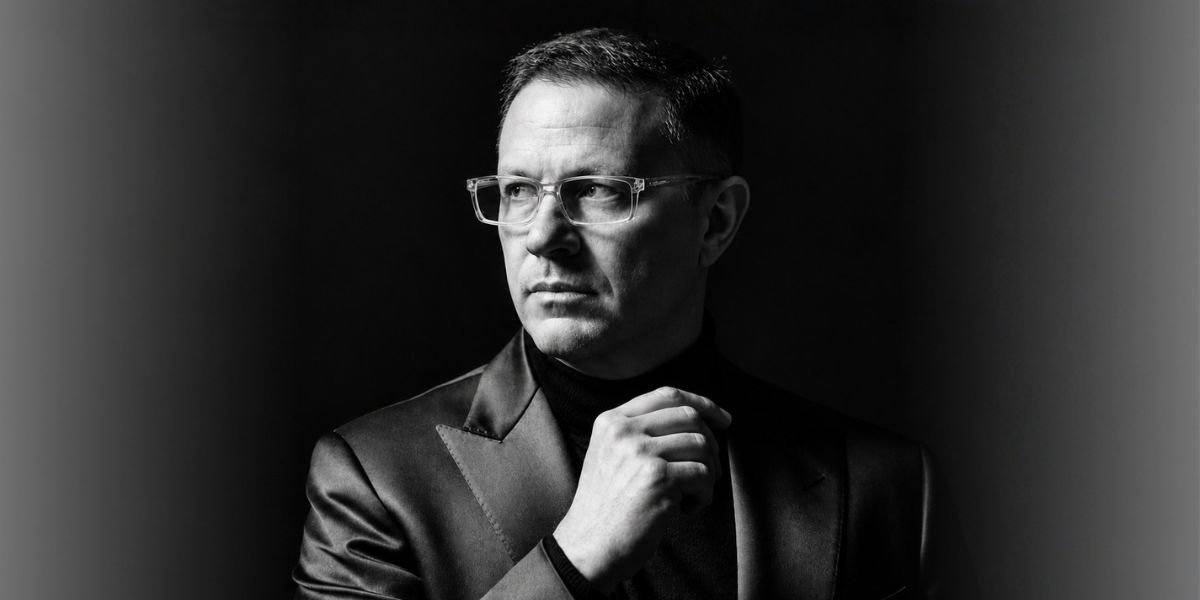
Brett Andrew Strange has spent years looking at the world through two related lenses: the practical realities of intelligence work and the imaginative demands of fiction. A former U.S. intelligence officer, Strange is the author of the three novels that form theAcross Latitudes espionage series, as well as Encounters: Six Short Stories. His background, extensive travel, and time living and working in Europe, the Middle East, and Asia give his fiction an international frame. He now calls San Francisco home.
Across Latitudes gathers Against the Dusk, Beneath the Purple Dawn, and Eastern Light into a single continuous political espionage story. The trilogy follows Iraq-war veteran Paul Drake and Russian-born art curator Katerina Volkova as their lives become entangled in a world shaped by secrecy, violence, political power, and personal consequence.
“Across Latitudes is a political espionage trilogy – one continuous story told across three books: Against the Dusk, Beneath the Purple Dawn, and Eastern Light,” Strange said. “It follows Paul Drake, an Iraq-war veteran carrying his own violent past, who is pulled into a global web of shadow warfare, alongside Katerina Volkova, a Russian-born art curator swept into the same current.”
The books move through a wide range of locations and political flashpoints. The story begins in 2017 and runs through 2024, moving from New York City to Istanbul, California, Paris, Malta, Sicily, and eventually the war in Ukraine. Strange describes the trilogy as more than a conventional spy narrative.
“It’s also a revenge tale, a love story, and a meditation about how and why people are willing to fight for their freedom in a violent world,” he said.
That combination is central to the trilogy’s identity. The book description presents Across Latitudes as a high-stakes story that pairs personal revenge and romance with the pressures of modern shadow warfare. Its characters face clandestine activity, geopolitical conflict, family strain, and the aftermath of violence. Rather than separating the personal from the political, Strange places the two in constant contact.
He also wanted the series to avoid what he sees as familiar genre shortcuts. Instead of invincible operatives and villains without recognizable motives, he built characters who make mistakes, carry doubts, and react to forces larger than themselves.
“Most espionage fiction today either leans on stale Hollywood formula or slides into exaggerated fantasy – invincible heroes, cartoonish villains,” Strange said. “I wanted the opposite for the thoughtful and careful reader.”
The author’s own experience shaped that approach. Asked what aspect of his CIA and national security background proved most useful in writing the trilogy, Strange pointed to the people and pressures behind intelligence operations.
“It gave me firsthand exposure to the real personalities and raw mechanics of intelligence work – the sacrifice, the deception, the psychological toll,” he said. “My background gave the operational detail its authenticity; the characters are based on real intelligence operations and procedures, not fantasy Hollywood images.”
Strange has also traveled to more than two dozen countries while researching the events, settings, and characters that appear in his writing. That on-the-ground attention is especially important in a trilogy that moves rapidly across continents while trying to preserve a sense of physical place.
For Strange, the result is meant to feel close to events readers recognize rather than distant from them. He argues that the series has particular urgency because its fictional action intersects with the political instability and military conflicts that have defined recent years.
“The story feels urgent right now – not speculative fiction, but a mirror held up to headlines people are already living through,” he said. “The research behind the settings – Istanbul, Malta, the Ukrainian front – makes the danger tangible. You’re not watching a thriller unfold from a distance; you’re standing inside it.”
The trilogy is also available in audio, where Strange says narrator Ryan Haugen increases the sense of tension. “In audio, Ryan Haugen’s narration pulls that tension even tighter with dramatic flair,” Strange said. The format gives readers another way to experience the shifting perspectives and international movement while keeping the story’s emphasis on atmosphere, character, and the accumulating pressure surrounding Paul and Katerina.
That balance between international scale and individual consequence gives the trilogy a structure in which political events matter most when they change what the characters can choose, protect, or recover.
Across Latitudes ultimately uses the machinery of espionage to ask broader questions about freedom, loyalty, survival, and identity. Its international scope may attract thriller readers, but Strange’s emphasis on imperfect people and personal stakes is designed to make the trilogy accessible beyond the boundaries of the genre.
Across Latitudes is available on Amazon.